Historical Knowledge Normal Math Worksheets for 8-Year-Olds
5 filtered results
-
From - To
Dive into history and math with our specially designed "Historical Knowledge Math Worksheets for 8-Year-Olds"! These engaging worksheets blend essential math skills with intriguing historical facts, offering a unique interdisciplinary learning experience. Perfect for curious minds, each worksheet features age-appropriate problems that reinforce arithmetic, geometry, and logic, all wrapped in fascinating historical contexts. Ideal for both classroom use and at-home learning, these worksheets help children not only practice their math skills but also enhance their appreciation for history. Make learning both educational and fun with our expertly crafted materials that spark interest and inspire young learners!
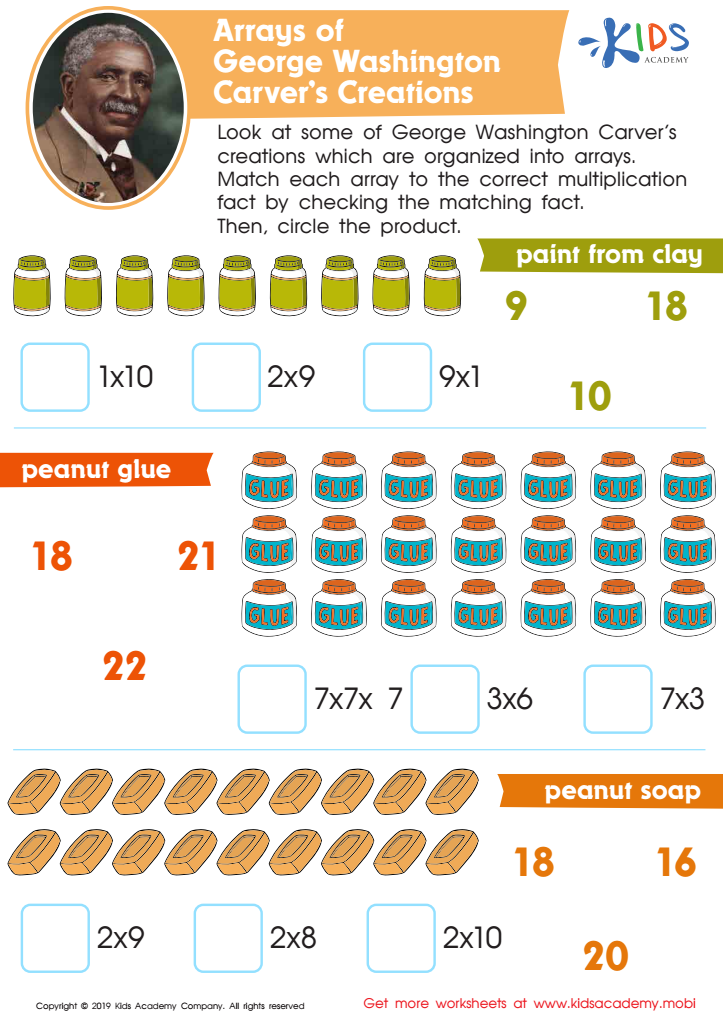
Arrays of George Washington Carver’s Creations Worksheet
 Assign to My Students
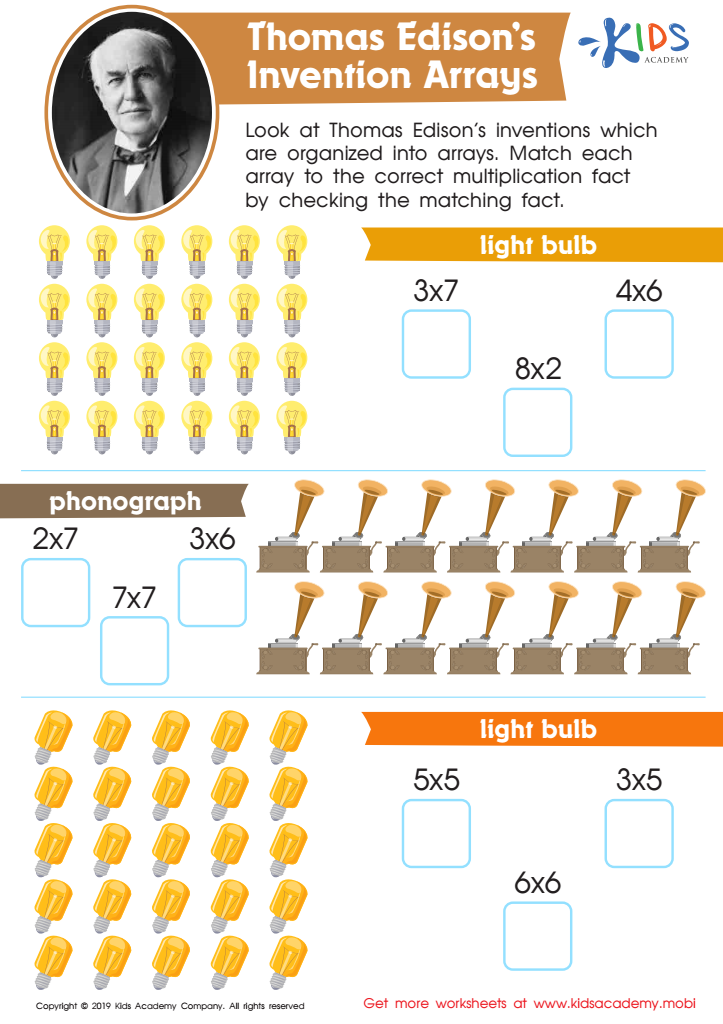
Thomas Edison’s Invention Arrays Worksheet
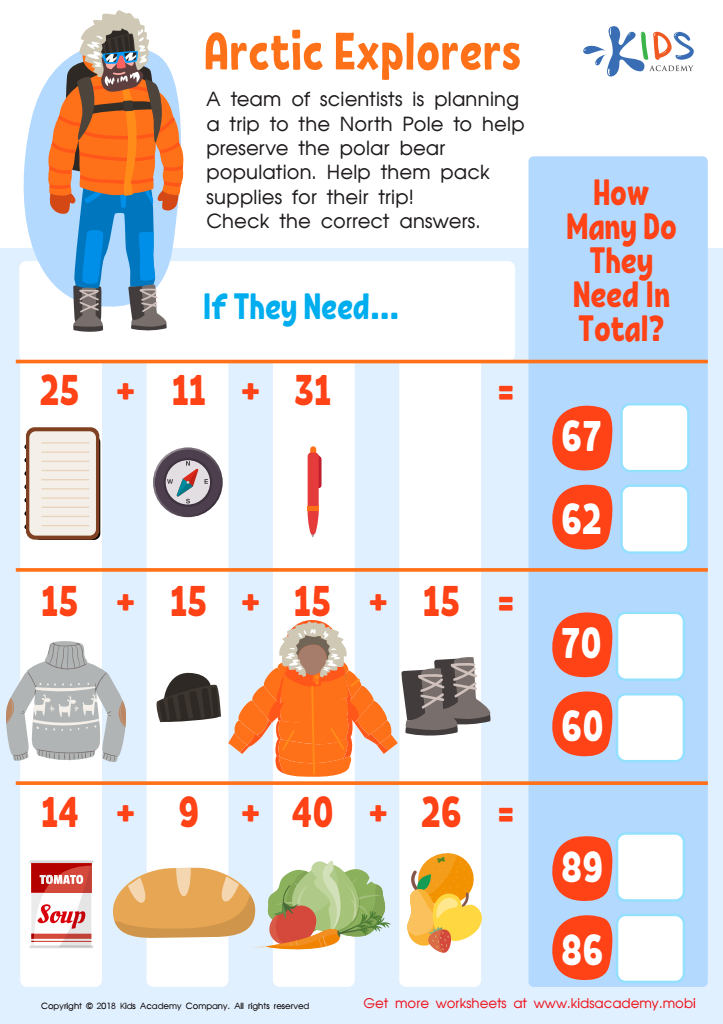
Arctic Explorers Worksheet
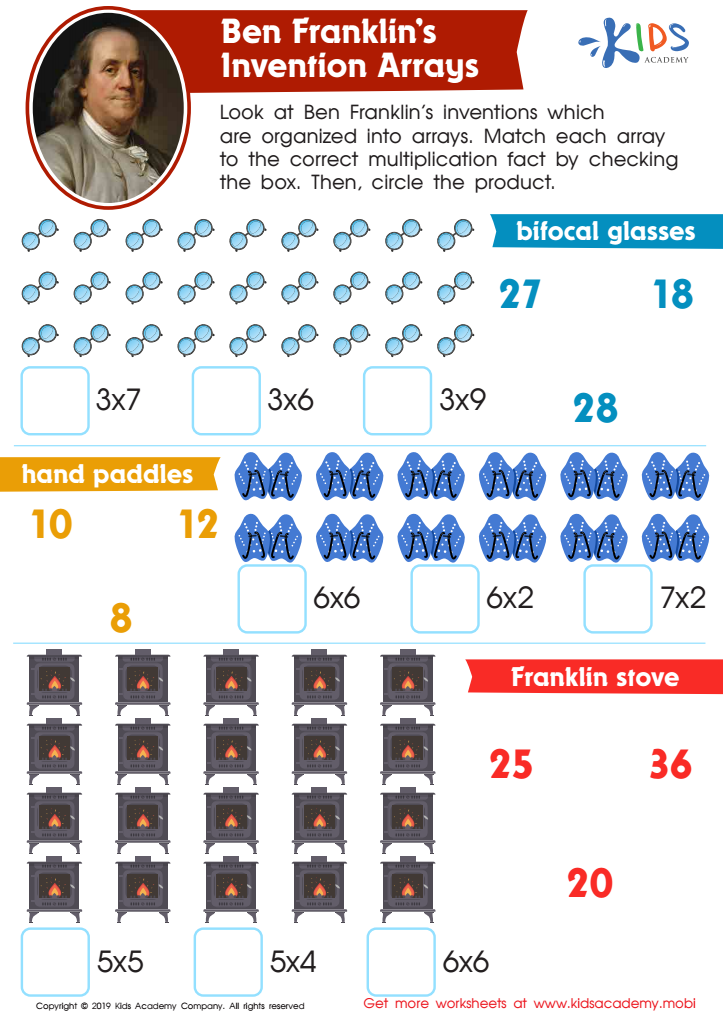
Ben Franklin’s Invention Arrays Worksheet
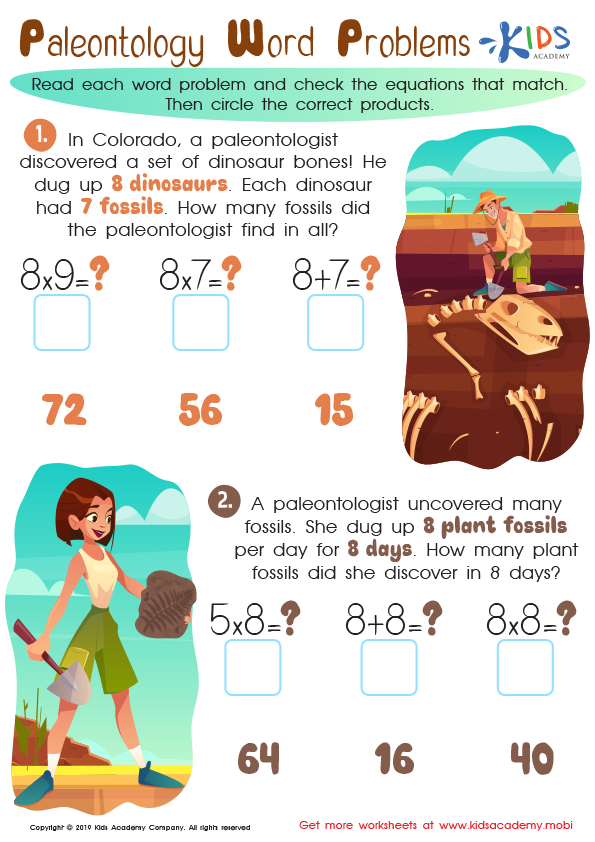
Archeology Word Problems Worksheet





.jpg)

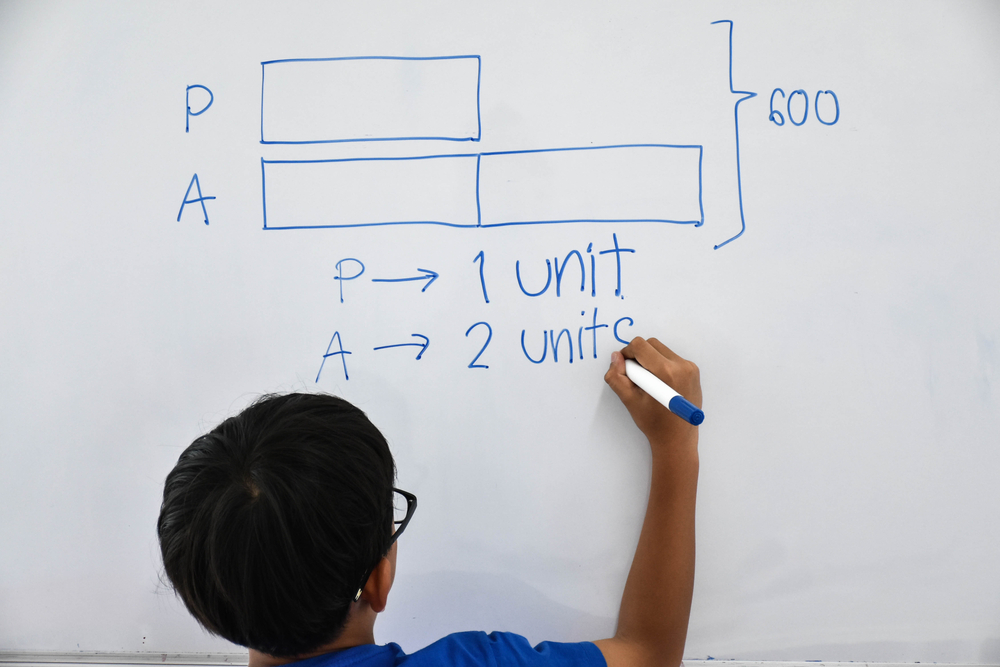
Parents and teachers should care about imparting historical knowledge and foundational math skills to 8-year-olds because both areas are crucial in shaping well-rounded, competent individuals predisposed to lifelong learning. Understanding history allows children to appreciate diverse cultures, recognize societal progress, and develop a sense of identity and perspective. It helps them discern patterns of human behavior, fostering critical thinking and empathy by learning from past achievements and mistakes.
Simultaneously, math skills are essential as they form the foundation upon which various academic and real-world abilities are built. Mathematics promotes logical reasoning, problem-solving capabilities, and analytical thought processes, which are valuable in both academic contexts and daily life. An early grasp of number sense, arithmetic, and basic geometry seeds confidence and proficiency for more advanced math and science endeavors.
Combining historical knowledge with math competencies not only cultivates intellectual curiosity but also prepares children to navigate and contribute meaningfully to an increasingly complex world. When parents and teachers emphasize these areas, they present opportunities for interdisciplinary learning, where history lessons can be infused with timelines and data analysis, and math problems can be contextualized with historical facts. Such integrated learning experiences bolster retention and comprehension, motivating kids to connect concepts across subjects naturally.








