Mental arithmetic skills Normal Math Worksheets for 8-Year-Olds
3 filtered results
-
From - To
Unlock your child's potential with our Mental Arithmetic Skills Normal Math Worksheets designed specifically for 8-year-olds. These engaging resources help young learners master mental math, enhancing their problem-solving abilities and boosting confidence. Featuring a variety of fun exercises, our worksheets encourage quick thinking and improve calculation speed. Tailored to align with educational standards, these printable worksheets make learning enjoyable and interactive. Whether at home or in the classroom, they provide the perfect blend of challenge and support for developing essential math skills. Dive into our collection today and watch your child's mathematical abilities flourish!
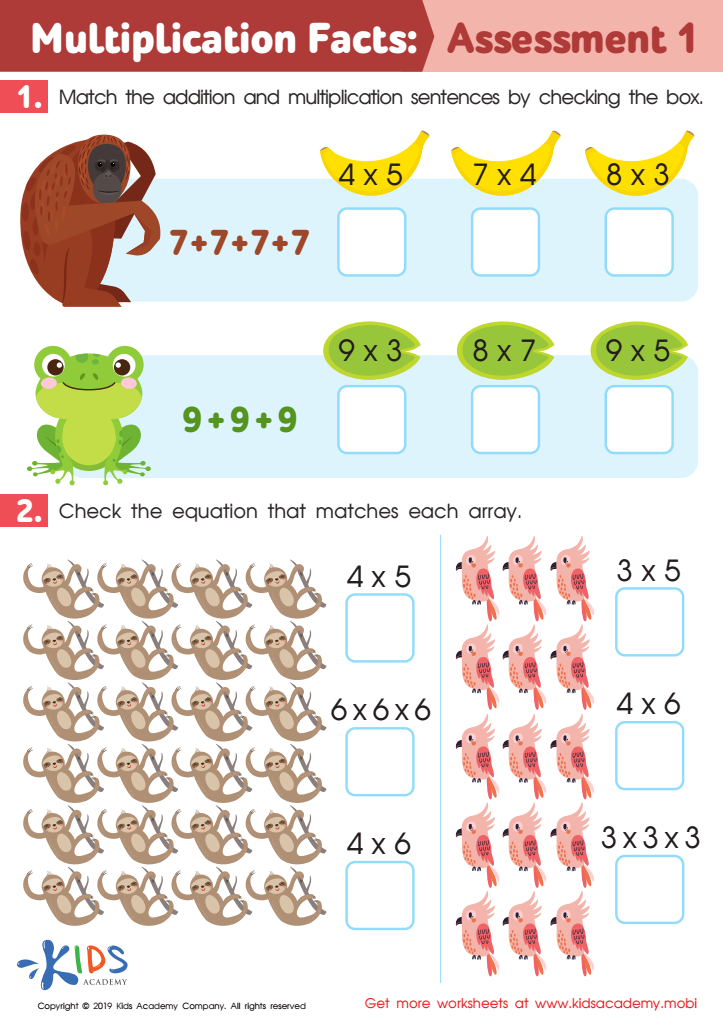
Multiplication Facts: Assessment 1 Worksheet
 Assign to My Students
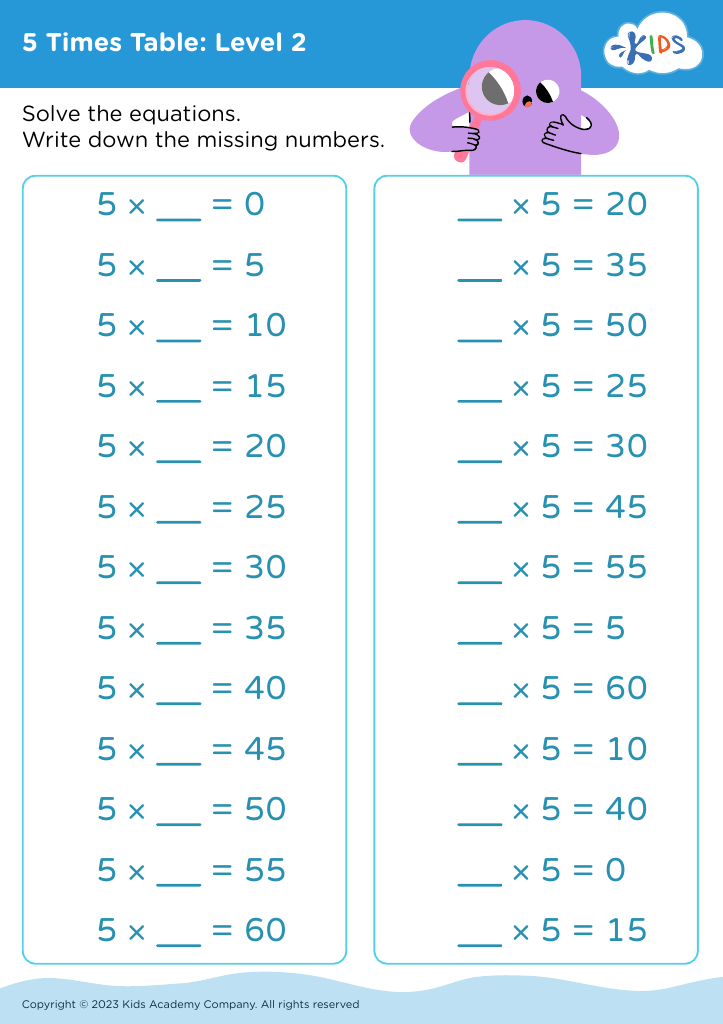
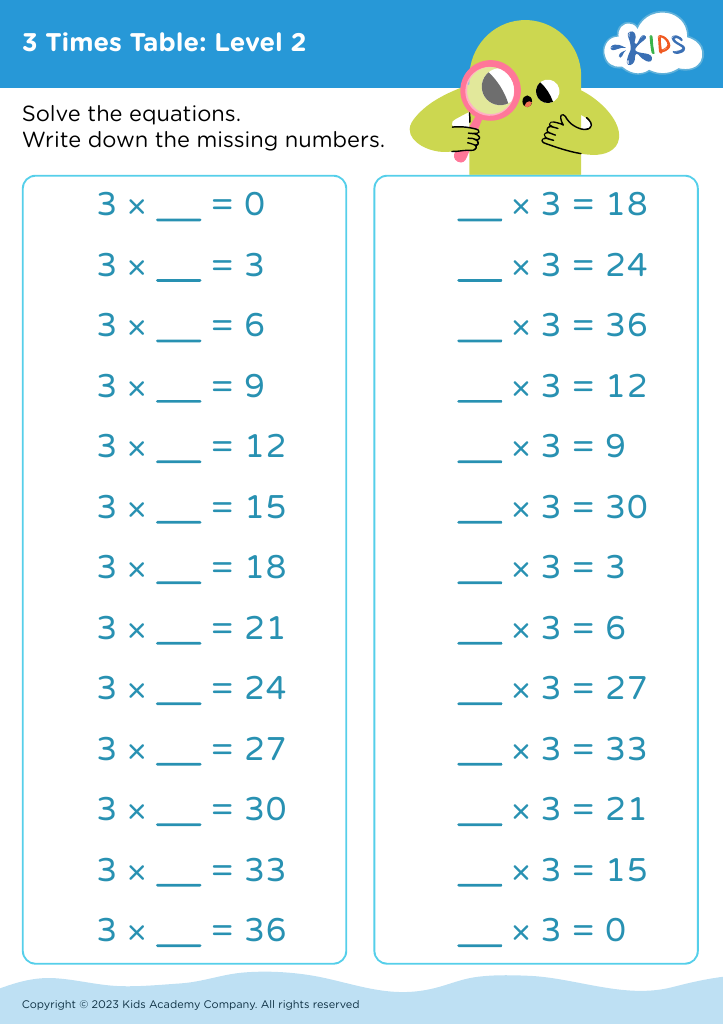







Mental arithmetic skills are essential for 8-year-olds as they lay the foundation for their overall mathematical abilities and cognitive development. Parents and teachers should care about nurturing these skills for several reasons. Firstly, mental arithmetic fosters confidence in children's abilities. Being able to perform calculations in their heads boosts self-esteem and encourages a positive attitude towards math.
Moreover, mental arithmetic enhances problem-solving abilities. As learners engage in mental calculations, they develop critical thinking skills, enabling them to tackle complex problems more effectively. This skill is particularly beneficial not just in mathematics, but in real-life situations, such as budgeting, cooking, or planning.
Additionally, mental arithmetic strengthens memory and concentration. Regular practice requires children to hold numbers in their minds, improving their cognitive functions, which can translate to better performance in other subjects.
From a broader perspective, cultivating these skills can inspire a lifelong interest in mathematics and science, critical fields in our increasingly technology-driven world. In essence, reinforcing mental arithmetic through engaging activities creates a solid foundation for academic success, personal confidence, and practical skills necessary for daily life. Thus, parents and teachers should actively support the development of these vital skills.








