Understanding subtraction Normal Math Worksheets for 8-Year-Olds
6 filtered results
-
From - To
Discover our "Understanding Subtraction Normal Math Worksheets" designed specifically for 8-year-olds! These engaging and well-structured worksheets promote essential subtraction skills, making learning both enjoyable and effective. Each worksheet features a variety of exercises that cater to different learning levels, helping children grasp the concept of subtraction through hands-on practice. Plus, our vibrant illustrations and interactive elements keep students motivated and focused. Whether you're a teacher or a parent, these resources will support your child’s mathematical journey while building their confidence. Explore our collection today and watch your child excel in subtraction with ease and enthusiasm!
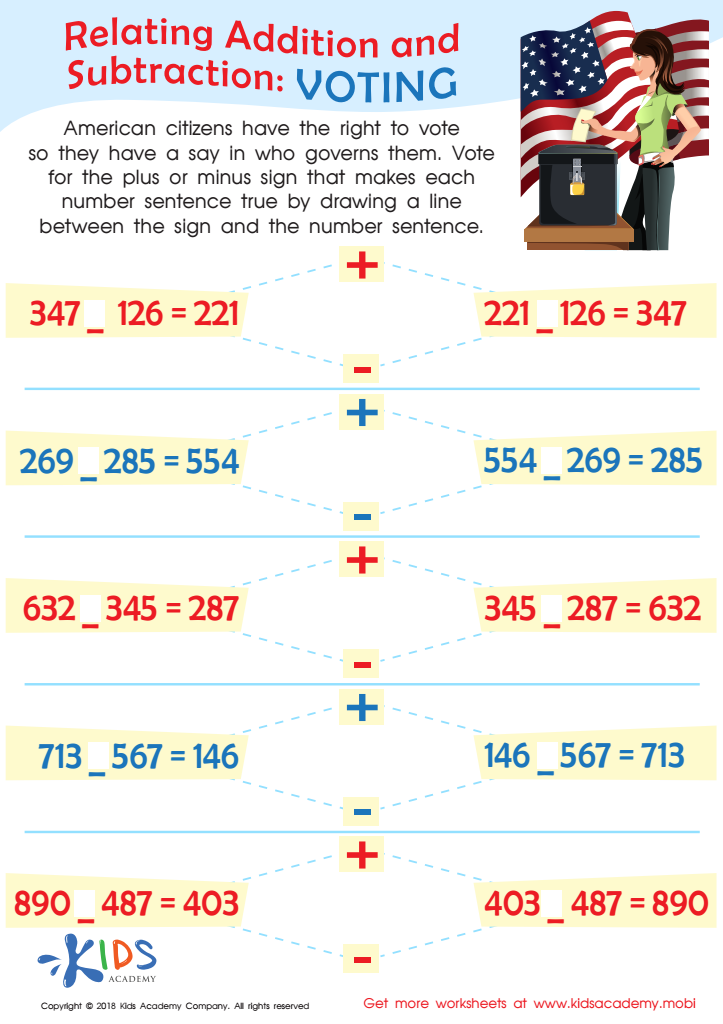
Voting Worksheet
 Assign to My Students
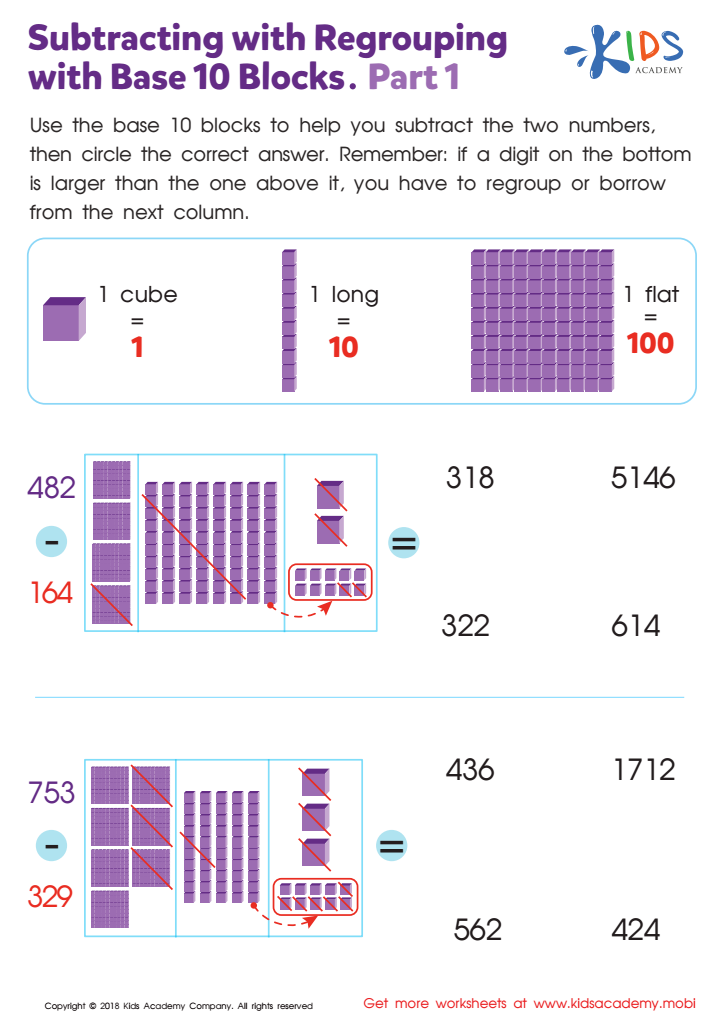
Subtracting with Regrouping with Base 10 Blocks. Part1 Worksheet
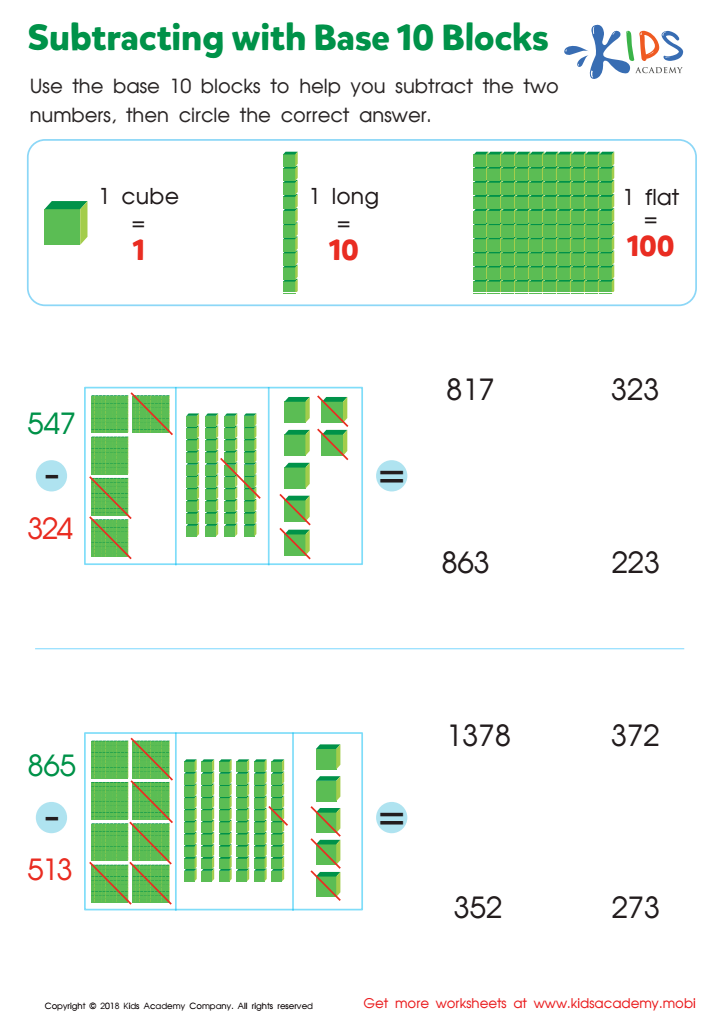
Subtracting with Base 10 Blocks Worksheet
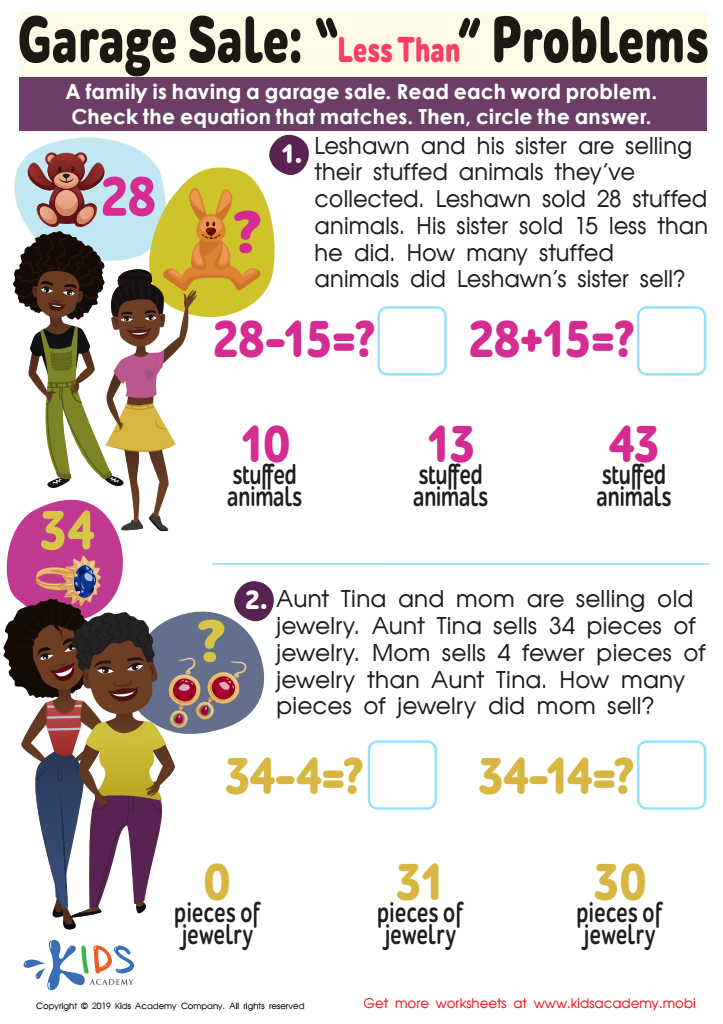
Garage Sale Less Than Worksheet
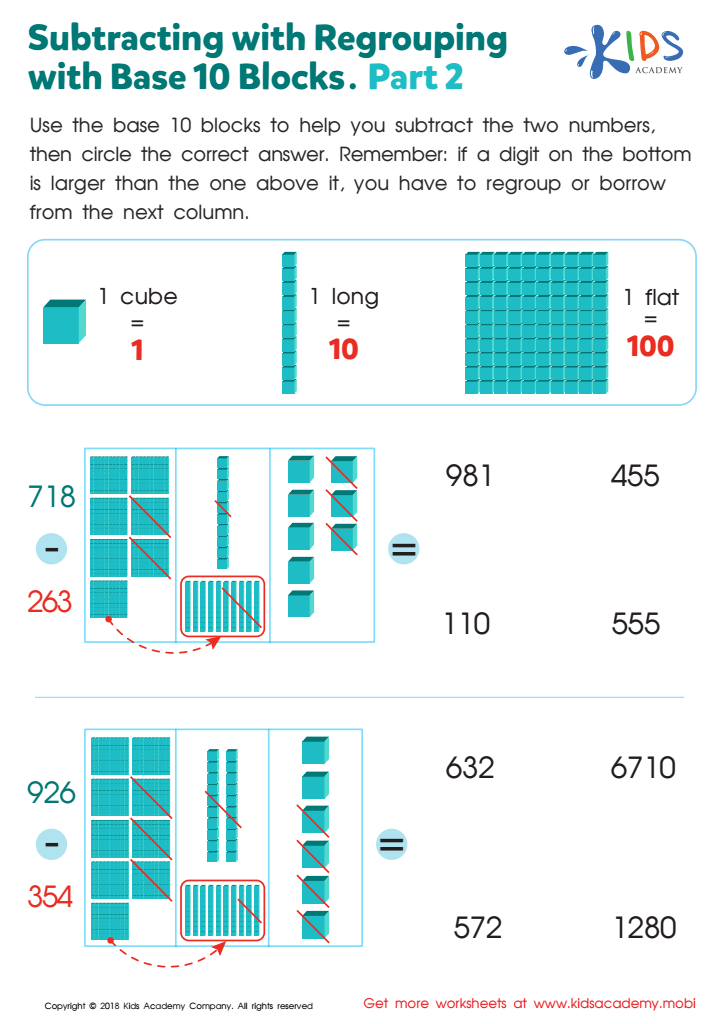
Subtracting with Regrouping with Base 10 Blocks. Part 2 Worksheet
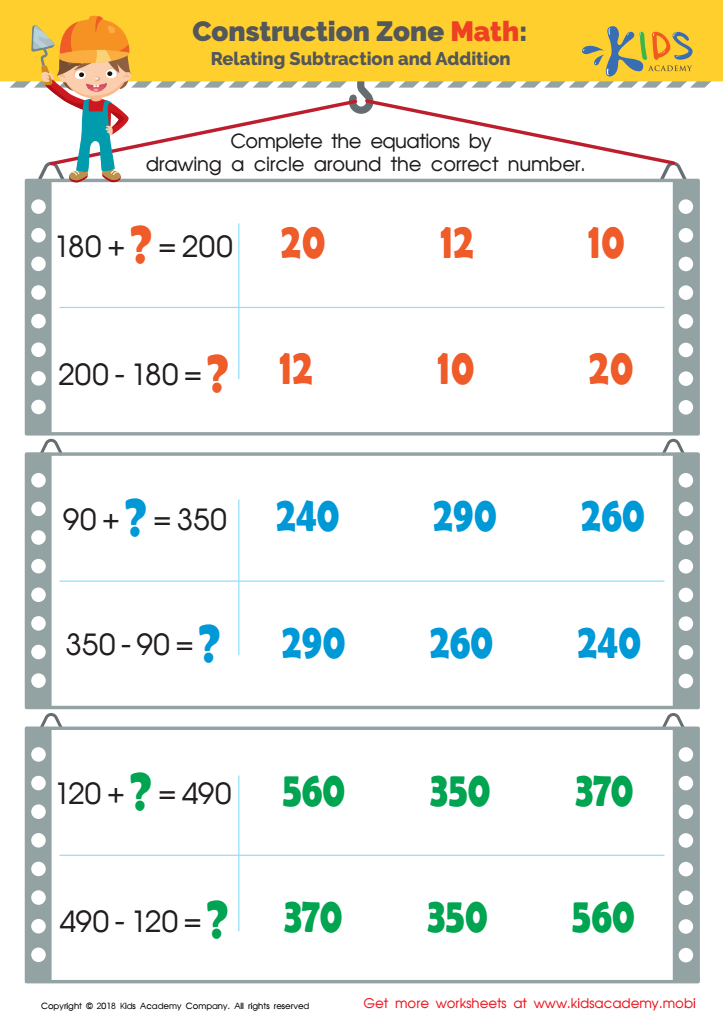
Construction Zone Math: Relating Subtraction and Addition Worksheet







Understanding subtraction is crucial for 8-year-olds as it forms the foundation for their mathematical development and problem-solving skills. At this age, children transition from merely memorizing basic facts to applying their understanding in various contexts. When parents and teachers prioritize comprehension over rote learning, they help children build a deeper conceptual framework that supports future learning in math.
Early mastery of subtraction encourages confidence and independence. Children who grasp the concept can tackle word problems, understand the relationship between addition and subtraction, and approach more complex mathematical concepts, such as borrowing or negative numbers, later on. Additionally, subtraction is not just an academic exercise; it has real-world applications, such as budgeting, cooking, and measuring, making it vital for everyday life.
Furthermore, fostering a supportive learning environment where children are encouraged to explore subtraction can nurture their critical thinking skills. Engaging activities and discussions about different subtraction strategies can make math enjoyable and relatable, leading to a positive attitude towards the subject. When parents and teachers work together to reinforce these concepts, they promote a love for learning and nurture effective problem solvers, preparing students for more advanced mathematics in the future.








