Understanding measurements Normal Measurement Worksheets for 8-Year-Olds
6 filtered results
-
From - To
Help your 8-year-old master the basics of measurements with our "Understanding Measurements: Normal Measurement Worksheets." These engaging resources are designed to make learning fun and effective, covering essential concepts such as length, weight, and volume. Suitable for children aged 8, our worksheets include various exercises to enhance critical thinking and problem-solving skills. Each activity is crafted to nurture a solid foundation in measurement basics, preparing your child for more advanced math topics. Equip your young learner with the tools they need to excel in understanding measurements and boost their confidence in math!
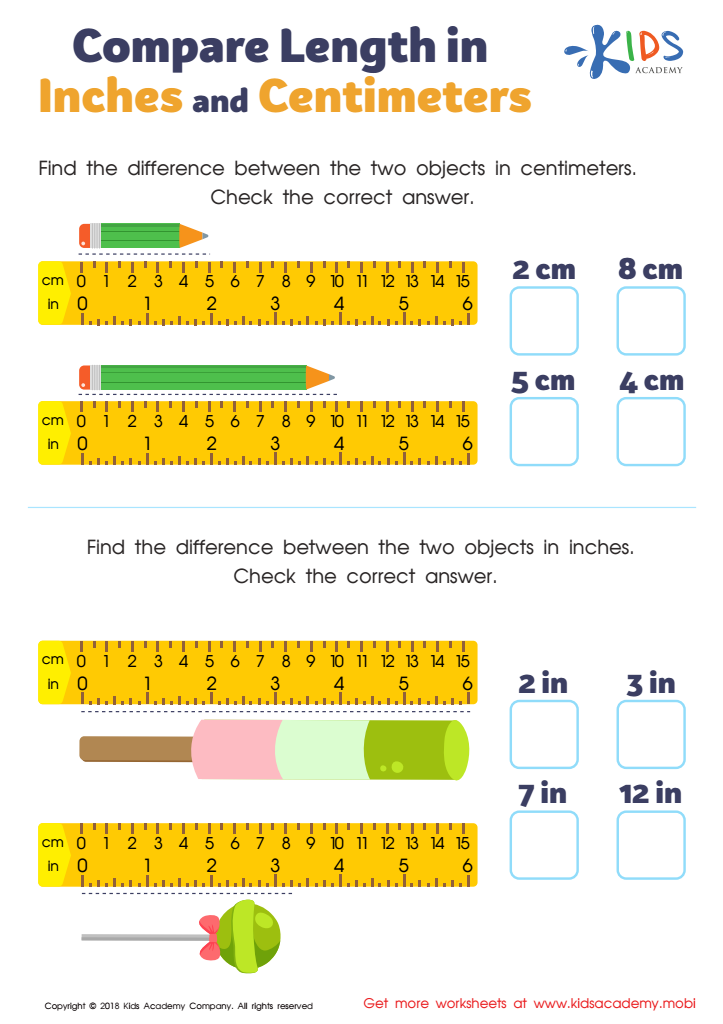
Compare Length in Inches and Centimeters Worksheet
 Assign to My Students
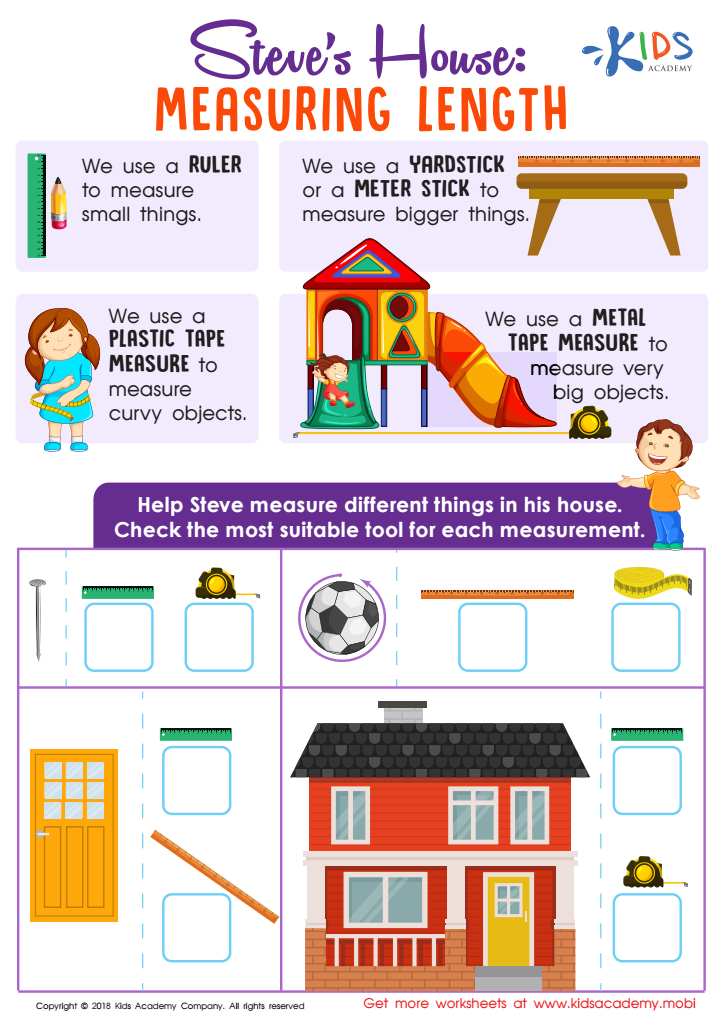
Steve's House: Measuring Length Worksheet
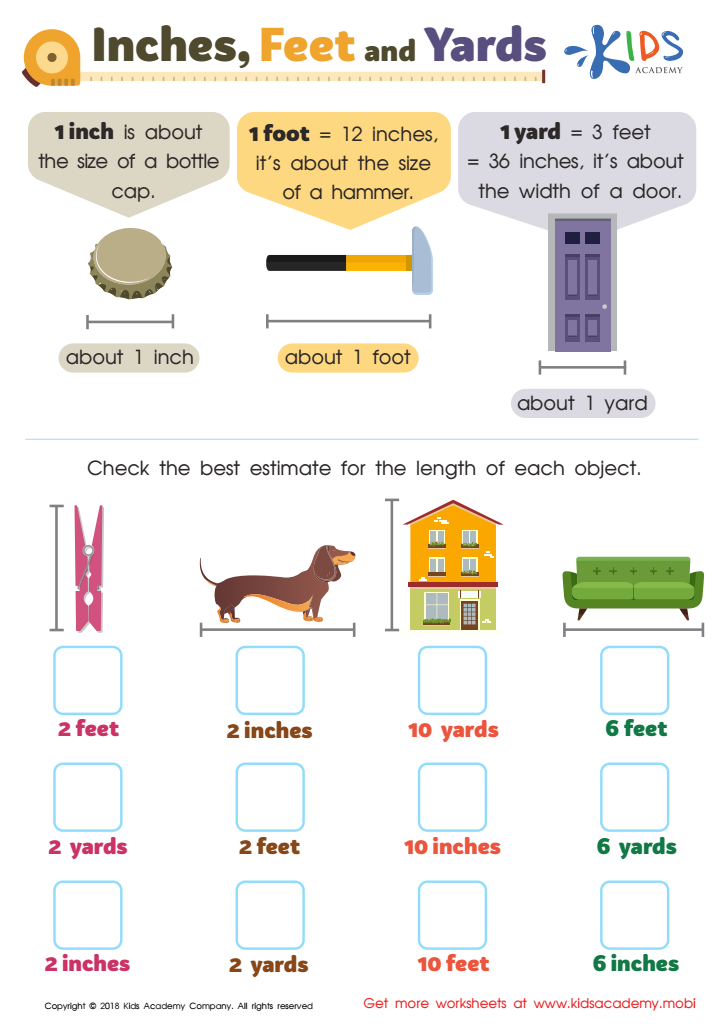
Inches, Feet and Yards Worksheet
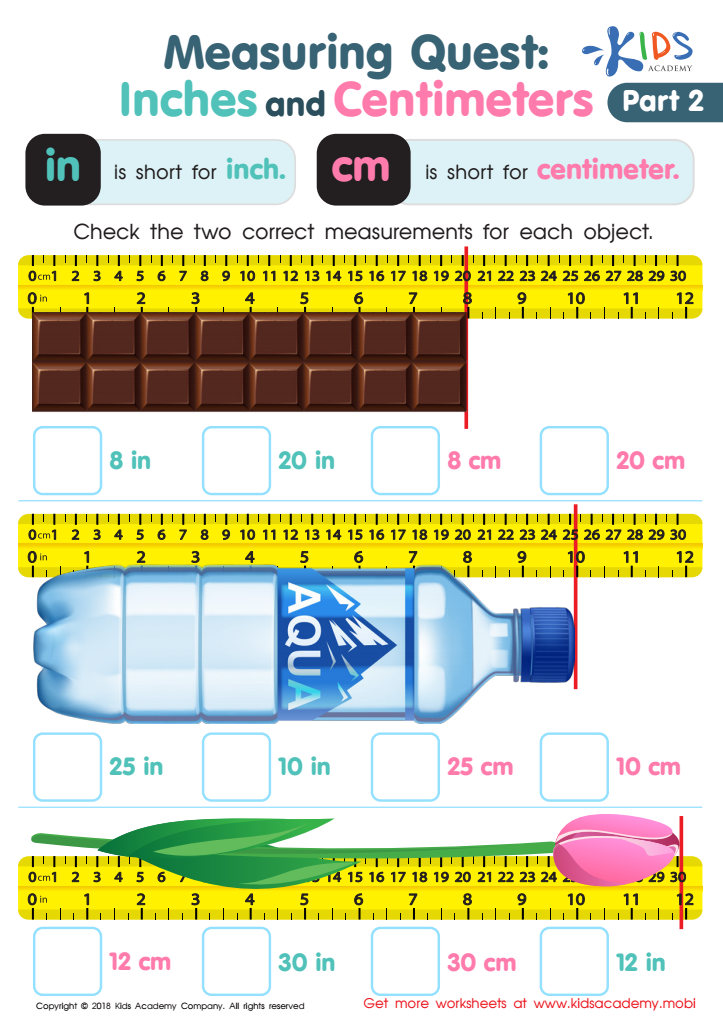
Measuring Quest: Inches and Centimeters - Part 2 Worksheet
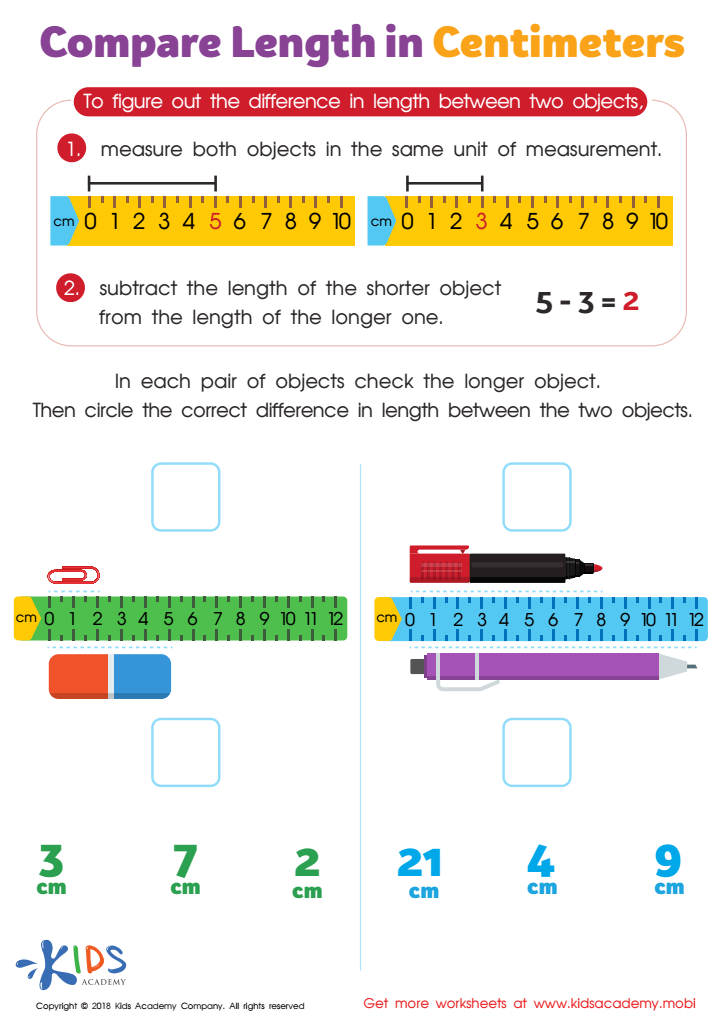
Compare Length in Centimeters Worksheet
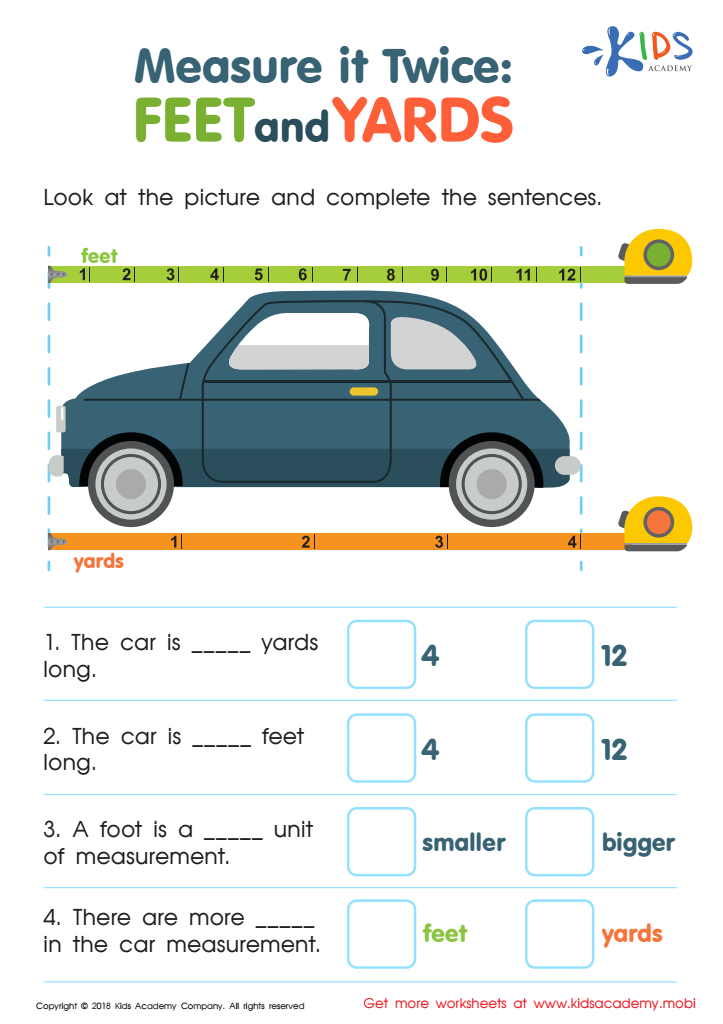
Measure It Twice: Feet and Yards Worksheet








Understanding measurements is crucial for an 8-year-old as it lays the foundation for essential math skills and everyday practical knowledge. For parents and teachers, focusing on this area brings multiple benefits. First, it enhances problem-solving abilities. When children grasp measurements, they can solve real-world problems more efficiently, such as determining the correct amount of ingredients in cooking or the right size of their clothing. This practical application fosters critical thinking and logical reasoning.
Second, understanding measurements strengthens other academic areas. Math topics like geometry, data analysis, and algebra often build on the concept of measurement. A strong foundational understanding helps children as they advance to more complex topics. It also integrates well with science subjects where experiments often involve accurate measurements.
Third, life skills gained are equally important. Knowing units of measurement, whether it be length, weight, or volume, is indispensable. It empowers kids to be more independent and responsible, letting them engage in activities like baking, gardening, or even simple DIY projects at home.
Lastly, a solid grasp of measurements enhances children's confidence. When they understand and can fluently use measurements, they are more likely to participate actively in class and various activities, ultimately fostering a love for learning and a sense of achievement. Thus, parents and teachers should invest time in ensuring children understand measurements thoroughly.








