Problem-Solving Skills Normal Multiplication Worksheets for 8-Year-Olds
8 filtered results
-
From - To
Enhance your child's multiplication abilities with our engaging problem-solving skills worksheets, specifically designed for 8-year-olds! These printable resources encourage critical thinking through various multiplication problems, helping to solidify their understanding of math concepts while making learning fun. Each worksheet presents relatable scenarios perfect for developing real-world math skills. With a focus on problem-solving techniques, kids will learn to tackle multiplication challenges confidently and independently. Our easy-to-use format allows parents and educators to seamlessly incorporate these exercises into learning routines. Unlock your child's potential in math and boost their problem-solving skills today!

Sightseeing 2-Step Word Problems Worksheet
 Assign to My Students
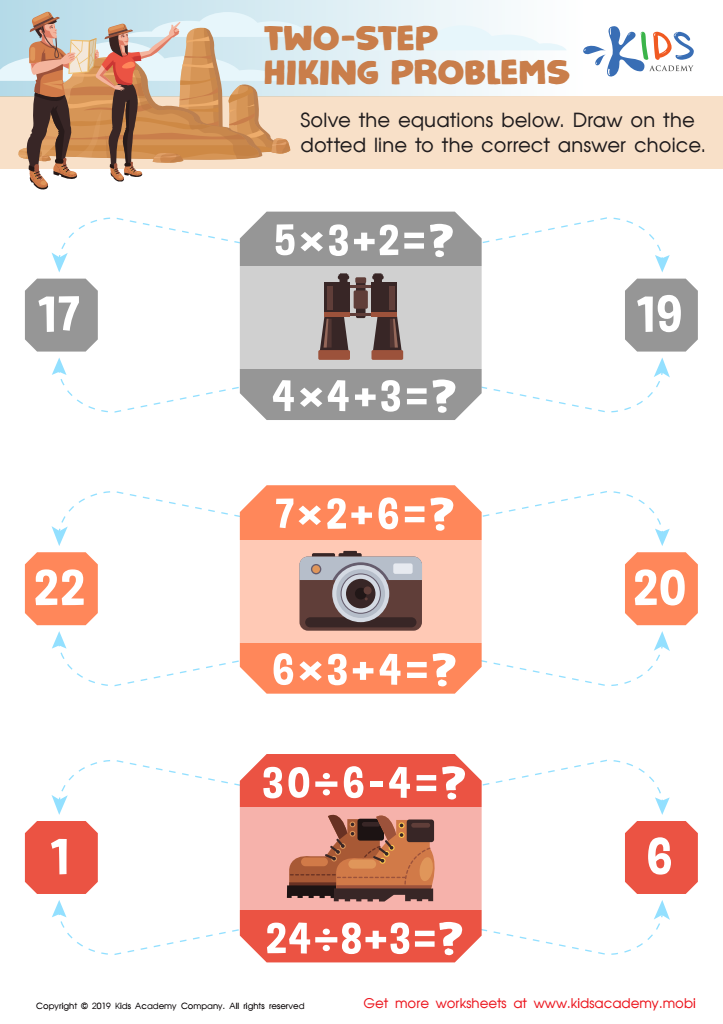
Two-Step Hiking Problems Worksheet
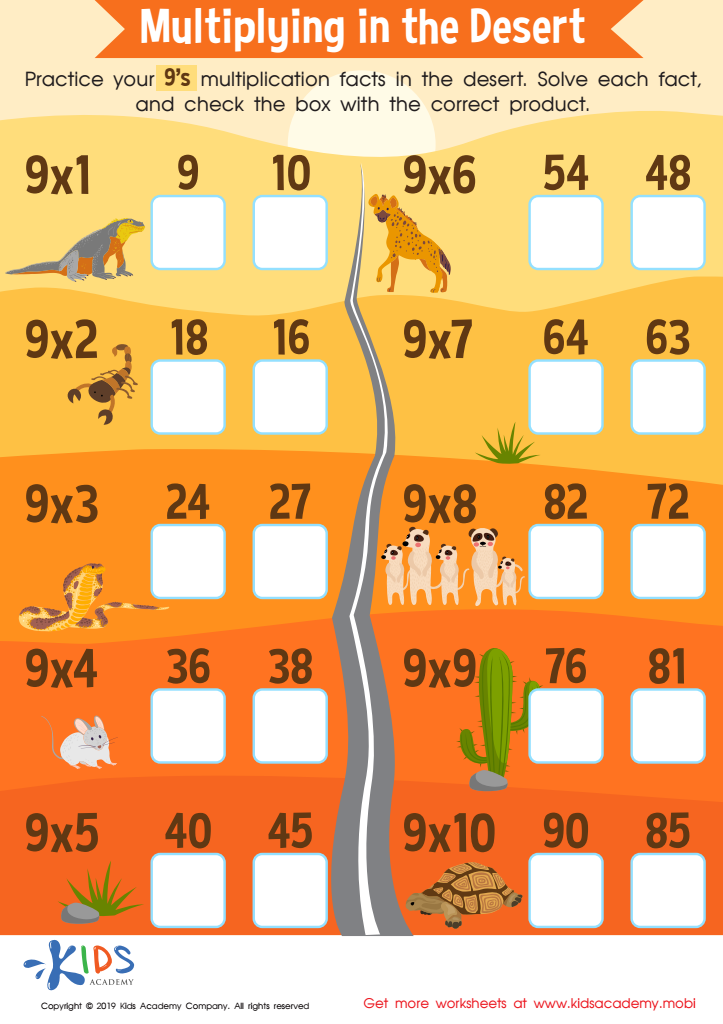
Multiplying in the Desert Worksheet
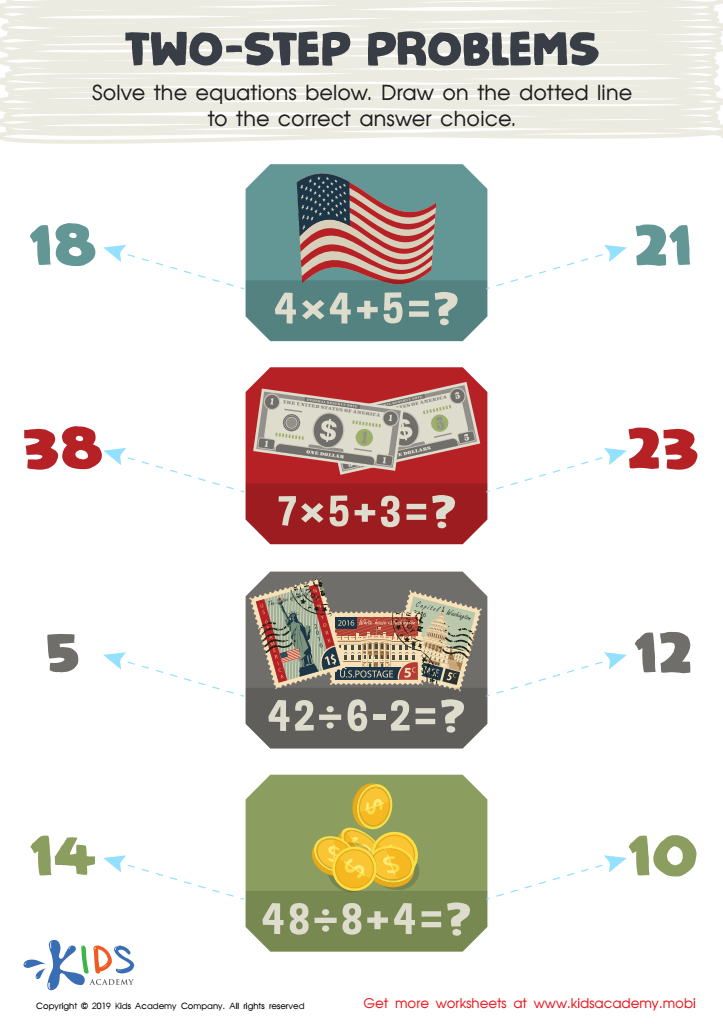
Two-Step Problems Worksheet
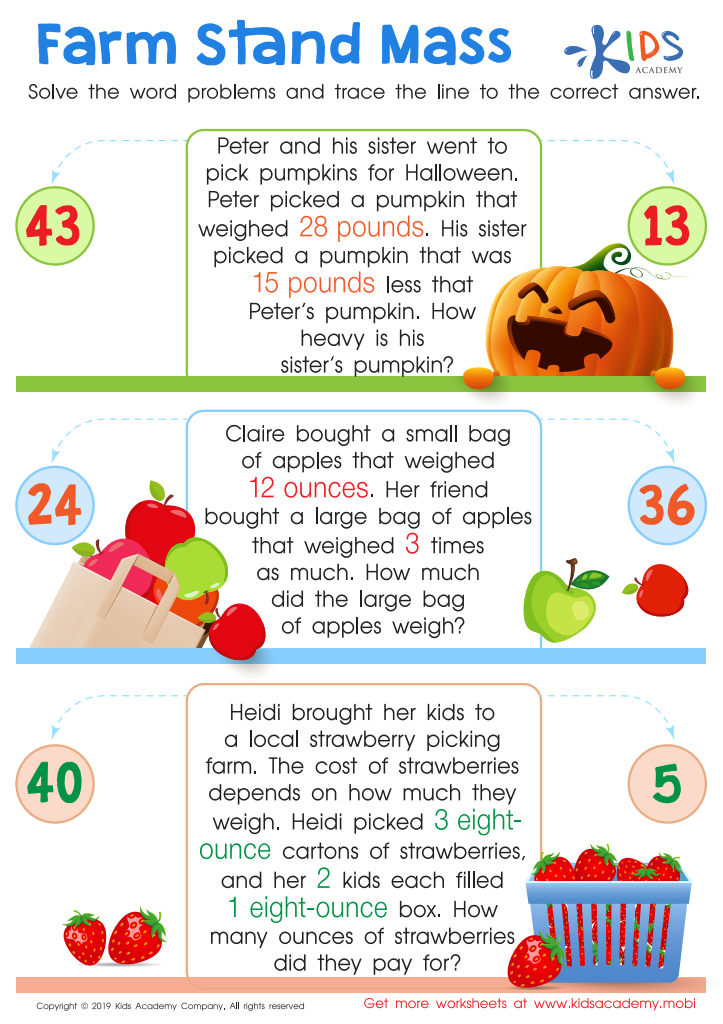
Farm Stand Mass Worksheet
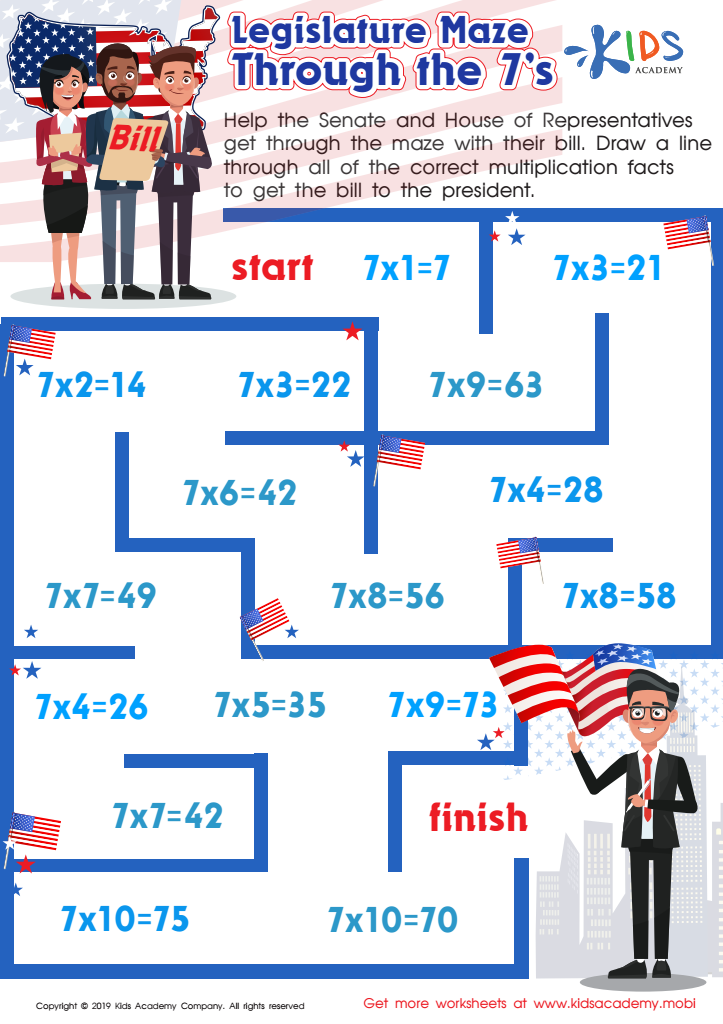
Legislature Maze Through the 7’s Worksheet
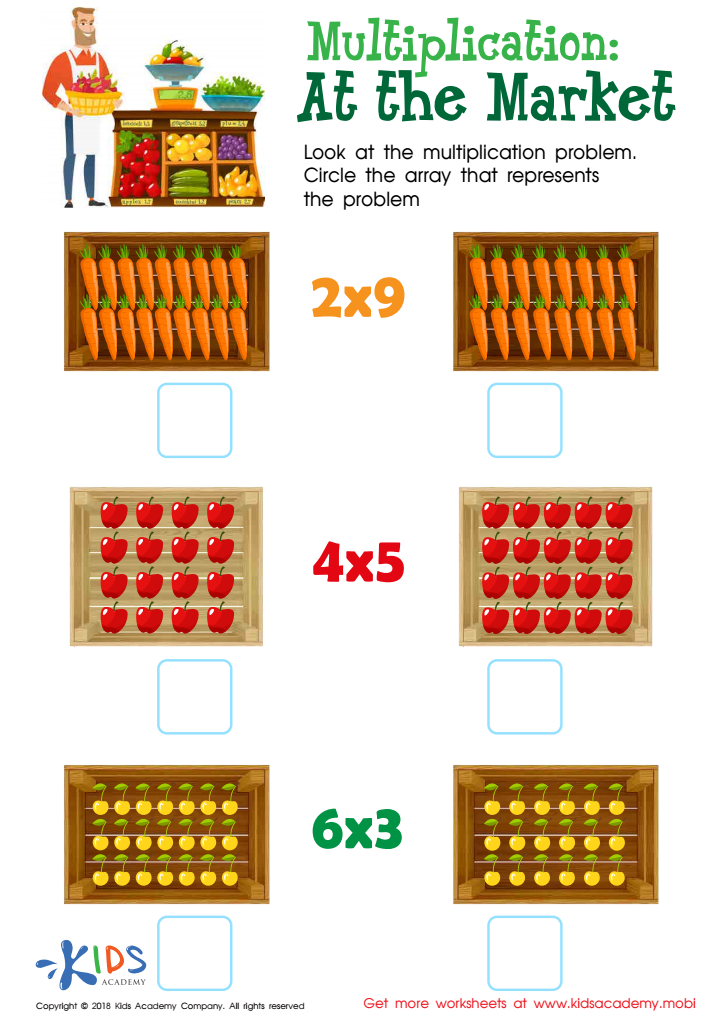
At the Market Worksheet

Multiplying with Betsy Ross Worksheet








Problem-solving skills, particularly in normal multiplication, are essential for 8-year-olds as they form the foundation for future mathematical understanding and critical thinking. At this age, children are just beginning to transition from concrete concepts to abstract thinking. Helping them develop strong multiplication skills through problem-solving encourages logical reasoning, enhances spatial awareness, and supports their ability to make connections across various mathematical concepts.
For parents and teachers, fostering these skills promotes a child's confidence and independence in learning. As children engage with multiplication problems, they learn to analyze situations, identify patterns, and apply strategies—skills vital not only in math but in everyday life. This process can enhance resilience; encountering and overcoming challenges cultivates a growth mindset, encouraging children to embrace difficulties rather than shy away from them.
Additionally, strong problem-solving skills can improve overall academic performance. Demonstrating their competence in math can motivate children in other subjects, creating an engaging and integrated learning experience. In a world increasingly driven by technology and critical analysis, ensuring that children develop effective problem-solving skills will prepare them for future educational opportunities and real-world challenges. Thus, both parents and teachers play a crucial role in nurturing these important skills through structured learning and encouragement.








