Filters

11 filtered results

Clear all filters
Favorites
With answer key
Interactive

11 filtered results

Difficulty Level

Grade


Enhance the cognitive development and analytical abilities of 8-year-olds with our Critical Thinking Normal Reading Fiction Worksheets. Our age-appropriate materials are specifically designed to challenge young minds, fostering skills such as understanding contexts, identifying themes, and drawing inferences. Featuring a mix of engaging stories and thought-provoking questions, these worksheets encourage children to think deeply about what they read. This not only improves their reading comprehension but also cultivates essential critical thinking skills that will benefit their academic journey. Perfect for teachers and parents seeking to elevate their child’s literacy through engaging and educational fiction reading activities.

Check out this FREE Trial Lesson on Reading Fiction for age 8!

Lessons in Fables and Folktales

Favorites
With answer key
Interactive
  • 8
  • Critical Thinking
  • Reading Fiction
  • Normal
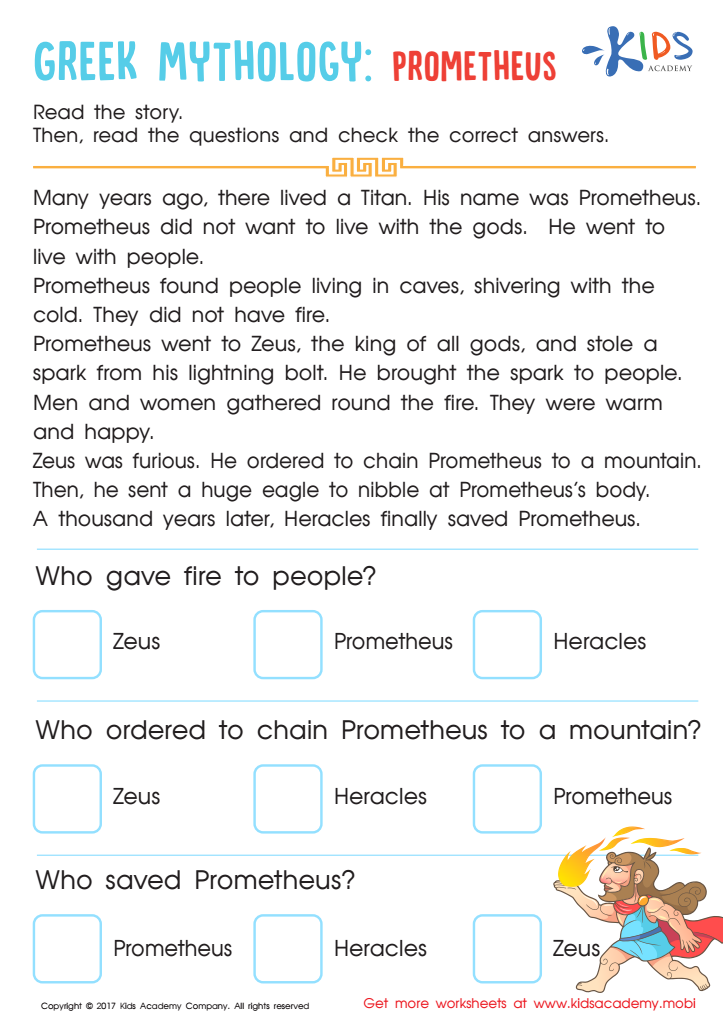
Prometheus story worksheet

Prometheus Story Worksheet

Help kids improve reading comprehension with this Prometheus story worksheet! Learn about this classic mythological tale and break down the plot into understandable parts. By doing so, children will understand the story each step of the way.
Prometheus Story Worksheet
Worksheet
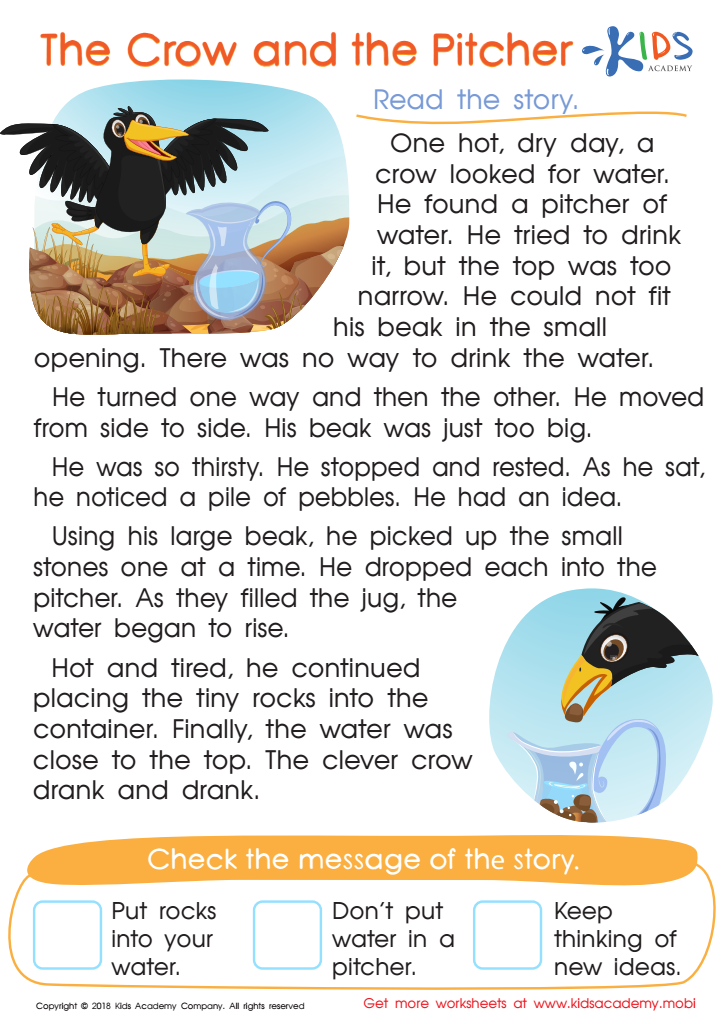
The Crow and the Pitcher Worksheet

The Crow and the Pitcher Worksheet

Introduce your child to reading comprehension with this fascinating worksheet from Kids Academy! Featuring Aesop's fable of a thirsty crow, your child will enjoy reading and determining the central theme of the passage. This worksheet is a great way to give your child a purpose for reading while helping to build their comprehension skills.
The Crow and the Pitcher Worksheet
Worksheet
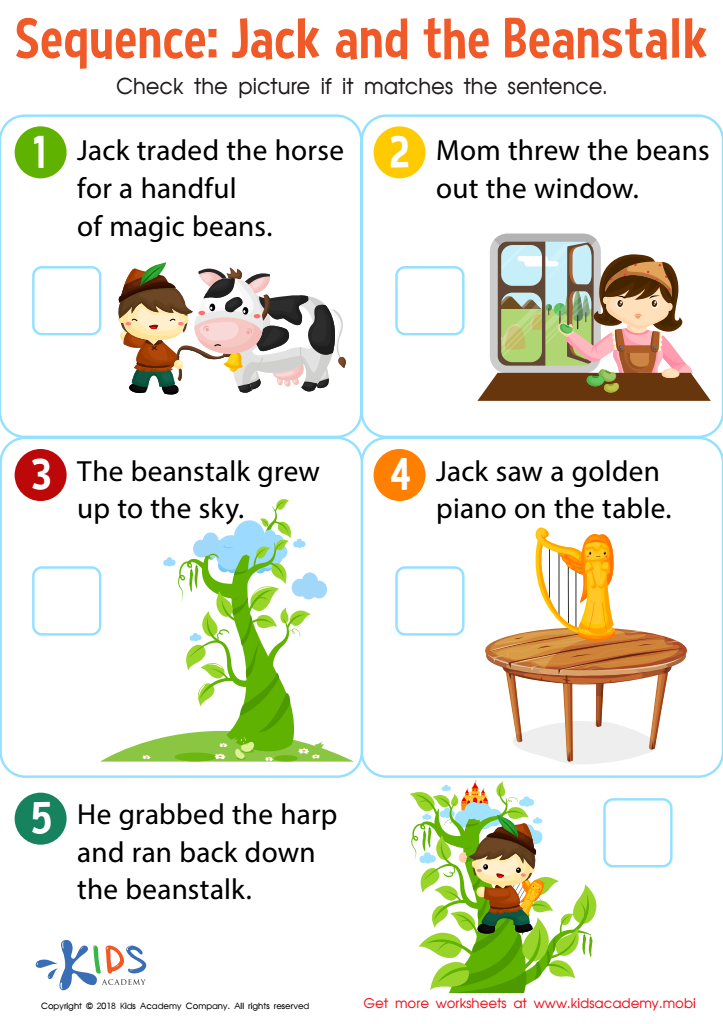
Sequence: Jack and The Beanstalk Worksheet
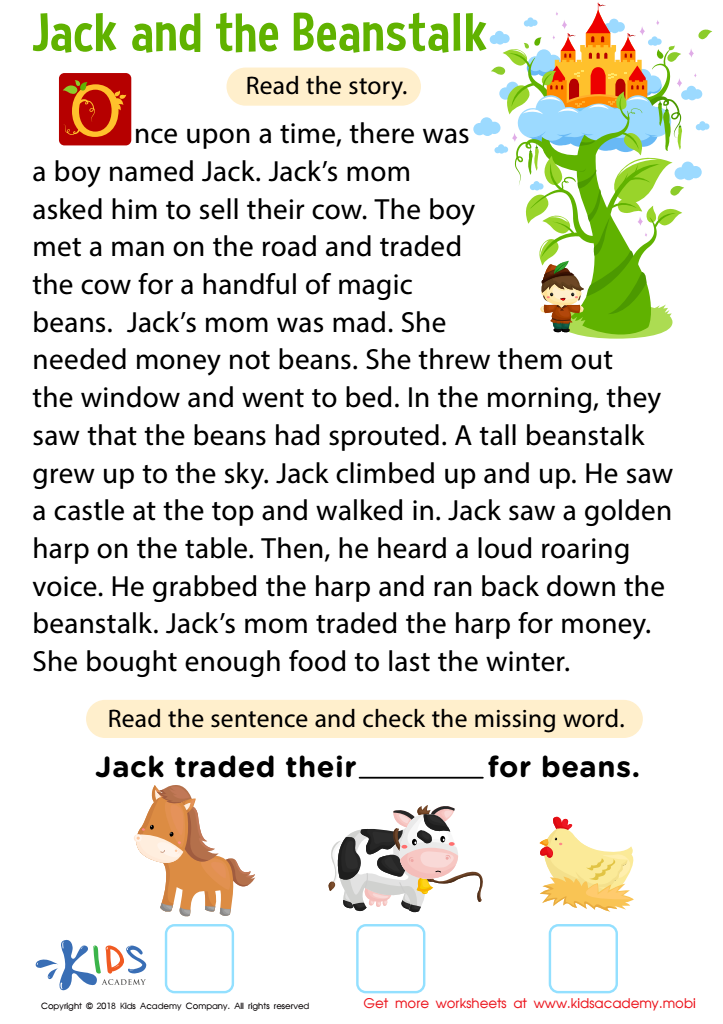

Sequence: Jack and The Beanstalk Worksheet

Ensure your kids are familiar with Jack and the Beanstalk before starting this worksheet. If not, read them the story. In the pdf, there are five pictures with sentences. Read the sentences, ask your kid if it matches the picture, then help them check if it does.
Sequence: Jack and The Beanstalk Worksheet
Worksheet
Jack and Beanstalk Worksheet
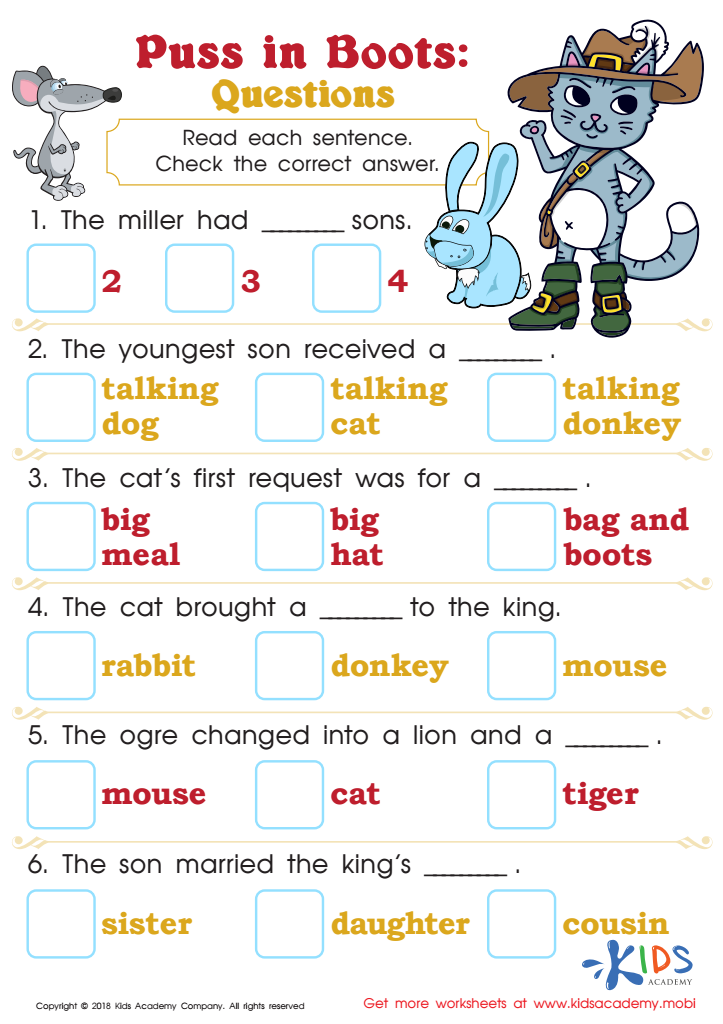

Jack and Beanstalk Worksheet

Story time can be a fun and educational experience for your kids. Read them the classic Jack and the Beanstalk - and even read it twice to help them pay attention. Afterwards, help them fill in the blank on the worksheet to expand their vocabulary and learn more from the story.
Jack and Beanstalk Worksheet
Worksheet
Puss in Boots: Questions Worksheet
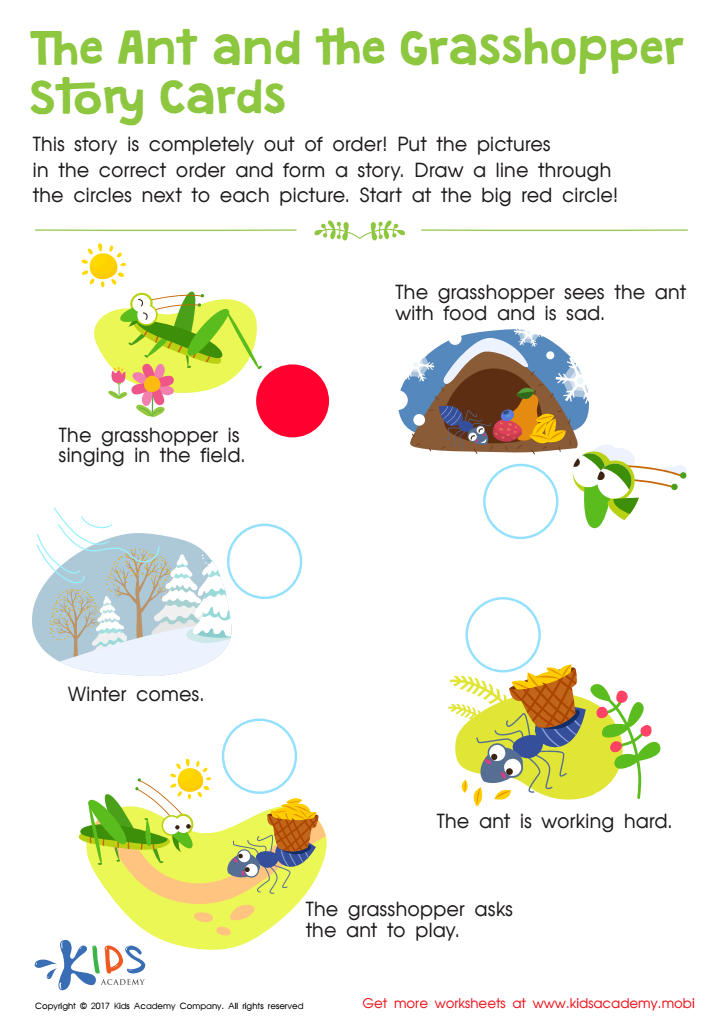

Puss in Boots: Questions Worksheet

This worksheet contains questions to be checked with boxes for the correct answers. It also has pictures of animals; ask kids to identify them, noting the objects with them. Read the questions and have kids provide the answers. Help them check the boxes for the right answer.
Puss in Boots: Questions Worksheet
Worksheet
The Ant and the Grasshopper worksheet PDF

The Ant and The Grasshopper Worksheet
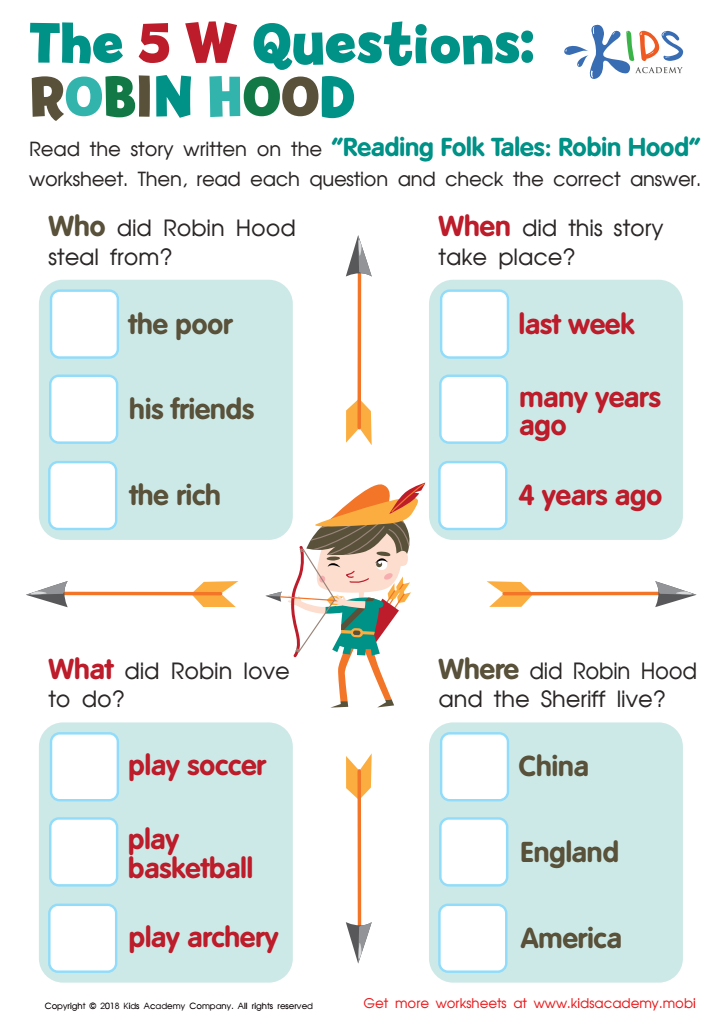
This worksheet uses the beloved childhood fable "The Ant and the Grasshopper" to teach your child about plot and order of events. Your child must read the events and put them in the right order. Once completed, review the story with your child to ensure its accuracy.
The Ant and The Grasshopper Worksheet
Worksheet
The 5 W Questions: Robin Hood Worksheet

The 5 W Questions: Robin Hood Worksheet

Before embarking on this Robin Hood adventure, ensure your child reads and comprehends the 'Reading Folk Tales: Robin Hood' worksheet. Have them consider the story's lessons, and observe the details. Read the questions and help your kids select the correct answers.
The 5 W Questions: Robin Hood Worksheet
Worksheet
Realistic Fiction: The First Day Worksheet

Realistic Fiction: The First Day Worksheet

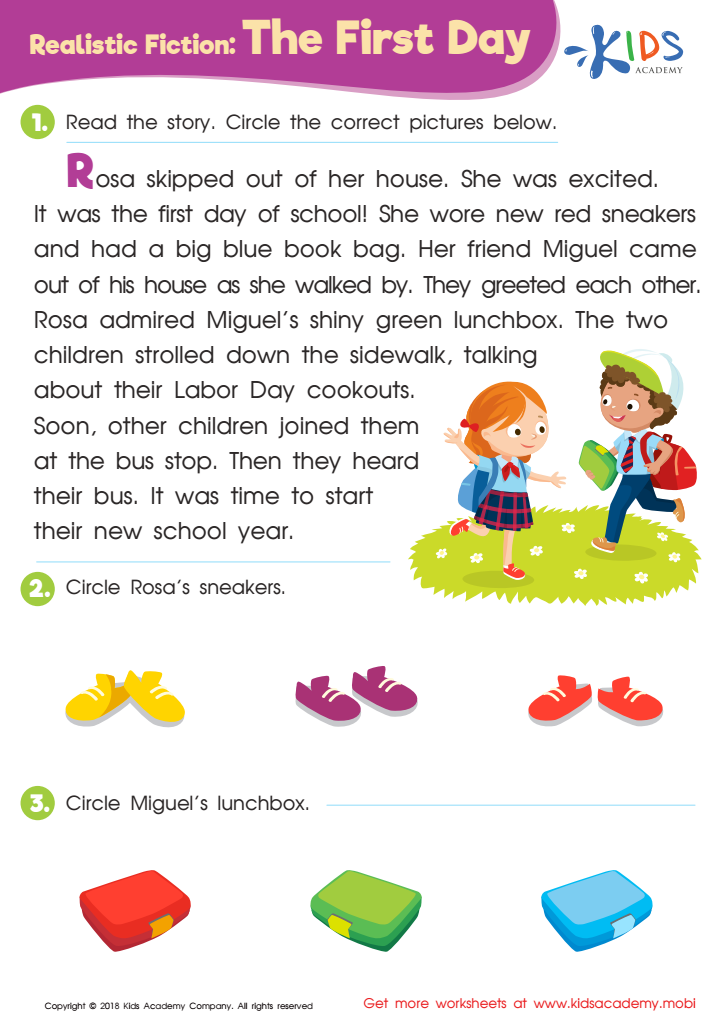
Fiction is made-up events, so story-writing is fiction writing. In this worksheet, there's a short story about Rosa, her friend Miguel, and their first day back at school. Read the story aloud to your kids and help them circle the right pictures to the questions. Repeat if needed.
Realistic Fiction: The First Day Worksheet
Worksheet
Point of View Printable

Point of View Printable

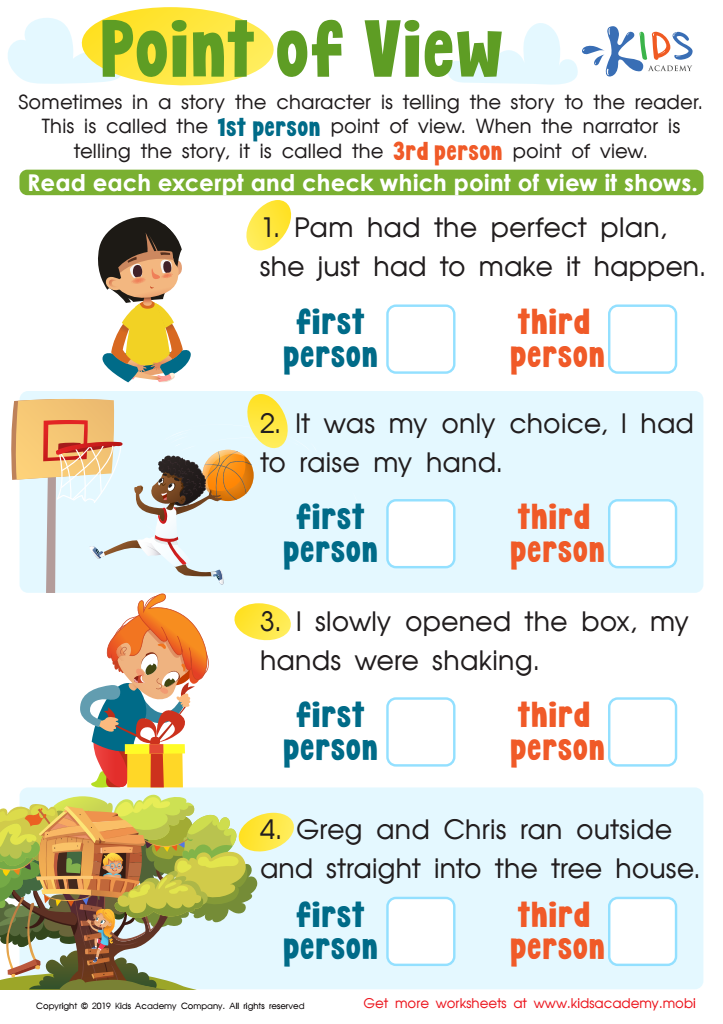
Teach your kids about points of view with this worksheet! In a story, characters can tell the story in first person or it can come from a narrator in third person. Read the excerpt in the worksheet and ask your kids to identify which point of view it is.
Point of View Printable
Worksheet
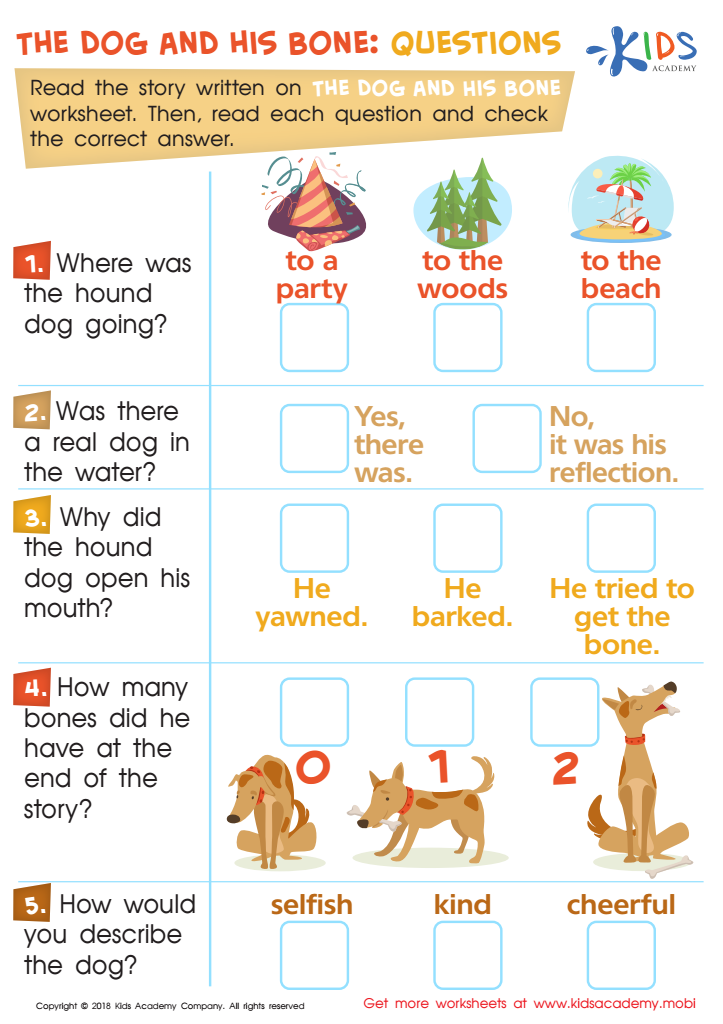
The Dog and His Bone: Questions Worksheet

The Dog and His Bone: Questions Worksheet

Read the story of The Dog and His Bone to your child and help them understand it. Have them read it aloud if possible. Then, read the five questions on the worksheet and guide them to select the correct answers.
The Dog and His Bone: Questions Worksheet
Worksheet
Think About It: Assessment Worksheet


Think About It: Assessment Worksheet

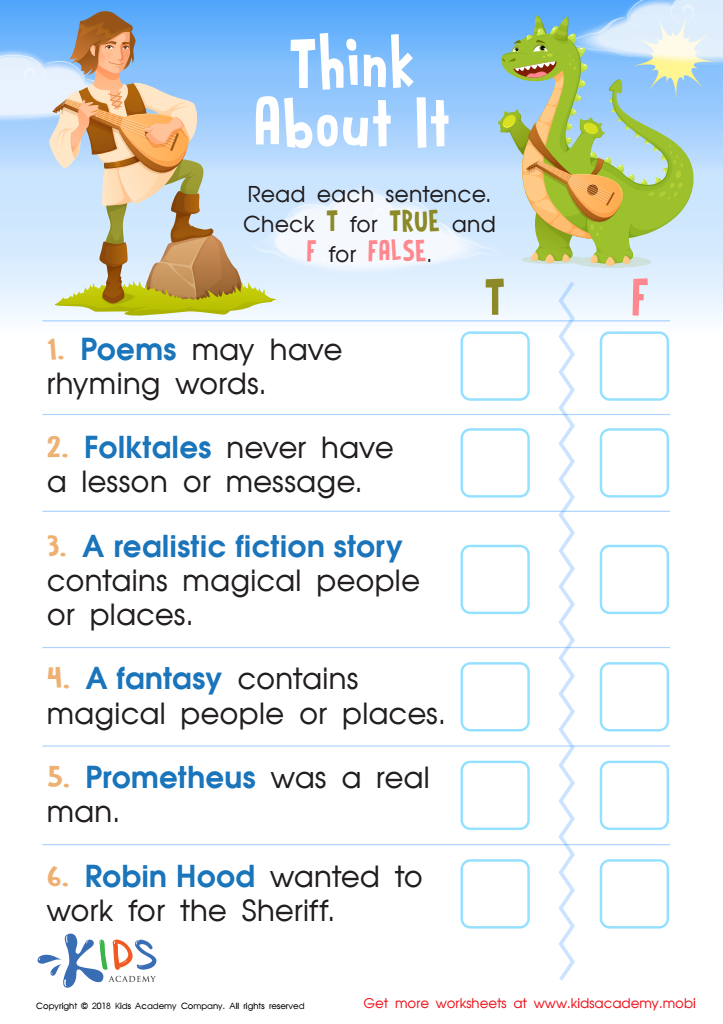
Reading is a fun and important way to learn. Help your students become better readers with this simple yet colorful worksheet. Read each sentence aloud, then have them read it by themselves. Ask them to check T for True and F for False. It's a great way to practice their reading skills!
Think About It: Assessment Worksheet

Worksheet


Parents and teachers should care deeply about promoting critical thinking and normal reading of fiction for 8-year-olds because both elements are fundamental to a child’s cognitive and emotional development. At this age, children's brains are highly receptive to new information and skills, making it an optimal time to instill robust thinking habits.

Reading fiction exposes children to diverse worlds, characters, and situations, thereby expanding their imagination and empathy. Through stories, kids learn to see things from different perspectives, which is a cornerstone of critical thinking. When children analyze characters’ motivations and predict plot outcomes, they practice reasoning and problem-solving skills. This kind of intellectual engagement nurtures their ability to question, evaluate, and form well-rounded opinions—abilities that are invaluable throughout life.

Furthermore, normal reading practice enhances language development, increases vocabulary, and improves comprehension skills. As children learn to navigate complex sentences and text structures within enjoyable narratives, they build a solid foundation for future academic success across all subjects. Stories also spark curiosity and a love for reading, encouraging lifelong learning.

In essence, fostering critical thinking and a habit of reading fiction equips 8-year-olds with essential tools to understand and navigate the world, making them more mindful individuals and adept learners. This dual focus supports both their intellectual growth and emotional intelligence, setting them up for holistic development.