Enhance your child's mathematical skills with our Counting Practice Normal Worksheets designed specifically for 9-year-olds. These engaging worksheets provide an excellent opportunity for children to master counting, improve number recognition, and develop basic arithmetic skills. With a variety of fun and structured activities, kids will enjoy practicing their counting abilities in a playful way. Each worksheet caters to different learning levels, ensuring a suitable challenge for every child. Whether at home or in the classroom, our resources support foundational math skills essential for academic success. Download our printable worksheets today and make counting a fun and exciting learning experience!

Check out this FREE "Counting practice" Trial Lesson for age 9!

Power and Value of Pieces

Favorites
With answer key
Interactive
  • 9
  • Counting practice
  • Normal
The Dog and His Bone Worksheet

The Dog and His Bone Worksheet

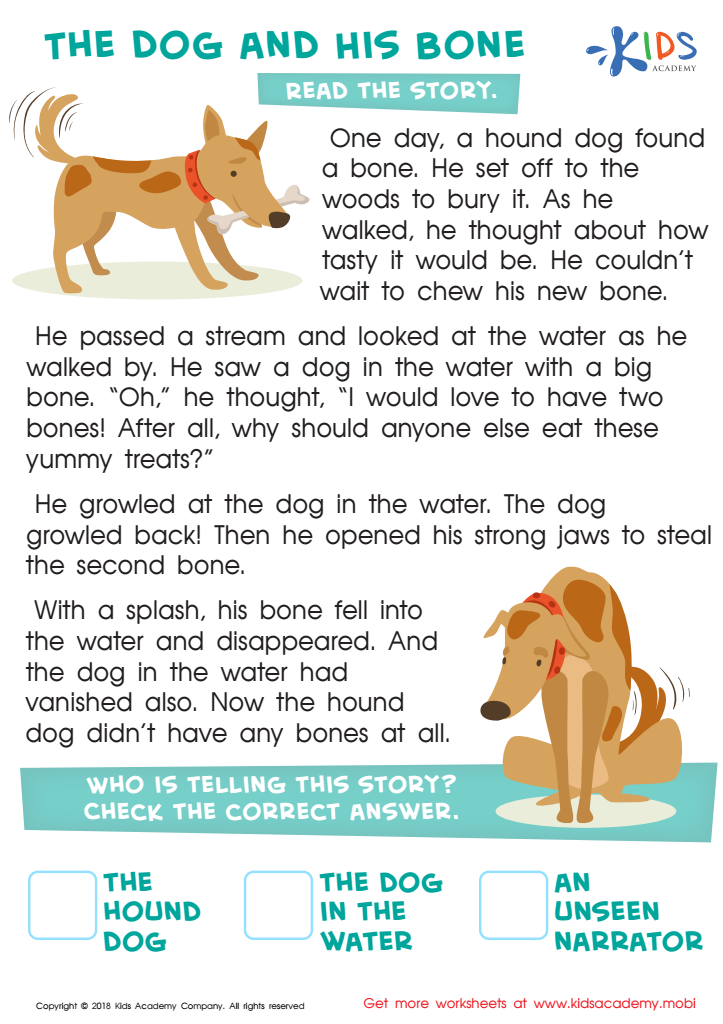
Read the story of The Dog and His Bone to your kids, making sure they take in the details. Ask them the questions in this worksheet and help them check the answers. Encourage them to think carefully.
The Dog and His Bone Worksheet
Worksheet
Learning Numbers Worksheets: Tracing And Writing Number 6 PDF

Tracing And Writing Number 6 Worksheet
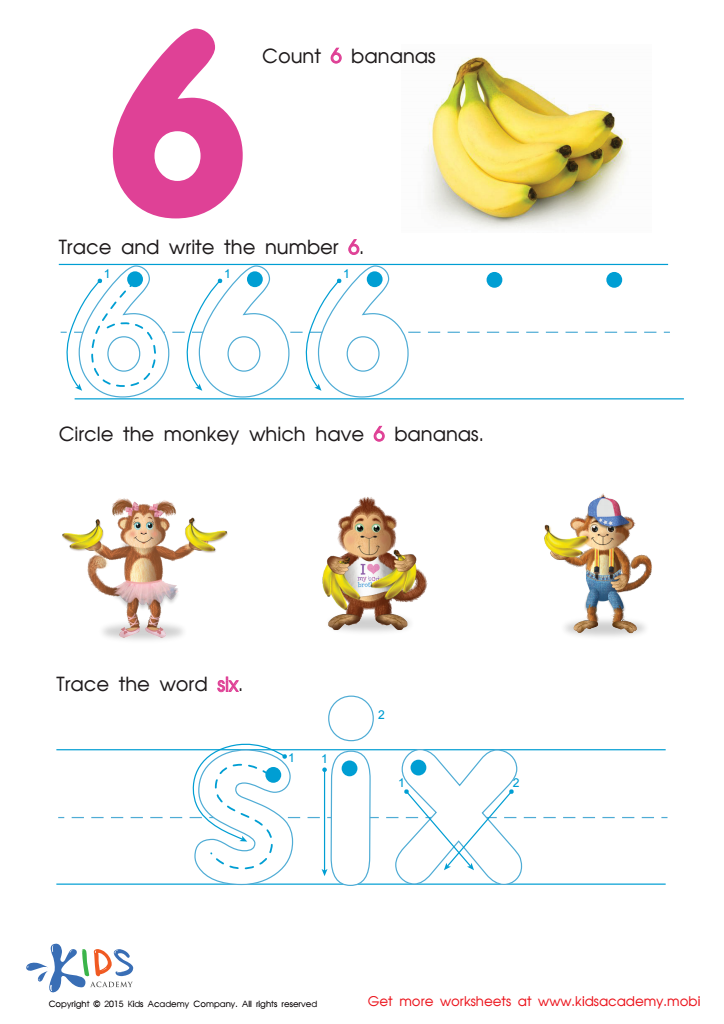
Learn numbers in a fun way with our preschool number worksheets. Count six bananas, trace and write the number, find the monkey with six bananas, and trace the word "six." Explore more activities at Kids Academy.
Tracing And Writing Number 6 Worksheet
Worksheet
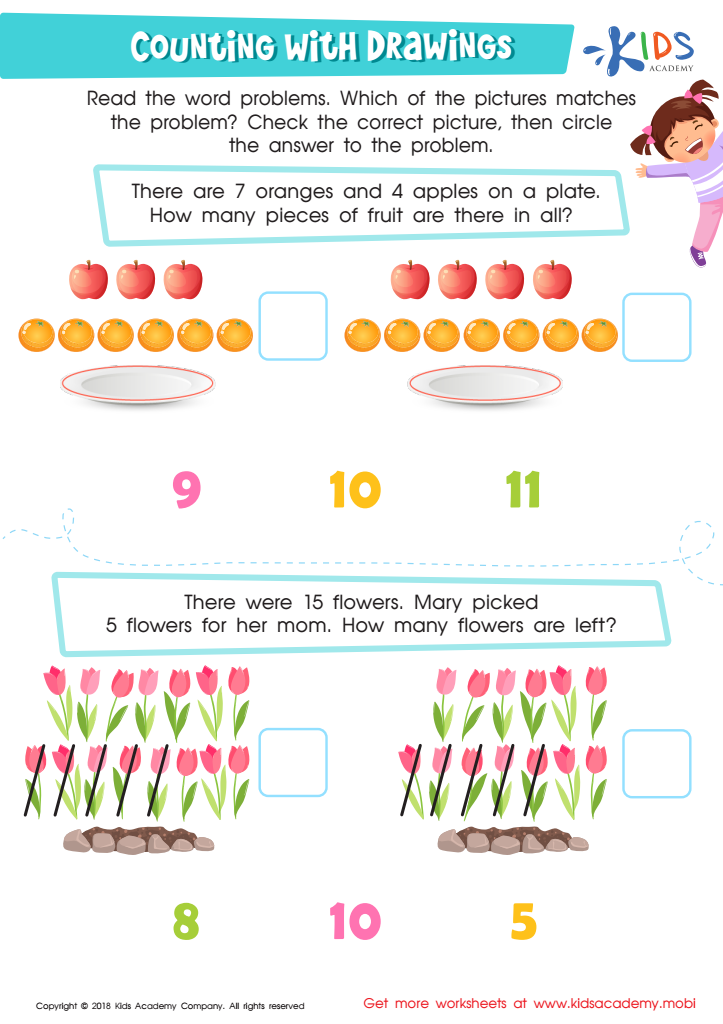
Counting with Drawings: Fruits & Chocolates Worksheet

Counting with Drawings: Fruits & Chocolates Worksheet

Learning basic addition and subtraction has never been easier with this free worksheet! Young mathematicians can sort & count to get the right sum or difference for each problem. Plus, they'll practice fine motor skills by circling the correct answer. An ideal way to help kids build important visual recognition and discernment skills.
Counting with Drawings: Fruits & Chocolates Worksheet
Worksheet
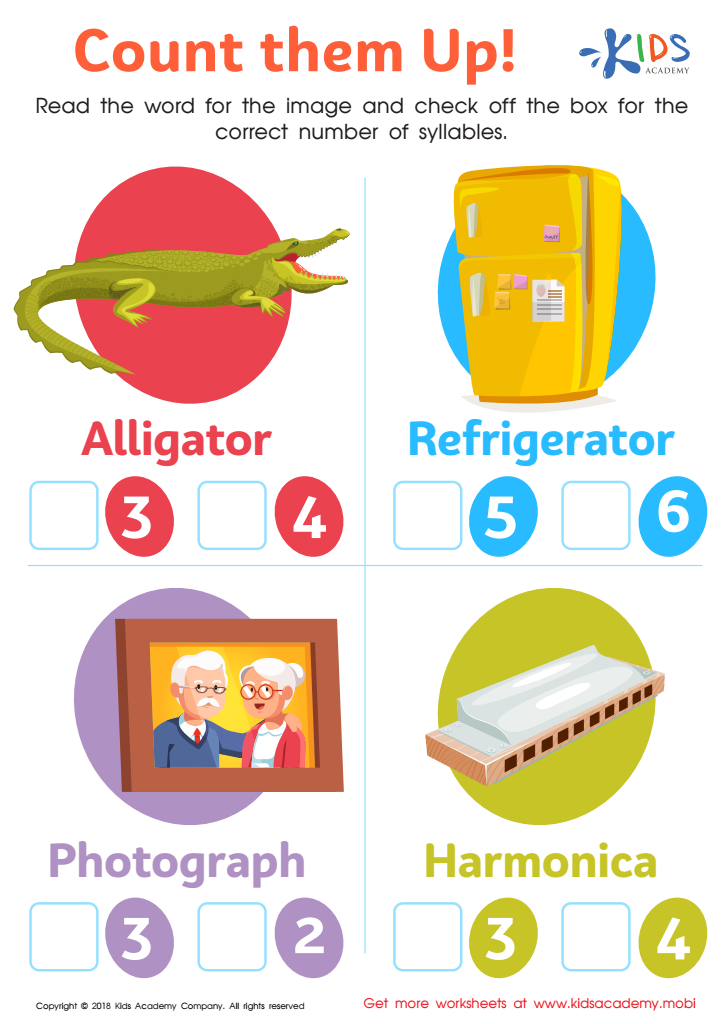
Count Them Up Worksheet

Count Them Up Worksheet

This worksheet has four colorful pictures. Ask your students to identify and name each image, then count the syllables in the word. Make them repeat the word after you, and check off the box with the correct number of syllables. Mastering the art of counting goes beyond numbers. Get your students counting syllables with this activity!
Count Them Up Worksheet
Worksheet
Chess Pieces Math Worksheet

Chess Pieces Math Worksheet

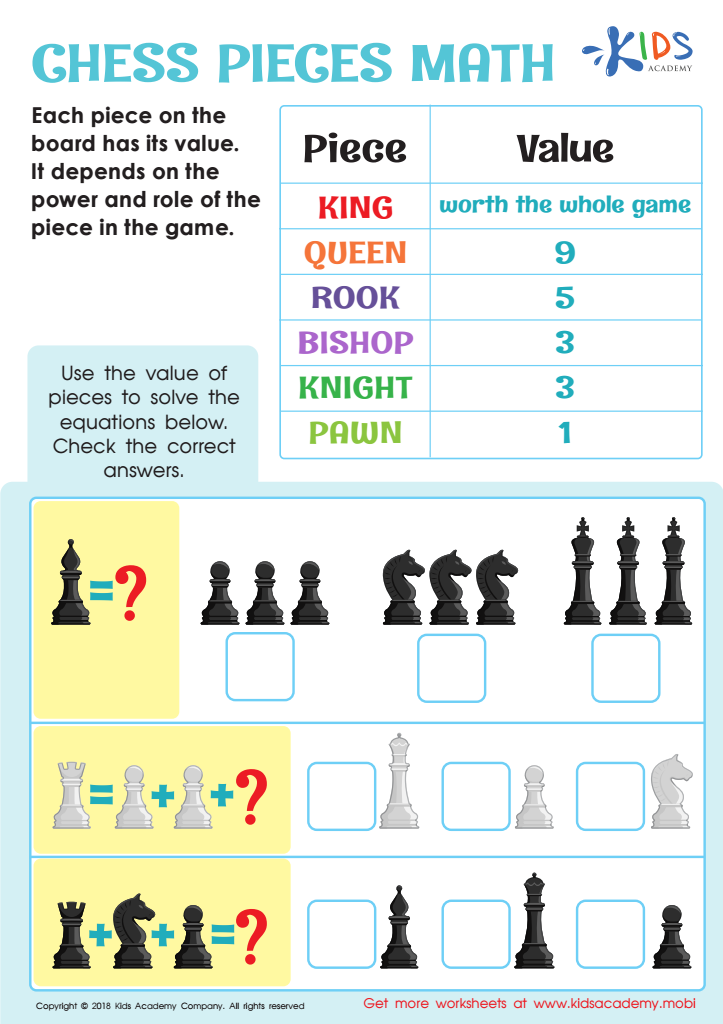
Chess involves math! Each piece has its own value, from the king (worth the entire game) to the queen (9 points), varying according to their power and role. In the worksheet, your child must use these values to solve the equations at the bottom.
Chess Pieces Math Worksheet
Worksheet
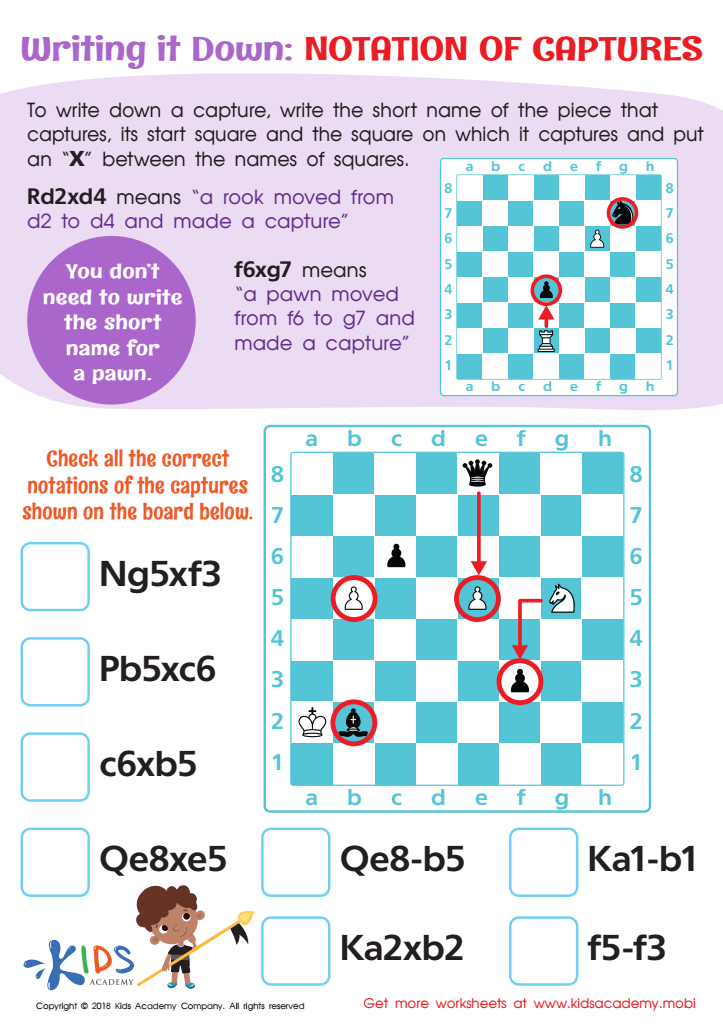
Notation of Captures Writing it Down Worksheet

Notation of Captures Writing it Down Worksheet

To teach students how to record captures in chess, use this worksheet. Write down the piece's short name, start sq., and the sq. where it captures, separating them with an X. For example, Rd2Xd4 means a rook moved d2 to d4 and took a piece. Pawn captures don't need a name.
Notation of Captures Writing it Down Worksheet
Worksheet
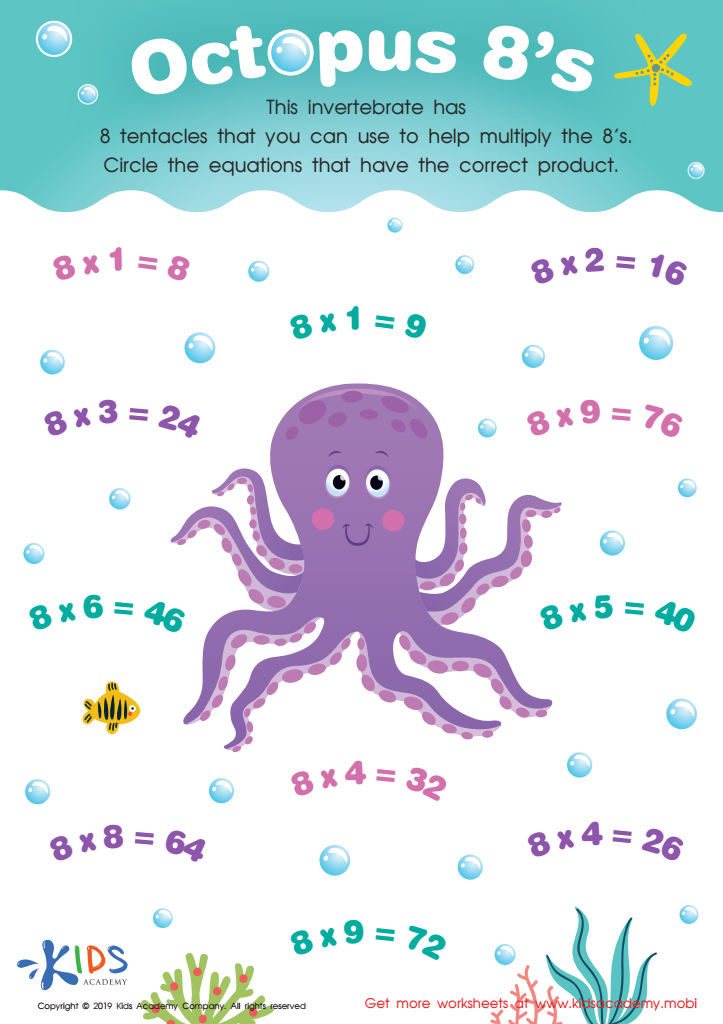
Octopus 8’s Worksheet

Octopus 8’s Worksheet

Can your child identify the octopus in the worksheet? It's an invertebrate with 8 tentacles. Have your child circle the equations with the correct products, and see if they can tell you some other features of the octopus too.
Octopus 8’s Worksheet
Worksheet


Counting practice is essential for 9-year-olds as it serves as a foundational skill for numerous aspects of mathematics and everyday life. At this age, children are transitioning from basic counting to more complex mathematical concepts, including addition, subtraction, multiplication, and division. Regular counting practice reinforces their number sense and strengthens their ability to comprehend these advanced concepts.

Moreover, counting develops critical thinking and problem-solving skills. Engaging children in activities that involve counting helps them learn to analyze and approach problems systematically. Additionally, counting practice can bolster confidence in their mathematical abilities, paving the way for positive attitudes towards math as they grow.

Counting is also vital in real-life applications, such as managing money, following recipes, and understanding time. When children grasp counting well, they are better prepared for future academic challenges and practical scenarios.

Lastly, it fosters a bond between parents and teachers when they engage in counting activities together, making learning interactive and fun. In summary, counting practice equips children with necessary skills, enhances cognitive development, and encourages positive dispositions towards mathematics—a crucial area in their educational journey.