Problem-Solving Skills Normal Geometry Worksheets for 9-Year-Olds
3 filtered results
-
From - To
Our "Problem-Solving Skills in Geometry" worksheets for 9-year-olds are designed to enhance critical thinking and analytical abilities in young learners. Tailored to meet standard learning objectives, these printable activities make geometry fun and engaging. Through a variety of challenging problems and interactive tasks, students learn to navigate shapes, angles, and geometric concepts. Our worksheets not only foster academic skills but also build confidence as children solve increasingly complex problems. Ideal for both classroom use and home practice, these resources are a great way to support and enrich your child's mathematical education. Explore and empower your child's problem-solving journey today!
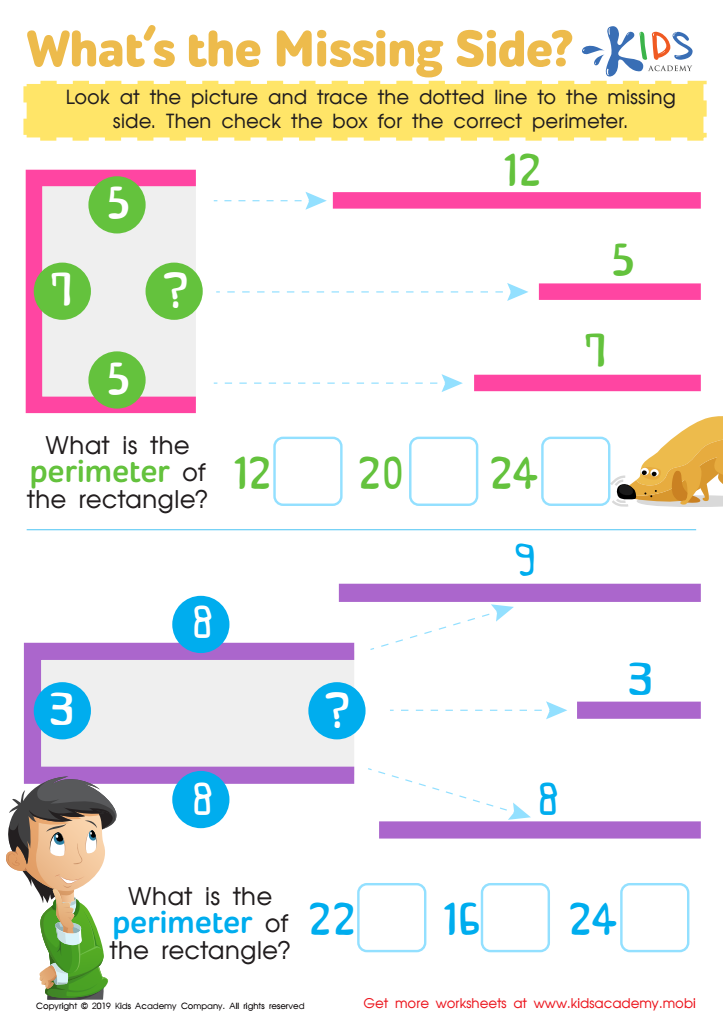
What's the Missing Side Worksheet
 Assign to My Students











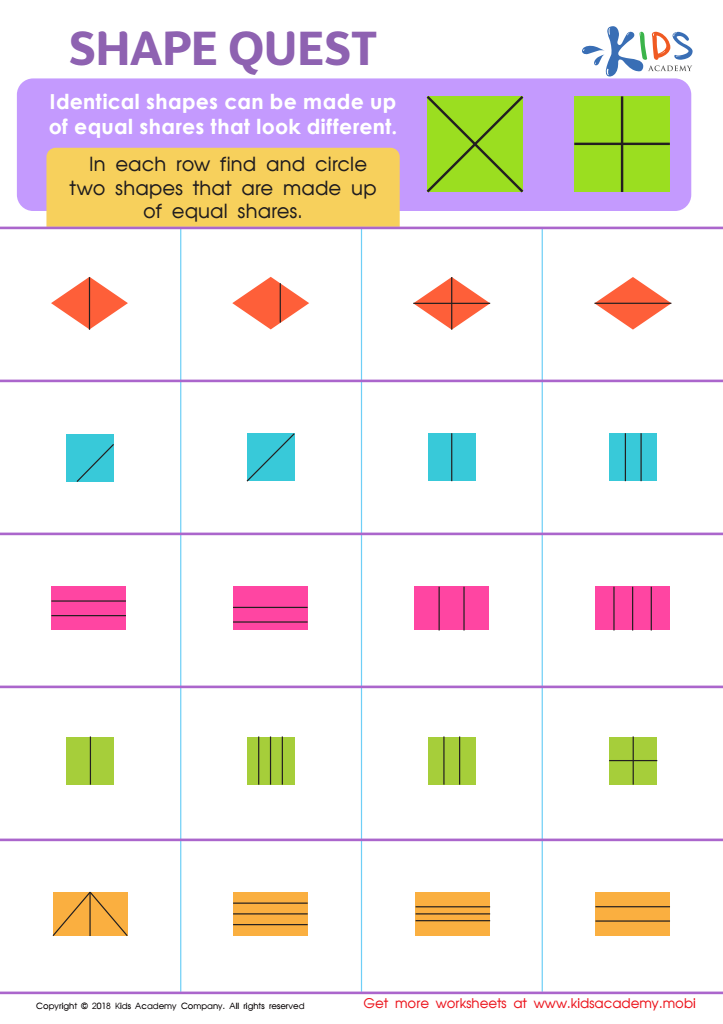
Shape Quest Worksheet
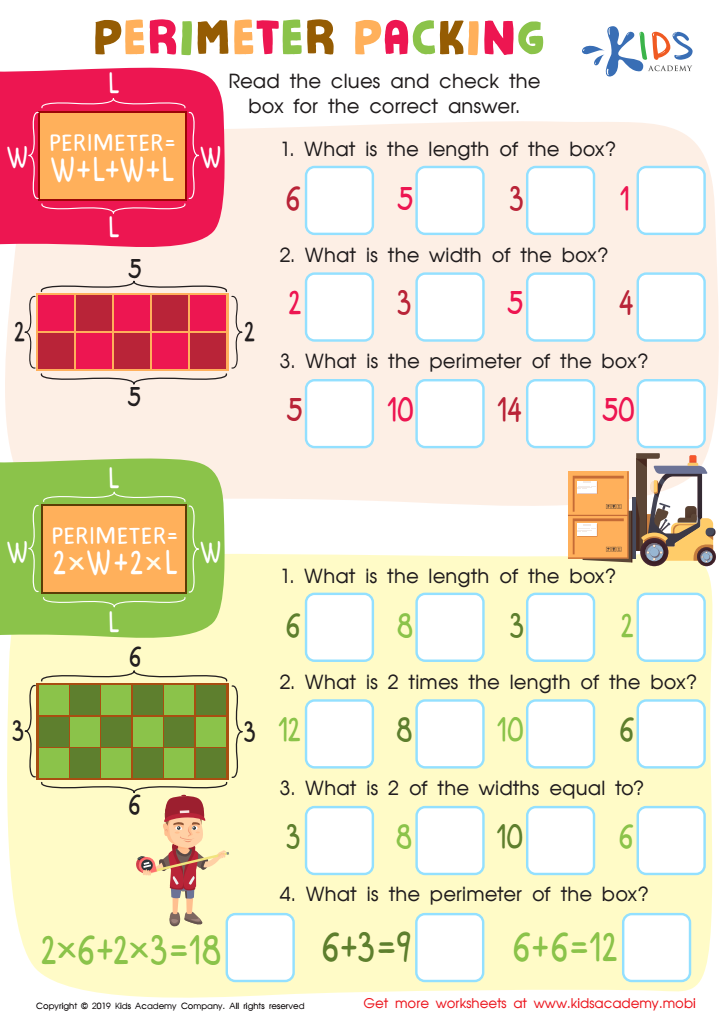
Perimeter Parking Worksheet








Problem-solving skills in normal geometry are crucial for 9-year-olds as they play a key role in developing logical thinking and spatial reasoning abilities. At this age, children are at a prime stage to enhance their cognitive skills, and geometry serves as an ideal medium to achieve this. When parents and teachers focus on these skills, they enable children to understand and interpret the world around them in a more structured and coherent way.
Geometry goes beyond knowing shapes; it involves reasoning and drawing conclusions based on given information. By engaging with geometry problems, children can develop critical thinking and analytical skills that are not only useful in math but also in everyday situations that require logical decision-making and problem resolution. For instance, figuring out how to share puppy treats evenly among friends or estimating how many books will fit on a particular bookshelf involves geometric thinking.
Additionally, solving geometry problems enhances perseverance and resilience as children learn to tackle challenges and refine their strategies. As they work through difficulties and celebrate successes, their confidence grows, cultivating a mindset oriented towards mastery and growth. Hence, nurturing problem-solving skills in geometry helps build foundational abilities that are essential for academic success and lifelong learning.
Parents and teachers play a pivotal role in encouraging and guiding children through this learning process, ensuring these young learners gain the benefits that geometry problem-solving has to offer.








