Handwriting practice Normal Tracing Numbers Worksheets for 9-Year-Olds
3 filtered results
Difficulty Level
Grade
Age
-
From - To
Subject
Activity
Standards
Boost your 9-year-old's handwriting skills with our Handwriting Practice Normal Tracing Numbers Worksheets. Specifically designed for young learners, these worksheets make learning numbers enjoyable and efficient. Featuring clear tracing guidelines, each page allows children to practice forming numerals with precision. The engaging activities not only help in mastering number shapes but also enhance fine motor skills and hand-eye coordination. Perfect for home or classroom use, these worksheets ensure that your child develops a solid foundation in both math and handwriting. Download now from Kids Academy and watch your child's confidence soar as they trace and learn!
Favorites
With answer key
Interactive
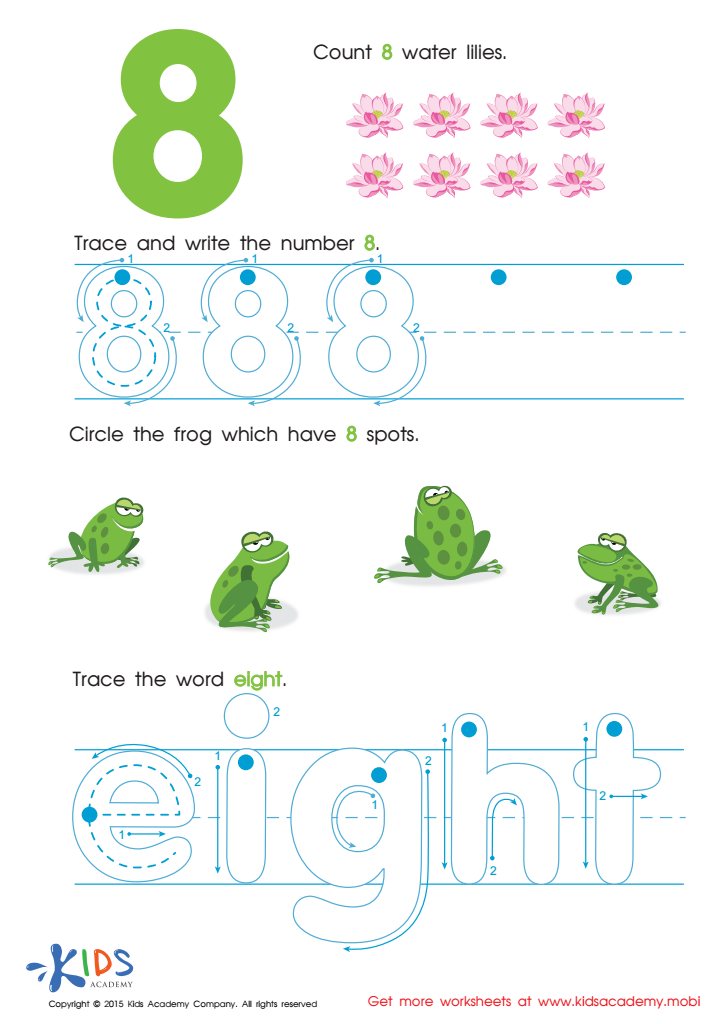
Learn Number 8 Easily Worksheet
Kids can trace, write numbers and learn to pronounce them through exciting activities and games. Try our number worksheets for preschoolers to make learning fun!
 Assign to My Students
Learn Number 8 Easily Worksheet
Worksheet
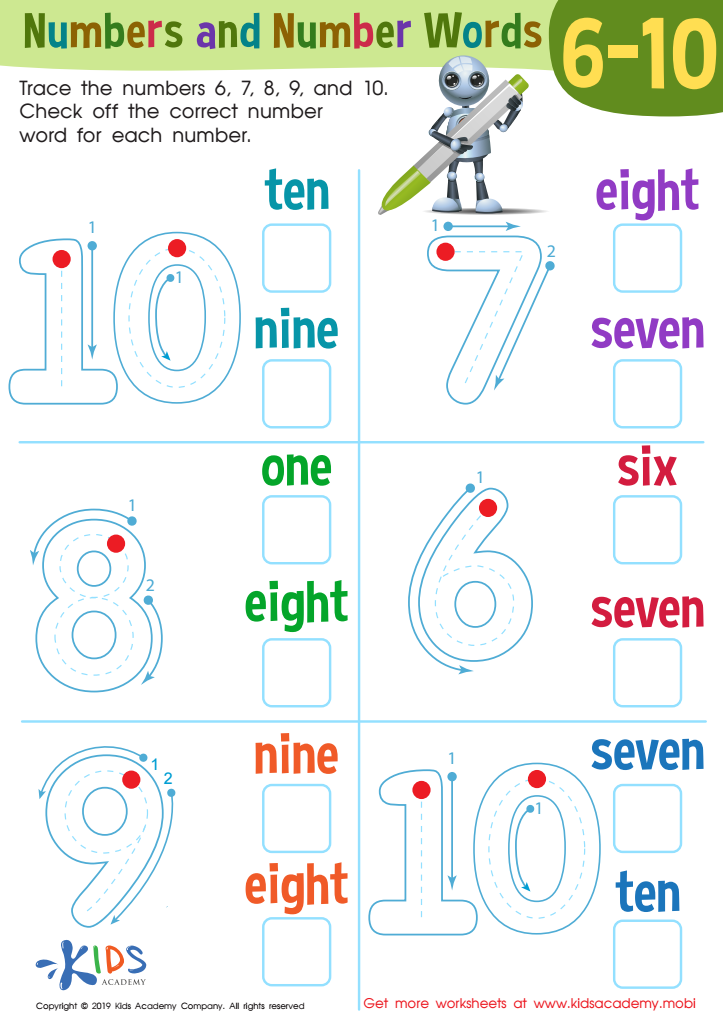
Numbers and Number Words 6–1 Worksheet
As children explore numbers and words, parents and teachers can help them learn to count and read with activities such as this worksheet. Here, the student traces numbers 6-10 and then selects the right number words to match. A fun and interactive way to learn!
Numbers and Number Words 6–1 Worksheet
Worksheet
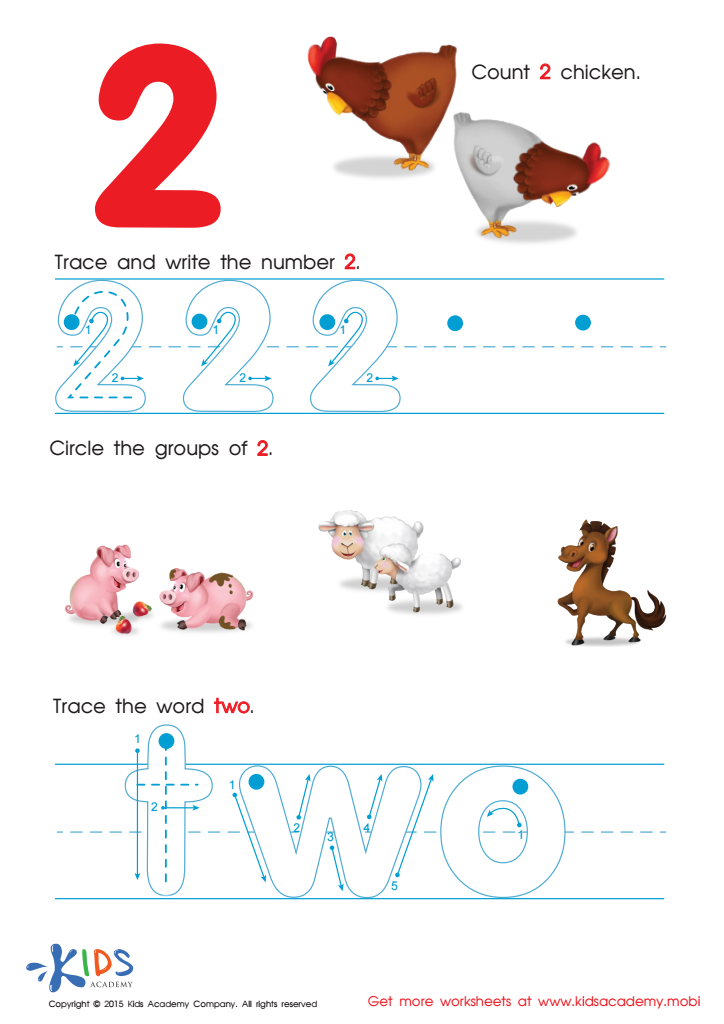
Learn to Write the Number 2 Worksheet
Teaching numbers should be fun! Ask your kids to count the two chicks, circle the groups of two among the animals, then trace and write the number and word. Get more fun worksheets from Kids Academy.
Learn to Write the Number 2 Worksheet
Worksheet
Join Kids Academy for Free
Who is primarily going to use this learning content?








Handwriting practice, particularly normal tracing numbers, is essential for 9-year-olds and merits high importance amongst parents and teachers. At this developmental stage, children are refining their fine motor skills and coordinating small muscle movements required for intricate tasks. Tracing numbers enhances these motor skills, improving hand-eye coordination and concentration. Consistency in handwriting also aids cognitive development; when children repetitively trace numbers, they reinforce their learning and understanding of numerical concepts.
Moreover, neat handwriting has practical benefits in a child’s academic life. Students with legible handwriting are often more confident in their written assignments, reducing instances of mislabeled work or misunderstood answers on tests due to poor penmanship. This confidence can positively impact their overall academic performance.
In addition, good handwriting can foster a sense of pride and achievement in children, boosting their self-esteem. The discipline and patience required for tracing numbers can also help instill valuable organizational skills and attention to detail, traits that will benefit a child well beyond their school years.
In essence, handwriting practice intricately connects motor skills, cognitive development, and personal growth, making it a fundamental activity that teachers and parents should value to support well-rounded development in 9-year-olds.