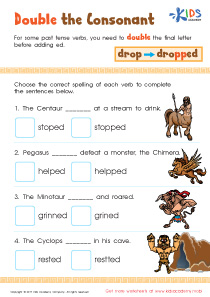
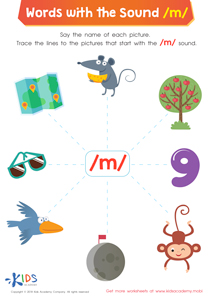
Word Recognition Normal Consonant Digraphs Worksheets
5 filtered results
-
From - To
Boost your child's reading skills with our "Word Recognition Normal Consonant Digraphs Worksheets." Designed for early learners, these engaging worksheets help students recognize and master consonant digraphs—two consonants that create a unique sound together. With a variety of activities, including matching, coloring, and word building, children will improve their phonetic awareness and expand their vocabulary. These worksheets serve as an effective resource for teachers and parents to reinforce reading fundamentals in a fun, interactive way. Encourage confidence in young readers today! Discover the joy of learning with our carefully crafted materials. Access and download your worksheets now!
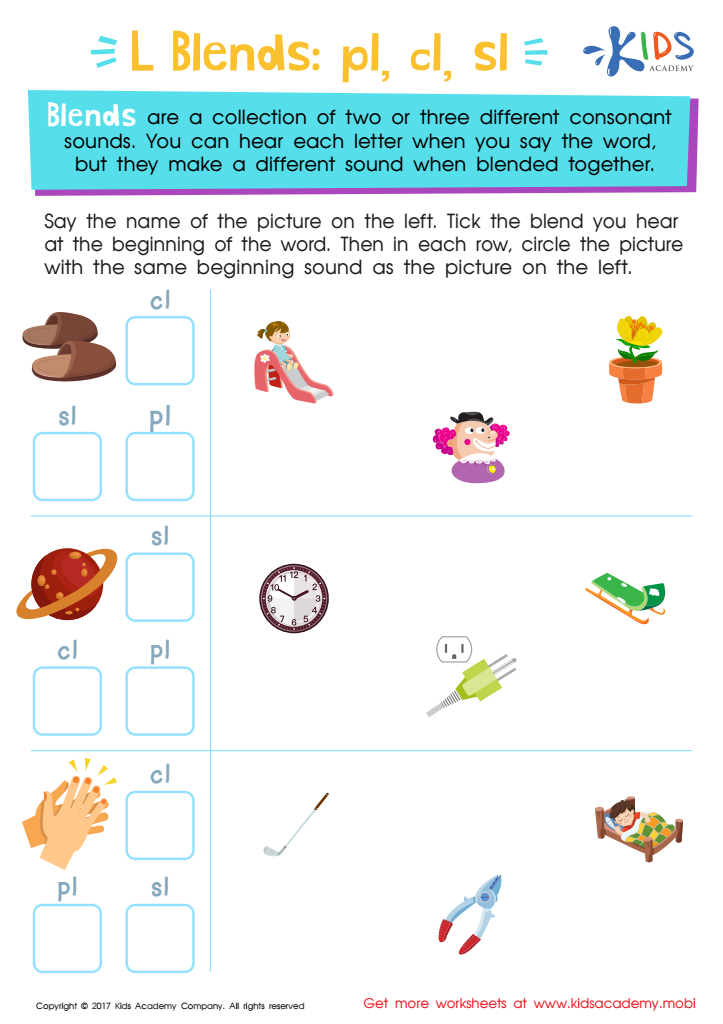
L Blends: "Pl", "Cl" and "Sl" Printable
 Assign to My Students
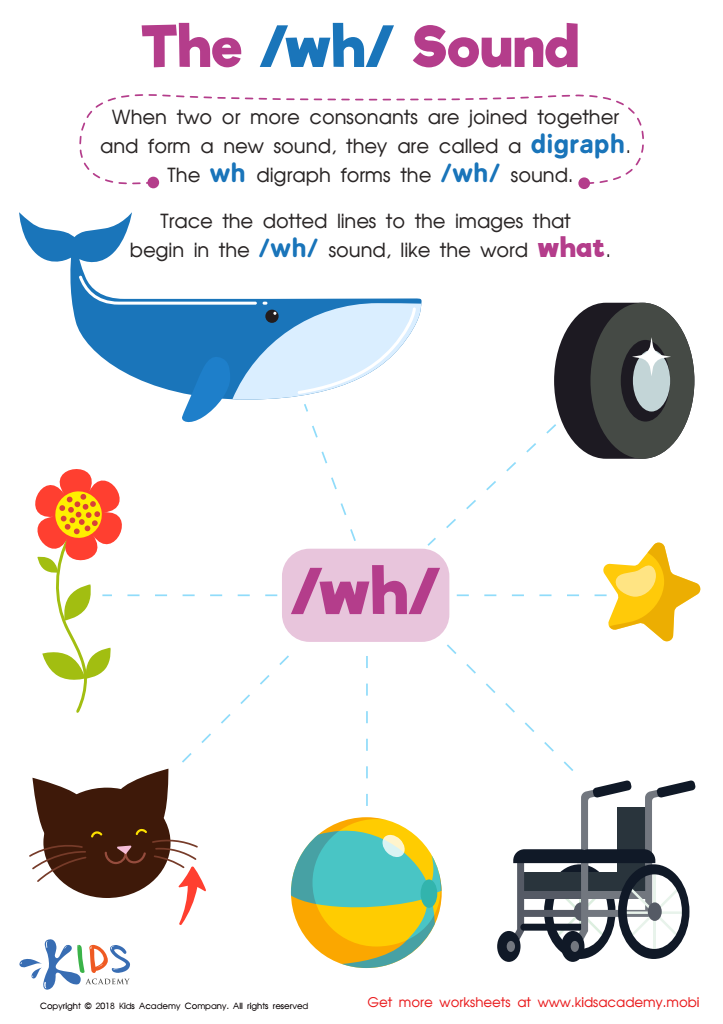
The /wh/ Sound Worksheet
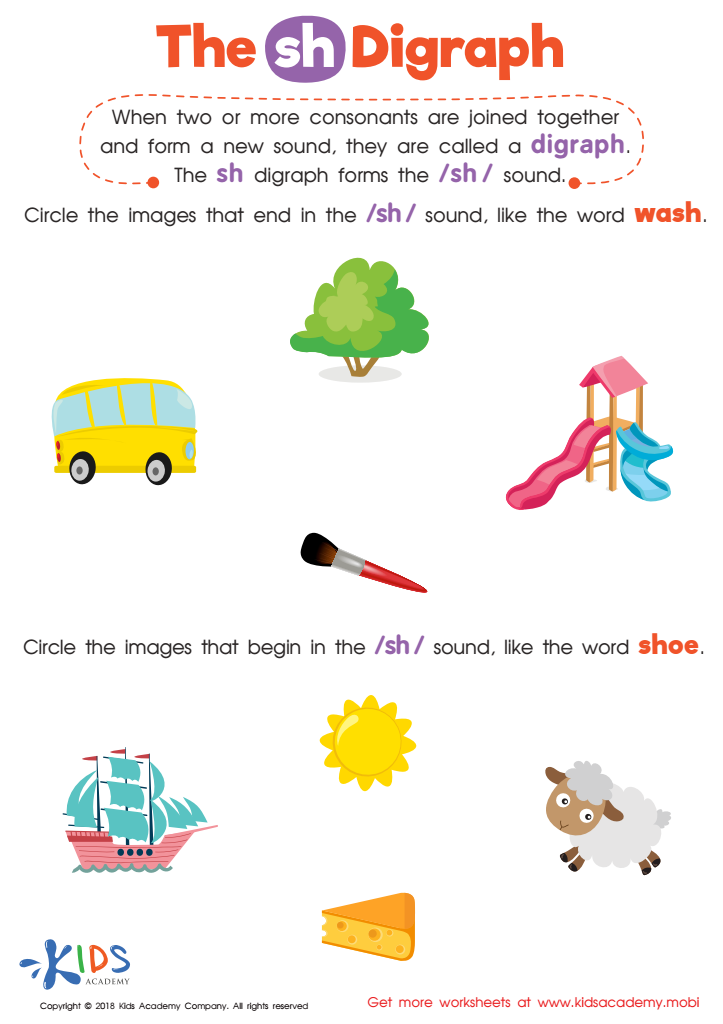
The SH Digraph Worksheet
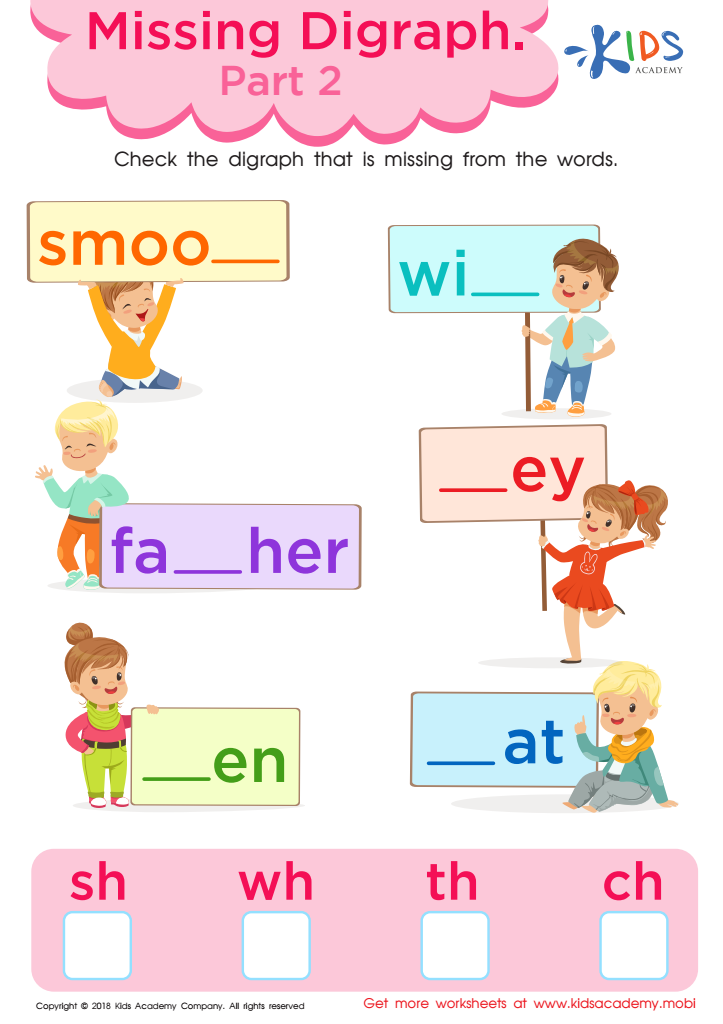
Missing Digraph: Part 2 Worksheet
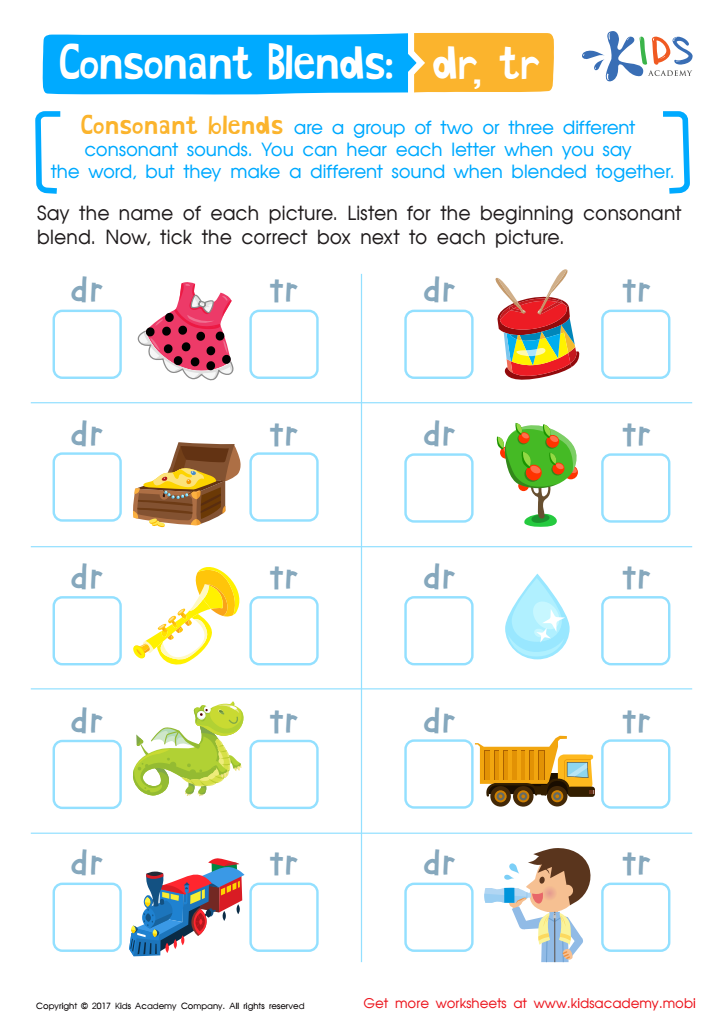
Consonant Blends: "Dr" and "Tr" Printable


Word recognition, particularly in the context of consonant digraphs, is essential for children's reading development. Consonant digraphs are pairs of consonants that create a unique sound, such as "sh" in "ship" or "ch" in "chair." Understanding these digraphs enhances children's phonemic awareness, which is a critical skill for proficient reading.
Parents and teachers should care about consonant digraphs because they lay a foundation for vocabulary building and reading fluency. Mastering these digraphs helps children decode unfamiliar words, improving their confidence when tackling new texts. A solid grasp of phonics facilitates reading comprehension, enabling children to focus on understanding content rather than struggling with word recognition.
Additionally, teaching consonant digraphs can make learning to read a more engaging experience. Incorporating interactive phonics games and activities captures children's attention and makes language learning enjoyable. By attending to the importance of word recognition and phonetic concepts, parents and teachers can support children in becoming proficient readers. This skill not only contributes to academic success but also nurtures a lifelong love for reading and learning, empowering students to explore ideas and grow in their literacy journeys.