Cognitive Development Normal Phonics Worksheets
6 filtered results
-
From - To
Unlock your child’s potential with our Cognitive Development Normal Phonics Worksheets. These expertly designed resources from Kids Academy support early learners in mastering essential phonics skills. Each worksheet features engaging activities that enhance cognitive development, boost reading abilities, and solidify understanding of letter sounds and word formation. Tailored for young minds, these printables provide a solid foundation for future reading success through fun and interactive learning. Ideal for both classroom and home use, our phonics worksheets make learning lively and effective, empowering children to excel in their phonetic mastery with confidence. Discover the joy of learning today!
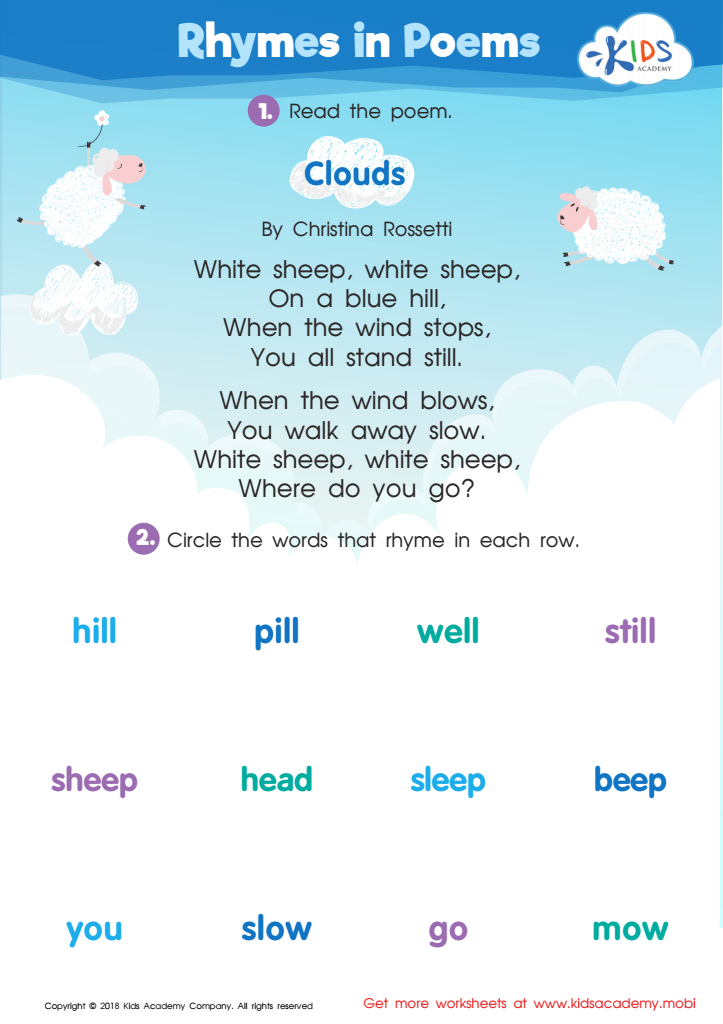
Rhymes in Poems Worksheet
 Assign to My Students
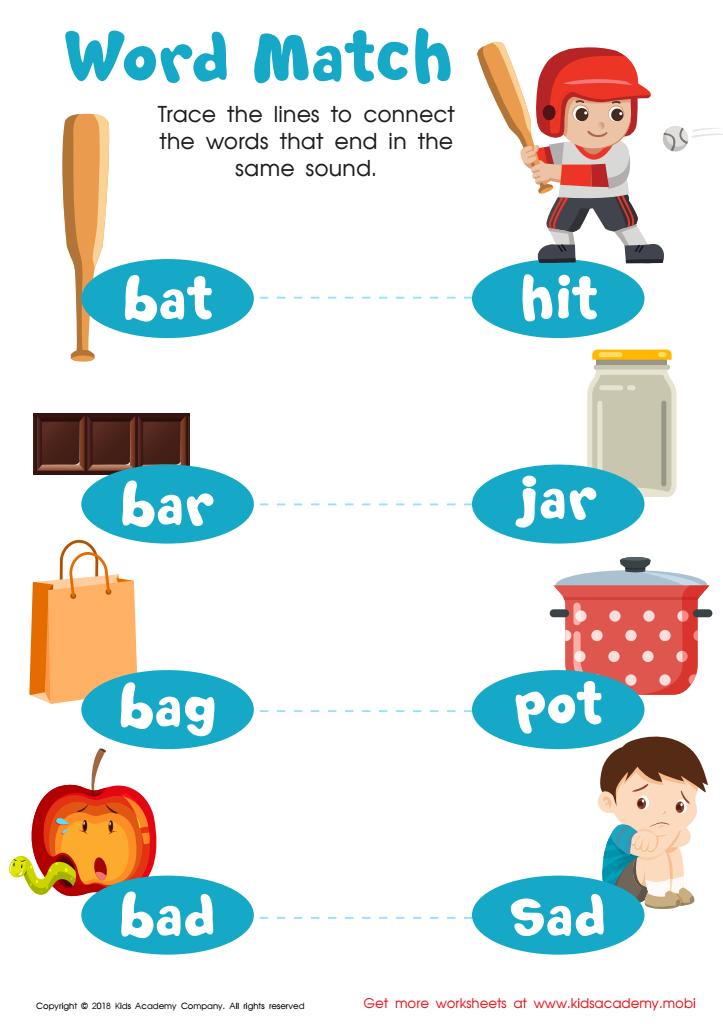
Word Match Reading Worksheet
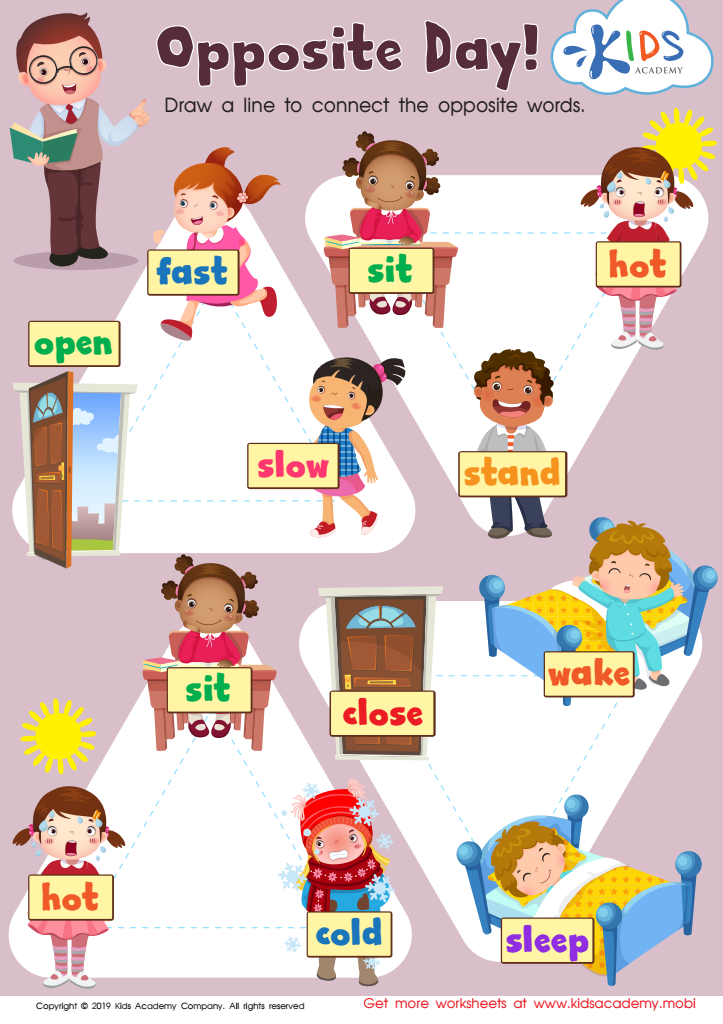
Opposite Day Worksheet
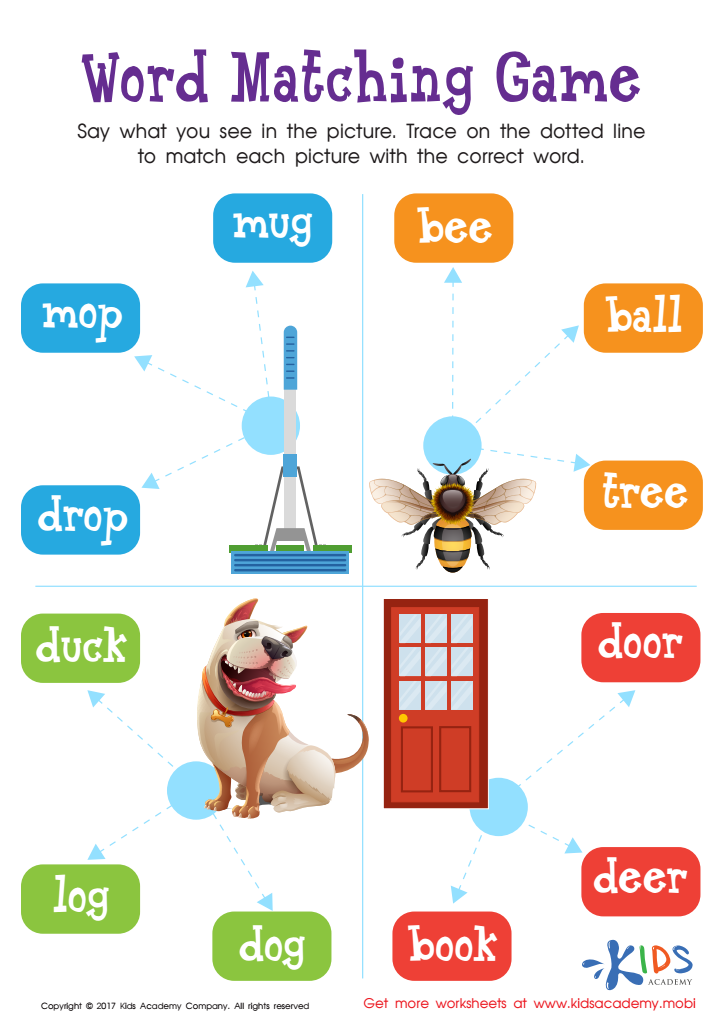
Word Matching Game Worksheet
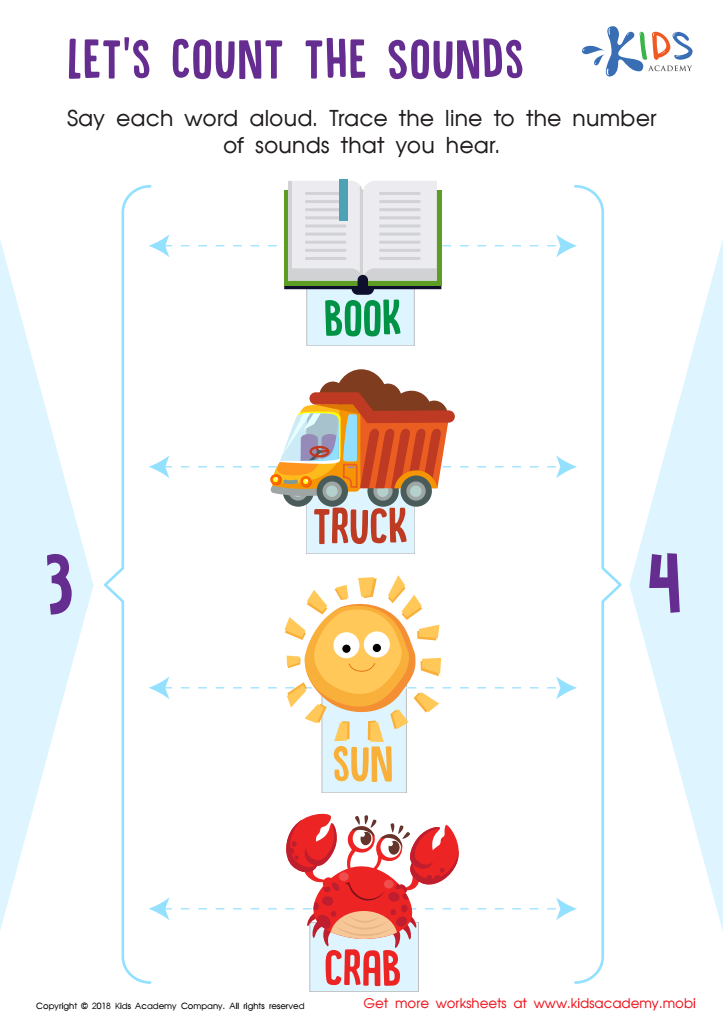
Let's Count the Sounds Worksheet
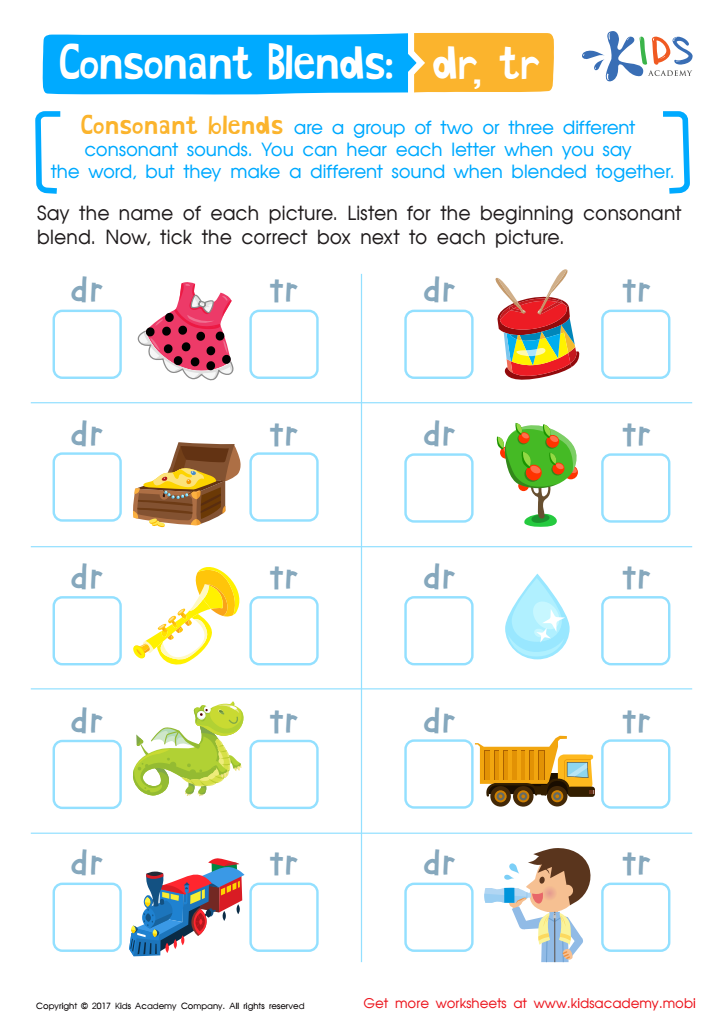
Consonant Blends: "Dr" and "Tr" Printable








Parents and teachers should care about cognitive development and normal phonics because these foundations are crucial for a child's academic and lifelong success. Cognitive development encompasses essential skills such as memory, attention, problem-solving, and the ability to process information, all of which are necessary for learning and understanding the world. For young children, the development of these skills directly influences their language acquisition and ability to perform everyday tasks.
Phonics, a method of teaching reading based on sound-letter relationships, is integral to language development. It helps children decode words, improving their reading fluency and comprehension. Mastery of phonics enables children to tackle new words independently, fostering confidence and a love for reading. Reading proficiency is closely linked to success in other academic areas such as mathematics, science, and social studies.
Moreover, early identification of struggles in cognitive development or phonics can lead to timely interventions, preventing future learning difficulties. For these reasons, paying attention to cognitive development and phonics allows parents and teachers to support children more effectively, creating a solid foundation for academic achievement and cognitive growth. This investment in a child’s early years paves the way for a lifelong positive learning trajectory.







