
Letter-sound recognition Normal Phonics Worksheets
4 filtered results
Difficulty Level
Grade
Age
-
From - To
Subject
Activity
Standards
Unlock your child’s reading potential with our Letter-Sound Recognition Normal Phonics Worksheets! Designed for early learners, these worksheets promote phonemic awareness by encouraging kids to connect letters with their corresponding sounds. Engaging and interactive activities allow students to practice identifying and pronouncing letter sounds in a fun, hands-on manner. Your child will gain confidence as they master the essential skills needed for literacy development. Our user-friendly format makes it easy for parents and teachers to track progress and reinforce learning at home or in the classroom. Dive into a world of phonics fun today and watch your little reader thrive!
Favorites
With answer key
Interactive
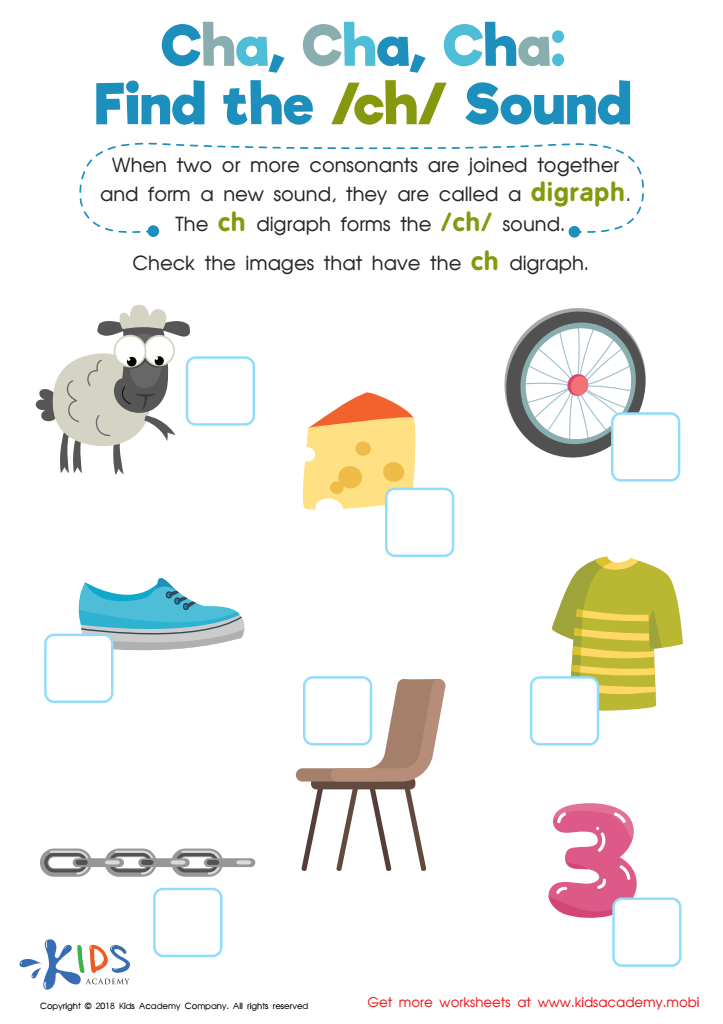
Cha, Cha, Cha: Find the /Ch/ Sound Worksheet
Have your students identify the objects in the images and if they struggle, help them check for the /ch/ digraph. This digraph forms a new sound when two or more consonants are combined, so it can be helpful to point it out to them in the colourful printout.
 Assign to My Students
Cha, Cha, Cha: Find the /Ch/ Sound Worksheet
Worksheet
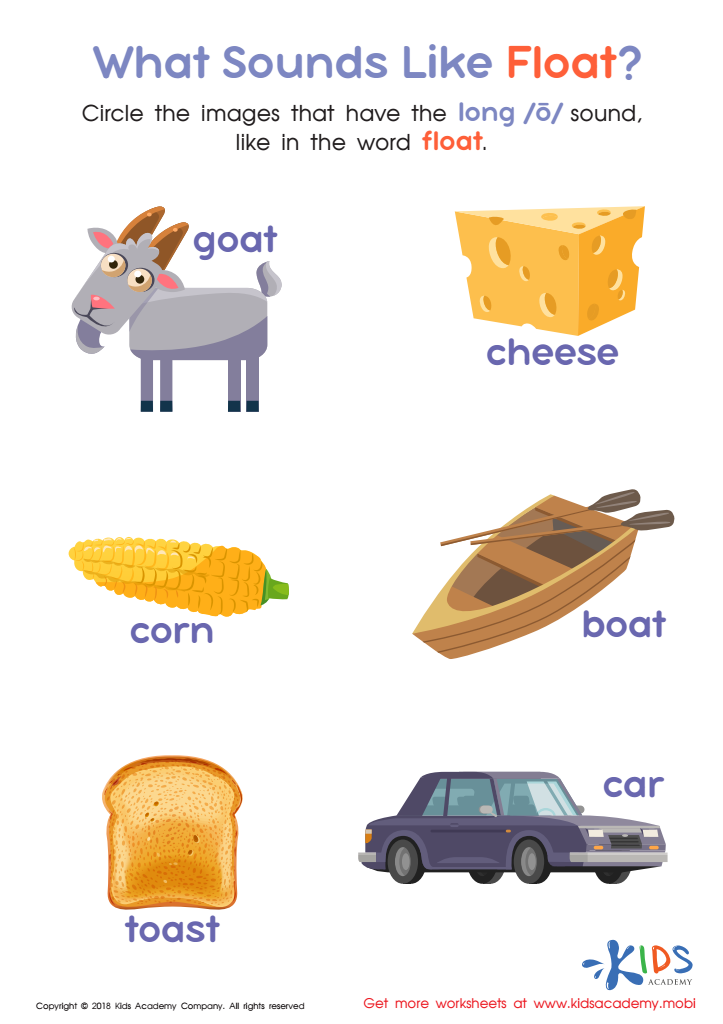
What Sounds Like Float? Worksheet
Help your kids practice the long /o/ sound with words such as 'boat', 'goat' and 'float'. Ask them to identify and circle the images in the worksheet that have the same sound. Award bonus points if they come up with more words with 'oa' spelling!
What Sounds Like Float? Worksheet
Worksheet
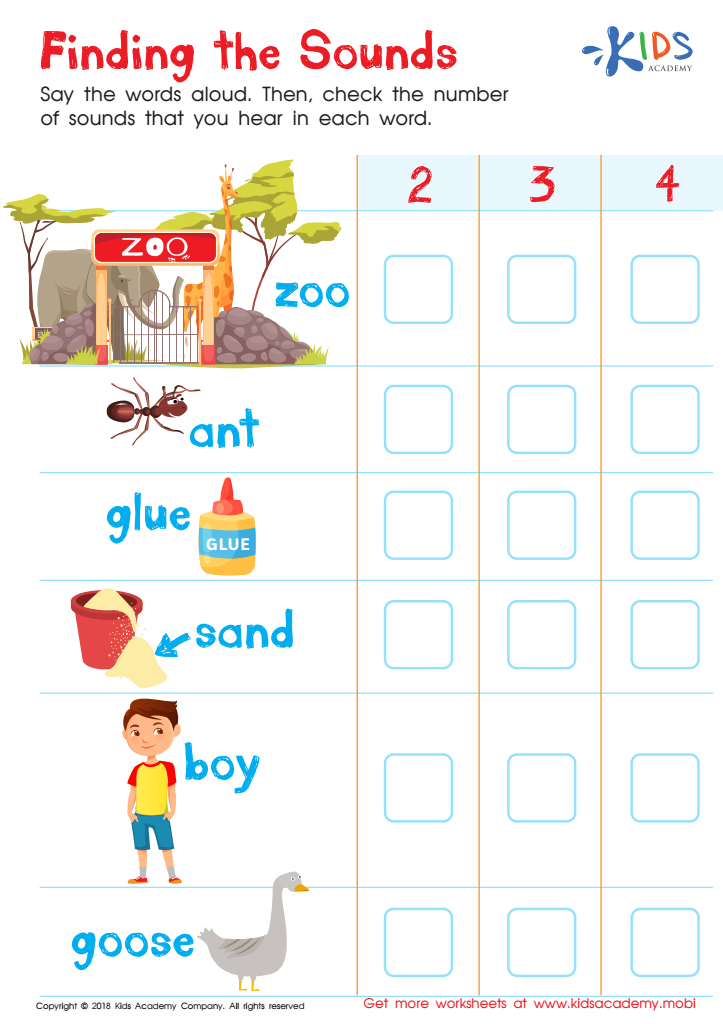
Finding the Sounds Worksheet
This free colorful worksheet assists children in learning words and breaking them down into sounds. It boosts auditory discrimination, phonological awareness and fine motor skills. Picture clues help them read confidently, and they can check the appropriate boxes to practice their reading skills.
Finding the Sounds Worksheet
Worksheet
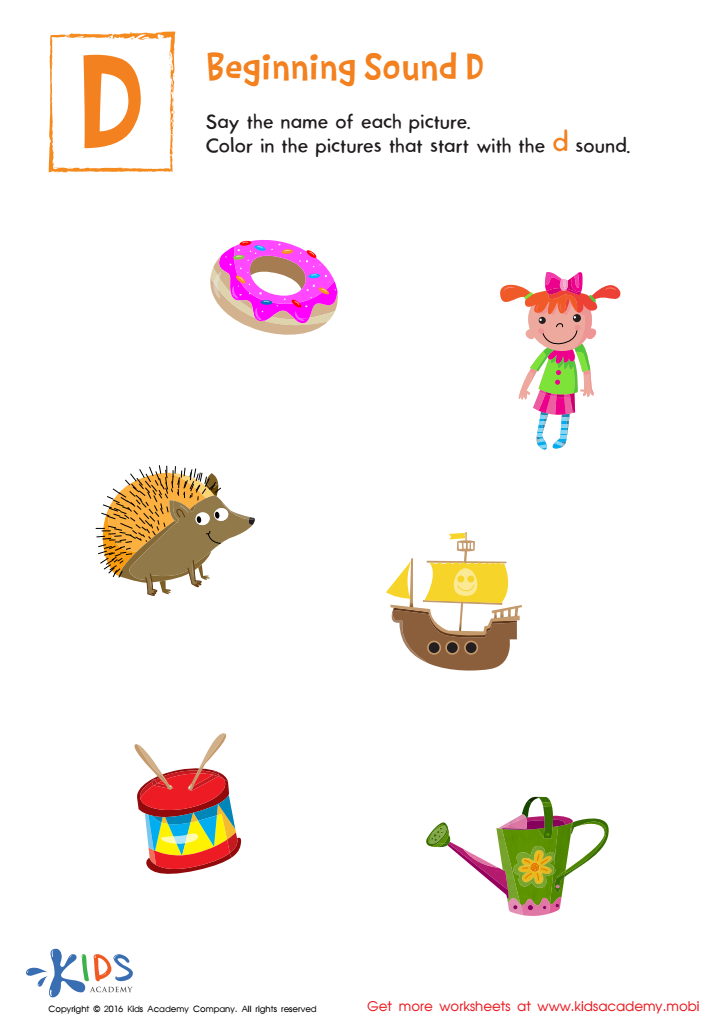
Beginning Sound D Worksheet
Reinforce phonics with this vibrant beginning sound d worksheet! Pictures help kids identify words beginning with 'd' and develop early reading skills. Sounding out each word increases literacy!
Beginning Sound D Worksheet
Worksheet
Join Kids Academy for Free
Who is primarily going to use this learning content?








Letter-sound recognition is a crucial aspect of early literacy that enables children to decode words and develop reading skills. Understanding phonics—the relationship between letters and their corresponding sounds—is essential in helping young learners read fluently and comprehend text. Parents and teachers should prioritize this skill because it lays the foundation for effective reading.
Mastering letter-sound recognition allows children to break down unfamiliar words into manageable parts, enhancing their ability to read independently. This skill also helps foster confidence in children when approaching new texts, ultimately nurturing a love for reading. Furthermore, knowledge of phonics supports spelling and writing, as it encourages children to manipulate sounds and letters.
In today’s digital age, where literacy is more important than ever, parents and teachers must cultivate strong reading skills early on. Early intervention in phonics education can prevent future literacy challenges and close achievement gaps for struggling readers. Additionally, children who enjoy reading tend to perform better academically across subjects, fostering lifelong learning.
In summary, letter-sound recognition through Normal Phonics is essential for developing proficient readers, and integrating this focus into early education can have far-reaching benefits for children’s overall success.







