Filters

9 filtered results

Clear all filters
Favorites
With answer key
Interactive

9 filtered results

Difficulty Level

Grade


Our "Letter Recognition Normal Tracing Letters Worksheets" are designed to help young learners master the alphabet. Each worksheet provides engaging activities for children to practice letter tracing, aiding in the development of fine motor skills and boosting writing confidence. With clear instructions and age-appropriate challenges, kids enjoy learning as they trace uppercase and lowercase letters. These worksheets are perfect for both classroom and at-home practice, ensuring a fun and effective way to reinforce letter recognition and early literacy skills. Start your child’s educational journey with our expertly designed tracing letters worksheets!

Check out this FREE Normal Trial Lesson on Tracing Letters!

L

Favorites
With answer key
Interactive
  • Letter recognition
  • Tracing Letters
  • Normal
Letter P worksheets
Letter P worksheets

Letter P Tracing Page

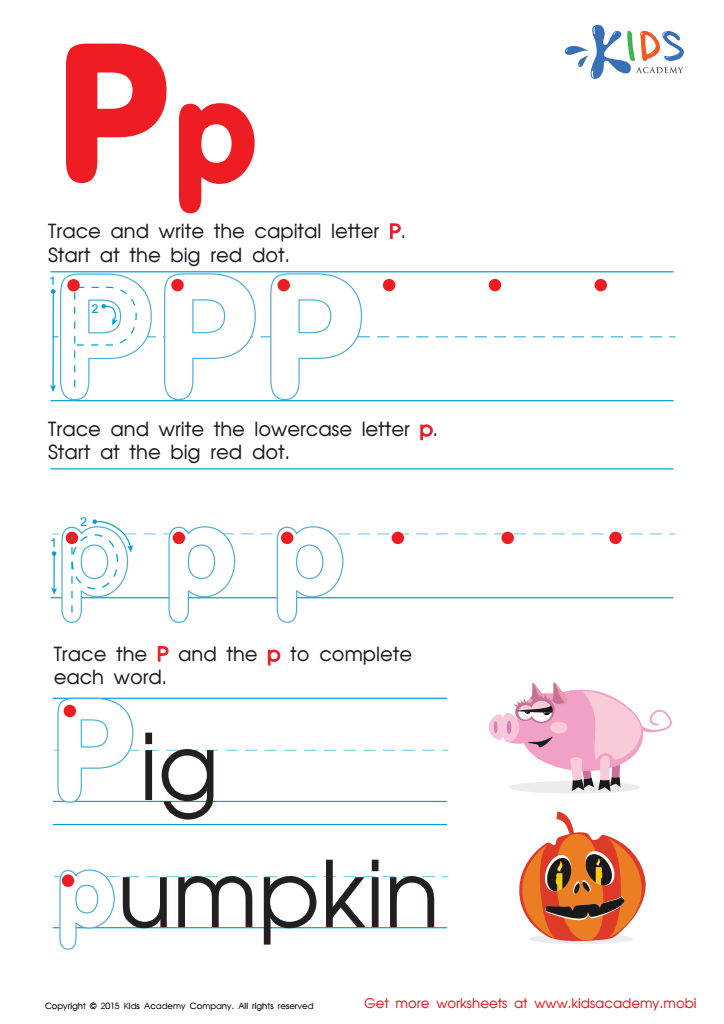
Trace the lines from the red dot to learn to write "P"! Then practice this letter with the fun activities: complete the word "Pig" and "Pumpkin". Check out Kids Academy to get more free ABC worksheets.
Letter P Tracing Page
Worksheet
Letter Q worksheets
Letter Q worksheets

Letter Q Tracing Page

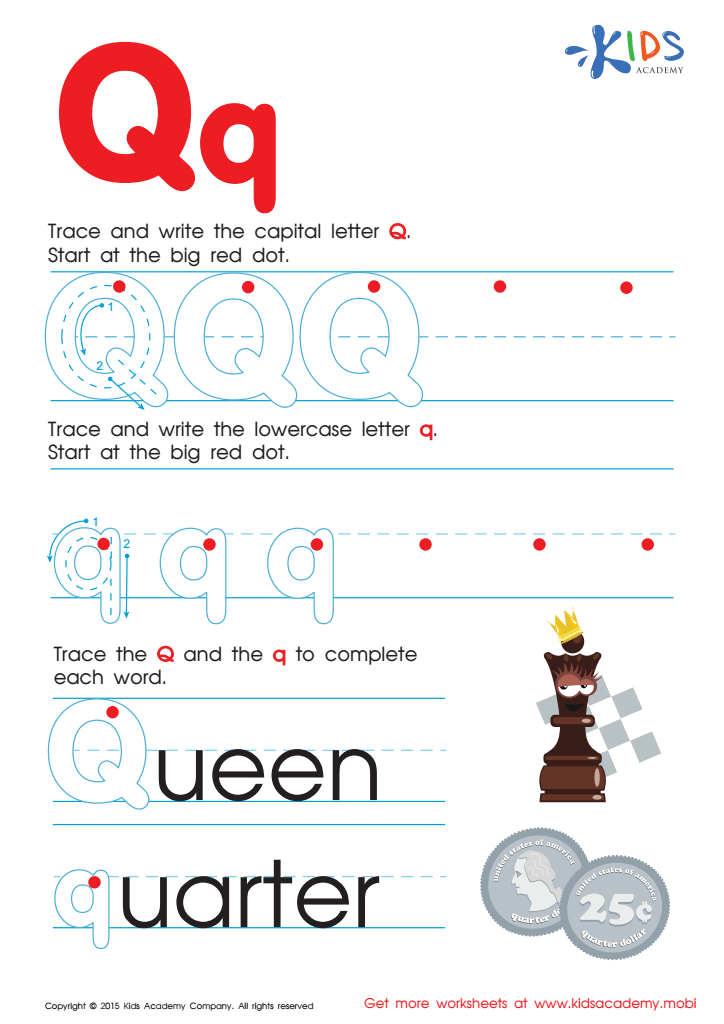
Learn the letter "Q"! Trace and write it a few times in upper and lowercase. Then help the Queen by writing her initial letter. Finally, write "quarters" and practice with more alphabet worksheets.
Letter Q Tracing Page
Worksheet
Letter H worksheets
Letter H worksheets

Letter H Tracing Page

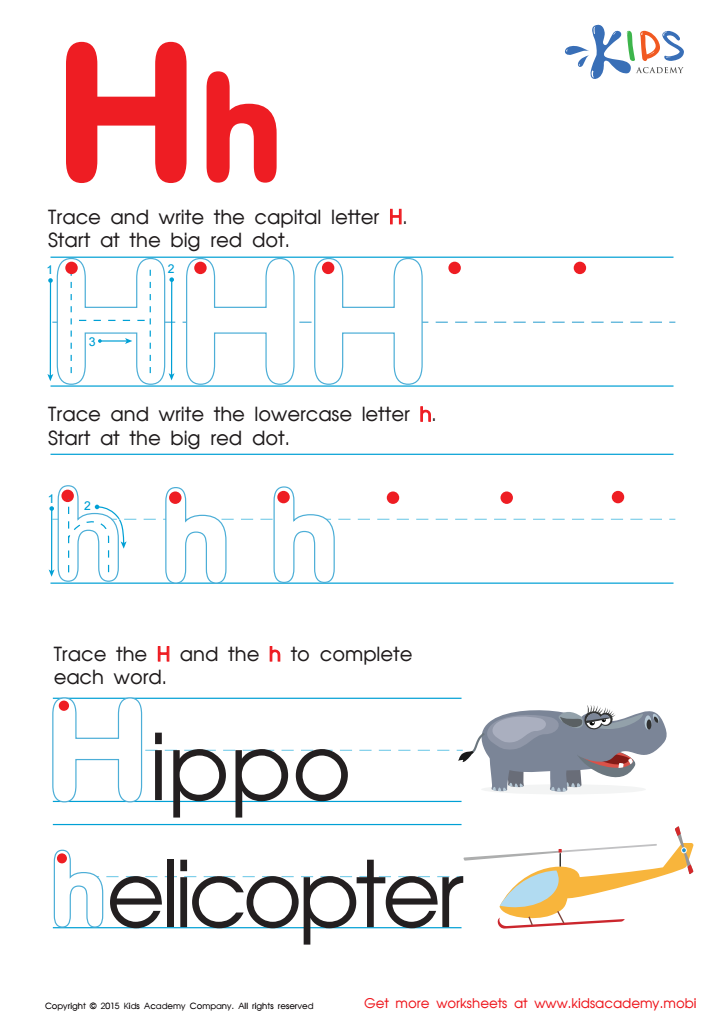
Trace the letter "H", then practice writing its lowercase form. Finally, choose your favorite form of transport and ride away! Get our worksheets to make learning fun and easy.
Letter H Tracing Page
Worksheet
letter G worksheets
letter G worksheets

Letter G Tracing Page

Get ready to trace the letter "G" – with a big red spot as the starting point, trace the lines and watch the letter appear. Uppercase and lowercase letters are both easy and fun to write. Give it a go and finish the word "go". Play the guitar and say "hello" to a funny ghost!
Letter G Tracing Page
Worksheet
Letter L worksheets
Letter L worksheets

Letter L Tracing Page

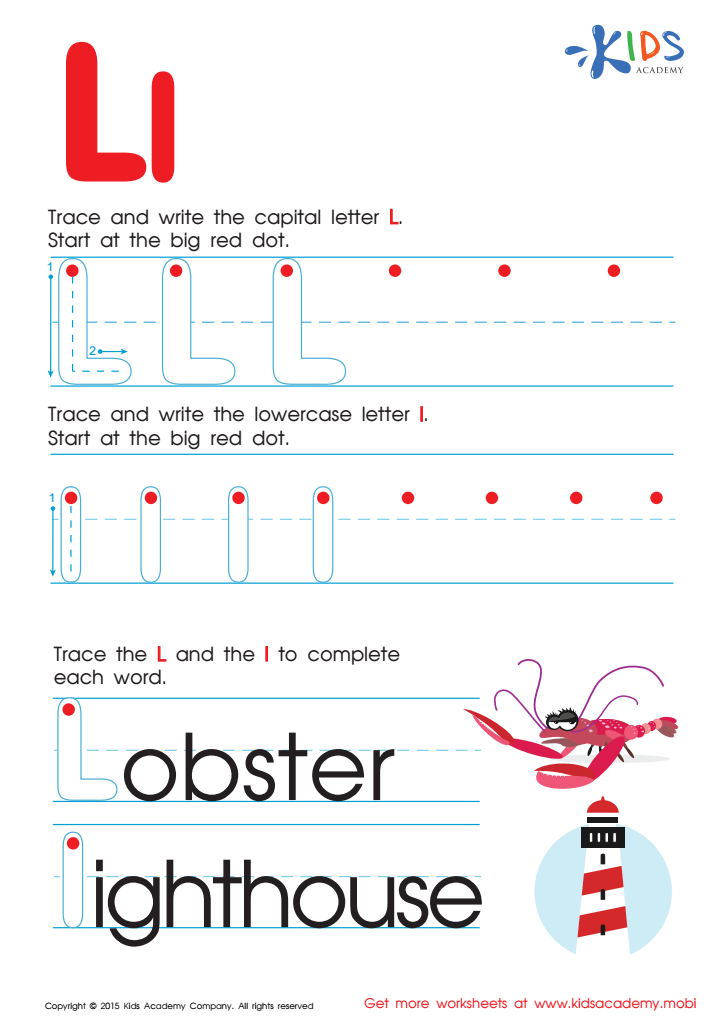
Trace uppercase and lowercase letters to practice writing. Pay attention to the lowercase letters, like the "L", that are not as tall as an uppercase "I" or as short as a lowercase "i". Words like "lobster" and "lighthouse" are waiting to be completed. Enjoy!
Letter L Tracing Page
Worksheet
Letter A Tracing Worksheet Preview

Letter A Tracing Worksheet

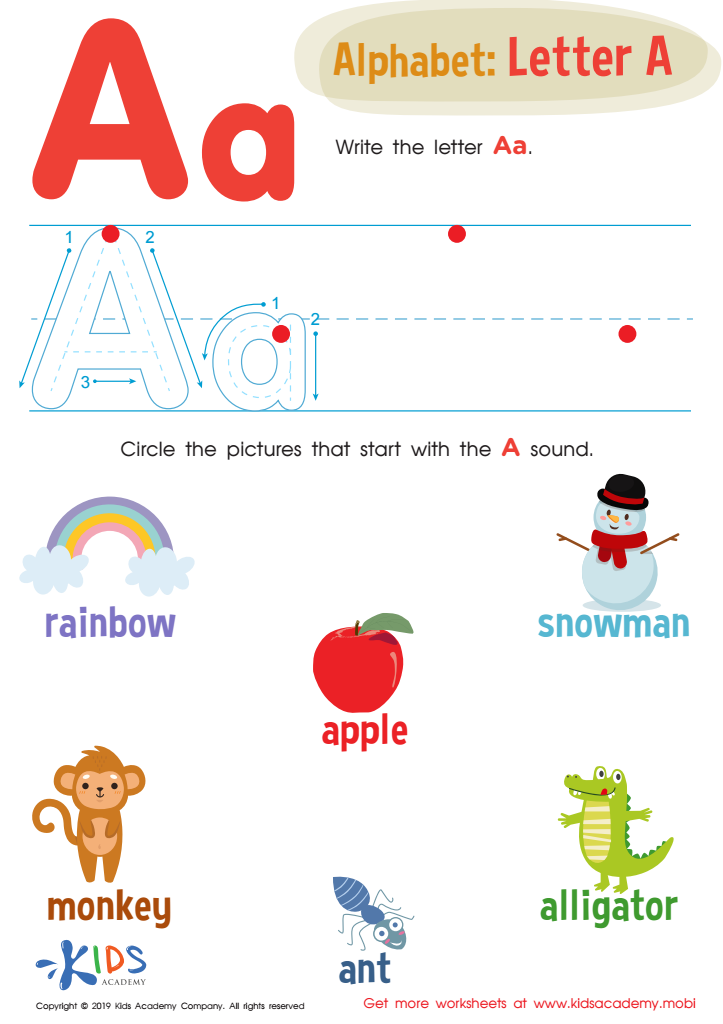
Learning the letter "A" is essential. This worksheet helps kids trace and write it, boosting their skill. They also circle pictures with the "A" sound, with both the word and picture provided. This helps them learn how to pronounce words like "apple" correctly.
Letter A Tracing Worksheet
Worksheet
Letter K worksheets
Letter K worksheets

Letter K Tracing Page

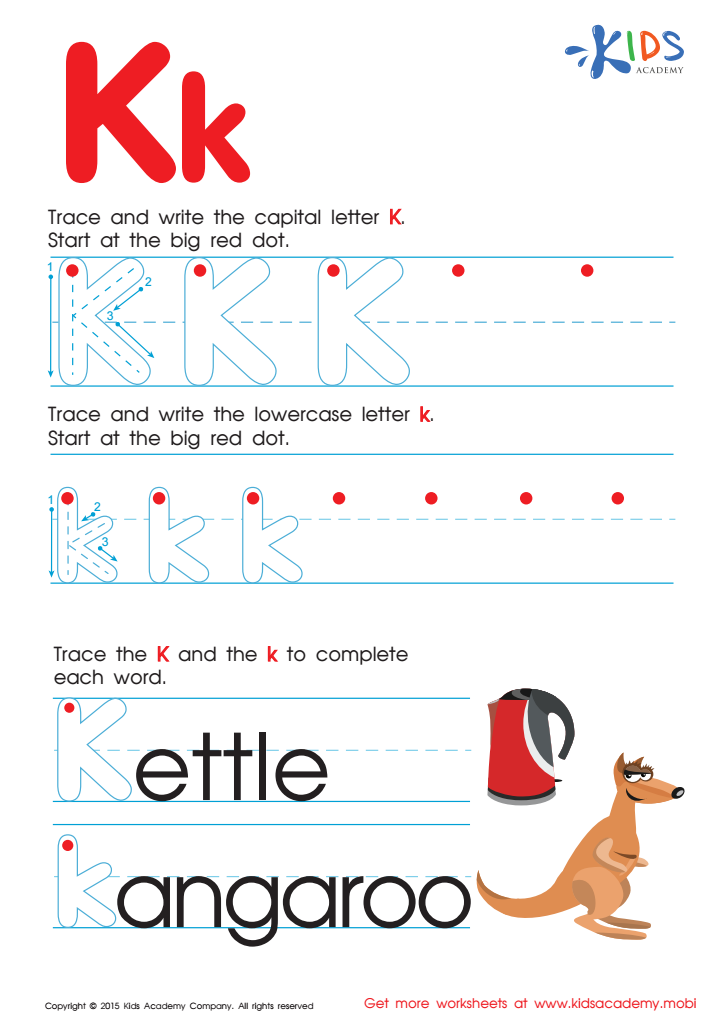
Trace and write the letter K; start at the big red dot. Use it to complete words like "Kettle" and "Kangaroo". Visit Kids Academy for more free alphabet worksheets for kindergarten.
Letter K Tracing Page
Worksheet
letter F worksheets
letter F worksheets

Letter F Tracing Page

Trace "F" with your pencil! Start at the red dot and draw lines — it's fun! Check it out — it looks great! Keep practicing to make it even better. Then, try completing words. Help out the broken fan and funny frog! Get free alphabet worksheets and activities for your kids. Come see our new tracing pages!
Letter F Tracing Page
Worksheet
letter d worksheets
letter d worksheets

Letter D Tracing Page

Trace and write capital and lowercase letter "D" with our free printable alphabet worksheet! Be careful not to mix up "b" and "d" - just look at the ducks and write their first letter. The dolphin wants to join the fun too - do you like dolphins? Get more fun worksheets and activities at Kids Academy!
Letter D Tracing Page
Worksheet


Letter recognition and normal tracing letters are fundamental steps in early literacy for children, providing the bedrock upon which they build reading and writing skills. Parents and teachers should prioritize this aspect of education for several key reasons.

Firstly, letter recognition is crucial for successful reading development. When children can identify letters, including their names and sounds, they begin to understand the alphabetic principle—the concept that letters and combinations of letters create sounds, leading to word formation. This understanding is a prerequisite for developing phonemic awareness, where they recognize and manipulate the sounds in words.

Secondly, tracing letters enhances fine motor skills and hand-eye coordination. As children trace, they engage the small muscles in their hands crucial for writing. This practice not only helps them become more comfortable with forming each letter but also prepares them physically to handle the demands of writing longer phrases and sentences as they progress in school.

Lastly, these activities instill confidence and a sense of accomplishment. Successfully recognizing and tracing letters can excite and encourage young learners, fostering a positive association with learning and schooling. This motivational effect can be vital as children face progressively challenging educational tasks.

In essence, by ensuring children master letter recognition and tracing, parents and teachers lay a solid, multifaceted foundation for future academic success.