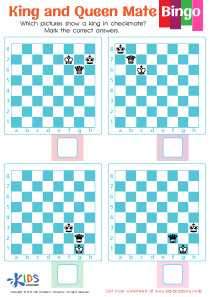
Chess strategy understanding Normal Chess Worksheets
3 filtered results
-
From - To
Unlock your child's potential with our Chess Strategy Understanding worksheets at Kids Academy. Tailored for young minds, these worksheets enhance critical thinking, problem-solving, and strategizing skills. Through engaging activities, kids learn key chess concepts, board positioning, opening tactics, and strategic moves in a fun, interactive way. Ideal for beginners and budding chess enthusiasts, our comprehensive worksheets offer a step-by-step guide to mastering chess strategies. Empower your child to become a confident and competent player while enjoying a stimulating educational experience. Explore our Chess Strategy Understanding worksheets and boost your child's intellectual growth today!
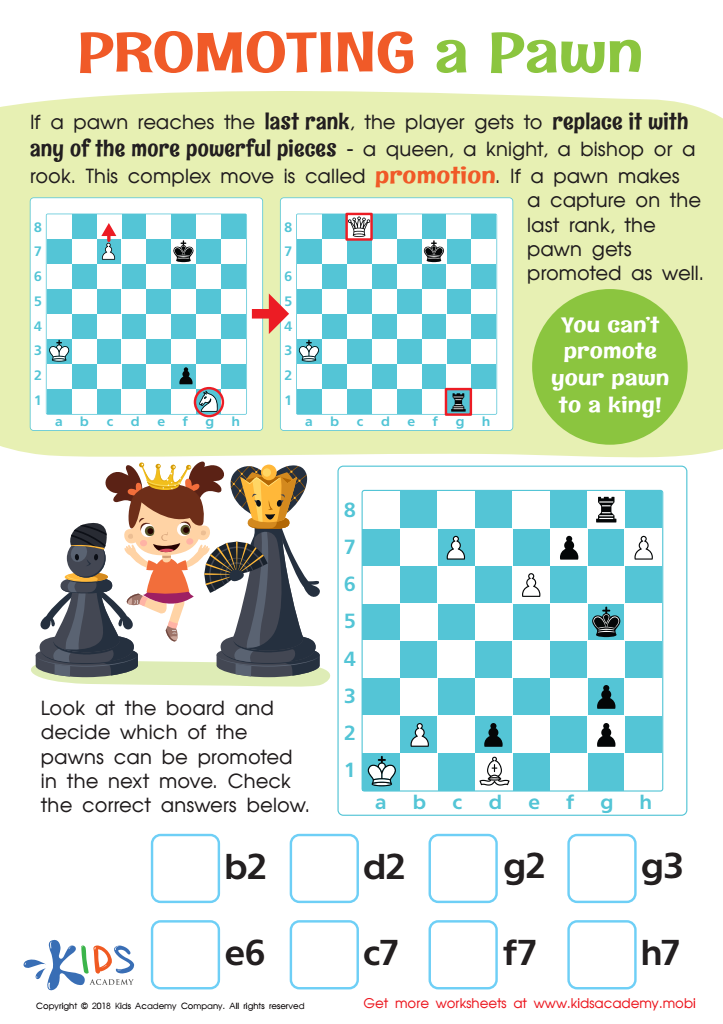
Promoting a Pawn Worksheet
 Assign to My Students
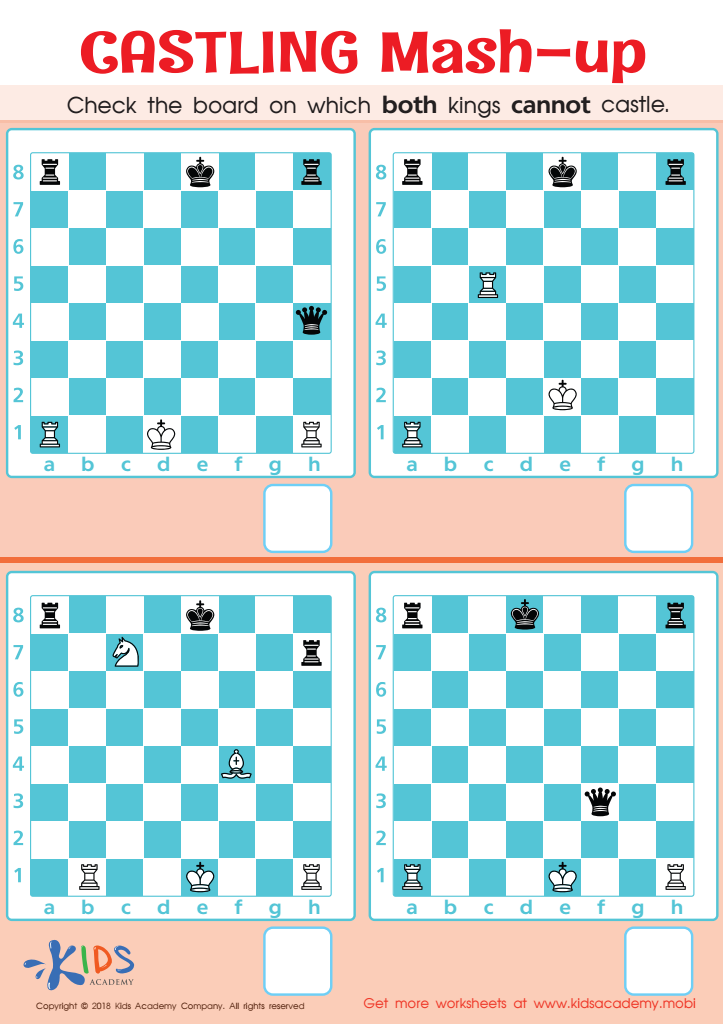
Castling Mash–up Worksheet
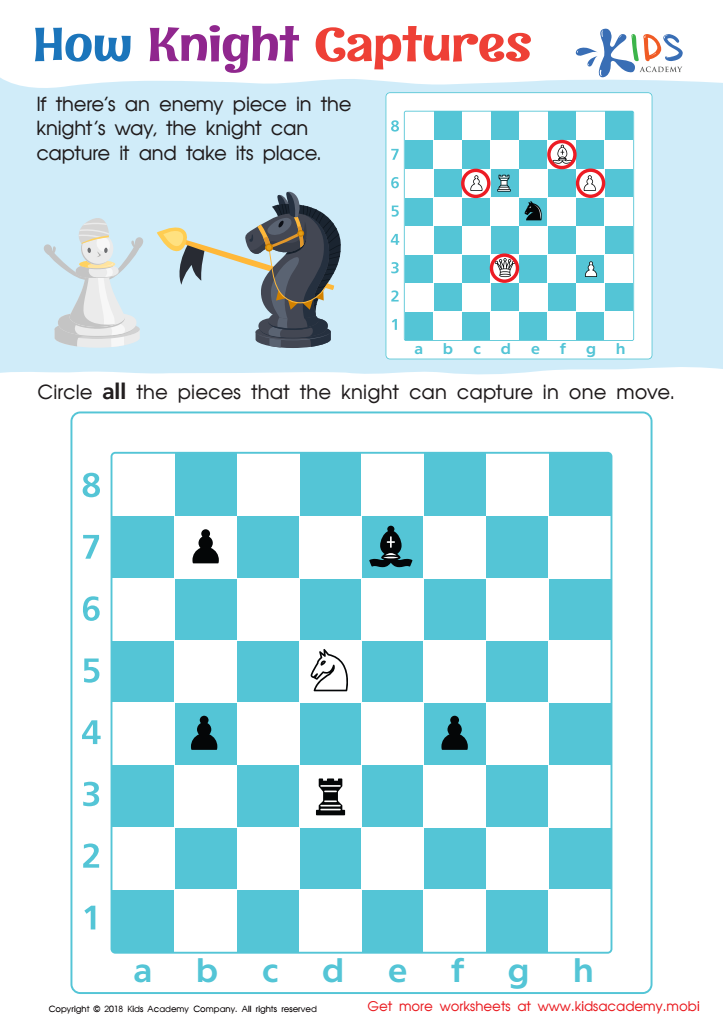
How Knight Captures Worksheet





Understanding chess strategy is valuable for children and should be a point of interest for both parents and teachers. Firstly, chess promotes critical thinking and problem-solving skills. As students learn to anticipate their opponent's moves, they develop the ability to foresee consequences and plan several steps ahead, which are crucial cognitive skills transferrable to other academic areas and real-life situations.
Secondly, chess improves concentration and patience. It requires players to focus intently and think carefully before making each move. This kind of sustained attention and deliberation can help children in their studies and other activities that require prolonged mental effort.
Furthermore, chess teaches important life lessons such as the value of perseverance and the necessity to learn from mistakes. Whether they’re experiencing defeat or success on the chessboard, children learn to deal with setbacks and rejoice responsibly in achievements, which molds resilience and balanced character.
Additionally, playing chess can be socially engaging, promoting sportsmanship and respect for others. Chess clubs and competitions provide a platform for making new friends and engaging in healthy, structured competitive activities.
Finally, for parents, guiding children through chess can be a shared activity, fostering closer relationships. For teachers, incorporating chess into the curriculum or as an extracurricular activity provides diverse educational value and could identify and nurture budding talents in intellectual pursuits.