Cognitive Development Normal Chess Worksheets
4 filtered results
Difficulty Level
Grade
Age
-
From - To
Subject
Activity
Standards
Explore our engaging "Cognitive Development Normal Chess Worksheets" designed for young learners to strengthen their critical thinking and problem-solving skills. These worksheets effectively intertwine the principles of chess with cognitive development, offering a fun and educational experience. Each worksheet features activities that challenge children to enhance their strategic thinking, concentration, and decision-making abilities through the captivating world of chess. Ideal for early-grade teachers and parents, these resources cater to various learning styles while fostering creativity in a structured way. Stimulate your child’s mind and enjoy valuable bonding time as they navigate through these stimulating chess-related tasks designed to promote cognitive growth!
Favorites
With answer key
Interactive
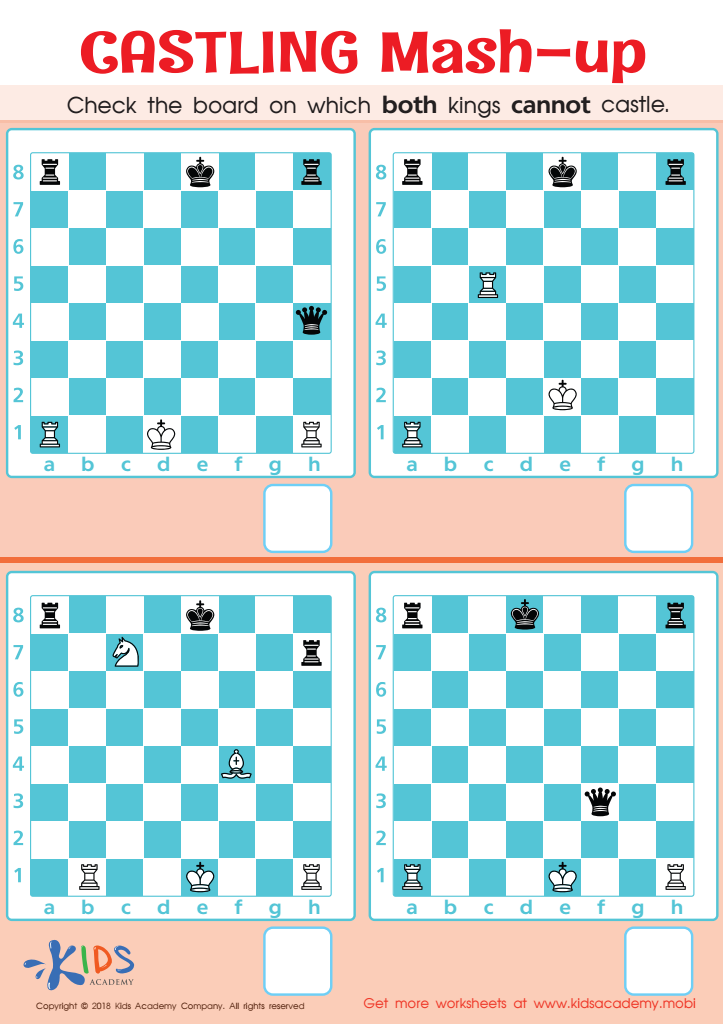
Castling Mash–up Worksheet
Before starting the worksheet, ensure your child understands castling in chess. If not, take time to explain it. Once they have a clear grasp of the rules, help them complete the exercise. Check the board to ensure that neither king can castle.
 Assign to My Students
Castling Mash–up Worksheet
Worksheet
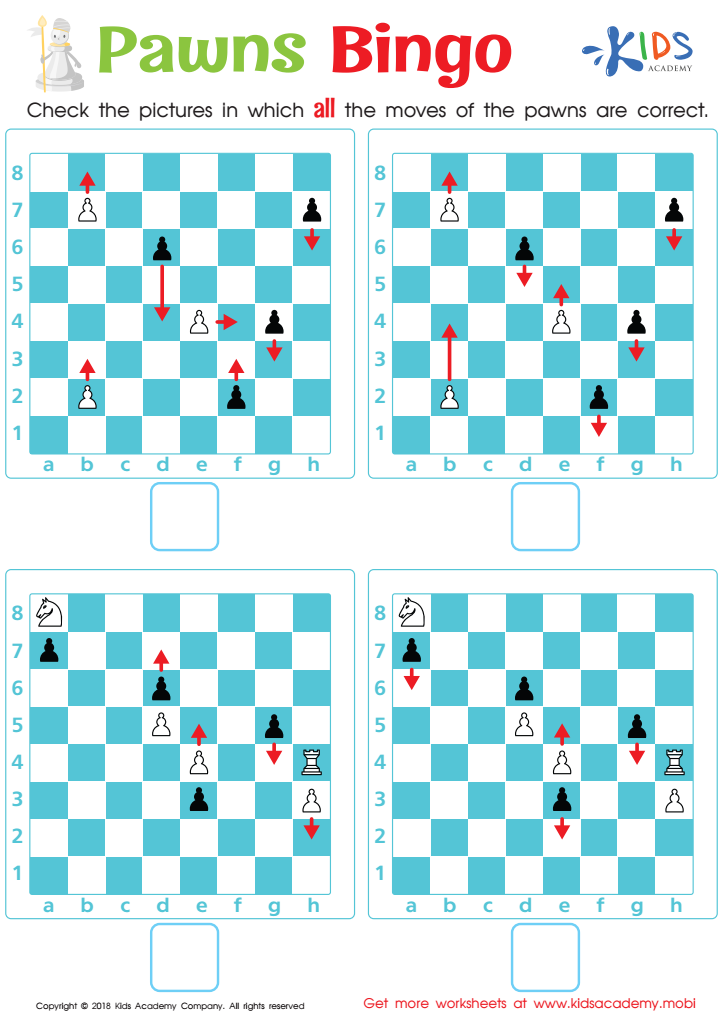
Pawns Bingo Worksheet
Test your students' knowledge of chess pawns. Present them with a worksheet featuring a picture, and ask them to identify the correct pawn moves. Afterward, they'll be better equipped to maneuver strategically on the chessboard.
Pawns Bingo Worksheet
Worksheet
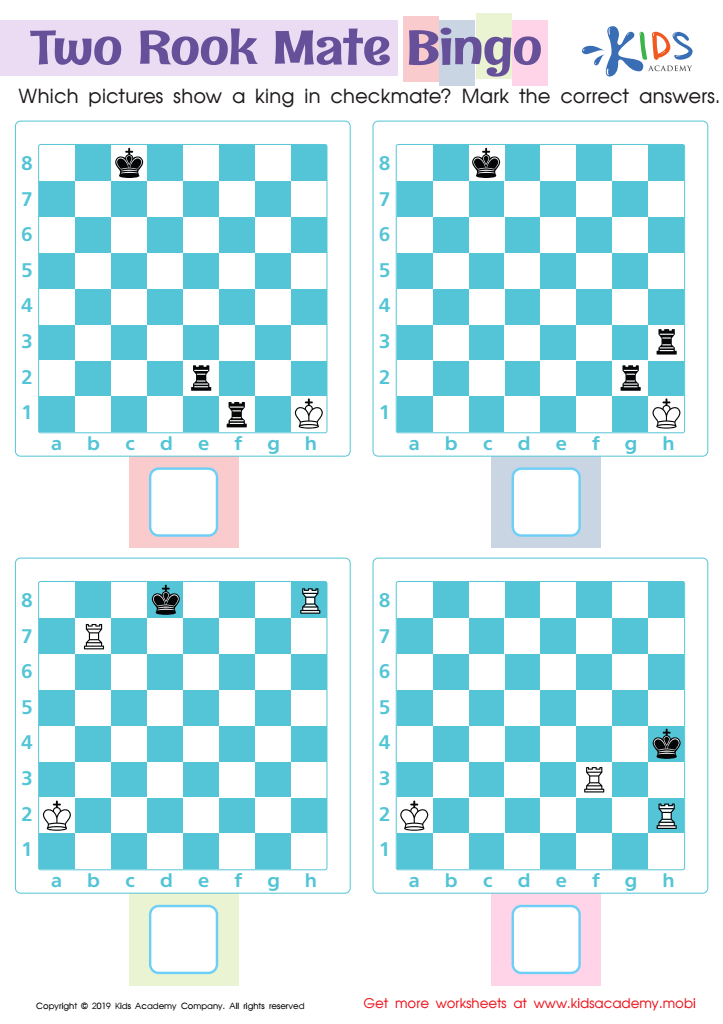
Two Rook Bingo Worksheet
Kids can have fun and strengthen their visual perception skills with Two Rook Mate Bingo. This worksheet challenges them to identify which chess boards show a king in checkmate using the Two Rook Mate strategy. Once they choose the correct one, they get the prize for checkmate! Playing chess helps kids with strategy, logic, and critical thinking.
Two Rook Bingo Worksheet
Worksheet
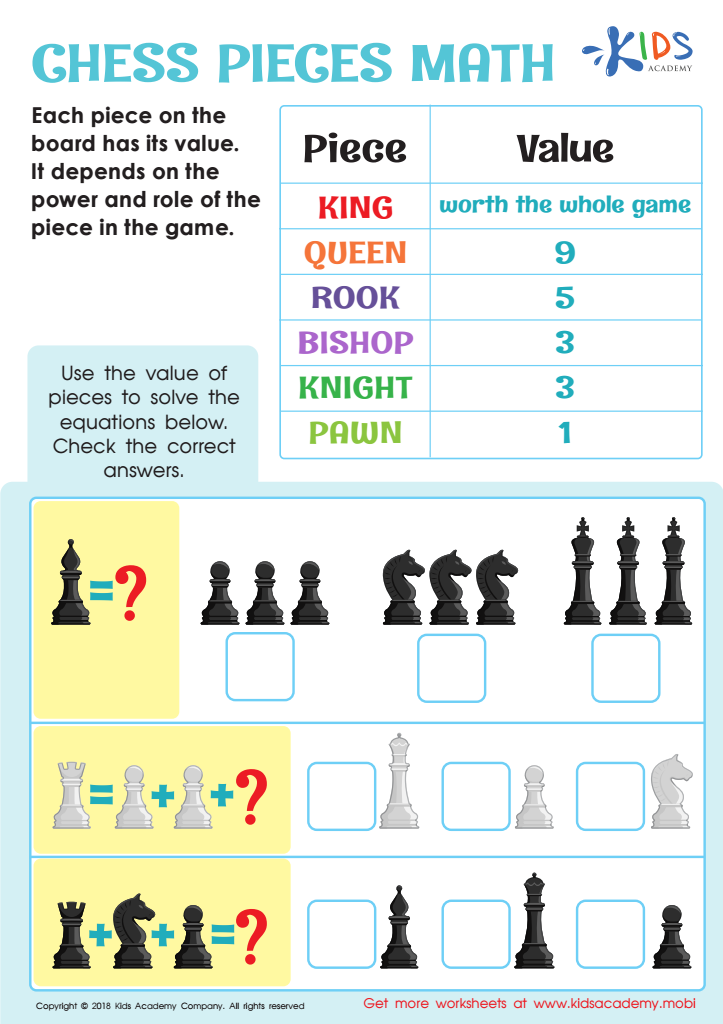
Chess Pieces Math Worksheet
Chess involves math! Each piece has its own value, from the king (worth the entire game) to the queen (9 points), varying according to their power and role. In the worksheet, your child must use these values to solve the equations at the bottom.
Chess Pieces Math Worksheet
Worksheet
Join Kids Academy for Free
Who is primarily going to use this learning content?






Cognitive development is crucial for children's overall growth, impacting their problem-solving abilities, critical thinking skills, and emotional well-being. Understanding normal cognitive development is essential for parents and teachers since it enables them to recognize and support the stages through which children progress. Engaging with tools like chess can significantly benefit cognitive development. Chess, a game that requires strategic thinking, pattern recognition, and decision-making, enhances cognitive skills such as logic, concentration, and memory.
Parents and teachers should care about these aspects as they play a pivotal role in children's academic readiness and social interactions. By nurturing cognitive development, they help children build resilience and adapt to challenges, laying the foundation for lifelong learning. Identifying deviations or delays in cognitive development through normal benchmarks helps ensure timely interventions, fostering a supportive environment conducive to growth. Moreover, incorporating activities like chess into educational curricula can stimulate interest, offering children fun and engaging ways to develop critical cognitive capabilities. Therefore, investing time and resources in understanding cognitive development is essential for guiding children toward success in school and beyond.