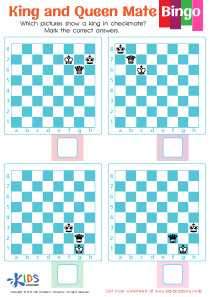
Enhance your child's strategic thinking skills with our engaging Normal Chess Worksheets designed specifically for young learners. These worksheets aim to teach essential chess strategies, promoting critical thinking and problem-solving abilities in a fun way. Each worksheet focuses on different chess concepts and tactics, making it easy for kids to grasp essential skills while enjoying the game. Perfect for early grade learning, our resources are tailored to help children improve their cognitive abilities and decision-making through strategic play. Unlock the world of chess for your child and watch their strategic prowess grow with our expertly crafted worksheets!

Check out this FREE Normal Trial Lesson on Chess!

What Is Chess?

Favorites
With answer key
Interactive
  • Strategic thinking development
  • Chess
  • Normal
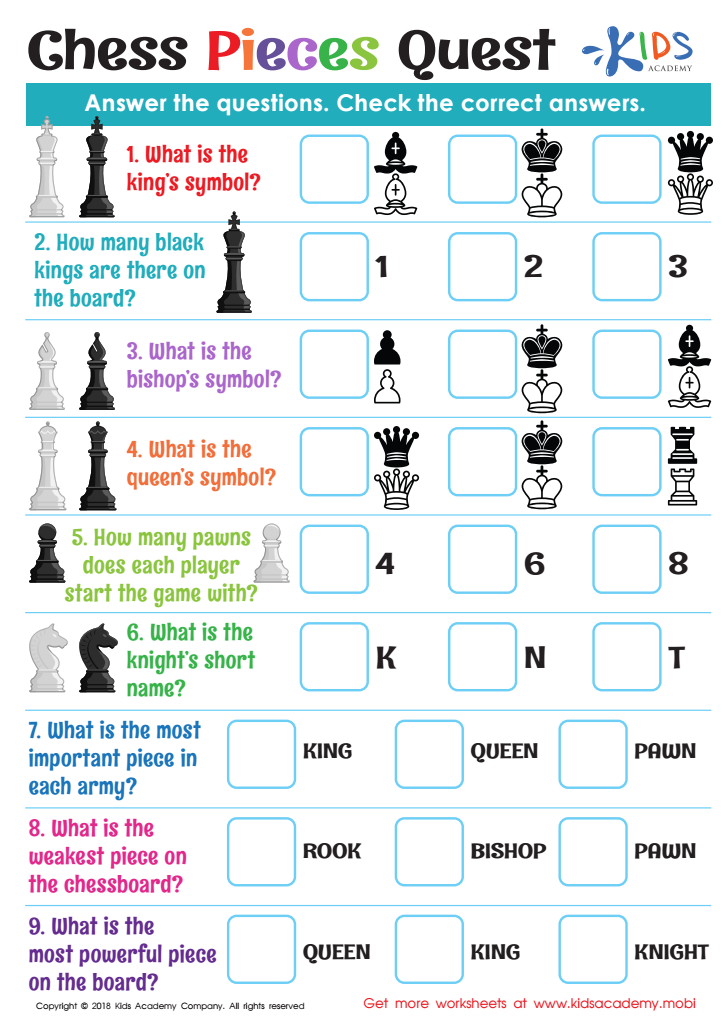
Chess Pieces Quest Worksheet

Chess Pieces Quest Worksheet

Help your child prepare for the chess quest by refreshing their knowledge of the symbols and characteristics of each chess piece. Then, have them try the 9 questions on this worksheet. These questions will assess their understanding of the symbols and how many pieces each player starts with.
Chess Pieces Quest Worksheet
Worksheet
Notation of Moves Writing it Down Worksheet

Notation of Moves Writing it Down Worksheet

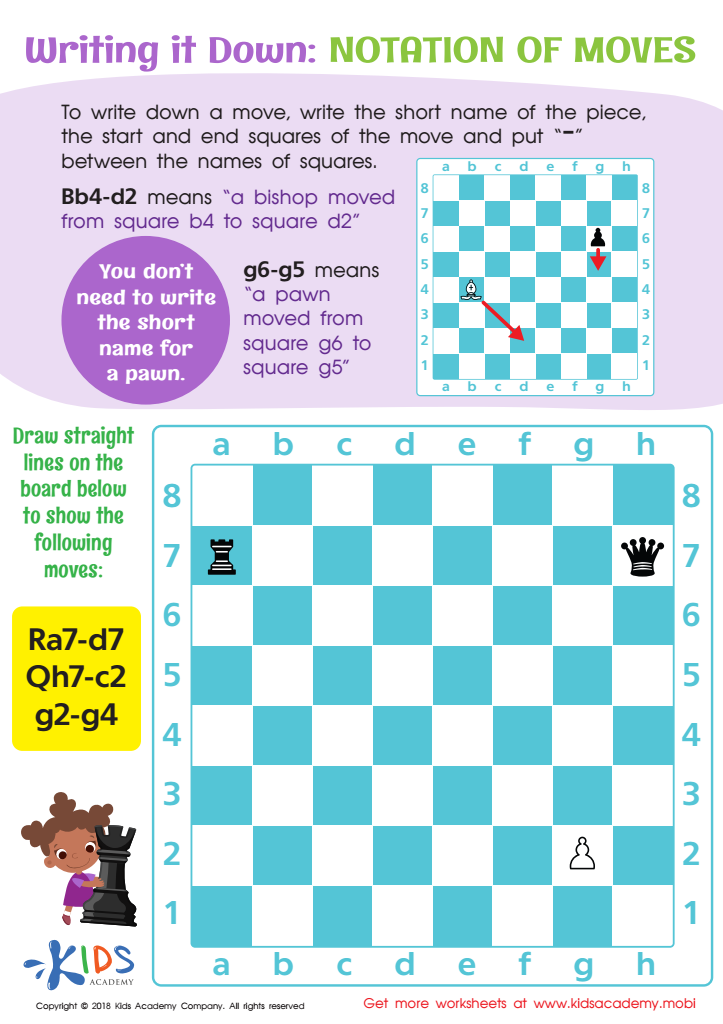
Notating chess moves can be tricky for kids to learn. This worksheet will help them better understand it. To notate a move, write the piece's short name, start and end squares, and separate them with a "-". For instance, Bd4-d2 means a bishop moved from b4 to d2. No need to write pawns' short names.
Notation of Moves Writing it Down Worksheet
Worksheet
How Rooks Capture Worksheet

How Rooks Capture Worksheet

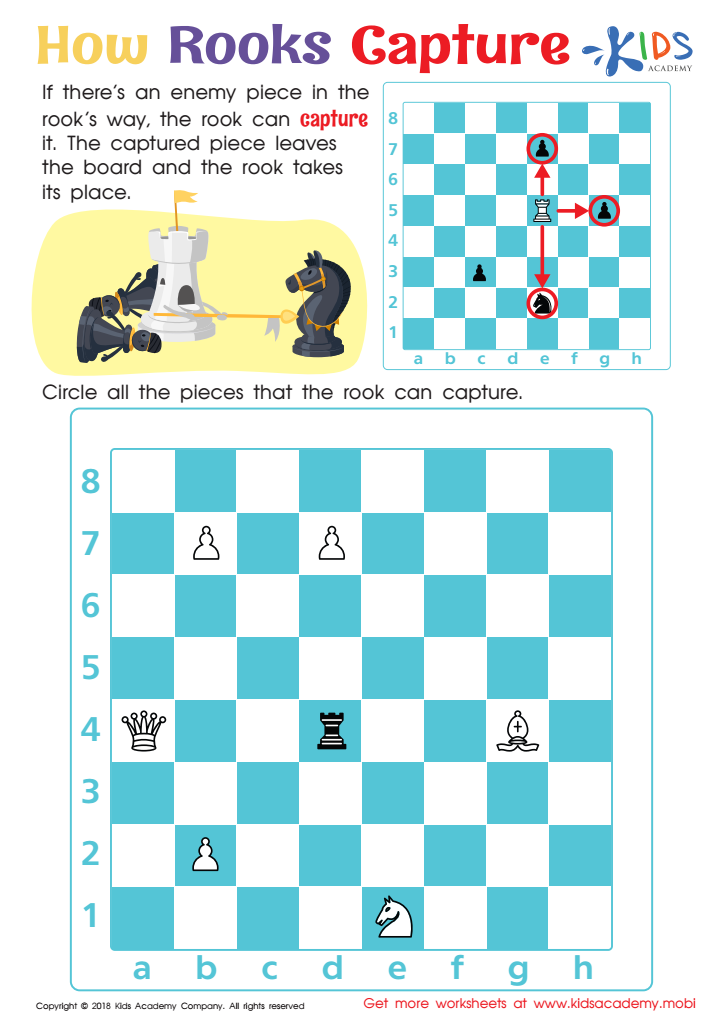
Chess is a game that requires skill, concentration and planning. Players must move their chess pieces strategically to capture pieces from their opponent. Do your kids know how to use the rook to capture pieces? Go through the worksheet with them and circle the pieces the rook can capture.
How Rooks Capture Worksheet
Worksheet
How Queen Captures Worksheet

How Queen Captures Worksheet

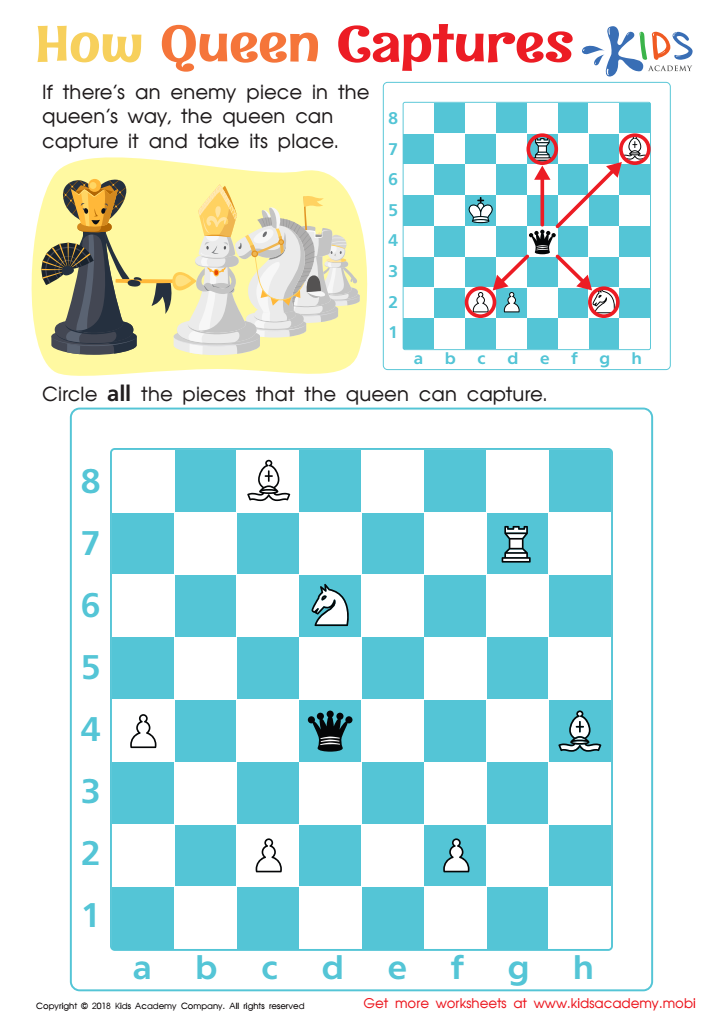
Chess is a great game for sharpening math skills, strategic thinking, and knowledge of how each piece moves. If your child is interested, introduce them with this worksheet. It demonstrates how the queen can capture opposing pieces, such as another queen, and take their place.
How Queen Captures Worksheet
Worksheet
Chess Manners Worksheet

Chess Manners Worksheet

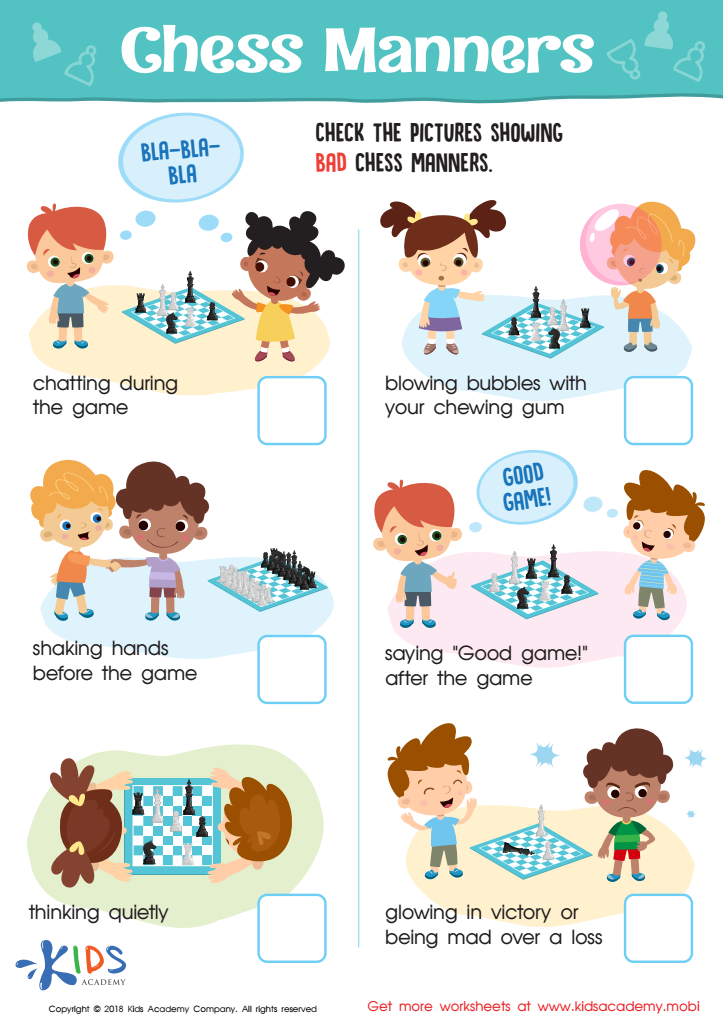
Teach your child chess manners in addition to table and social ones. Chess has clear rules and etiquette which must be followed for a proper game. Review this worksheet with your kid and discuss the pictures that show inappropriate behaviours. This will help them understand how to play the game correctly and with good manners.
Chess Manners Worksheet
Worksheet
Moves Notation Bingo Worksheet

Moves Notation Bingo Worksheet

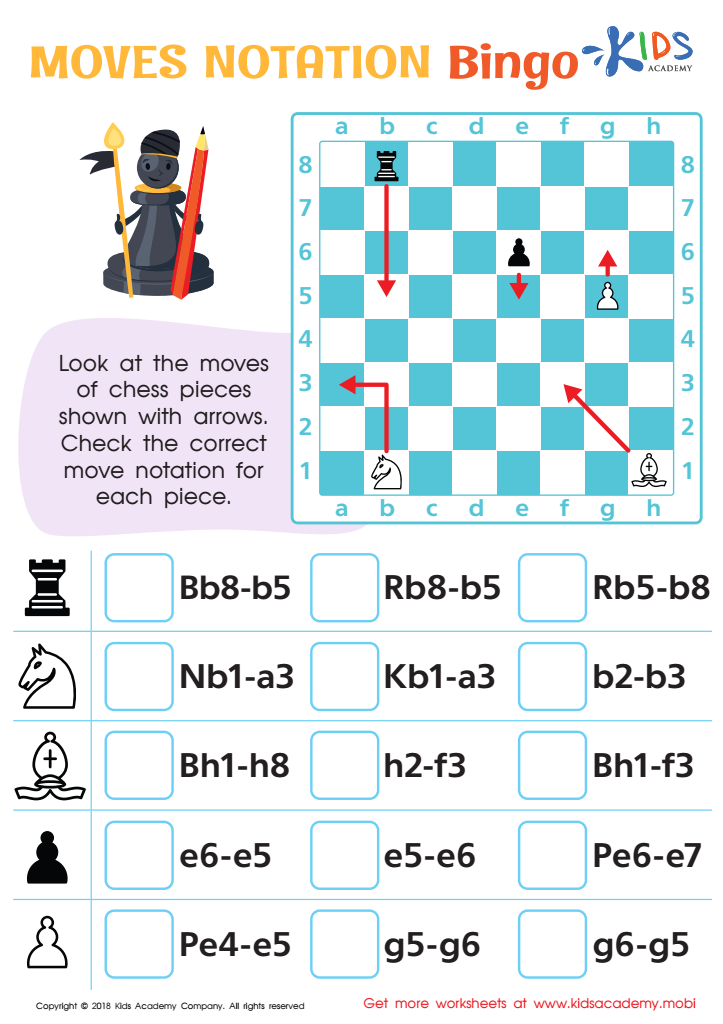
Test your child's chess notation skills with this simple worksheet. Download the PDF which shows a chess board and arrows pointing to pieces. Ask your child to identify the moves and note them down correctly. The notations needed are for bishop, pawn, rook and knight. Up to 80 words.
Moves Notation Bingo Worksheet
Worksheet
How Bishops Move Worksheet

How Bishops Move Worksheet
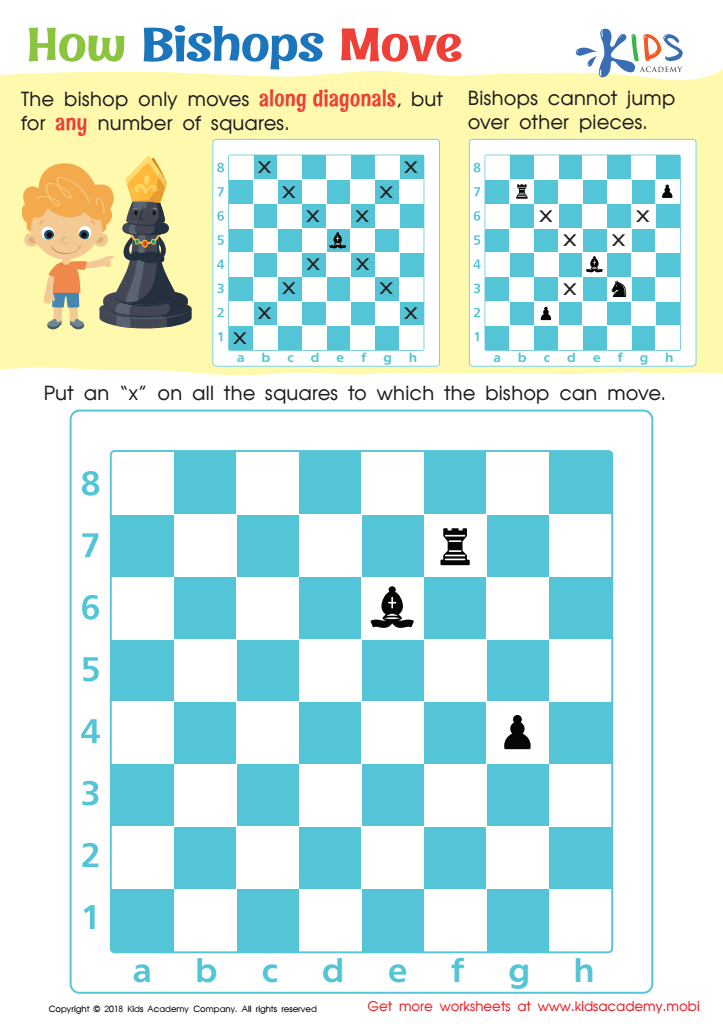
There is no such thing as too much sharpening of skills. Encourage your child to learn more about chess technicalities with this simple worksheet. It shows them how a bishop moves: along diagonals any number of squares, but it can't jump over other pieces.
How Bishops Move Worksheet
Worksheet


Strategic thinking development through chess offers valuable benefits for children, making it essential for parents and teachers to prioritize this activity. Chess is not just a game; it encourages critical thinking, problem-solving, and decision-making skills. As children learn to anticipate their opponent's moves and devise strategies, they enhance their cognitive abilities, which are transferable to other academic subjects and real-life situations.

Moreover, playing chess fosters patience and discipline. It teaches kids the importance of considering consequences before acting, a skill applicable to their studies and personal behavior. The game encourages resilience, as players learn to cope with losses and develop a growth mindset, understanding that failure is a part of learning.

Additionally, chess promotes social interaction, enabling children to collaborate, communicate, and respect others, vital skills in any educational setting. Research has shown that incorporating chess into the curriculum can improve students' overall academic performance, especially in mathematics and reading comprehension.

By supporting strategic thinking through chess, parents and teachers equip children with essential life skills that contribute to their personal and academic growth, preparing them not only for school but also for future challenges in an ever-changing world.