Explore our Grade 1 "Understanding Addition" worksheets designed to develop foundational math skills in young learners. These expertly crafted printable sheets make learning addition engaging and fun, using a variety of methods including visuals and real-world examples. Children will start with basic counting and progress to add within 20, fostering confidence and proficiency in problem-solving. Perfect for classroom or home use, our worksheets align with Common Core standards and support teachers and parents in guiding first graders towards mastering addition. Unlock your child's potential in mathematics with our comprehensive and easy-to-follow worksheets today!

Check out this FREE Grade 1 "Understanding addition" Trial Lesson!

Making 10's

Favorites
With answer key
Interactive
  • Grade 1
  • Understanding addition
  • Normal
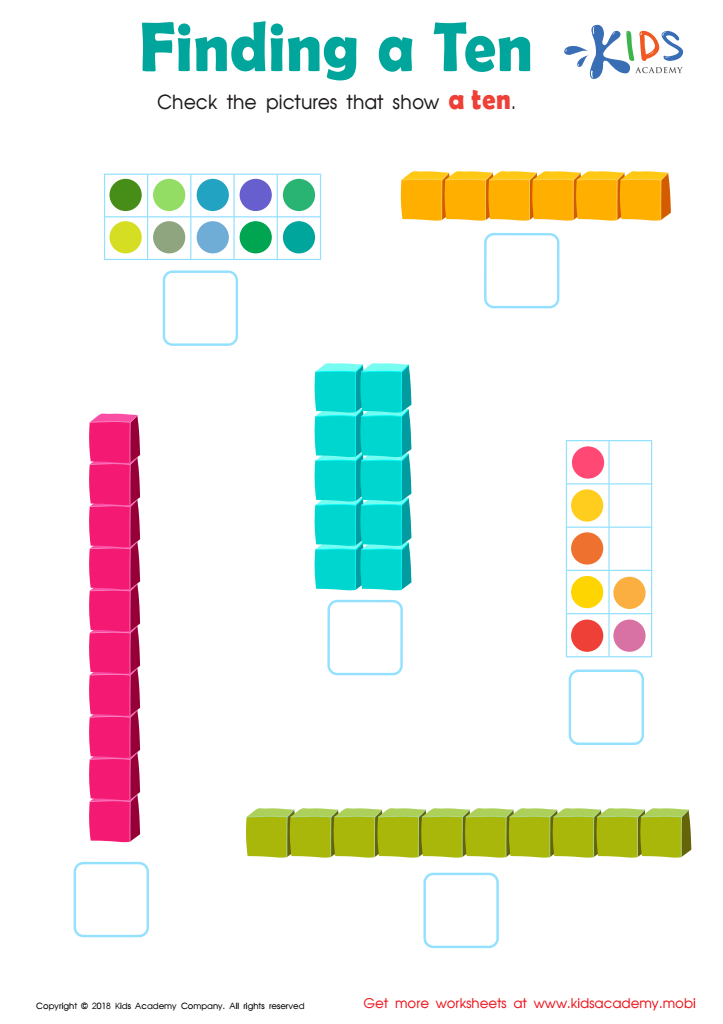
Finding a Ten Worksheet

Finding a Ten Worksheet

Can your child count to ten? Distinguish groups of ten? This free printable worksheet uses shapes and colors to help first graders learn to count and understand what groups of numbers look like. It's fun and easy to comprehend, helping kids master the fundamentals of math.
Finding a Ten Worksheet
Worksheet
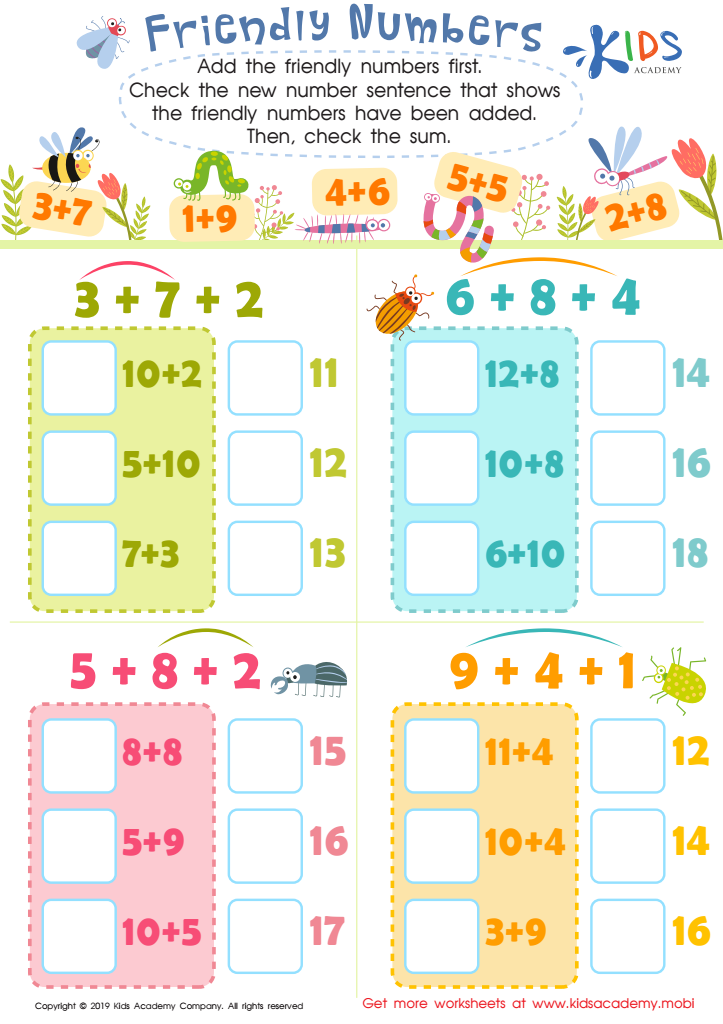
Friendly Numbers Worksheet

Friendly Numbers Worksheet

Help your students add the numbers at the top of the boxes. Check the new number sentences with friendly numbers. Assist them with simple addition and check the sum. It's easy, especially when they've already mastered counting and simple equations.
Friendly Numbers Worksheet
Worksheet
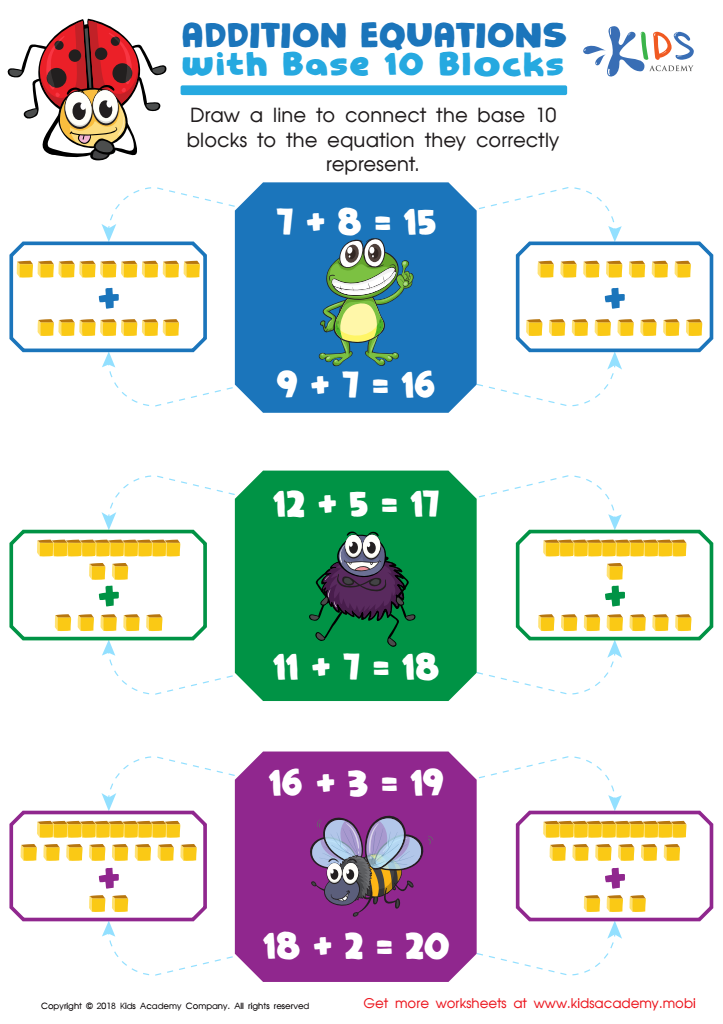
Addition Equations With Base 10 Blocks Worksheet

Addition Equations With Base 10 Blocks Worksheet

If your students are struggling with base 10 addition, this worksheet is here to help. Guide them with connecting the blocks to the equation with a line. It's a fun and colourful way to encourage learning.
Addition Equations With Base 10 Blocks Worksheet
Worksheet
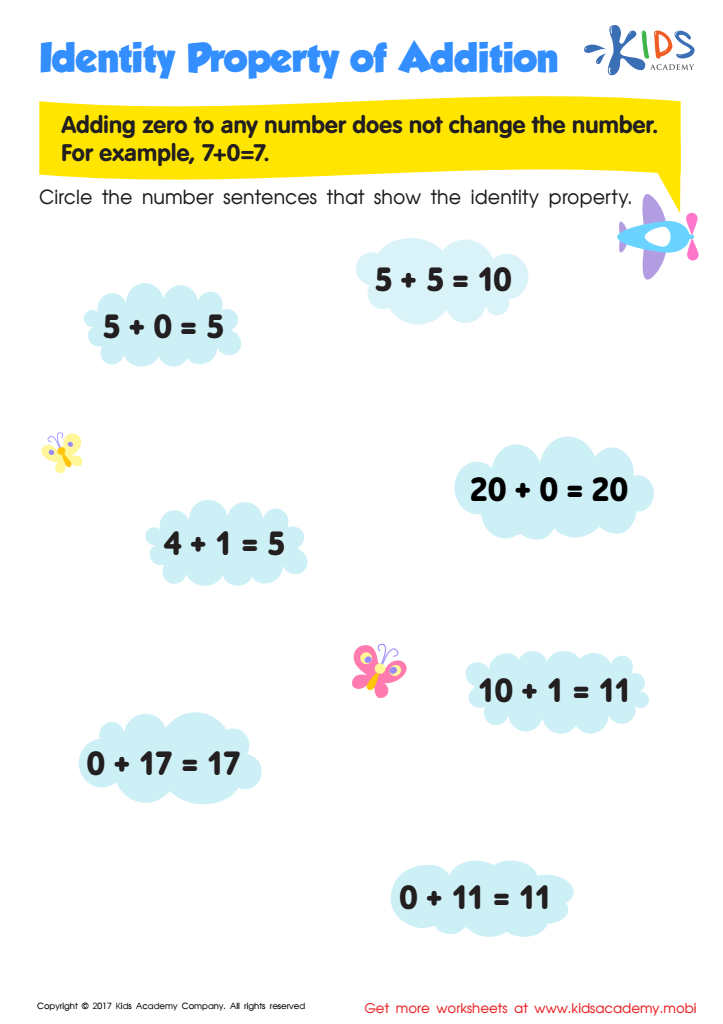
Identity Property of Addition Worksheet

Identity Property of Addition Worksheet

Kids must learn the identity property of addition in math. It states that adding zero to an equation does not change the number. A great way to help kids understand this concept is with a Kids Academy worksheet. It encourages kids to identify which number sentences demonstrate the identity property of addition. Doing so builds vital mental math skills for fast addition.
Identity Property of Addition Worksheet
Worksheet
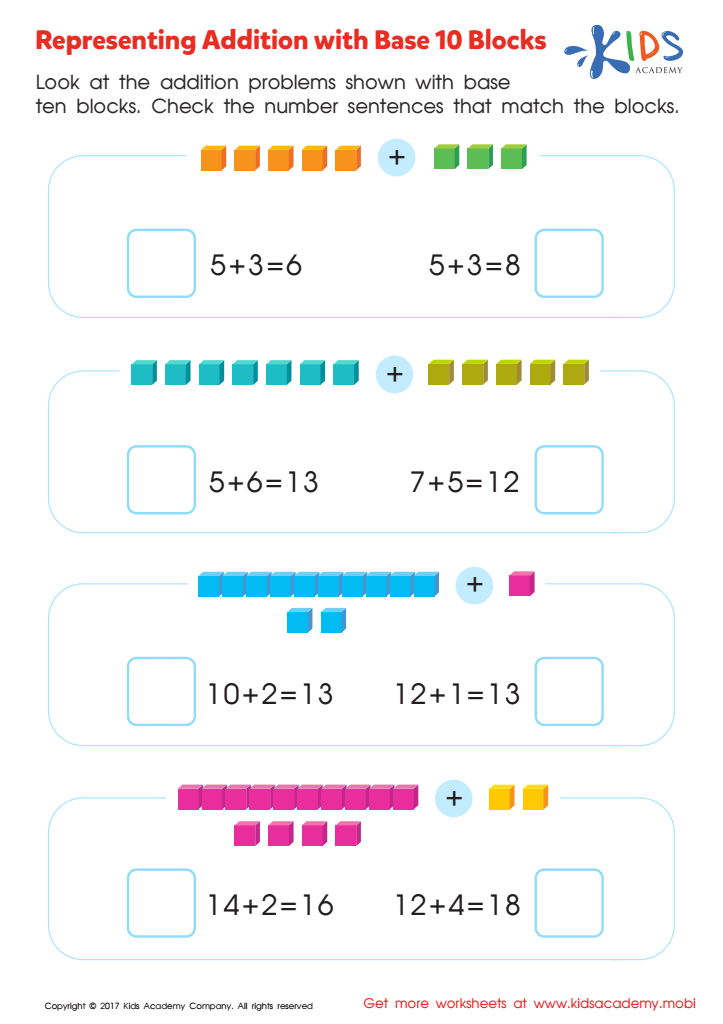
Representing Addition with Base 10 Blocks Worksheet

Representing Addition with Base 10 Blocks Worksheet

Solve addition problems with your little one: help them count the blocks, then select the correct equation from the choices. Circle the answer. Word play and math make a winning combo!
Representing Addition with Base 10 Blocks Worksheet
Worksheet
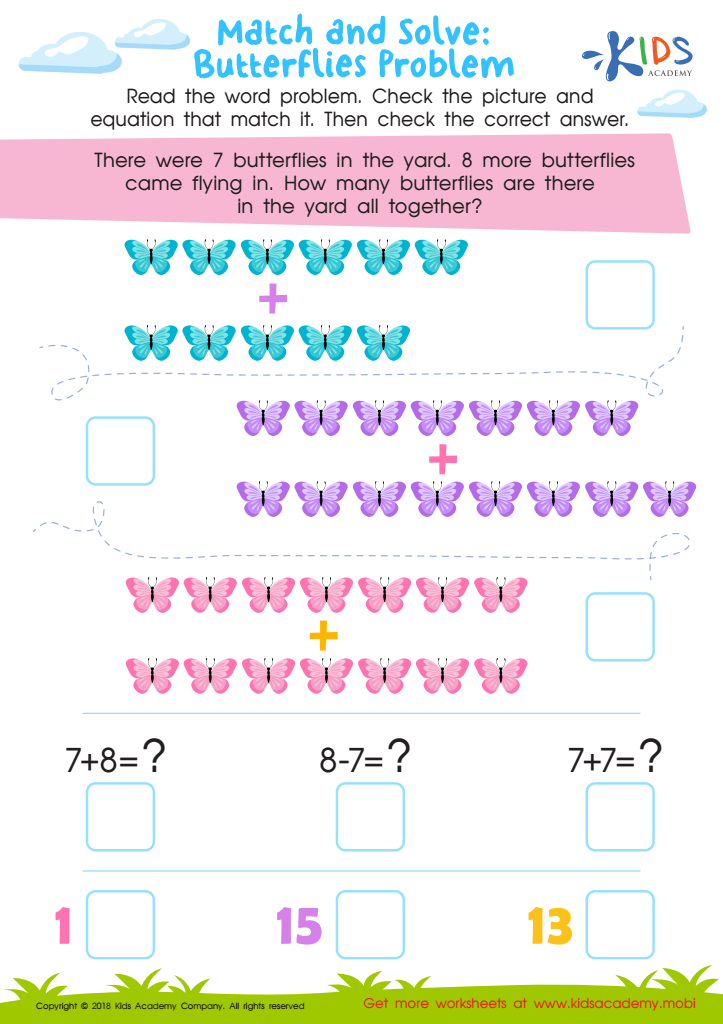
Match and Solve: Butterfly Problem Worksheet

Match and Solve: Butterfly Problem Worksheet

Kids should practice math problems in different ways. This fun worksheet uses butterflies to represent numbers in word problems. Help your child read the problem and count the butterflies to find the correct illustration. Then, pick the equation with the correct answer and find the solution. Tick the box to complete! (80 words)
Match and Solve: Butterfly Problem Worksheet
Worksheet
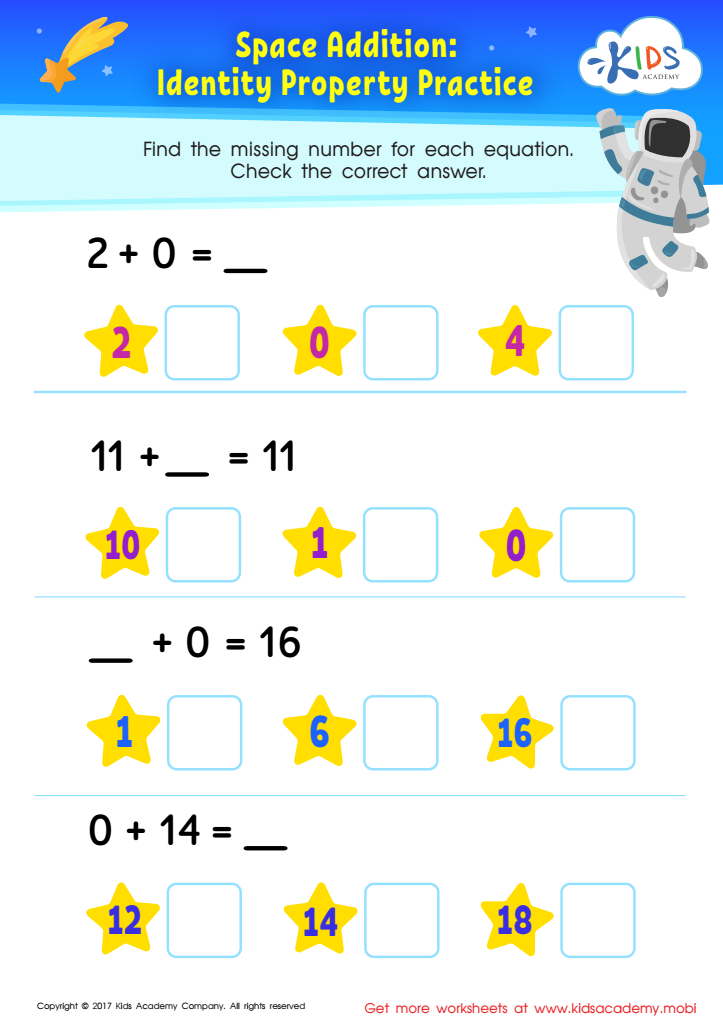
Space Addition: Identity Property Practice Worksheet

Space Addition: Identity Property Practice Worksheet

After learning about the identity property of addition, let your little mathematician put it into practice with Kids Academy's fun worksheet! Blast off into outer space and have them add by zero, discovering the total sum and solving equations with missing numbers. This is a great pre-algebraic exercise!
Space Addition: Identity Property Practice Worksheet
Worksheet
Apple Math Worksheet

Apple Math Worksheet

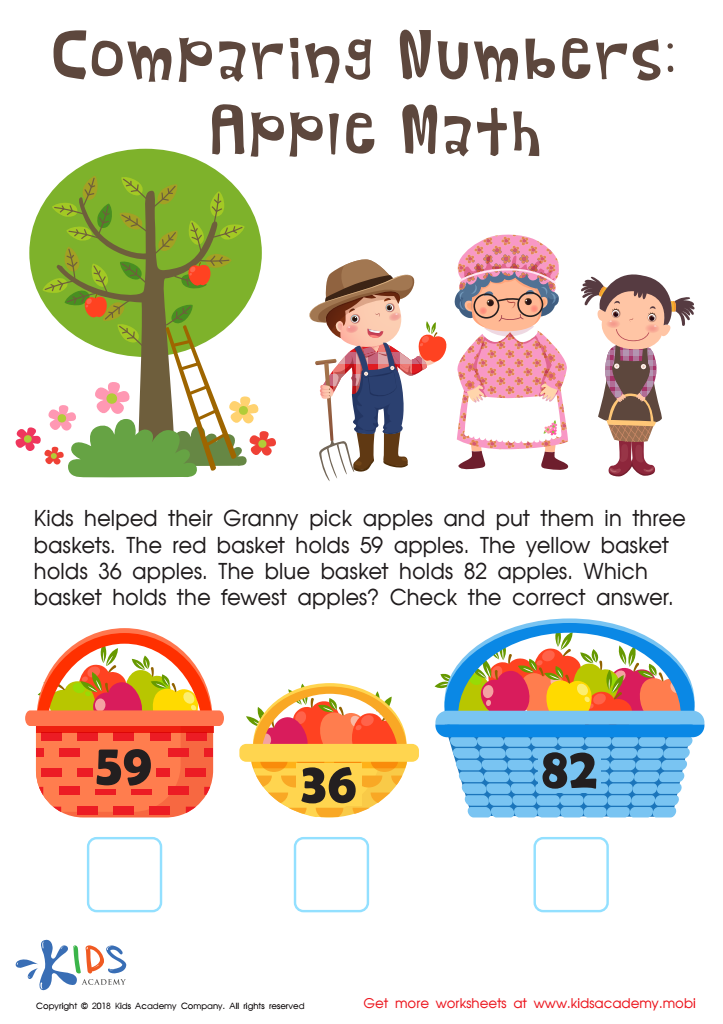
Math is more than just counting, adding, subtracting, multiplying, and dividing. Your child may be feeling overwhelmed by all the complexities, like comparing numbers and their differences. But with this worksheet, you can make comparing numbers fun again!
Apple Math Worksheet
Worksheet
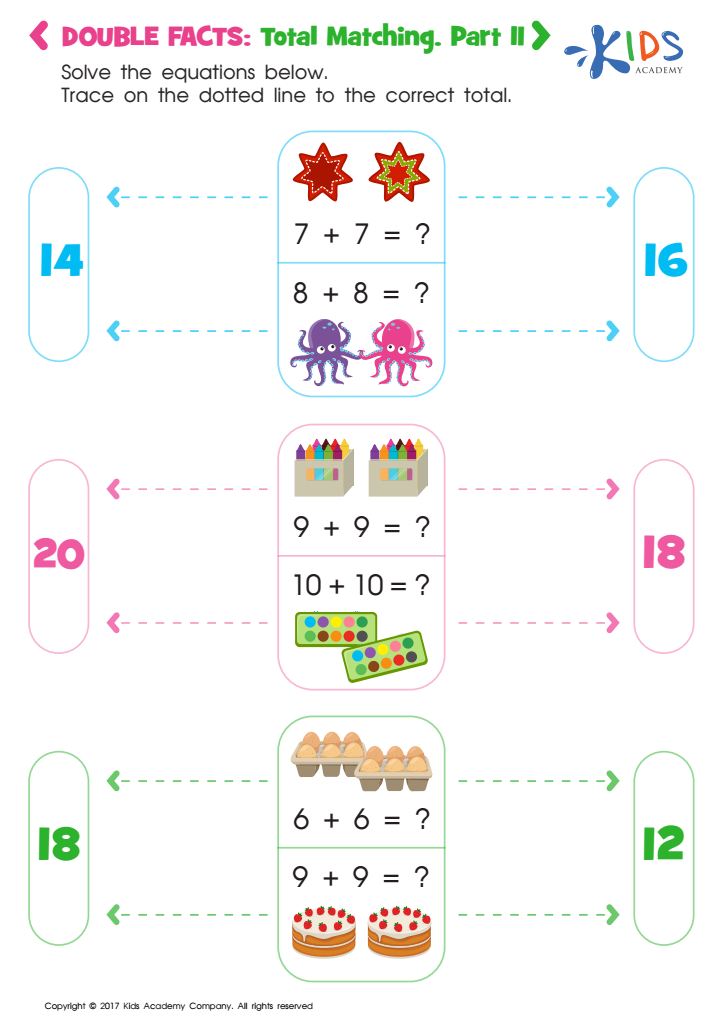
Double Facts: Total Matching 2 Worksheet

Double Facts: Total Matching 2 Worksheet

Having trouble with math? This printable worksheet is perfect for your child or student. It features simple addition problems that can be solved with your help. Trace the dotted line to the right answer and make counting numbers stress-free! Your young one will be solving math equations in no time.
Double Facts: Total Matching 2 Worksheet
Worksheet
Part, Part, Whole Worksheet


Part, Part, Whole Worksheet

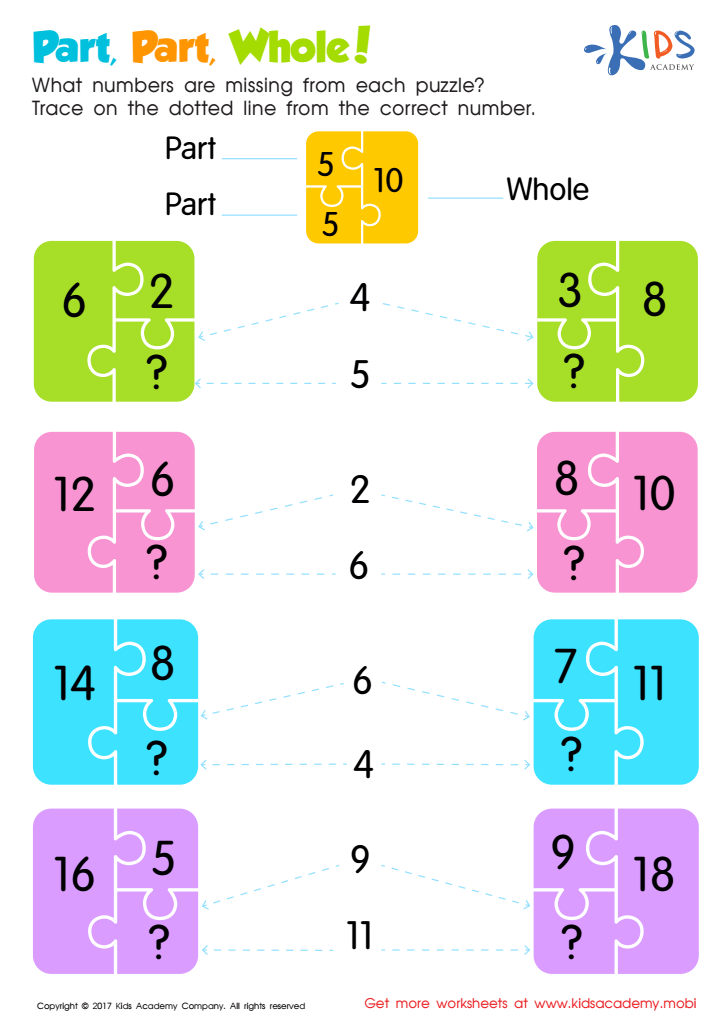
Help your child find the missing numbers in the puzzles. The worksheet combines fun and maths - stimulating the brain while keeping them engaged. Colourful pages will keep the learning enjoyable. Simple addition and subtraction will ensure they stay entertained.
Part, Part, Whole Worksheet
Worksheet


Understanding addition in Grade 1 lays the foundation for a child's future success in mathematics, which is crucial in everyday life and many career paths. At this early age, children are just beginning to grasp the core concepts of numbers and how they interact. Addition helps them understand the idea that numbers can be combined to create new values, which is not only a fundamental mathematical skill but also an essential life skill.

Firstly, mastering addition builds confidence. When children grasp the concept of adding numbers, they feel a sense of accomplishment that encourages further learning. This positive experience fosters a growth mindset, helping them approach more complex problems with curiosity and determination.

Secondly, addition is integral to nearly all subsequent math topics, from subtraction to multiplication and division. A strong foundation ensures that students are not left struggling as concepts build on one another. Without a solid understanding of basic addition, children may face challenges later on, which can lead to feelings of frustration or anxiety about math.

Moreover, basic addition is part of daily life—be it adding prices at the store, combining ingredients in a recipe, or figuring out time intervals. Ensuring that children understand addition equips them with practical skills they will use throughout their lives.

In summary, parents and teachers should prioritize understanding addition in Grade 1 to foster confidence, ensure readiness for future math challenges, and provide essential life skills.