Categorizing objects Normal Grade 1 Science Worksheets
3 filtered results
-
From - To
Discover our engaging "Categorizing Objects" Normal Grade 1 Science Worksheets designed to enhance young learners' observational and analytical skills. These worksheets provide a fun and interactive way for first graders to explore different objects, developing their ability to group items based on size, color, shape, and purpose. With a variety of exercises that encourage critical thinking and creativity, students will learn the importance of classification in everyday life. Perfect for homeschooling or classroom use, our printable resources are aligned with educational standards, making learning enjoyable and effective for your child. Start exploring the world of categorization today!
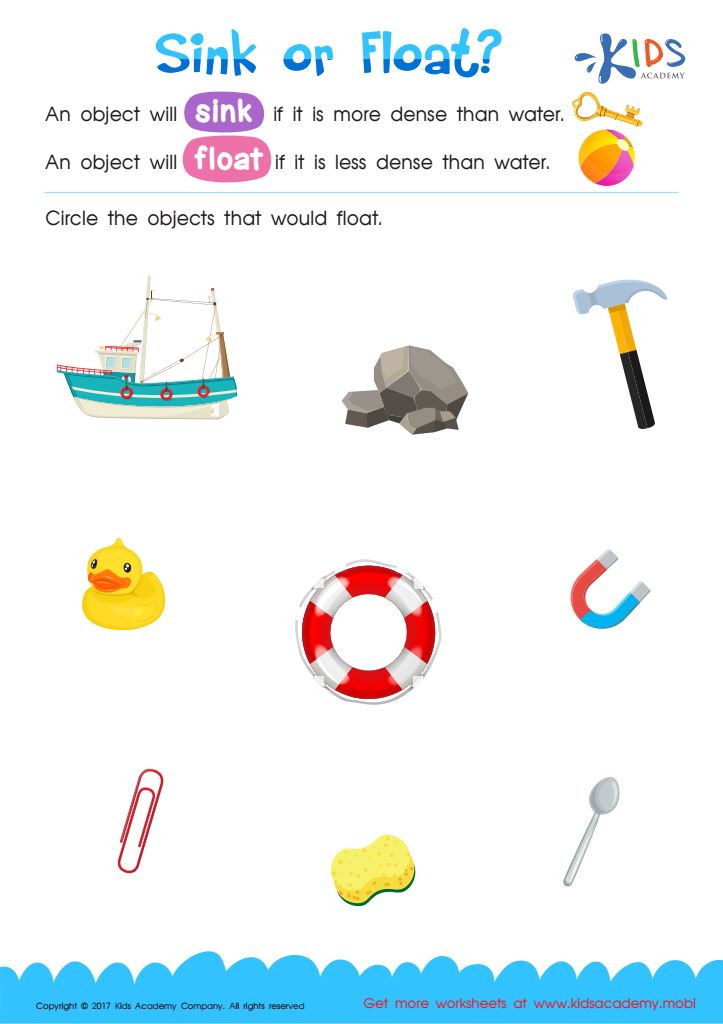
Sink or Float Printable
 Assign to My Students
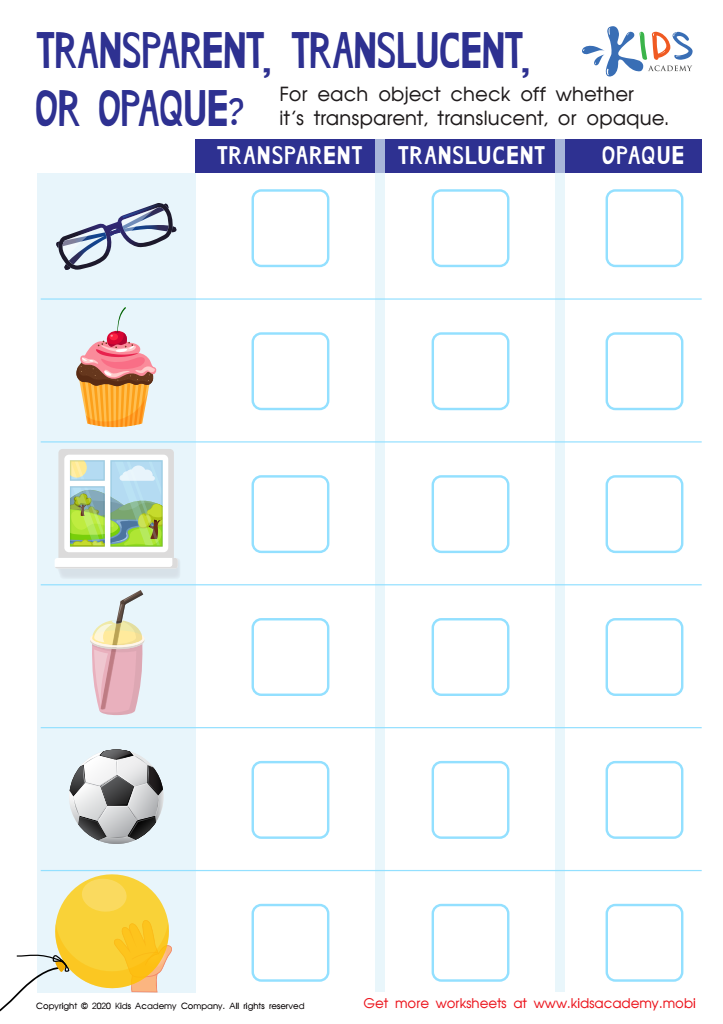
Transparent, Translucent, or Opaque Worksheet
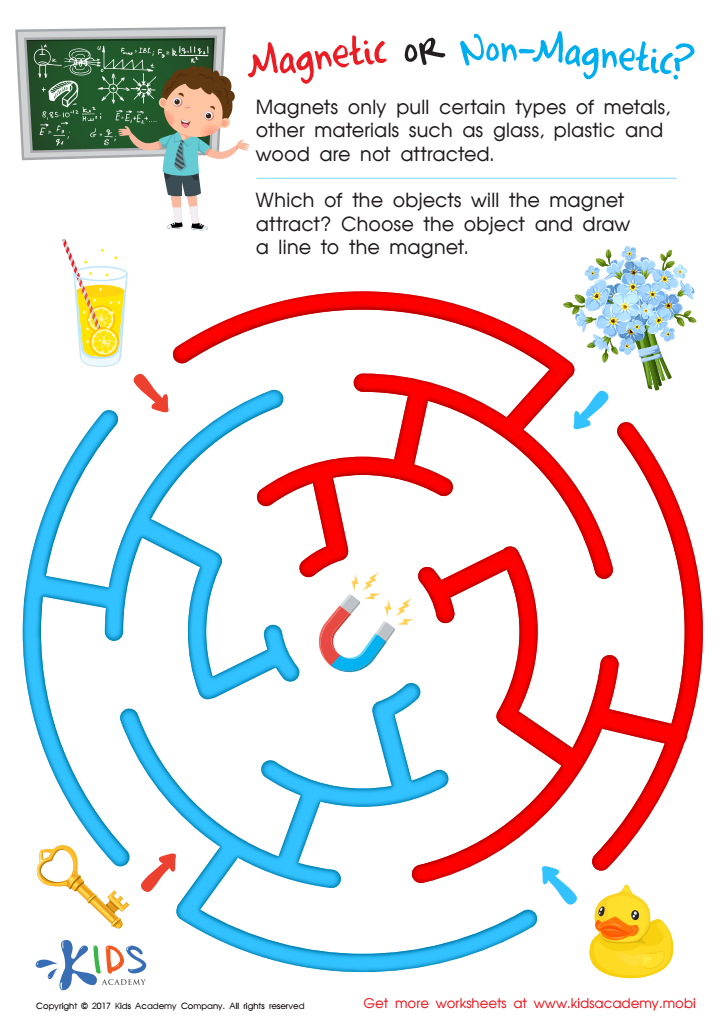
Magnetic or Non–Magnetic Worksheet






Categorizing objects is a fundamental skill in early education that can significantly impact a child's learning and development. For parents and teachers, understanding its importance in Grade 1 science is essential.
First, categorizing objects helps children develop critical thinking and problem-solving skills. When students sort items based on their attributes—such as size, shape, color, or function—they learn to identify similarities and differences. This cognitive process encourages observation, analysis, and logical reasoning.
Second, categorization fosters language development. As children describe their sorting methods, they expand their vocabulary and expressive abilities. Talking about categories like “animals” or “food” leads to discussions about characteristics and experiences, deepening their understanding.
Moreover, categorizing promotes organization, which is vital for more complex subjects later on. Children learn to break down information into manageable parts, laying a foundation for subjects like math and science.
Lastly, engaging in categorization activities enhances social skills. Collaborating with peers to sort objects can facilitate teamwork and communication, cultivating a cooperative classroom environment.
In essence, promoting categorization enriches academic skills while providing a variety of social and cognitive benefits, making it essential for both parents and teachers to prioritize in early childhood education.







