Filters

7 filtered results

Clear all filters
Favorites
With answer key
Interactive

7 filtered results

Difficulty Level

Grade


Explore our captivating collection of Critical Thinking Normal Kindergarten Math Worksheets designed to foster problem-solving skills and intellectual growth. These worksheets introduce young learners to foundational math concepts through engaging activities, puzzles, and creative exercises. Your child will enjoy fun, thoughtfully crafted tasks that stimulate curiosity and enhance critical thinking abilities. Perfect for home or classroom use, our resources provide a solid groundwork for math excellence while encouraging independent thinking and confidence. Discover the perfect balance of learning and play with our expertly developed worksheets, aimed at making early math education a delightful experience.

Check out this FREE Kindergarten Trial Lesson on Math!

Sorting Objects into 3 Categories

Favorites
With answer key
Interactive
  • Kindergarten
  • Critical Thinking
  • Math
  • Normal
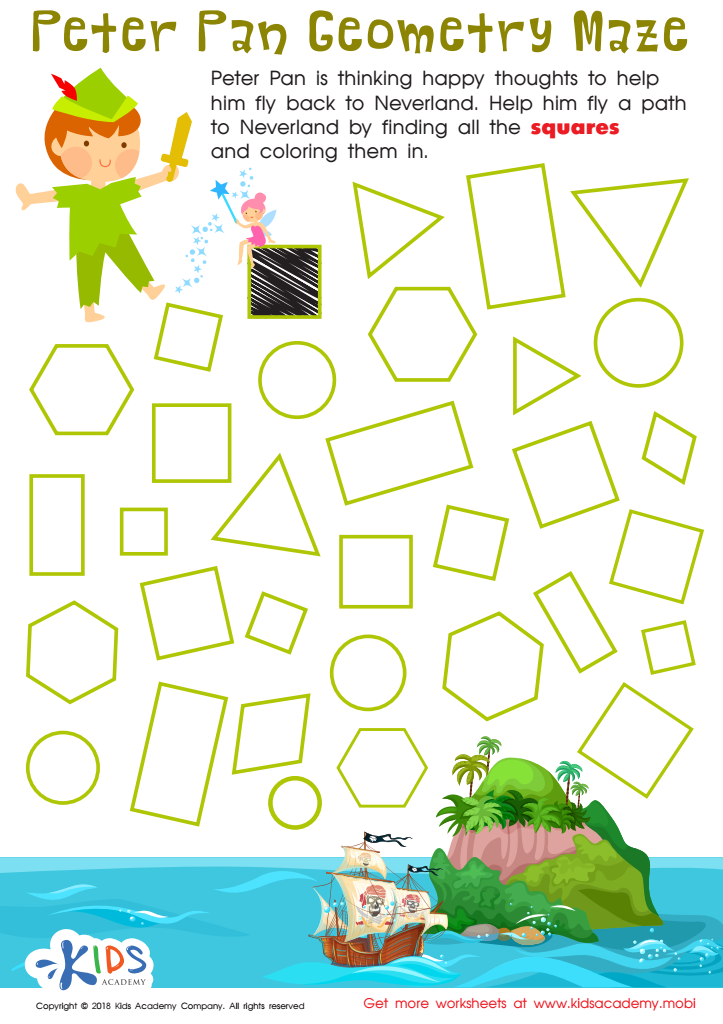
Peter Pan Worksheet Preview

Peter Pan Worksheet

Kindergarteners can join Peter Pan on an adventure to Neverland! They can help him by coloring squares to create a path, strengthening their shape identification skills in a fun maze. Let the journey begin!
Peter Pan Worksheet
Worksheet
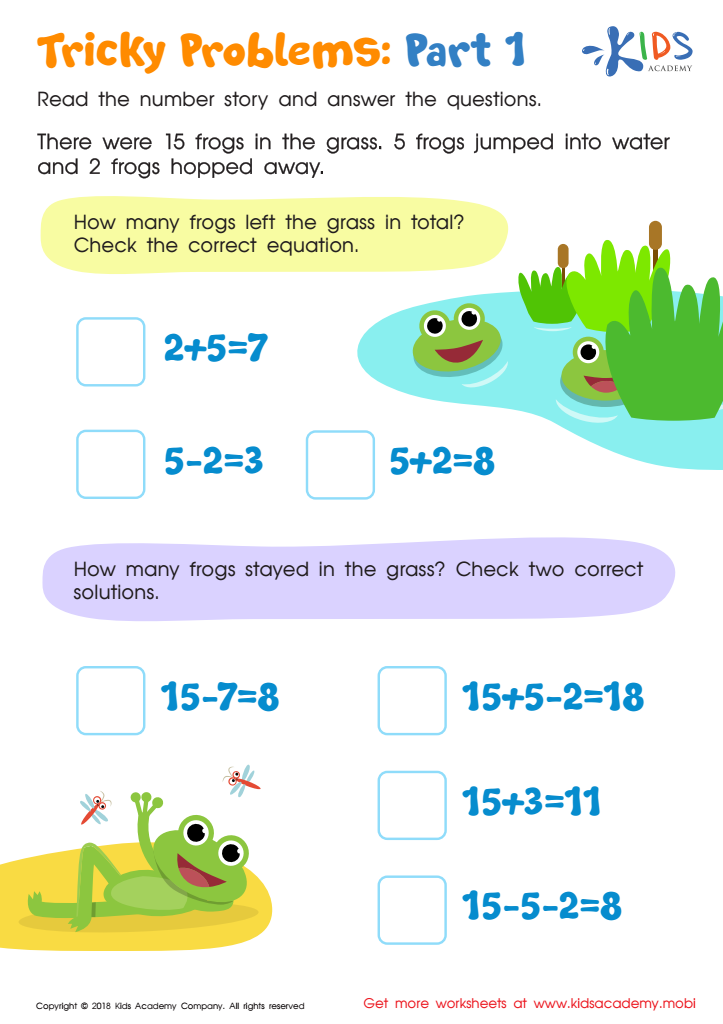
Tricky Problems Worksheet: Part 1

Tricky Problems Worksheet: Part 1

Visualizing word problems can help students solve them. This fun PDF worksheet encourages students to create mental images using math facts, then check boxes to match the equations for basic addition problems. It's a great way to build confidence in solving math.
Tricky Problems Worksheet: Part 1
Worksheet
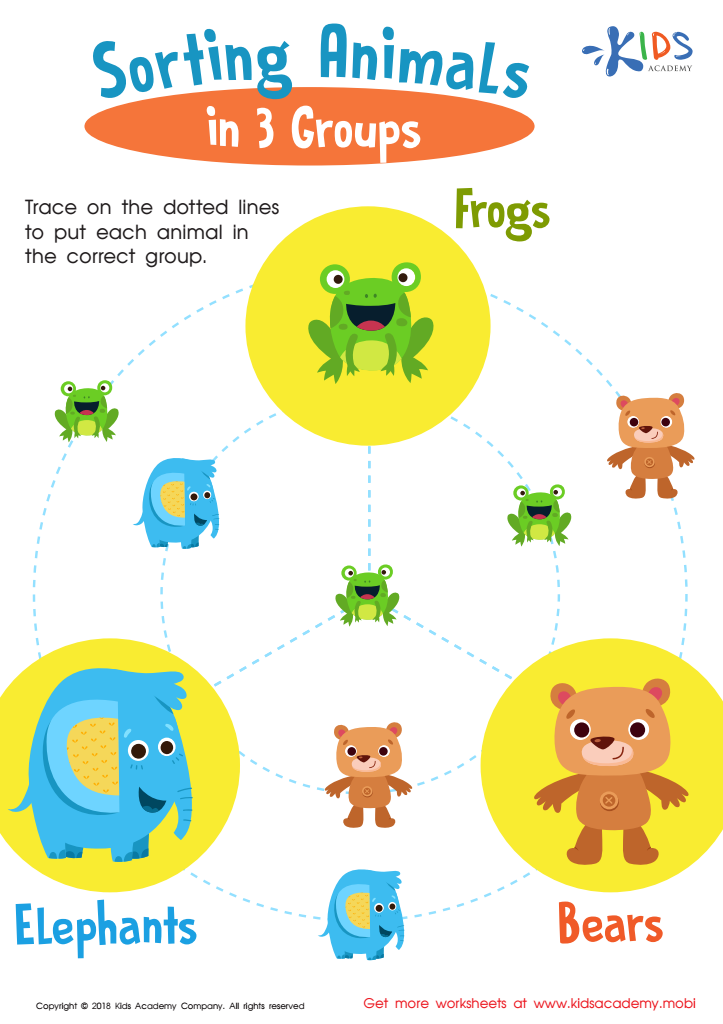
Sorting Animals in 3 Groups Worksheet

Sorting Animals in 3 Groups Worksheet

Let your kids practice and build skills for future Venn Diagrams with this PDF worksheet. They'll trace lines to match and group animals, and learn the differences and similarities of animals by categorizing with pictures and words. Plus, it's a great way to develop fine motor skills.
Sorting Animals in 3 Groups Worksheet
Worksheet
Comparing Squares Rectangles Worksheet

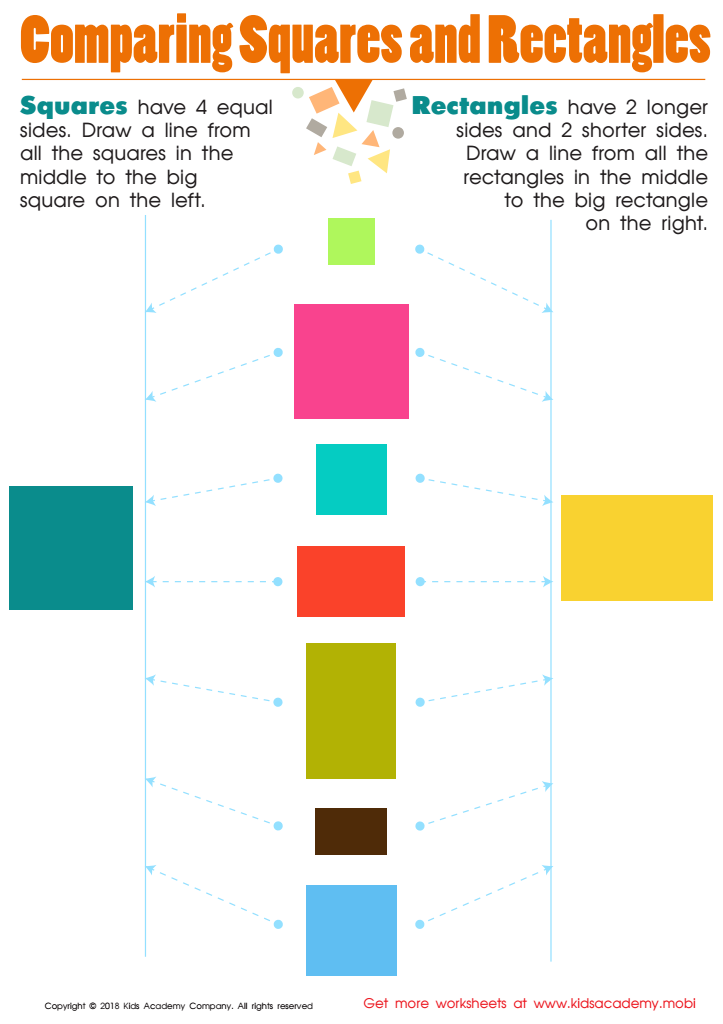
Comparing Squares Rectangles Worksheet

Help your little learner distinguish rectangles from squares with this fun geometry worksheet from Kids Academy! Read the definitions at the top, use the shapes on either side as a guide, then trace over the dotted line to match the rectangles and squares!
Comparing Squares Rectangles Worksheet
Worksheet
Word Problems: Assessment 2 Worksheet

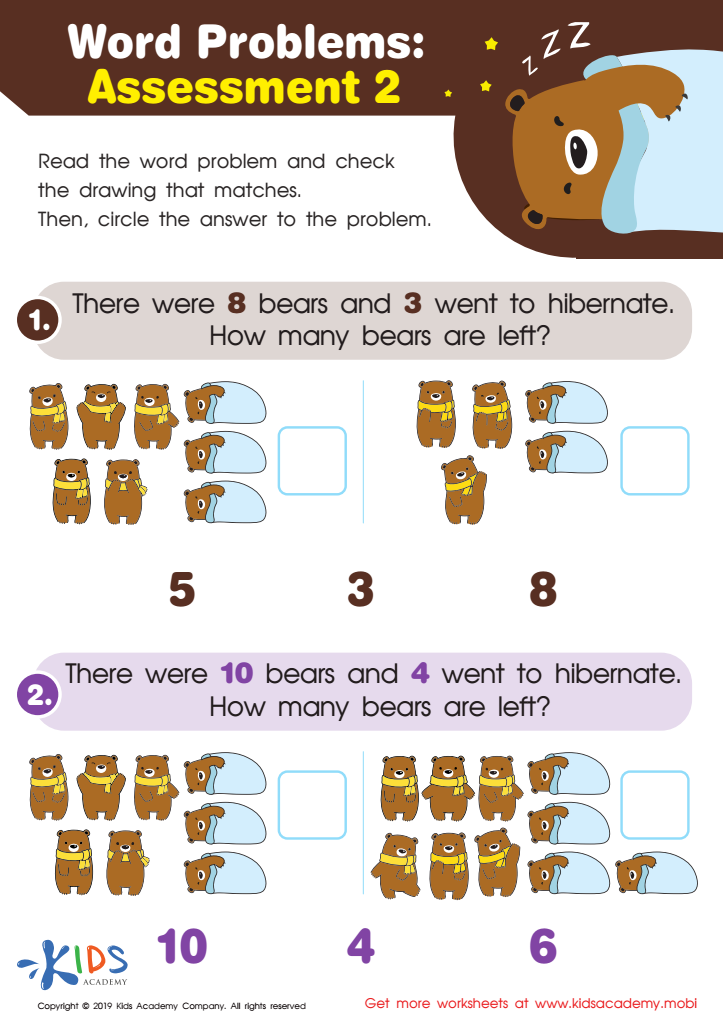
Word Problems: Assessment 2 Worksheet

This bear-themed worksheet is a great way to test subtraction skills. Have your child read the word problems and match the correct drawing with the answer. It's a fun way to quiz them without them even knowing. Enjoy counting cute snoozing bears! (80 words)
Word Problems: Assessment 2 Worksheet
Worksheet
Party Problems Worksheet

Party Problems Worksheet

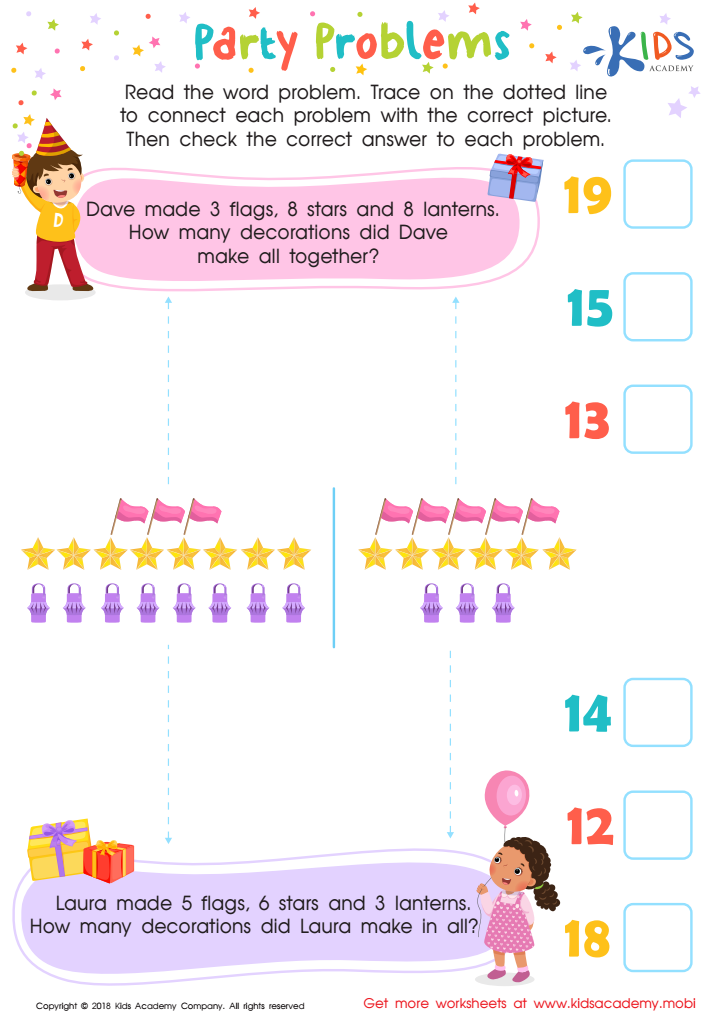
Problems at parties? No problem! With this engaging PDF worksheet, your student can connect word problems to pictures, check correct answers, and find the sum of 3 addend problems. They'll be a party-saving hero in no time!
Party Problems Worksheet
Worksheet
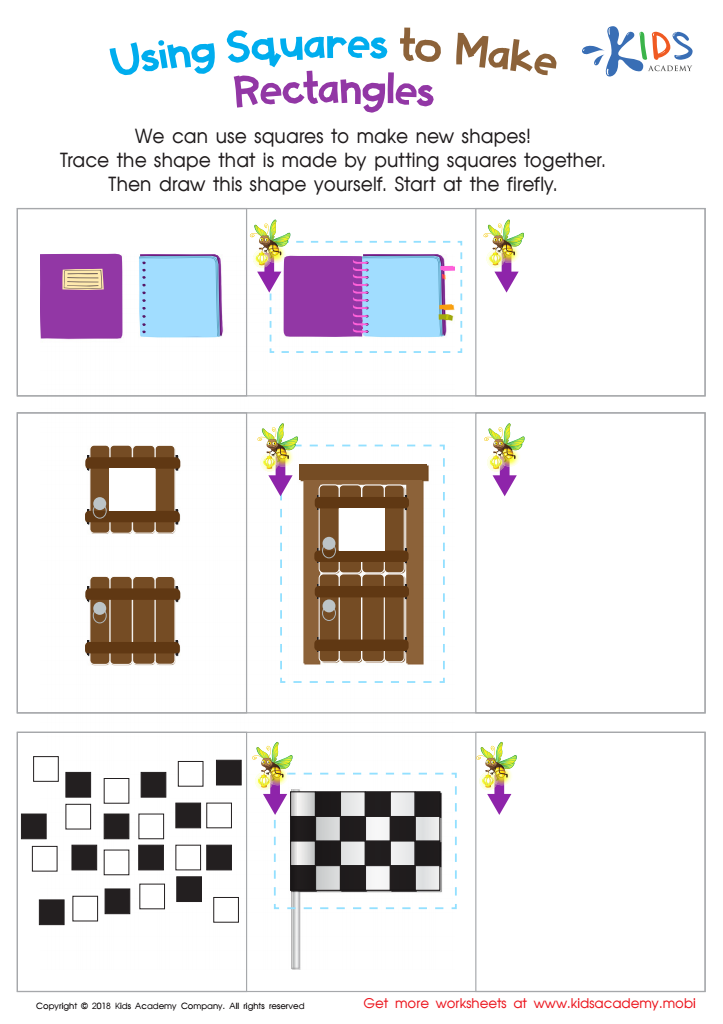
Using Squares to Make Rectangles Worksheet


Using Squares to Make Rectangles Worksheet

Creating shapes from other shapes (composing shapes) develops spatial skills, an essential geometry standard for young students. This worksheet introduces familiar square objects, then demonstrates how they create rectangles. Students practice tracing and then drawing the shape independently. Download this free math resource for the classroom today! (80 words)
Using Squares to Make Rectangles Worksheet

Worksheet


Critical thinking is an essential skill that should be nurtured from an early age, particularly within foundational subjects like kindergarten math. Encouraging young learners to think critically in math helps them develop problem-solving capabilities, which are crucial not just for academic success, but for navigating everyday life. By incorporating critical thinking into kindergarten math, children learn to approach problems with an analytical mindset, seeking solutions through reasoning and logic rather than memorization.

Parents and teachers should care about this because it sets the stage for lifelong learning and adaptability. When children are taught to think critically, they become more adept at understanding concepts deeply rather than merely following procedural steps. This deep understanding fosters a love for learning and boosts their confidence in tackling new problems.

Additionally, critical thinking in early math education promotes creativity. Students learn to see problems from multiple angles and come up with innovative solutions. This ability to think “outside the box” is valuable in our rapidly changing world, where adaptability and innovation are constantly required.

Ultimately, caring about critical thinking in kindergarten math means investing in the development of well-rounded, capable individuals who can contribute meaningfully to society. By fostering these skills early, we help children build a strong foundation that will benefit them throughout their educational journey and beyond.