Pattern recognition Normal Kindergarten Math Worksheets
4 filtered results
-
From - To
Discover engaging and educational pattern recognition worksheets designed specifically for kindergarten math! Our collection helps young learners develop essential skills needed for identifying, creating, and extending patterns. These worksheets include colorful visuals and fun activities that make learning enjoyable and effective. Ideal for both classroom use and home practice, our printable resources are tailored to enhance cognitive development and strengthen mathematical understanding through hands-on experience. Explore the world of patterns with exercises that promote critical thinking, concentration, and problem-solving skills. Perfect for early education, our pattern recognition activities ensure that children build a solid foundation in math while having fun learning!
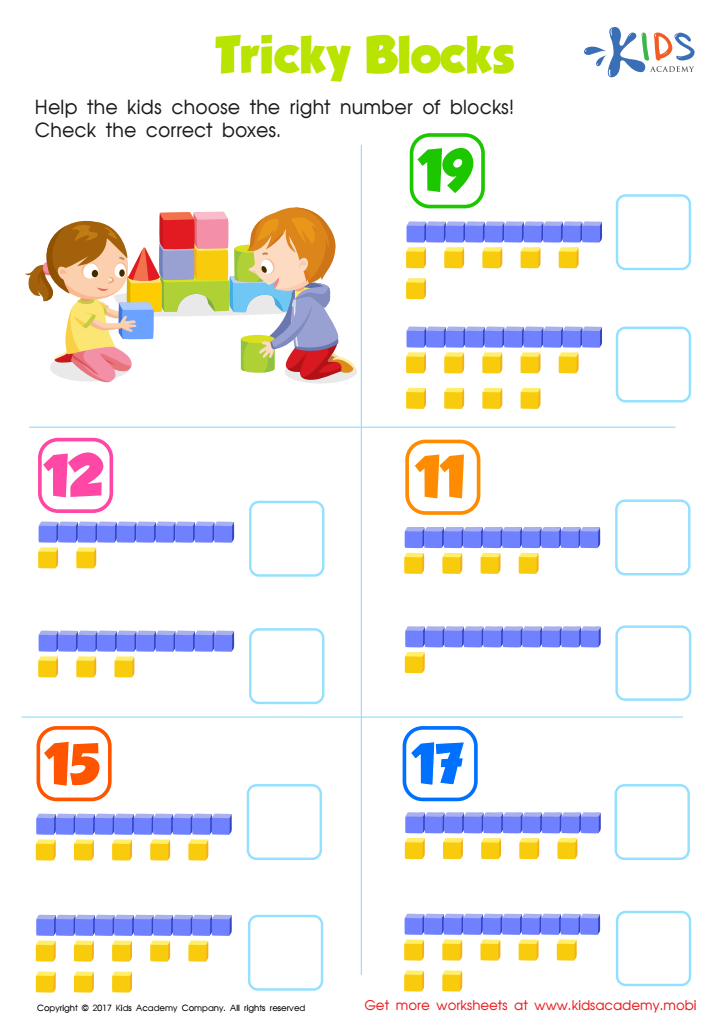
Tricky Blocks Worksheet
 Assign to My Students
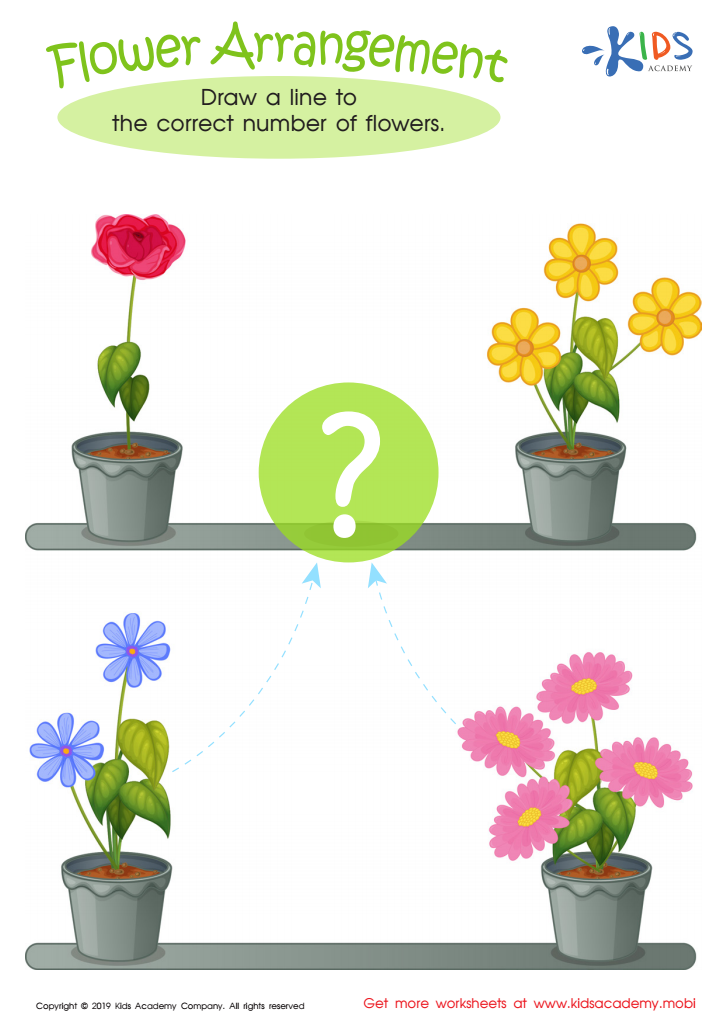
Flower Arrangement Worksheet
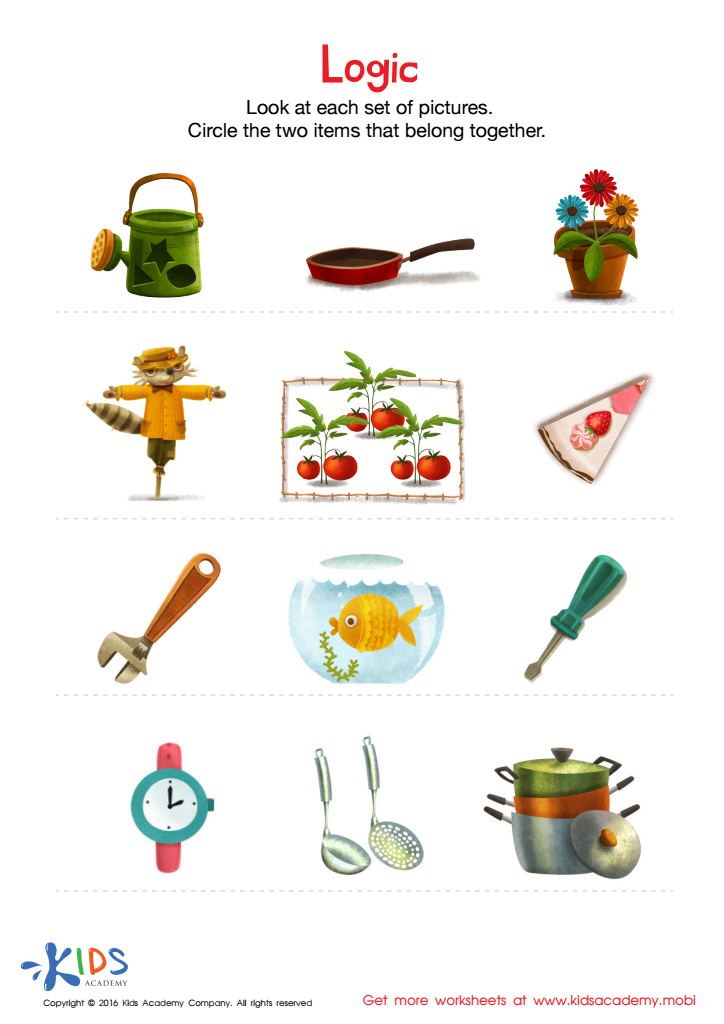
Logic Game Sorting Worksheet
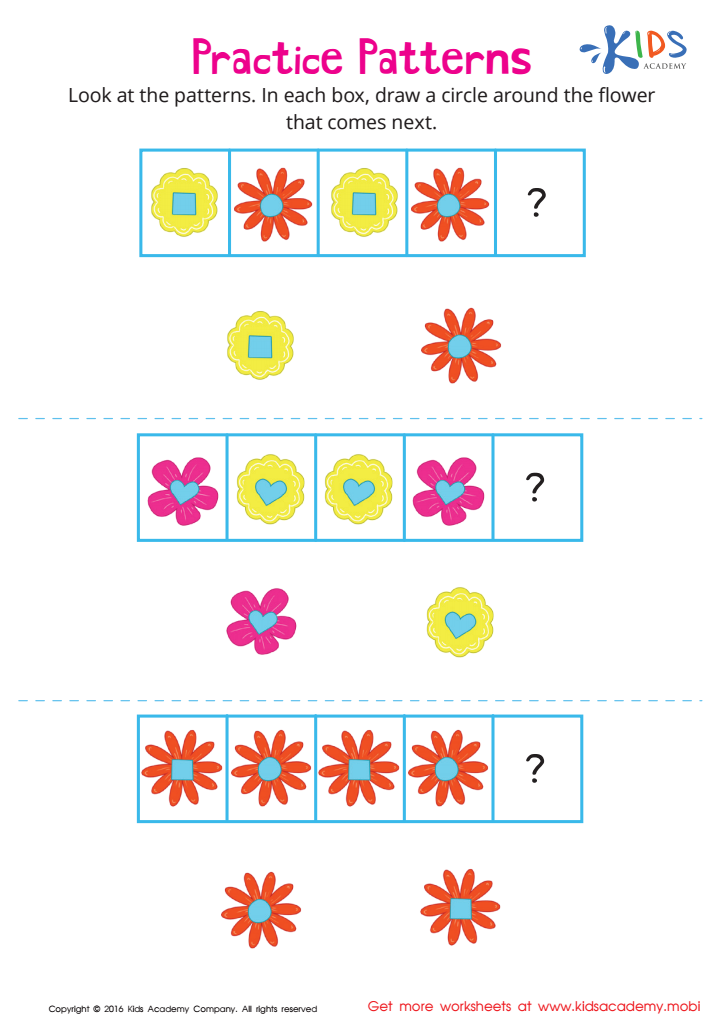







Pattern recognition is a fundamental skill in early childhood education, particularly in kindergarten math. Understanding patterns enables children to recognize relationships and structures in mathematics, which lays the groundwork for more complex concepts like addition, subtraction, and problem-solving. When children can identify patterns, they develop critical thinking and analytical skills, empowering them to make predictions, solve problems, and understand sequences in everyday life.
Moreover, engaging with patterns supports cognitive development. Recognizing patterns helps children improve their memory, as they learn to anticipate outcomes based on repeated elements. It also enhances their ability to engage in logical reasoning, an essential skill in both math and other academic areas.
For parents and teachers, fostering pattern recognition is vital because it encourages a deeper, more integrated understanding of math concepts that will be built upon in later grades. Early exposure to patterns also provides a foundation for fluency in math, promoting success across the curriculum. Overall, supporting children's engagement with patterns in kindergarten math enriches their learning experience and equips them with skills that are crucial for future academic success and everyday problem-solving. Through such early interventions, parents and teachers can work together to cultivate a strong mathematical foundation.








