Understanding directions Normal Kindergarten Math Worksheets
3 filtered results
-
From - To
Introduce your young learners to essential navigation skills with our "Understanding Directions" Normal Kindergarten Math Worksheets. These engaging, age-appropriate activities are designed to help children grasp basic directional concepts such as left, right, above, below, and more. Each worksheet combines colorful illustrations with simple instructions, making learning both fun and effective. By mastering these directional skills, children will enhance their spatial awareness and lay a solid foundation for future math proficiency. Perfect for classroom use or at-home practice, our worksheets support kindergarten students in developing critical thinking and problem-solving abilities in an enjoyable way. Discover the joy of learning directions today!
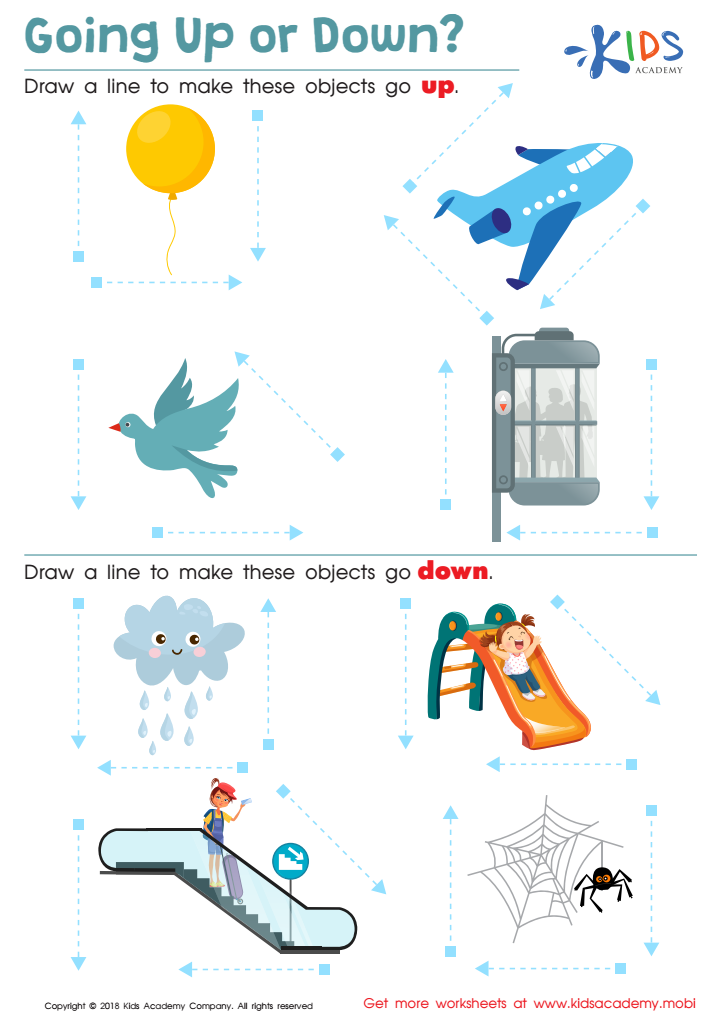
Going up or Down? Worksheet
 Assign to My Students
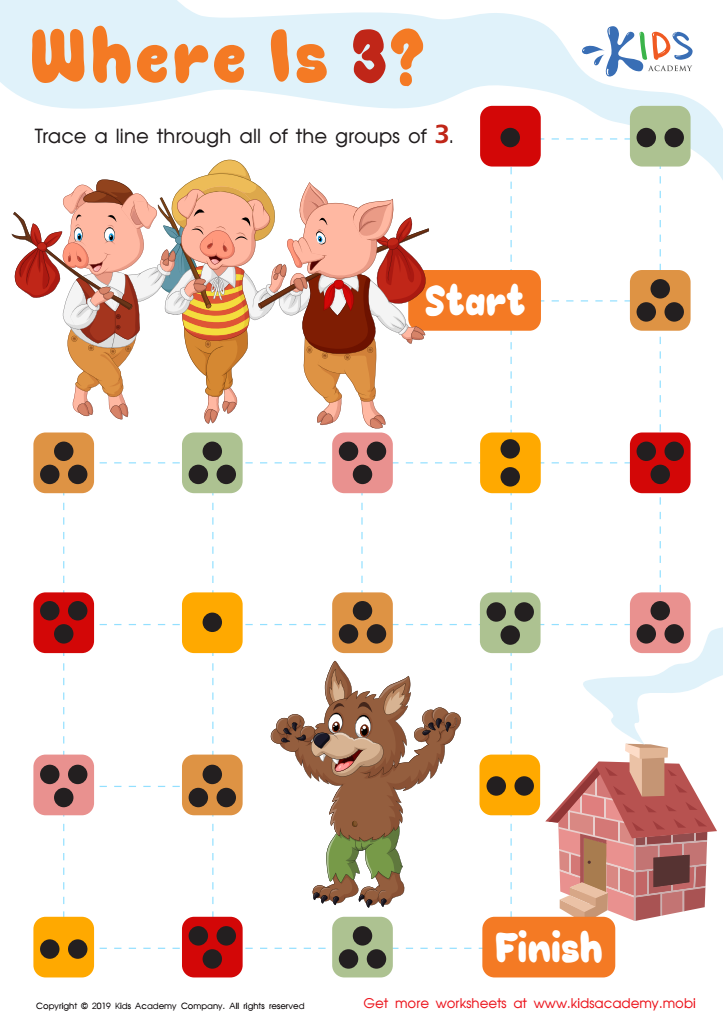
Where Is 3? Worksheet
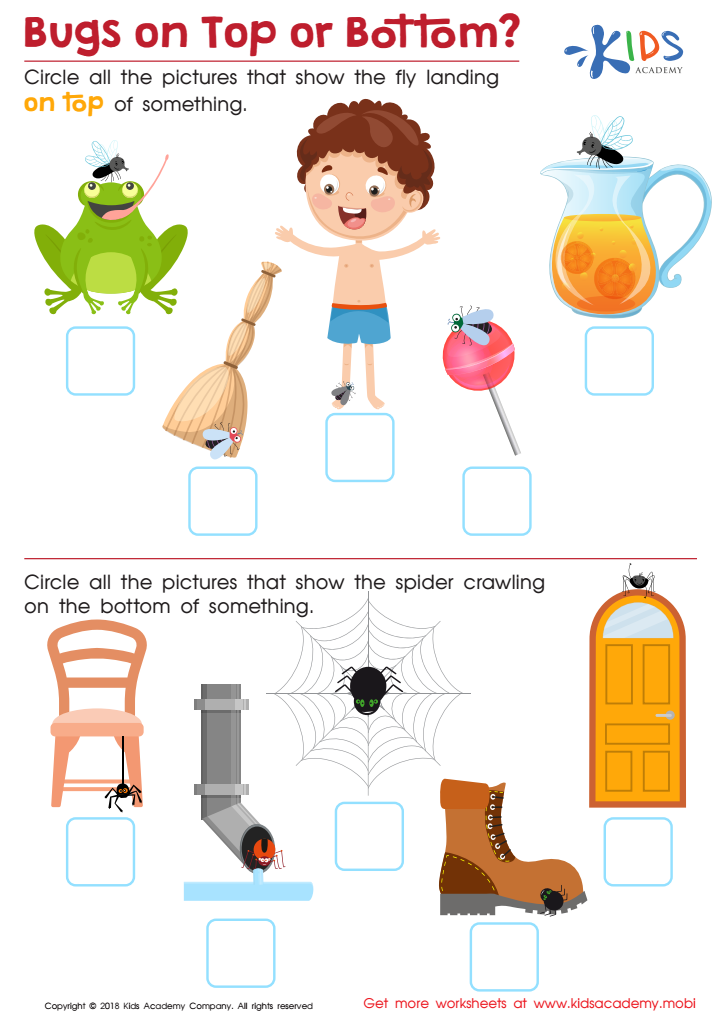
Bugs on Top or Bottom? Worksheet








Understanding directions in kindergarten math is a critical foundational skill with extensive implications on a child's academic journey and everyday life. Parents and teachers should emphasize this aspect for several significant reasons.
First, understanding directions fosters spatial awareness, helping children grasp concepts like over, under, beside, and next to. This spatial reasoning is vital not only in math but also in reading comprehension, following classroom routines, and safely navigating their physical environment.
Second, it enhances problem-solving skills. When children comprehend how to follow multi-step directions, they learn to approach tasks methodically, paving the way for tackling more complex mathematical problems in later grades, thereby building their confidence and competence.
Third, clear direction-following nurtures better communication skills. Being able to interpret and act on instructions accurately benefits their interactions with peers and adults, helping them succeed in collaborative tasks and reducing frustration.
Lastly, it establishes a strong foundation for future learning. Robust mathematical understanding begins with these elementary concepts, which are crucial for grasping more abstract ideas later on.
In summary, understanding directions in kindergarten math is indispensable as it bolsters spatial reasoning, problem-solving prowess, communication skills, and a strong foundation required for future academic success and everyday functional competence.








