
Visual perception Normal Kindergarten Math Worksheets
11 filtered results
Difficulty Level
Grade
Age
-
From - To
Subject
Activity
Standards
Introduce young learners to the exciting world of math with our engaging Visual Perception Kindergarten Math Worksheets! Designed to develop essential cognitive skills, these printables help children recognize patterns, shapes, and spatial relationships. Each worksheet features fun, colorful activities that enhance visual processing abilities, making math both enjoyable and educational. Perfect for home or classroom use, our worksheets foster critical thinking and problem-solving skills, setting a strong foundation for future math success. Let your child explore, learn, and have fun with these expertly crafted resources from Kids Academy. Download now and watch them thrive!
Favorites
With answer key
Interactive
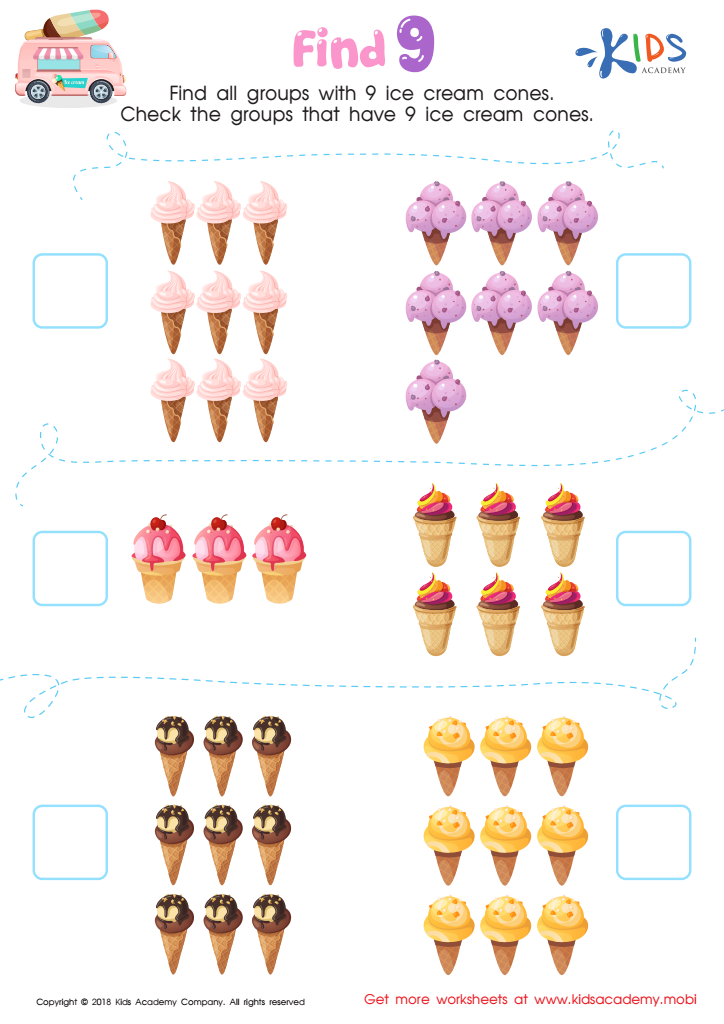
Find 9 Worksheet
Let your kids practice grouping numbers with this fun downloadable worksheet! It's full of ice cream colors and will help them improve their accuracy in addition and multiplication. Tracing the lines will also boost their fine motor skills.
 Assign to My Students
Find 9 Worksheet
Worksheet
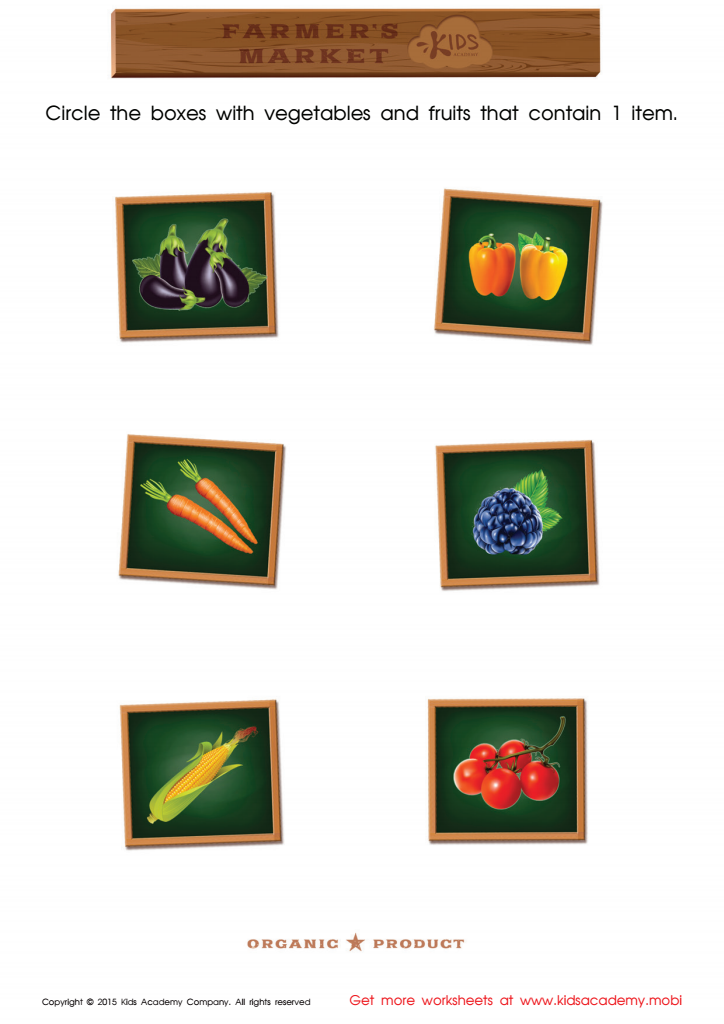
Count and Match Boxes with Vegetables
Print one and help your kid sharp his counting skills. With a variety of veggies to count, such as raspberries and eggplants, your little mathematician will have lots of fun.
Count and Match Boxes with Vegetables
Worksheet
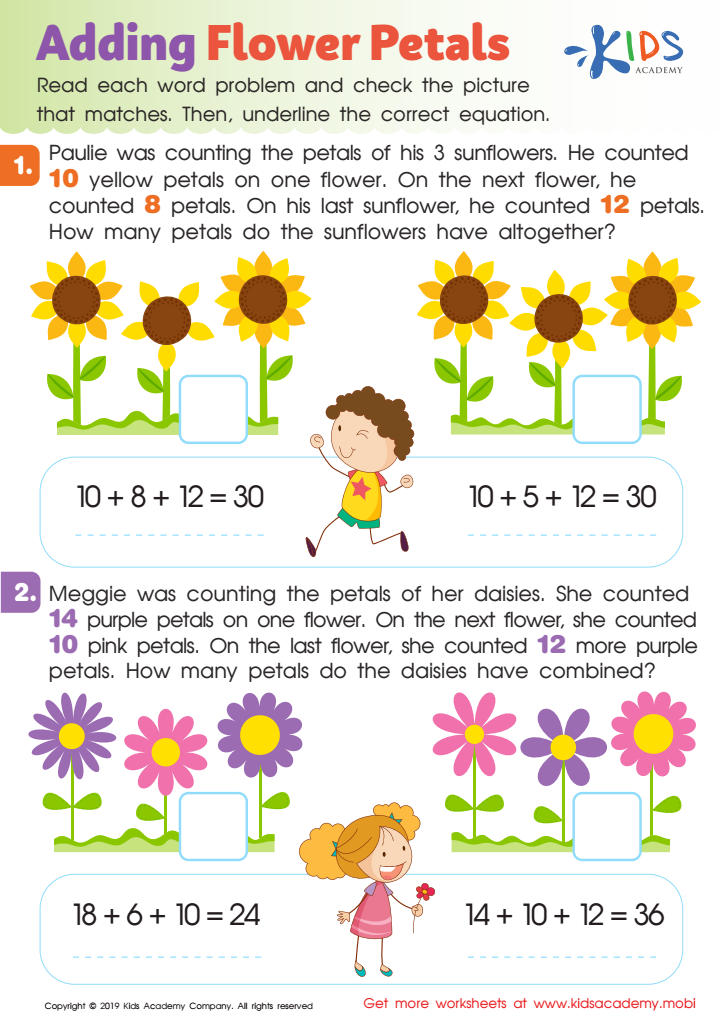
Adding Flower Petals Worksheet
This free worksheet helps little mathematicians learn to understand word problems. They'll read each one and match it to the corresponding picture. Important info is highlighted, teaching kids to look for key info when solving problems. Then they'll underline the correct number equation that matches the picture. A great way to practice problem-solving skills!
Adding Flower Petals Worksheet
Worksheet
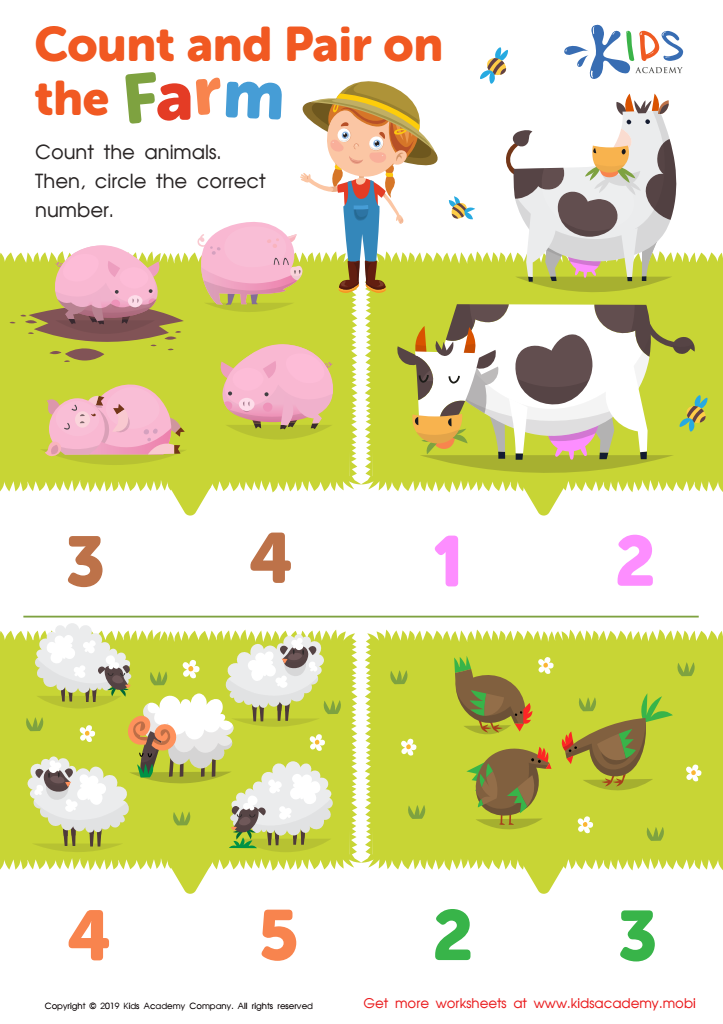
Count and Pair on the Farm Worksheet
Farms are essential to our society: they grow food and crops, and raise animals for us to use. Kids can have a great time at a farm, engaging in activities like identifying animals, counting them, and circling the correct number. On this worksheet, ask your kids to try all three!
Count and Pair on the Farm Worksheet
Worksheet
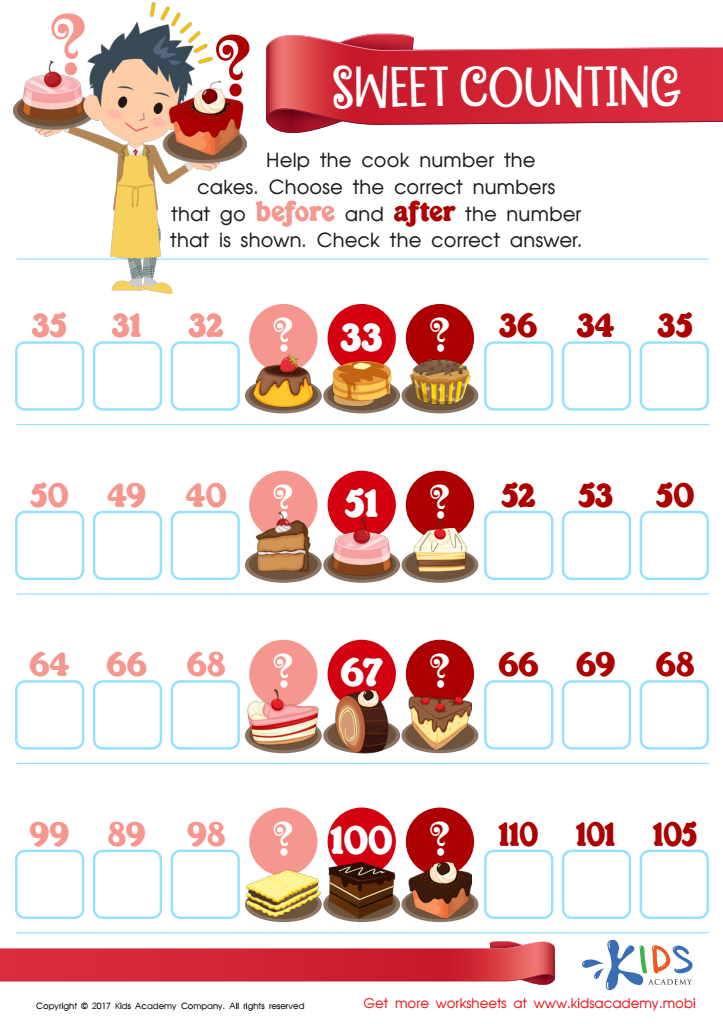
Sweet Counting - Part 1 Worksheet
Help your child learn numbers by counting cakes! Download this fun worksheet and have them fill in the numbers missing in the line of cakes. They'll have fun helping the cook and be learning at the same time!
Sweet Counting - Part 1 Worksheet
Worksheet
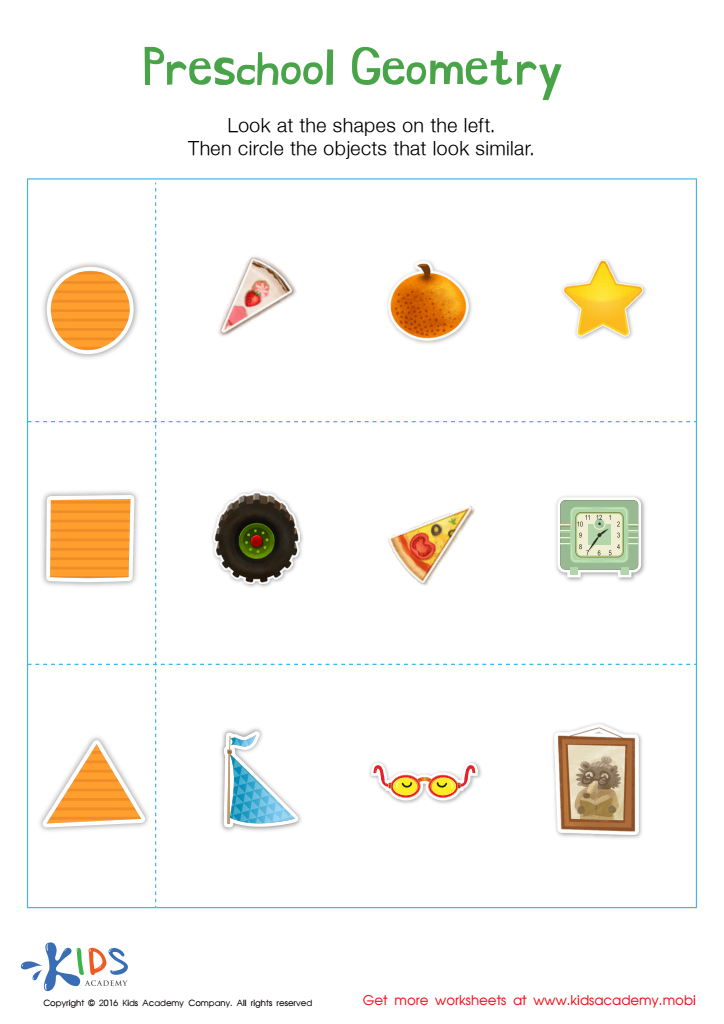
Preschool Geometry Match Up Worksheet
Teach your preschooler geometry using everyday objects. This printable worksheet helps them recognize, match, and follow directions like left and right. Start a conversation to extend their learning and they'll see how shapes appear in the world around them.
Preschool Geometry Match Up Worksheet
Worksheet
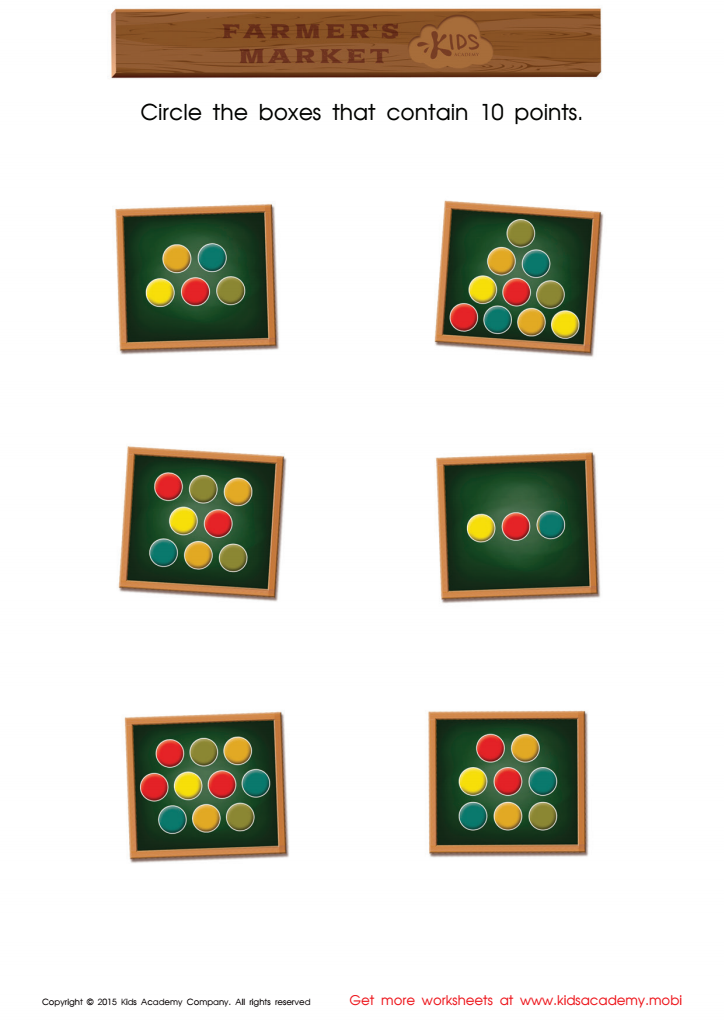
Count and Match Points 10 Math Worksheet
Help your youngster practice counting with this worksheet. Count the points in each box and circle any with up to 10 points. It will improve their counting and matching ability. Forget about addition and subtraction; it's time for a fun exercise for you both!
Count and Match Points 10 Math Worksheet
Worksheet
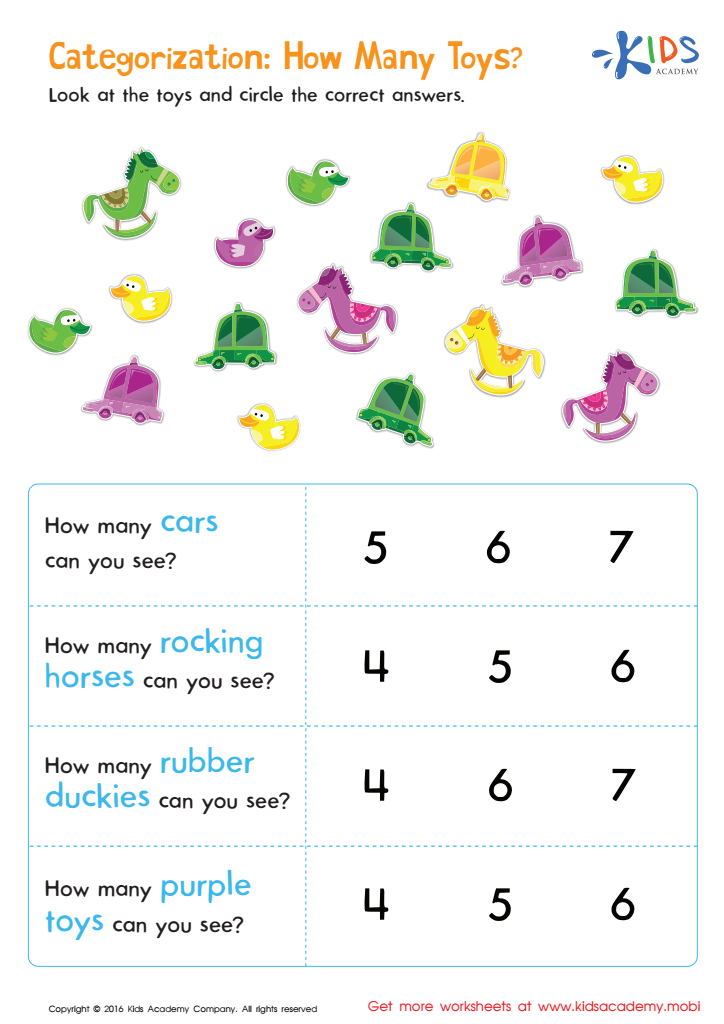
Classifying Toys by Type and Color Sorting Worksheet
Kids Academy offers free math worksheets to help practice counting, categorization & recognition skills. Kids will enjoy counting by color & type while strengthening problem-solving & literacy skills.
Classifying Toys by Type and Color Sorting Worksheet
Worksheet
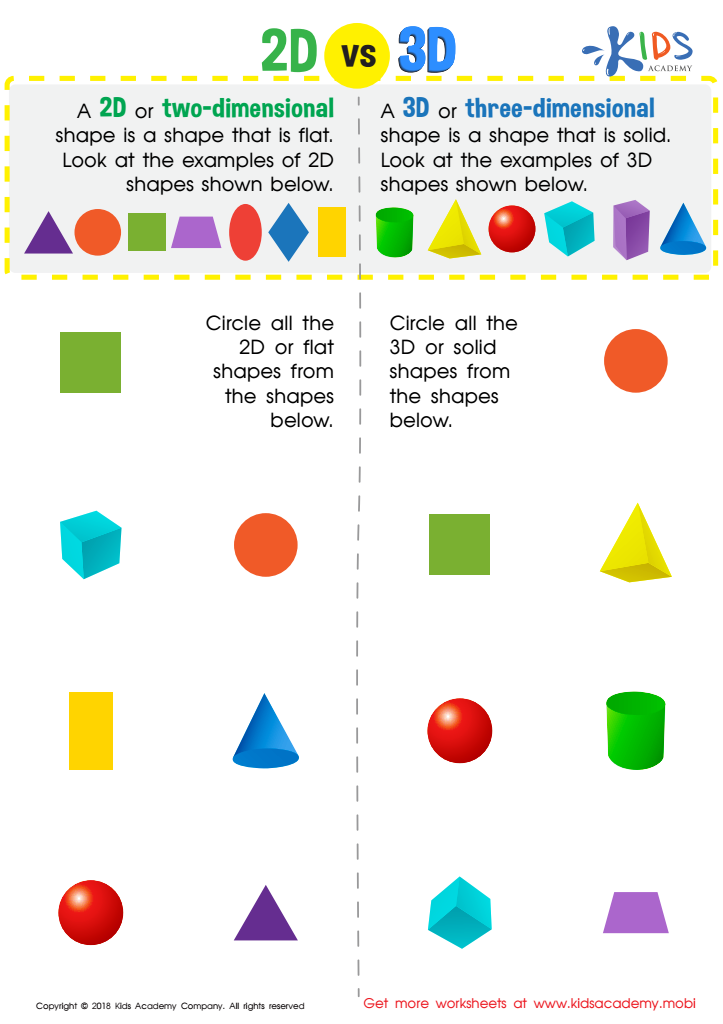
2D vs 3D Shapes Worksheet
Help your child understand 3D shapes using this engaging worksheet! Read the descriptions at the top and search for 2D and 3D shapes. An ideal activity for toddlers learning shapes. A fun way to understand the tricky concept of 3D shapes!
2D vs 3D Shapes Worksheet
Worksheet
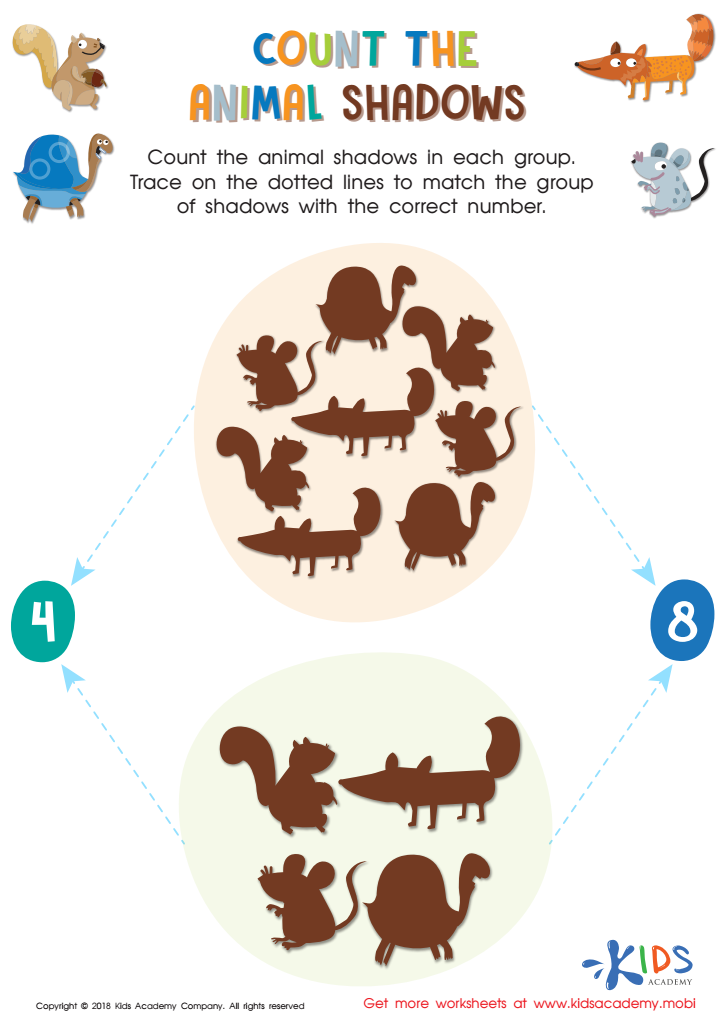
Count the Animal Shadows Worksheet
Our shadows accompany us wherever we go. Even your kids have seen theirs! Did they know that animals have shadows too? Count the animal shadows in each group with this worksheet. Ask your child to identify the animals pictured, then help them trace the dotted lines to match with the right number.
Count the Animal Shadows Worksheet
Worksheet
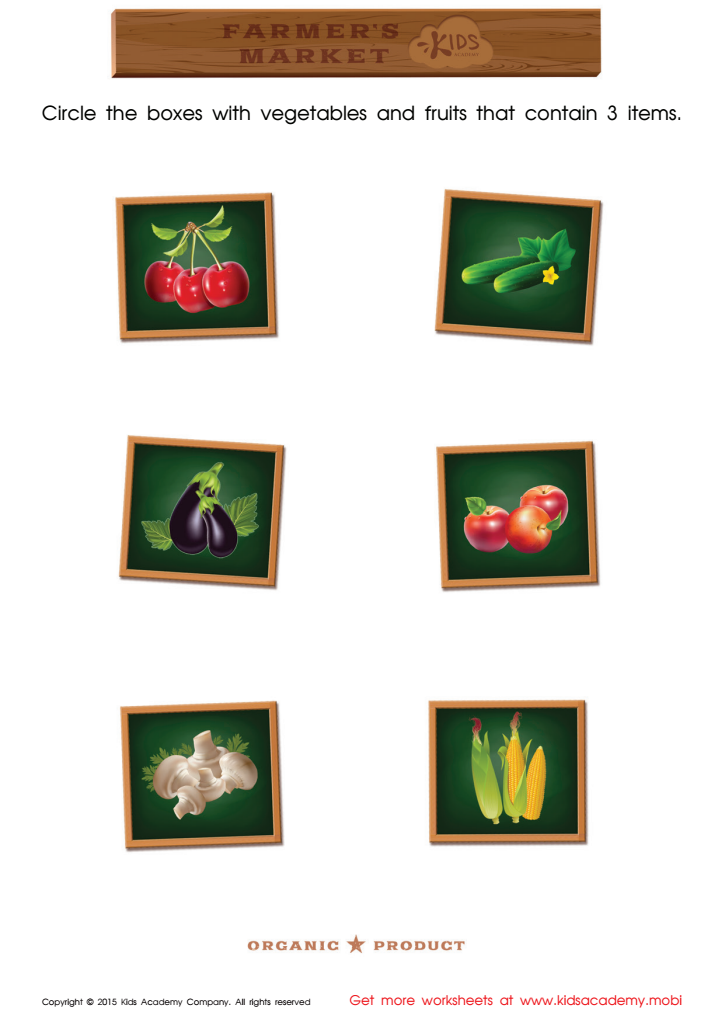
Count and Match Vegetables 1 – 5 Math Worksheet
Get your kindergartener to match the same number of vegetables with the boxes using this fantastic math worksheet. Using the Singapore approach, this printable worksheet makes math problems easy and fun for kids. Want more free worksheets? Click here for Kids Academy's selection!
Count and Match Vegetables 1 – 5 Math Worksheet
Worksheet
Join Kids Academy for Free
Who is primarily going to use this learning content?



%20(1).jpg)



.jpg)
Parents and teachers should prioritize fostering visual perception skills in kindergarten math because these skills lay the foundation for successful learning and development in multiple critical areas. Visual perception involves how the brain processes and interprets visual information from the environment, and it directly impacts a child's ability to understand and engage with early math concepts.
For example, when children learn to recognize shapes, patterns, and spatial relationships, they are developing essential skills for geometry and arithmetic. These abilities are crucial for tasks like sorting objects based on attributes (such as size or color), understanding number lines, and visualizing quantities. Moreover, well-developed visual perception skills support problem-solving strategies and logical thinking, both of which are integral to math competency.
In the broader context, good visual perception aids in reading, writing, and overall hand-eye coordination. A child who can accurately discern visual information will find it easier to distinguish between different letters and numbers, thereby improving literacy and numeracy skills simultaneously.
Furthermore, strengthening visual perception in early math enhances a child's confidence and enthusiasm for learning. By giving children tangible ways to see and understand abstract concepts, parents and teachers help instill a positive attitude towards math, which can lead to sustained academic success and a lifelong love for learning.








