
Astronomy basics Normal Worksheets
3 filtered results
Difficulty Level
Grade
Age
-
From - To
Subject
Activity
Standards
Introduce young learners to the fascinating world of space with our "Astronomy Basics Normal Worksheets" from Kids Academy! Perfect for early-grade students, these worksheets cover essential space concepts, including planets, stars, moons, and more. Engaging activities and colorful illustrations make learning fun and effective, helping children develop a strong foundation in astronomy. Each worksheet encourages curiosity and supports the development of critical thinking and problem-solving skills. Download and print these valuable resources to bring the wonders of the universe into your classroom or home, nurturing a passion for learning that can last a lifetime.
Favorites
With answer key
Interactive
 Assign to My Students
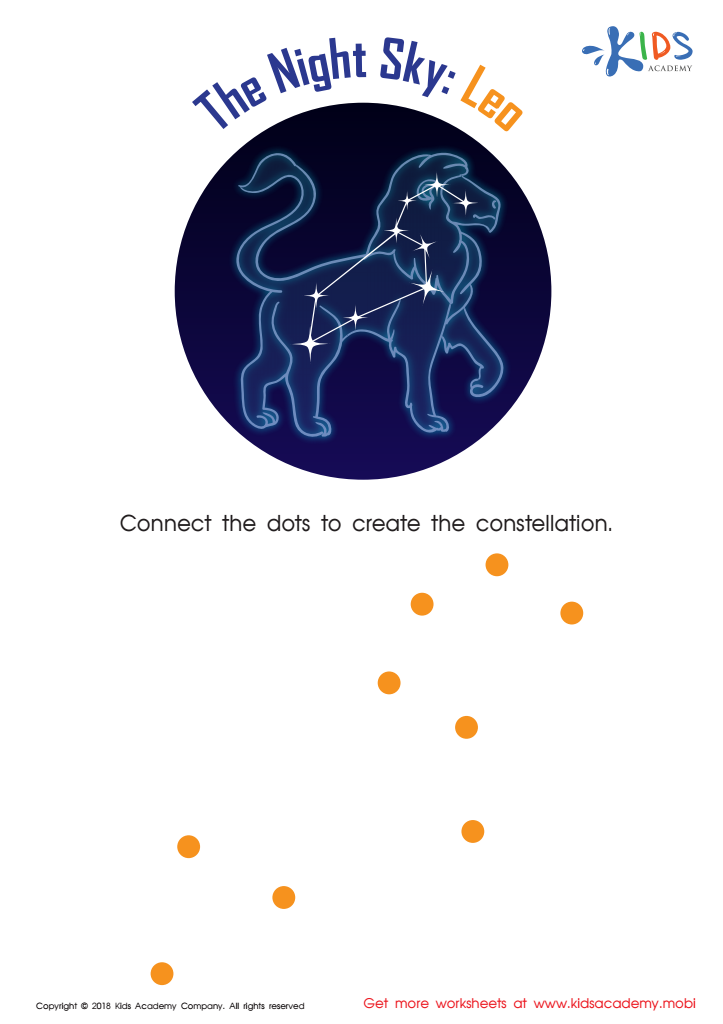
The Night Sky: Leo Worksheet
Let your kids explore the wonders of the stars with this fun worksheet! They'll connect the dots to create the constellation Leo. Night gazing instruments, a telescope or this printout can help your kids learn about constellations and horoscopes. Download the worksheet and let the star watching begin!
The Night Sky: Leo Worksheet
Worksheet
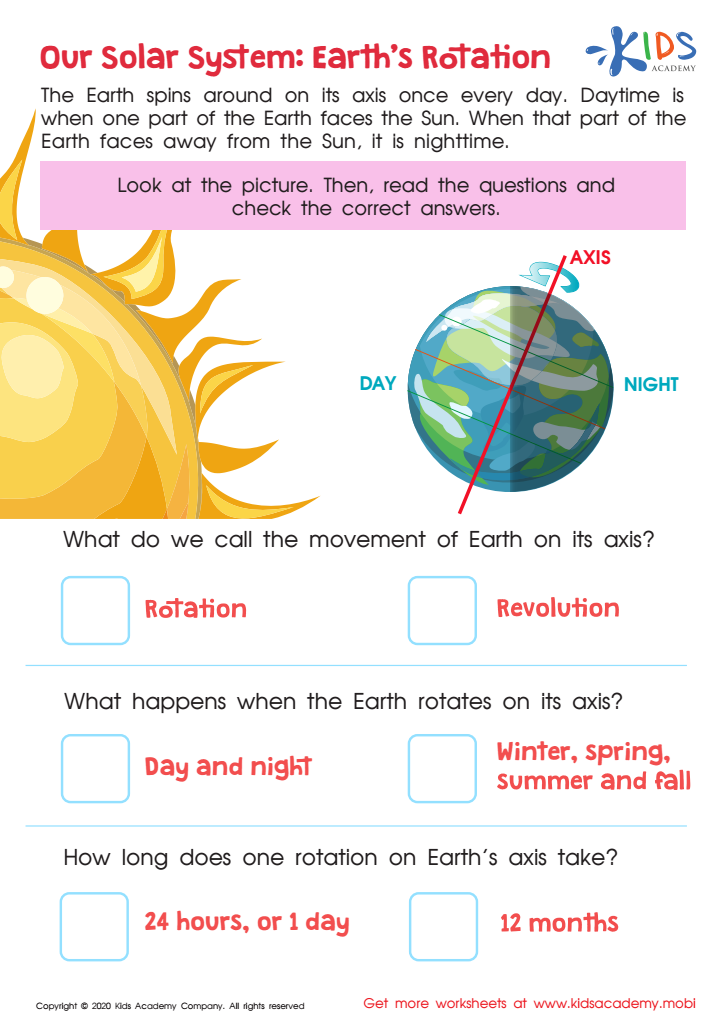
Our Solar System: Earth's Rotation Printable
They'll examine the illustration and answer questions to increase their vocabulary and knowledge.
Our Solar System: Earth's Rotation Printable
Worksheet
Join Kids Academy for Free
Who is primarily going to use this learning content?






.jpg)

Parents and teachers should care about teaching the basics of astronomy because it lays a strong foundation for critical thinking and curiosity in young minds. Astronomy, the scientific study of celestial objects and the universe, not only ignites wonder but also promotes a better understanding of our place in the vast cosmos. This subject encourages children to ponder big questions, develop inquiry-based learning skills, and become more science-literate individuals.
Teaching astronomy introduces fundamental concepts of science and mathematics in an engaging way. For instance, grasping the reasons for seasons, the phases of the moon, and the orbits of planets helps students understand natural phenomena and the passage of time. It can also defuse misconceptions, such as believing the Sun revolves around the Earth.
Moreover, astronomy uses skills in observation and critical analysis. Learning about distant galaxies can teach patience and attention to detail. These skills are transferable to other areas of education and everyday life.
Astronomy educates children on the importance of preserving our planet. As they learn about the uniqueness and fragility of Earth within the vast context of space, they are often inspired to become knowledgeable stewards of the environment.
Ultimately, an early introduction to astronomy can foster lifelong learning and appreciation for science, enhancing academic performance and inspiring future careers in science, Technology, Engineering, and Mathematics (STEM) fields.








