Chess strategy understanding Normal Worksheets
3 filtered results
-
From - To
Unlock the world of chess strategy with our "Chess Strategy Understanding Normal Worksheets." Perfect for young learners, these engaging and educational worksheets are designed to enhance critical thinking, problem-solving, and decision-making skills. Each worksheet presents thoughtfully crafted scenarios that guide students through essential chess strategies, helping them understand key concepts and improve their game. Whether your child is a beginner looking to grasp chess basics or an intermediate player aiming to refine their tactics, our worksheets cater to various skill levels. Explore, practice, and master chess with these invaluable learning tools, available exclusively at Kids Academy!
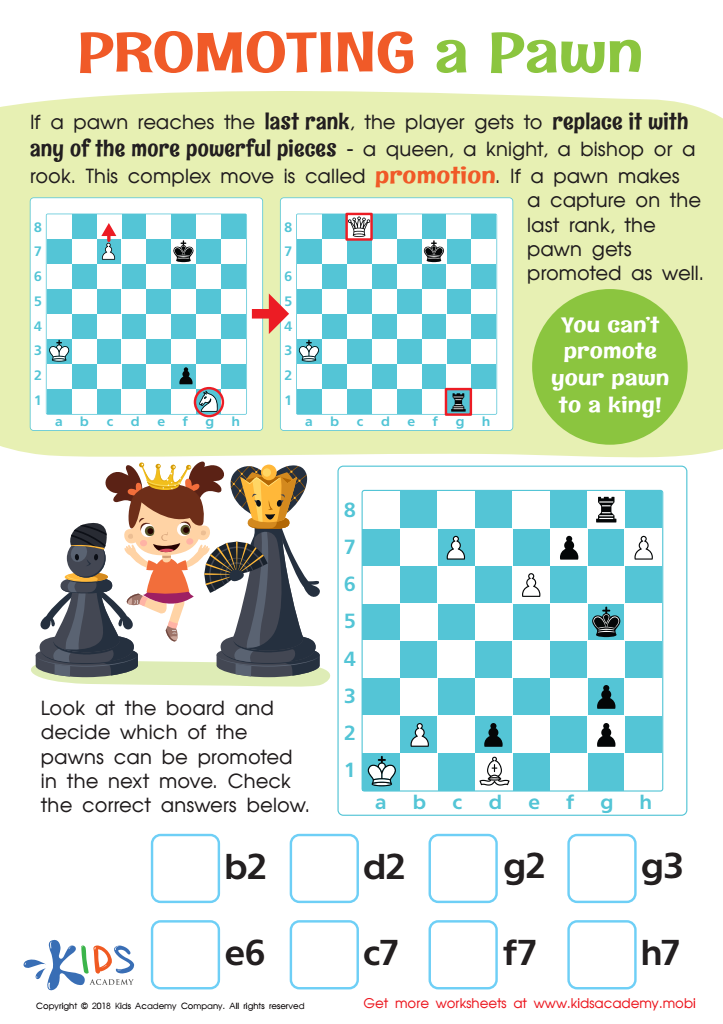
Promoting a Pawn Worksheet
 Assign to My Students
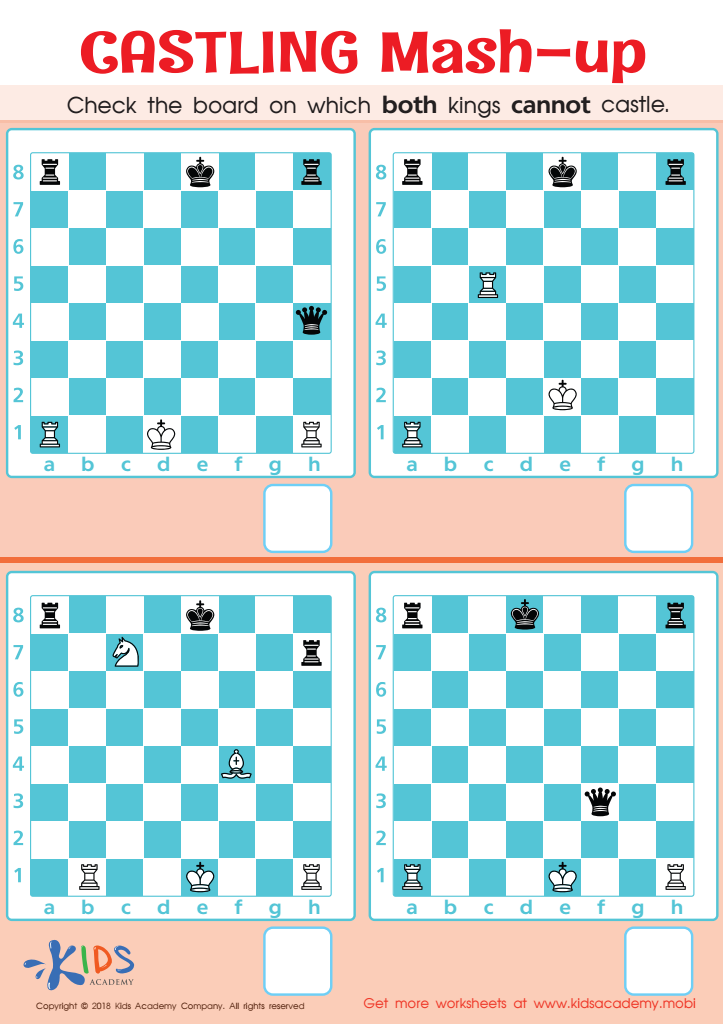
Castling Mash–up Worksheet
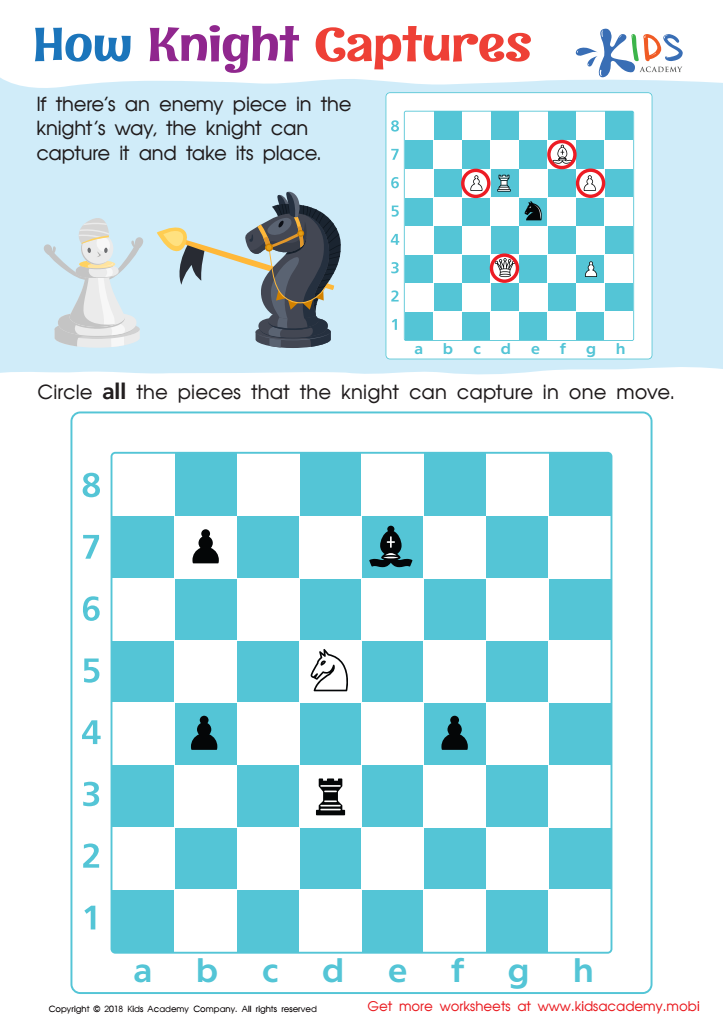
How Knight Captures Worksheet







Parents and teachers should care about children's understanding of chess strategy because it cultivates essential life skills and cognitive abilities. Chess requires players to think ahead, consider various possible moves, and anticipate the outcomes of their actions, which directly enhances critical thinking and problem-solving abilities. These skills are invaluable inside and outside the classroom, aiding in areas such as mathematics, science, and reading comprehension.
Moreover, chess teaches patience, discipline, and the importance of strategic planning. Children learn to focus and concentrate for extended periods, improving their attention span and discipline—traits beneficial in academic learning and daily activities. Additionally, chess reinforces the value of sportsmanship, as players must accept wins and losses gracefully, building emotional resilience.
Beyond cognitive development, chess increases memory capacity and analytical thinking. When students remember moves and strategies, they exercise their memory, which positively impacts overall academic performance. When analyzing their moves and their opponent’s moves, they engage in reflective thinking, deepening their analytical abilities.
Furthermore, chess is an inclusive game, transcending language and cultural barriers, fostering collaboration and mutual respect among diverse groups. Thus, encouraging children to learn and understand chess strategy is a holistic approach to developing their intellectual, emotional, and social skills, benefiting their overall growth and future success.








