Phonetics understanding Normal Worksheets
3 filtered results
-
From - To
Unlock your child’s reading potential with our Phonetics Understanding Worksheets! Specially designed for early learners, these engaging and educational worksheets focus on building phonetic awareness through fun activities. Each worksheet offers exercises to help children recognize and understand sounds, improve their pronunciation, and develop essential reading skills. Ideal for kindergarten and early grade students, our worksheets are easy to navigate and perfect for both classroom and home use. Make reading an adventure and give your child a strong foundation in phonetics with our high-quality, interactive learning materials! Explore and download now for free!
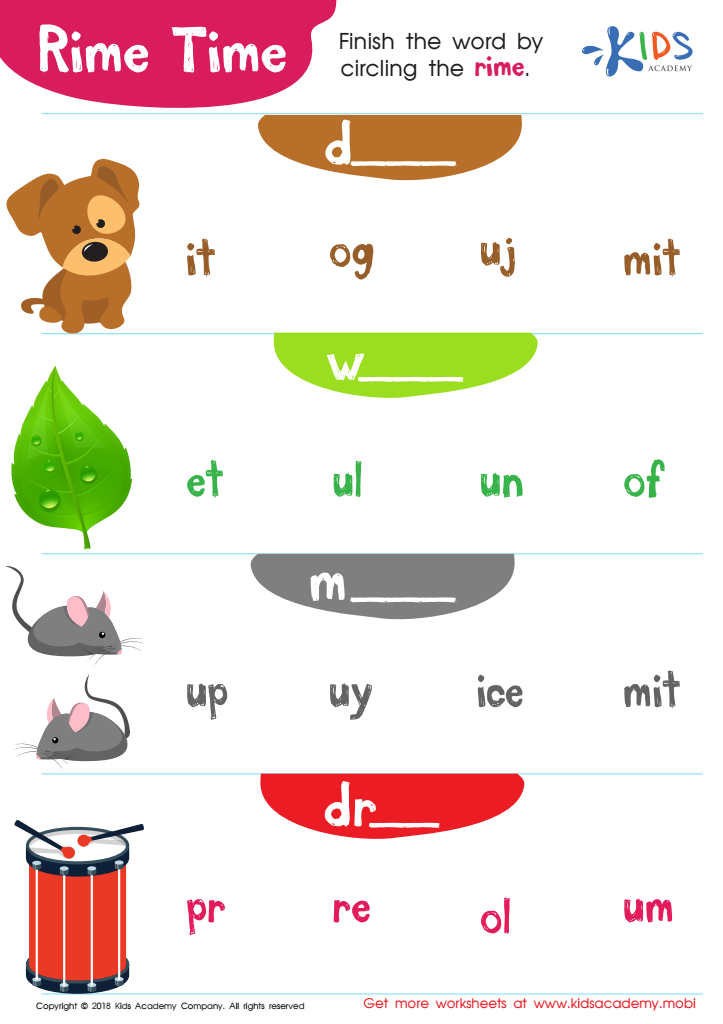
Rime Time Worksheet
 Assign to My Students
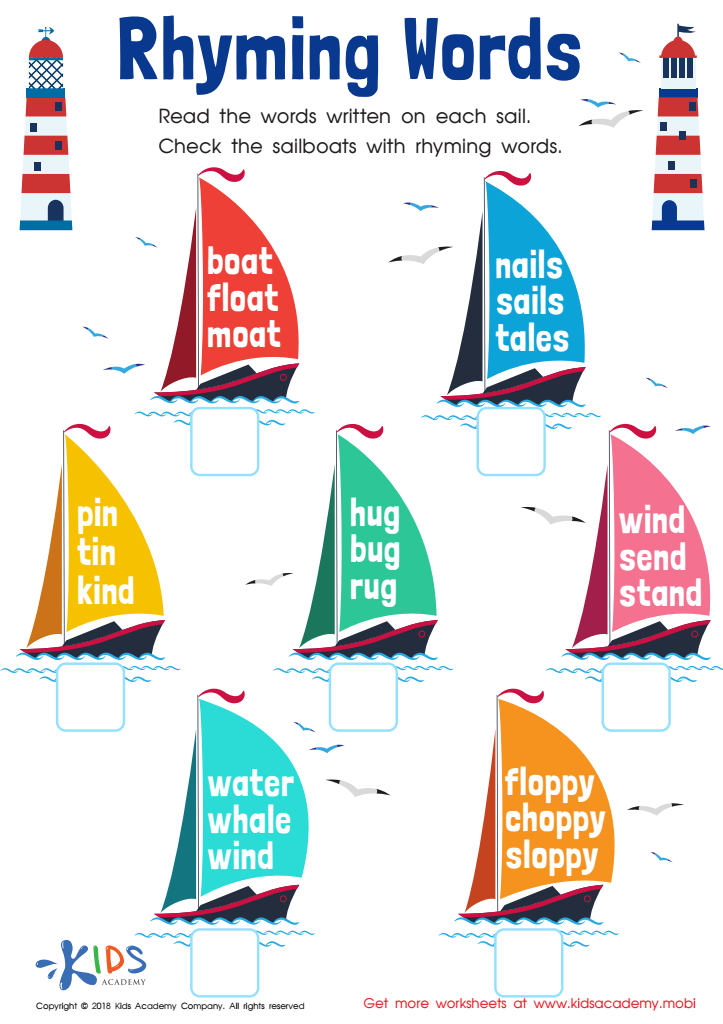
Rhyming Words Worksheet
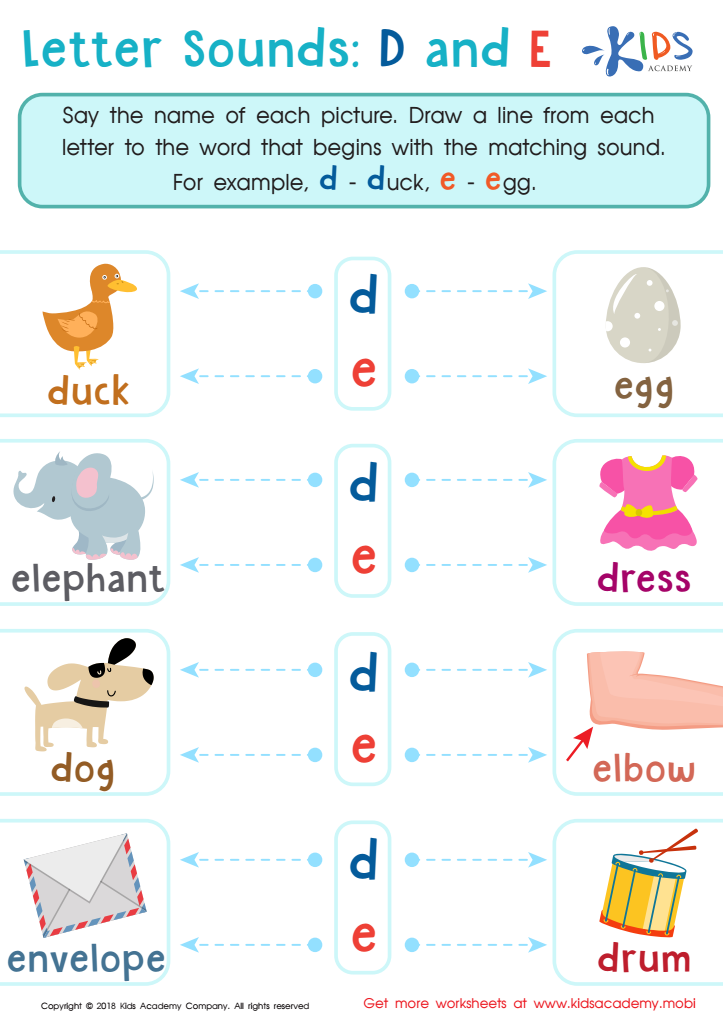
Letter D and E Sounds Worksheet







Phonetics is the study of sounds, and understanding it is crucial for both parents and teachers when it comes to children's language development. Grasping the role of phonetics helps in teaching children to read and speak more effectively. Early phonetic awareness aids in recognizing the relationship between letters and their corresponding sounds, a foundational step in phonics, which is essential for reading comprehension and literacy.
Phonetics allows educators and parents to identify and correct speech and pronunciation issues early, helping children articulate words properly, which boosts their confidence and communication skills. Understanding phonetics also supports language development, which is critical for cognitive growth and success in other academic areas.
Moreover, children with strong phonetic skills find it easier to learn new languages, decode unfamiliar words, and enhance their overall linguistic abilities. For parents, employing phonetics within everyday conversations nurtures a child’s auditory discrimination, while teachers can use it to create effective, engaging learning strategies tailored to student needs.
By valuing phonetics, parents and educators are building a strong foundation for children’s academic journey, ensuring they excel not only in reading and writing but in all areas of learning and communication. This fosters long-term educational success and a love for lifelong learning.








