Reading thermometers Normal Worksheets
3 filtered results
-
From - To
Boost children's learning skills with our "Reading Thermometers Normal Worksheets." These expertly designed worksheets are perfect for early-grade students to practice interpreting temperature from various types of thermometers. Ideal for enhancing comprehension and application abilities in practical scenarios, each worksheet offers engaging tasks that make learning fun and effective. Through hands-on exercises, kids will gain confidence and accuracy in reading both Fahrenheit and Celsius scales. Ideal for teachers and parents alike, these printables are an excellent resource for developing essential measurement and data management skills. Make learning to read thermometers a breeze with Kids Academy!
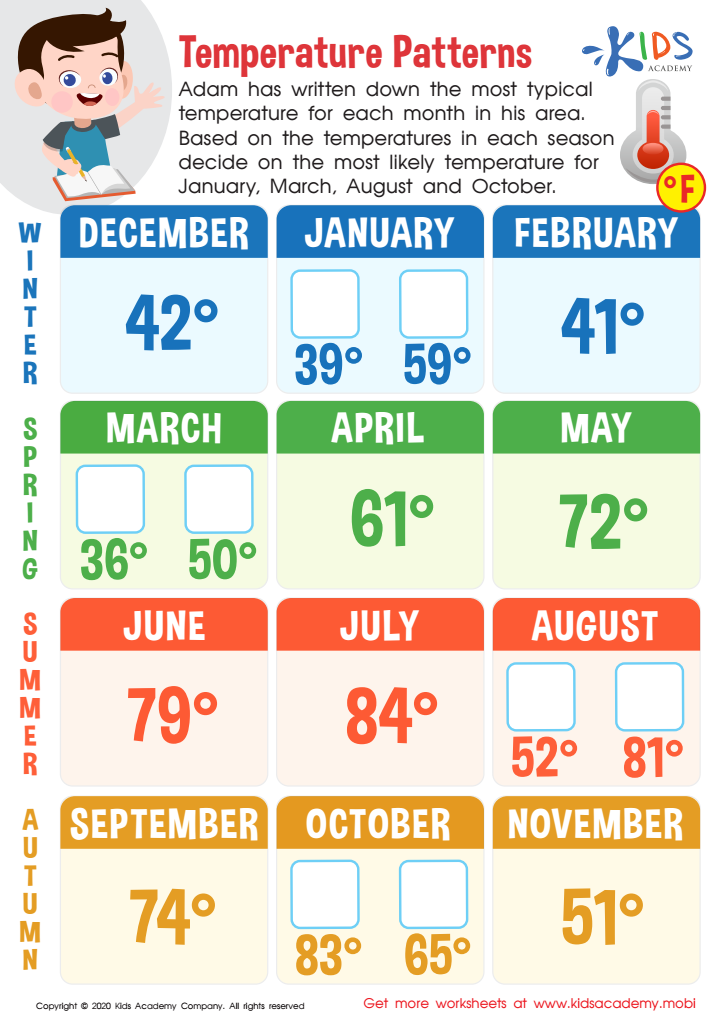
Temperature Patterns Worksheet
 Assign to My Students
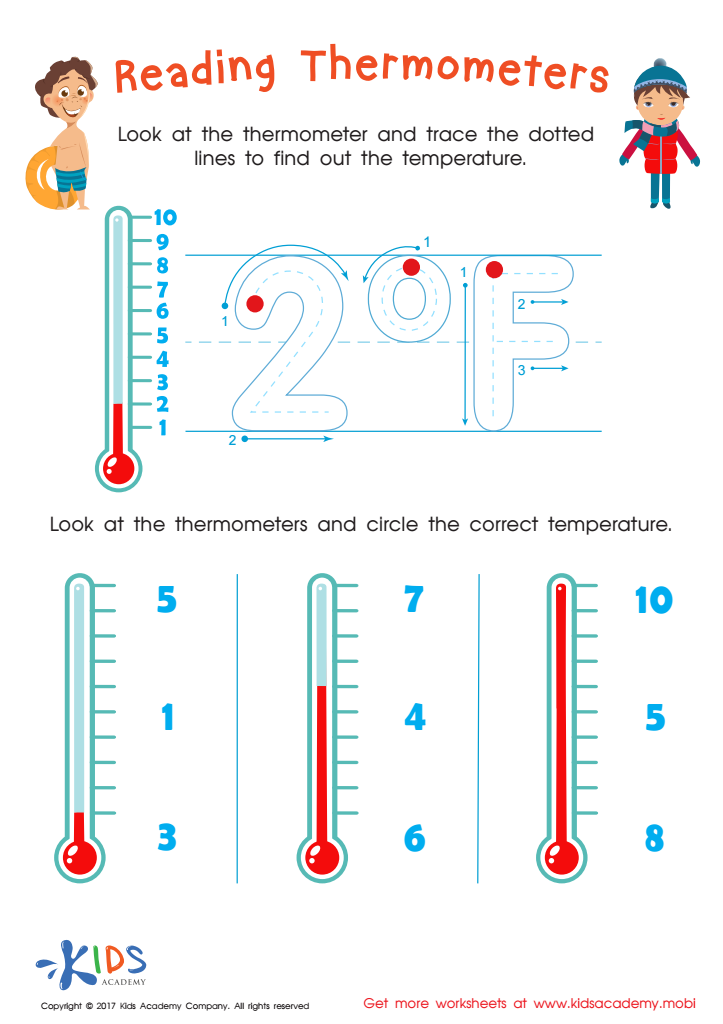
Reading Thermometers Printable
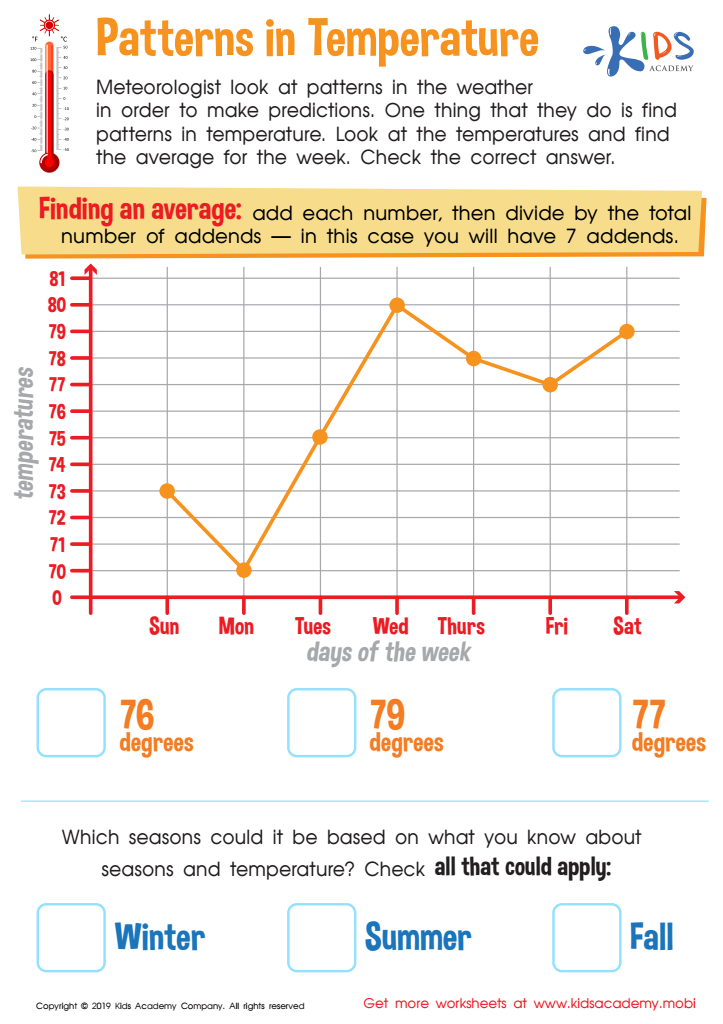
Patterns in Temperature Worksheet








Understanding how to accurately read thermometers is important for both parents and teachers because it is a fundamental skill that helps maintain children’s health and safety. For parents, knowing how to read a thermometer allows them to effectively monitor their child's body temperature, which is crucial in identifying fevers or potential infections early. Recognizing when a child's temperature is higher than normal can prompt timely medical intervention, thereby preventing complications from illnesses such as flu, colds, or other infections.
For teachers, especially those in early grades, teaching students to read thermometers fosters essential life skills. It not only promotes a basic understanding of temperature and its implications for health but also integrates practical lessons in science and real-world application. Educators can use thermometers to explain concepts like Celsius and Fahrenheit, provide hands-on learning experiences, and help develop students’ numerical and observational skills.
Moreover, promoting this knowledge among young children helps cultivate a sense of responsibility and awareness about personal health. Knowing what constitutes a normal body temperature empowers students to communicate more effectively about their health to caregivers and health professionals. It’s ultimately about equipping both parents and educators with tools to ensure children’s well-being and building foundational skills for lifelong health awareness.








