Rhyming skills development Normal Worksheets
4 filtered results
-
From - To
Enhance your child's language abilities with our Rhyming Skills Development Normal Worksheets, designed for children ages 3-6. Crafted to boost phonemic awareness, these engaging worksheets help kids recognize rhyming patterns, strengthen vocabulary, and develop foundational reading skills. Each exercise presents colorful, captivating illustrations and fun activities, from matching rhyming words to completing rhyming lines. Perfect for home or classroom use, these worksheets cater to various learning styles, ensuring every child experiences the joy of discovering rhymes. Foster a love for language and prepare your little ones for future reading success with these essential learning resources.
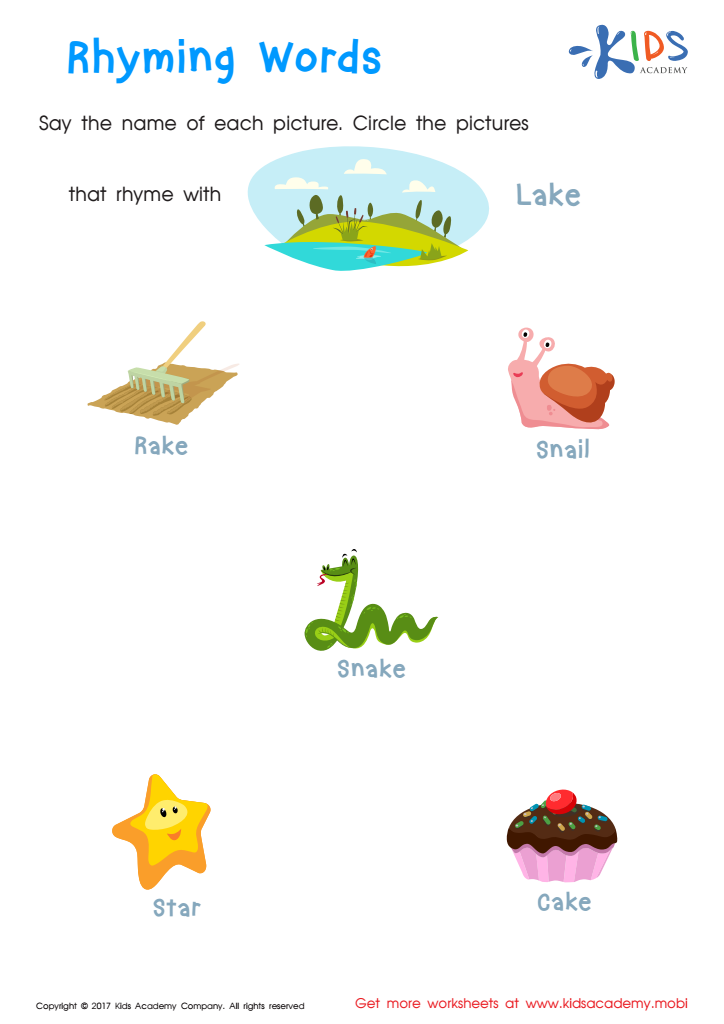
Rhyming Words Rhyming Worksheet
 Assign to My Students
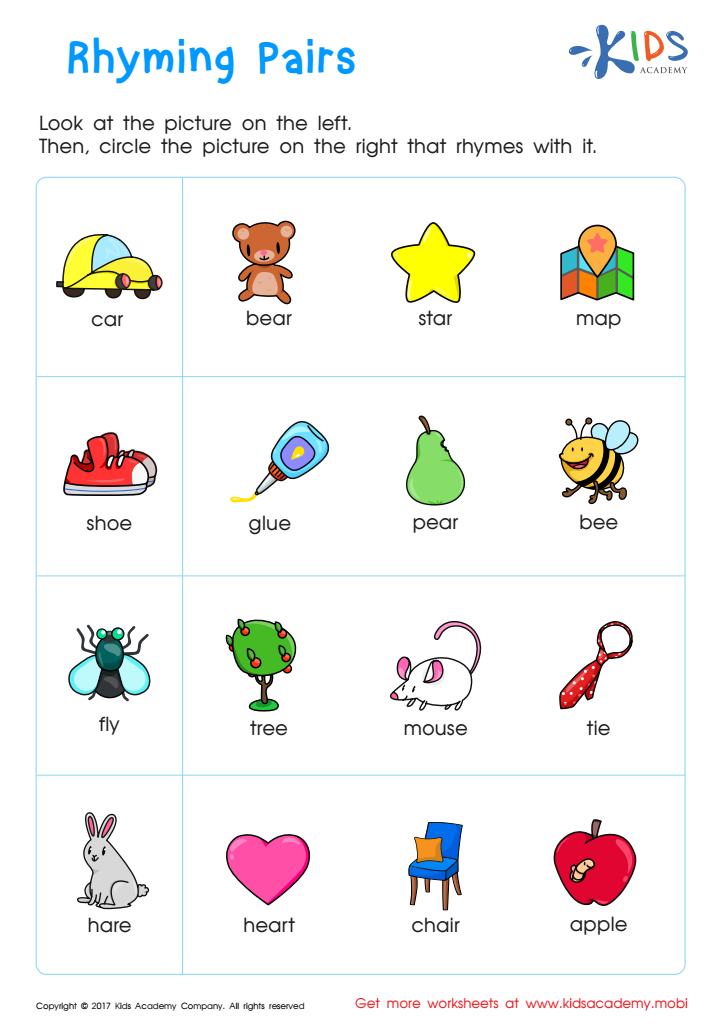
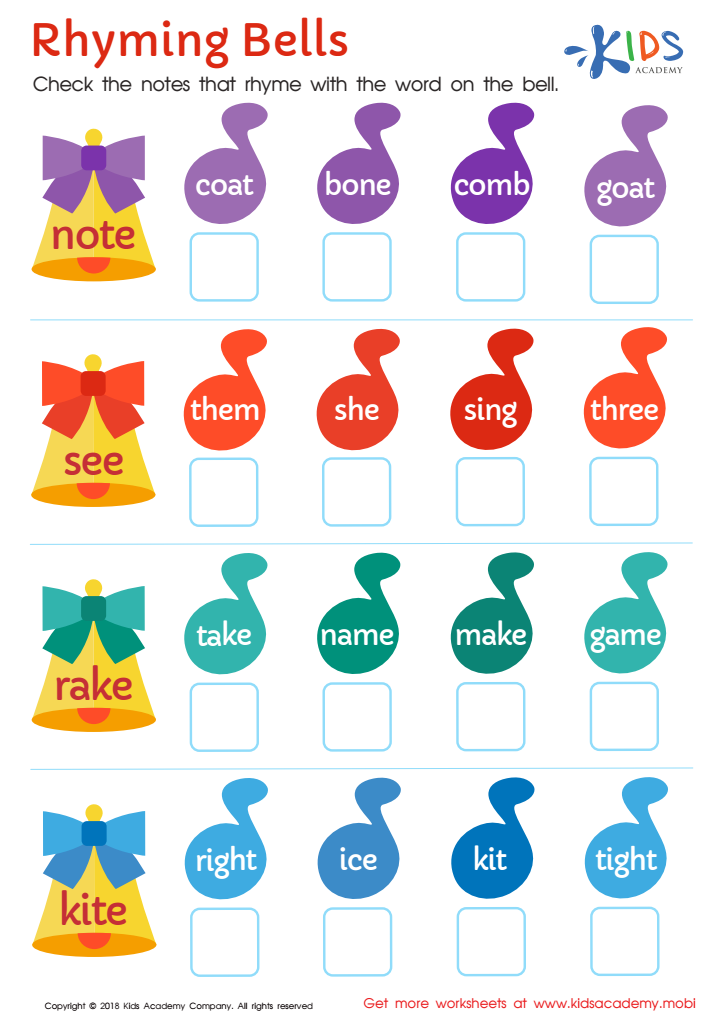
Rhyming Bells Worksheet
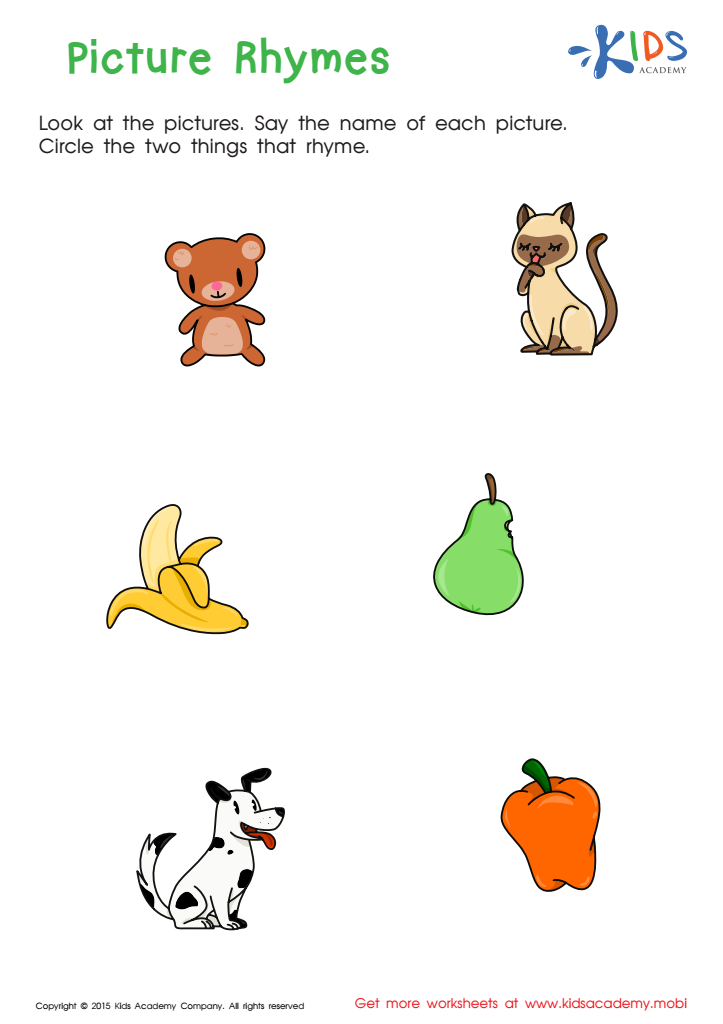
First Words: Picture Rhymes Worksheet






Rhyming skills are an essential foundation in early childhood literacy and language development, making them a crucial aspect for parents and teachers to prioritize. Rhyming helps children recognize and generate patterns in language, which is fundamental for developing phonemic awareness. This skill enables kids to discern different sounds in words, an ability that's closely linked to effective reading and writing.
When children practice rhyming, they engage in a fun, playful use of language that keeps them motivated and interested in learning. This engagement can turn learning into an enjoyable experience, fostering a positive attitude towards literacy from an early age. Additionally, understanding rhymes helps improve their memory and recall abilities because recognizing repetitive patterns and sequences aids in retaining information.
Moreover, rhyming helps with vocabulary expansion. When children are exposed to new rhyming words, they naturally build their lexicon, strengthening their communication skills. In social settings, a good grasp of language allows children to express themselves more effectively and engage in conversations with peers, promoting better social development.
In sum, rhyming is more than just a playful activity; it is a critical stepping stone towards comprehensive linguistic and cognitive development. By nurturing rhyming skills, parents and teachers are setting children up for future success in reading, writing, and overall communication.








