Understanding number relationships Normal Worksheets
3 filtered results
-
From - To
Discover our "Understanding Number Relationships" worksheets designed to enhance essential math skills in young learners. Our engaging resources help students grasp key concepts such as counting, number order, comparing quantities, and basic arithmetic operations. The carefully crafted exercises are perfect for building a solid foundation in math, boosting confidence, and making learning fun. Ideal for both classroom and at-home practice, these worksheets cater to various skill levels and learning paces. Start exploring today with Kids Academy's expertly developed worksheets to support your child's journey to math success!
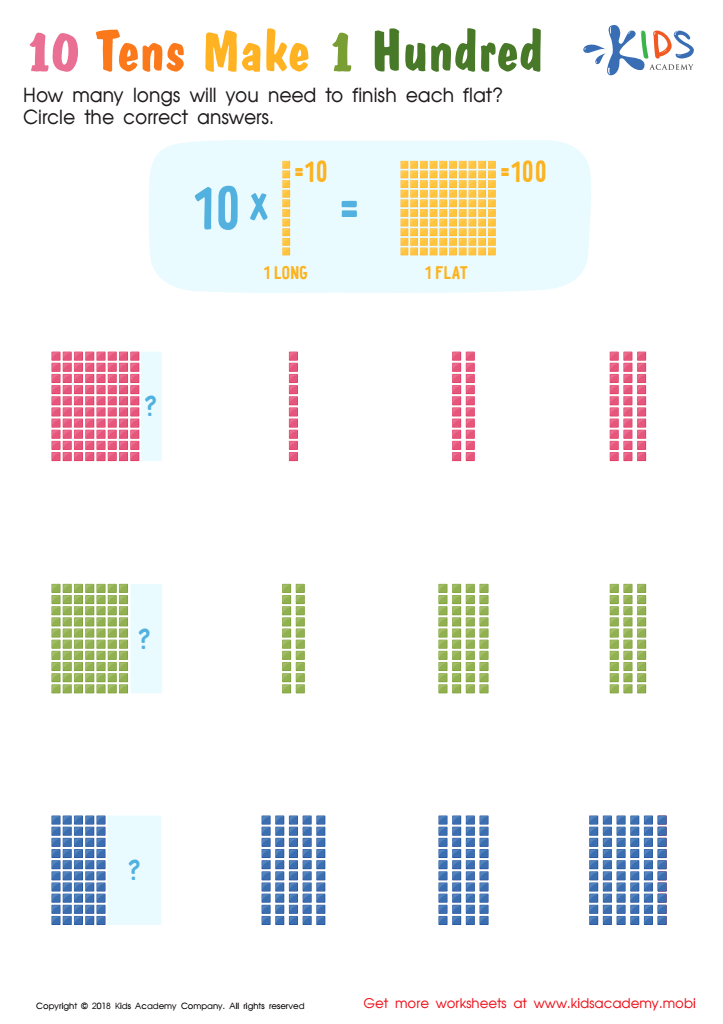
10 Tens Make 1 Hundred Worksheet
 Assign to My Students
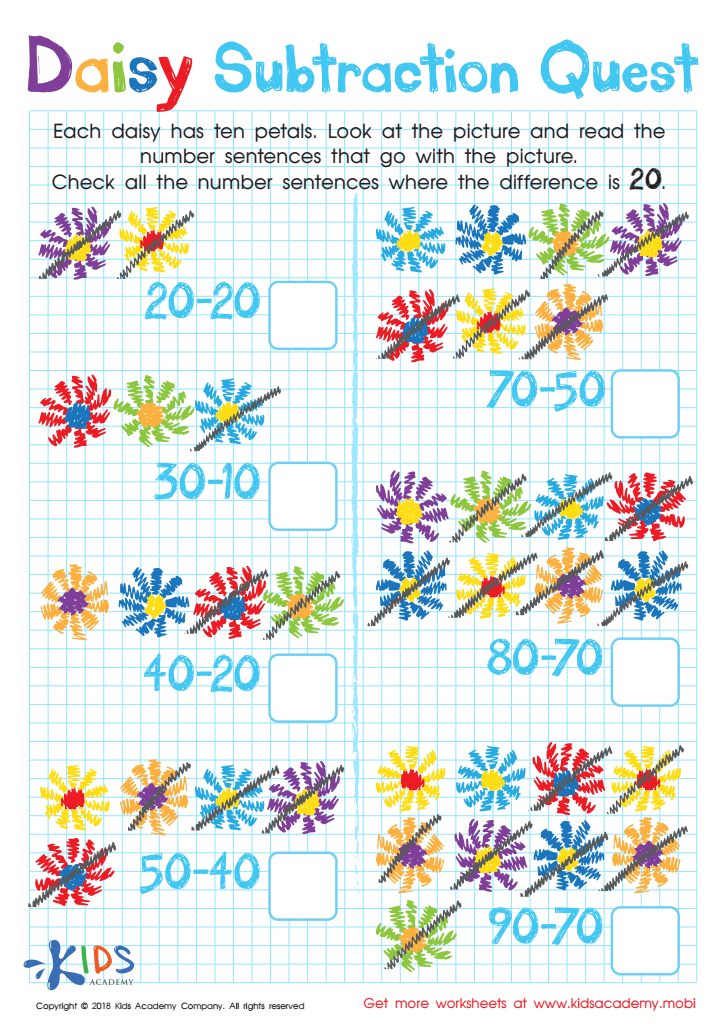
Daisy Subtraction Quest Worksheet
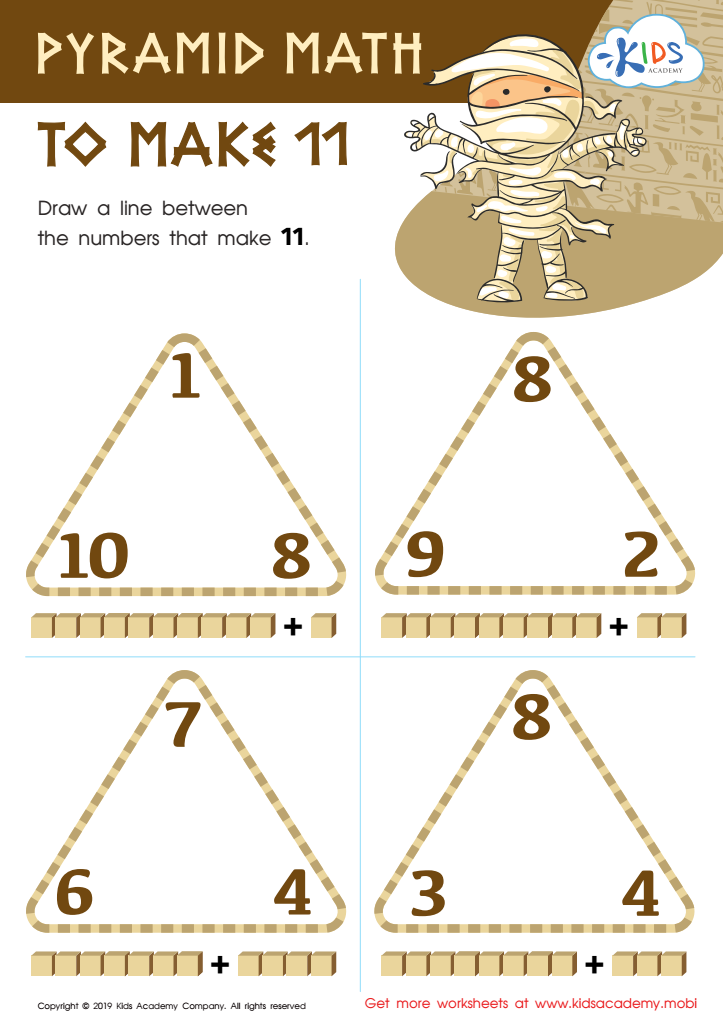
Pyramid Math to Make 11 Worksheet






Understanding number relationships is crucial for a child's mathematical development, and both parents and teachers play pivotal roles in fostering this comprehension. Number relationships refer to the ability to see and understand how numbers interact with one another, such as recognizing patterns, making connections, and understanding mathematical concepts like addition, subtraction, multiplication, and division.
For parents, supporting this aspect of learning at home can greatly reinforce what is taught in school. Simple activities like counting objects during daily chores, playing number-based games, or discussing measurements during cooking can strengthen a child's grasp of numbers. Understanding these relationships builds a strong foundation for more complex mathematical concepts they will encounter later.
For teachers, fostering an environment that encourages exploration and discussion of numbers helps students develop critical thinking and problem-solving skills. When students understand number relationships, they are better equipped to tackle various mathematical problems, from basic arithmetic to more advanced concepts. This understanding also boosts their confidence, making them more likely to engage with and enjoy learning math.
Ultimately, a solid grasp of number relationships sets the groundwork for academic success and daily life skills. By caring about and actively promoting this understanding, parents and teachers empower children to develop a life-long love for mathematics and its applications.








