Verb identification Normal Worksheets
7 filtered results
-
From - To
Our "Verb Identification Normal Worksheets" offer young learners a fun and effective way to strengthen their grammar skills. Designed for early grade students, these worksheets help kids recognize and use verbs properly in sentences. Engaging activities and colorful illustrations make learning exciting, encouraging students to explore different action words. Ideal for classroom use or at-home practice, these worksheets are aligned with educational standards to support language arts development. By repeatedly identifying verbs, children build a solid foundation in grammar that enhances their overall reading and writing abilities. Visit Kids Academy for high-quality resources to boost your child’s learning journey!
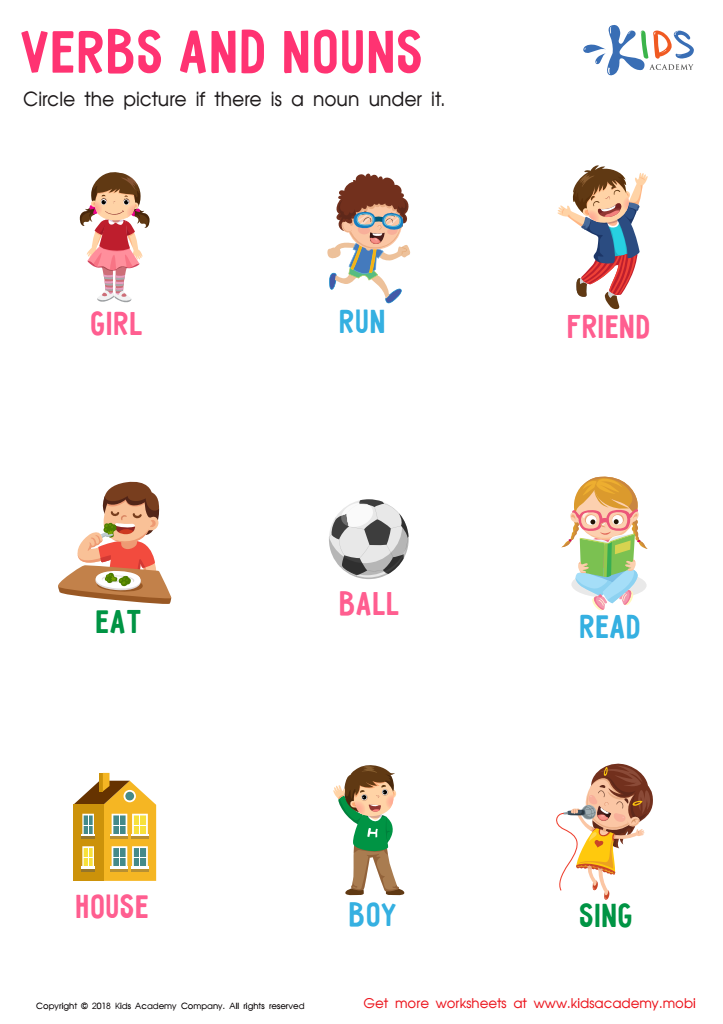
Verbs and Nouns Worksheet
 Assign to My Students
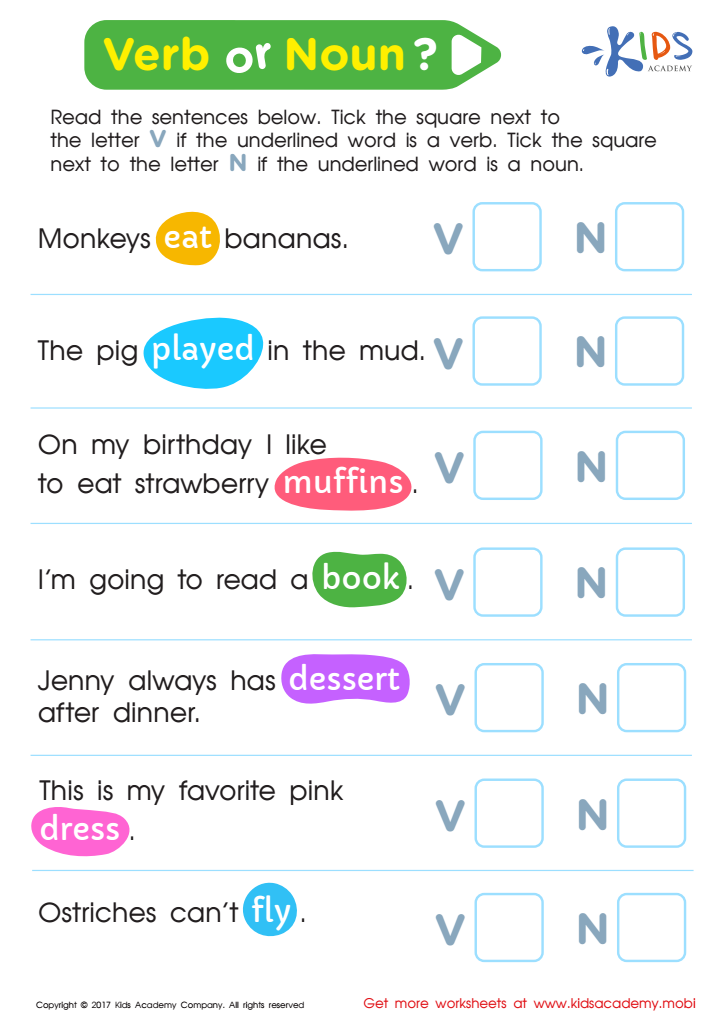
Verb or Noun Worksheet
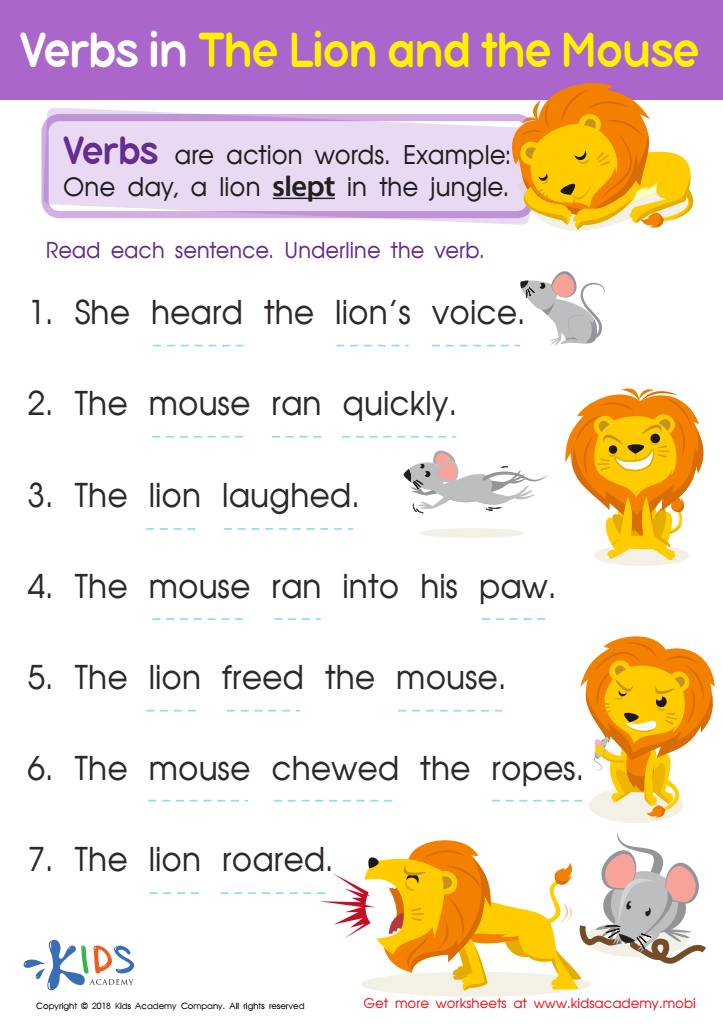
Verbs in The Lion and the Mouse Worksheet
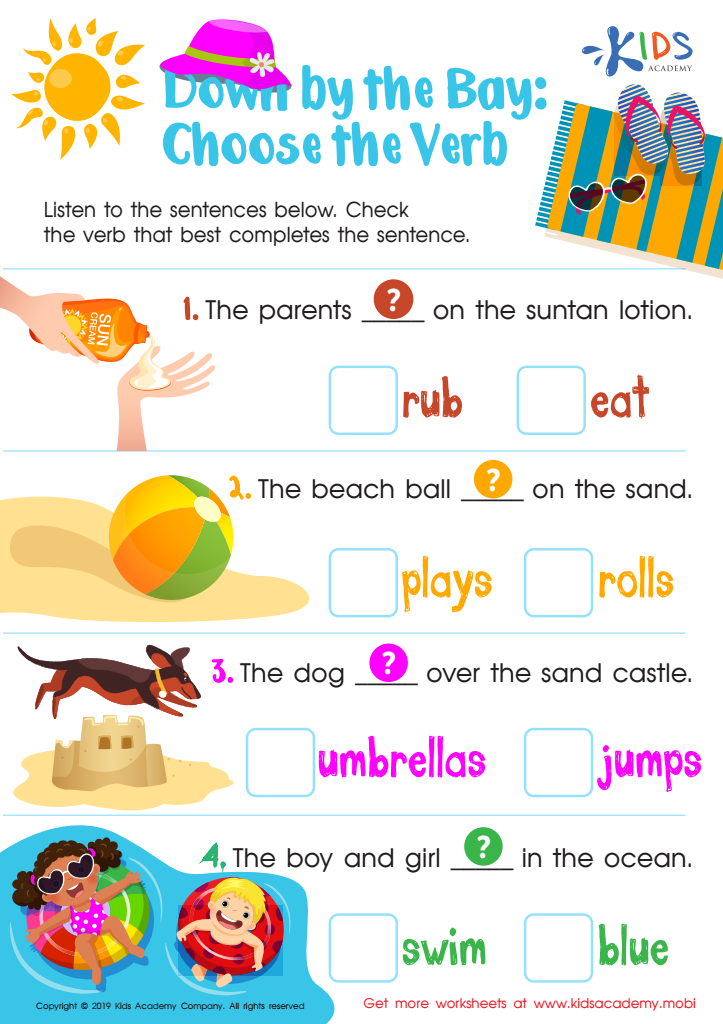
Down by the Bay: Choose the Verb Worksheet
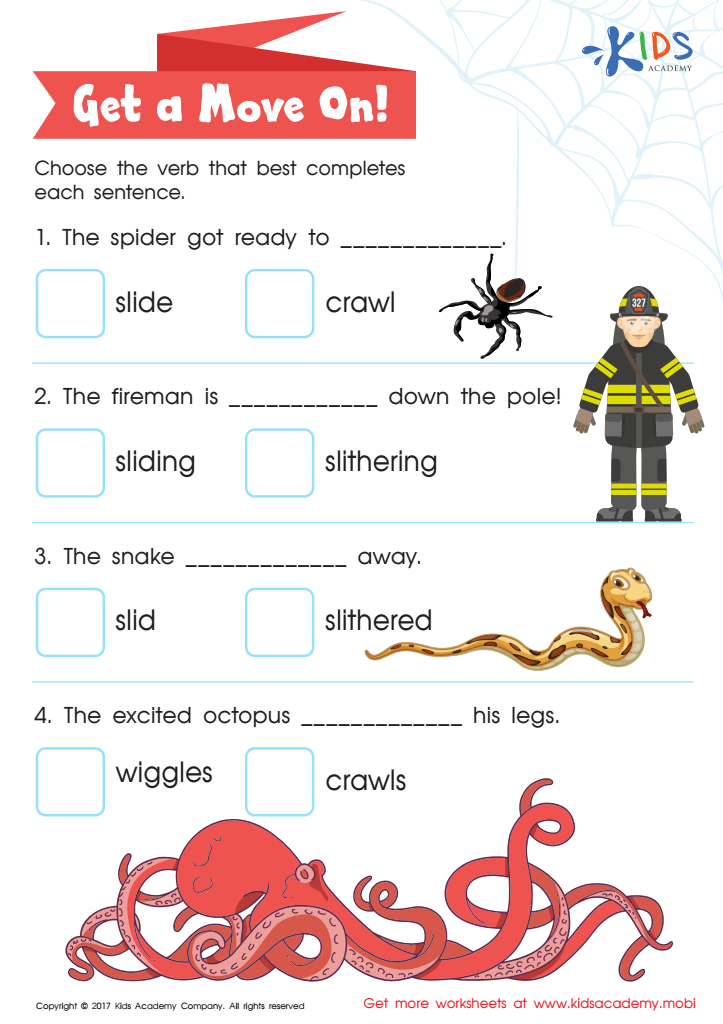
Verb Worksheet
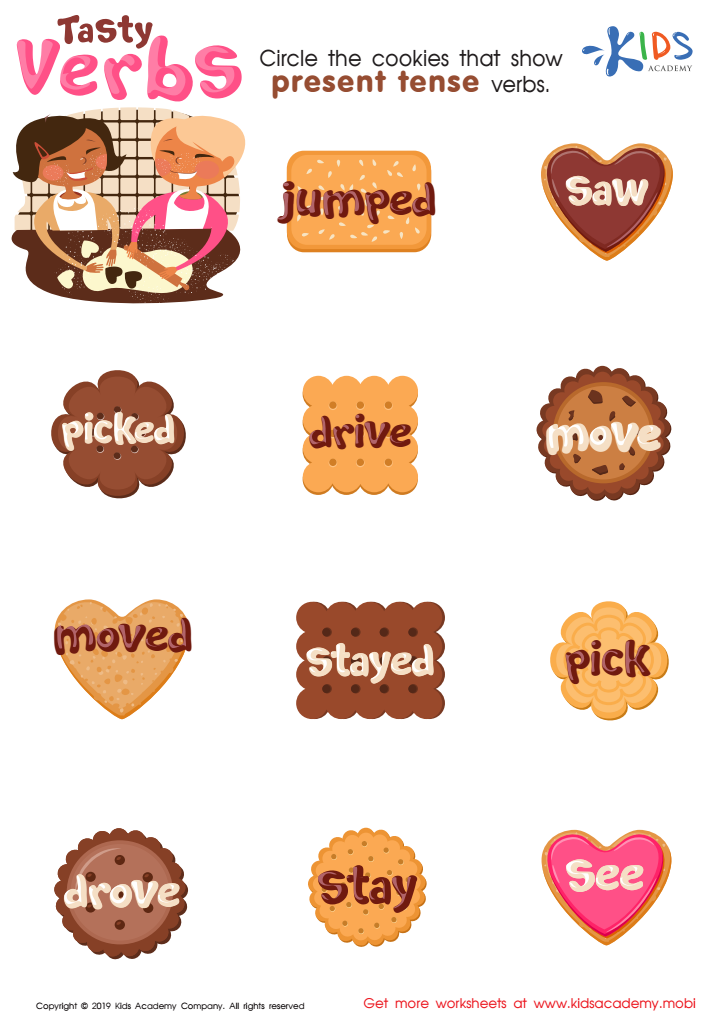
Tasty Verbs Worksheet
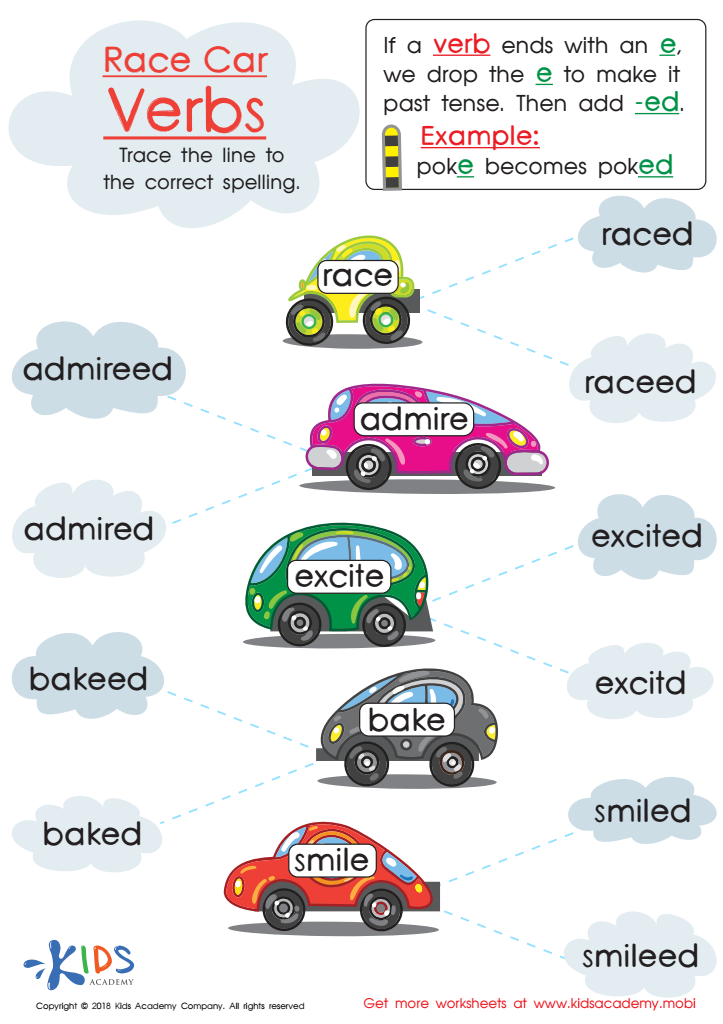
Race Car Verbs Worksheet







Verb identification is a fundamental skill that supports a child's overall language development and literacy skills. Parents and teachers should prioritize teaching children how to identify verbs because verbs are the action words that express what happens in a sentence, acting as the core of effective communication. When children learn to identify verbs, they better understand sentence structure and become more competent readers and writers.
Recognizing verbs improves a child's ability to construct meaningful sentences, enhancing both their written and spoken communication. This skill aids them not only in creating coherent statements but also helps in comprehending texts more efficiently. By understanding verbs, children can accurately describe actions and events, making their storytelling more engaging and precise.
Additionally, identifying verbs supports cognitive development, as it requires children to understand and manipulate different parts of speech, thus boosting their analytical and critical thinking abilities. Early mastery in recognizing verbs ensures a smoother transition into advanced grammatical concepts, which are essential as they progress in their education. For these reasons, parents and teachers should invest time and resources into teaching verb identification, as it forms the foundation for successful language acquisition and effective communication.








