Cognitive Development Normal 2D Shapes Worksheets
5 filtered results
-
From - To
Enhance your child's cognitive development with our engaging 2D shapes worksheets! Designed for early learners, these printable resources help develop essential skills such as shape recognition, critical thinking, and spatial awareness. Our worksheets feature vibrant illustrations and interactive activities that make learning fun and effective. Perfect for preschoolers and kindergartners, these materials support the understanding of basic shapes like circles, squares, triangles, and more. Use them at home or in the classroom to strengthen foundational math skills while encouraging creativity and curiosity. Discover the joy of learning with our comprehensive 2D shapes cognitive development worksheets today!
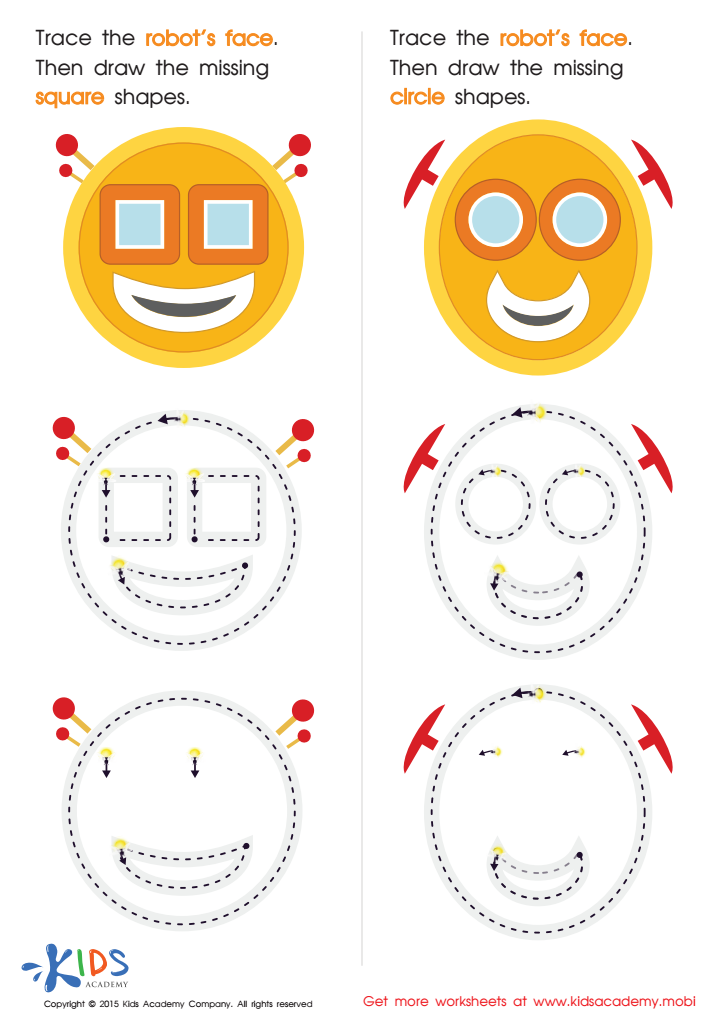
Practicing to Draw Circles And Squares Printable
 Assign to My Students

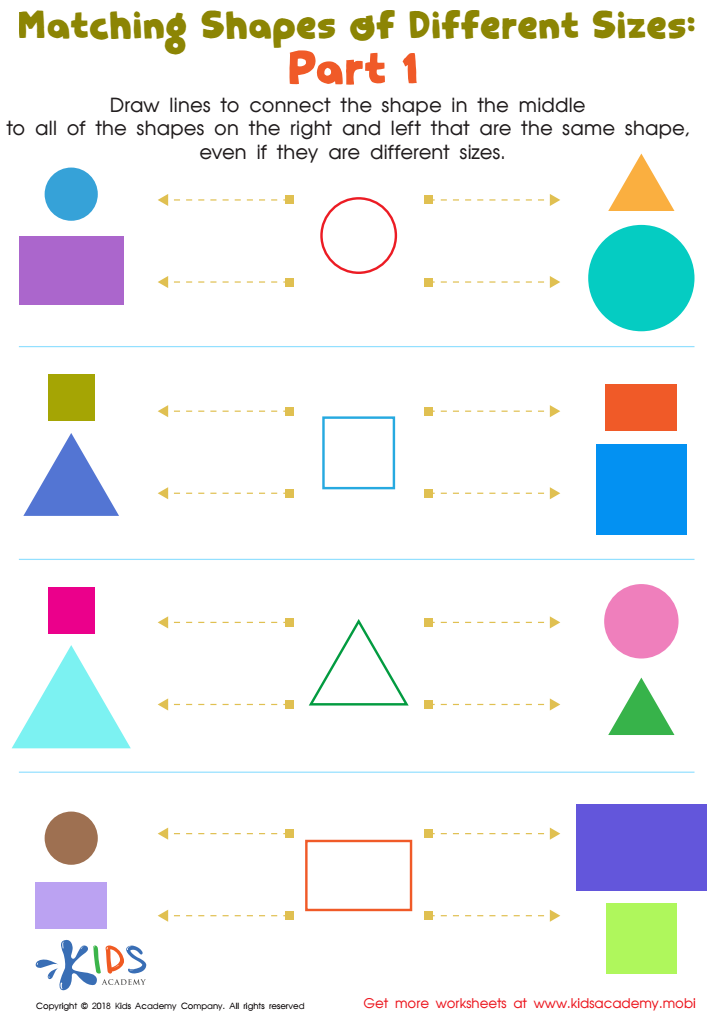
Geometry: part 1 Worksheet
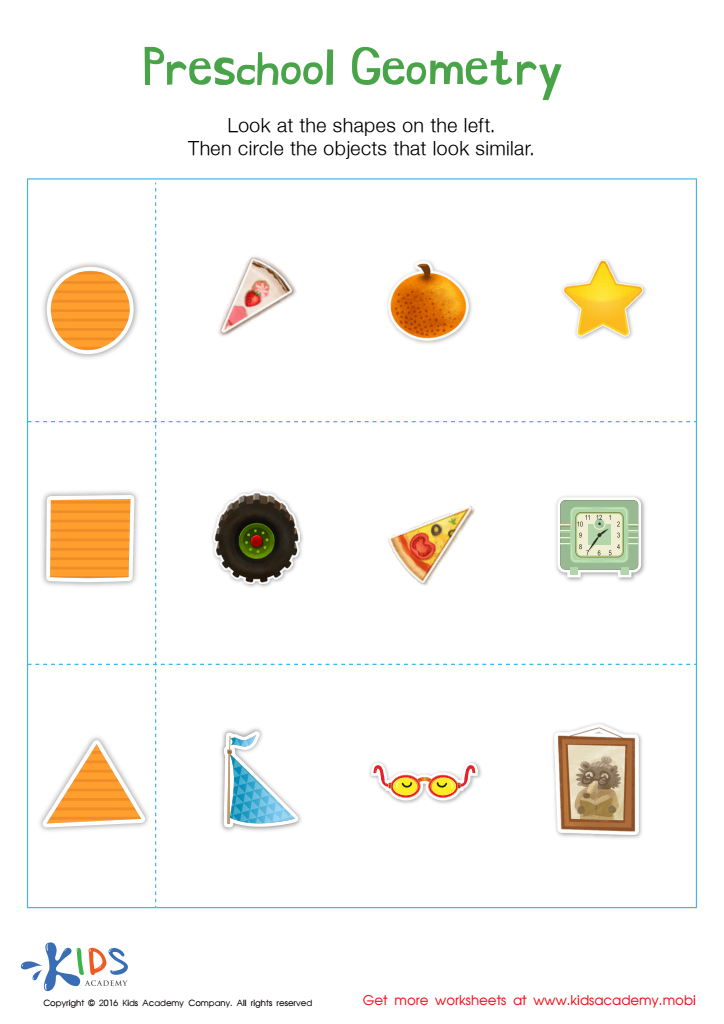
Preschool Geometry Match Up Worksheet
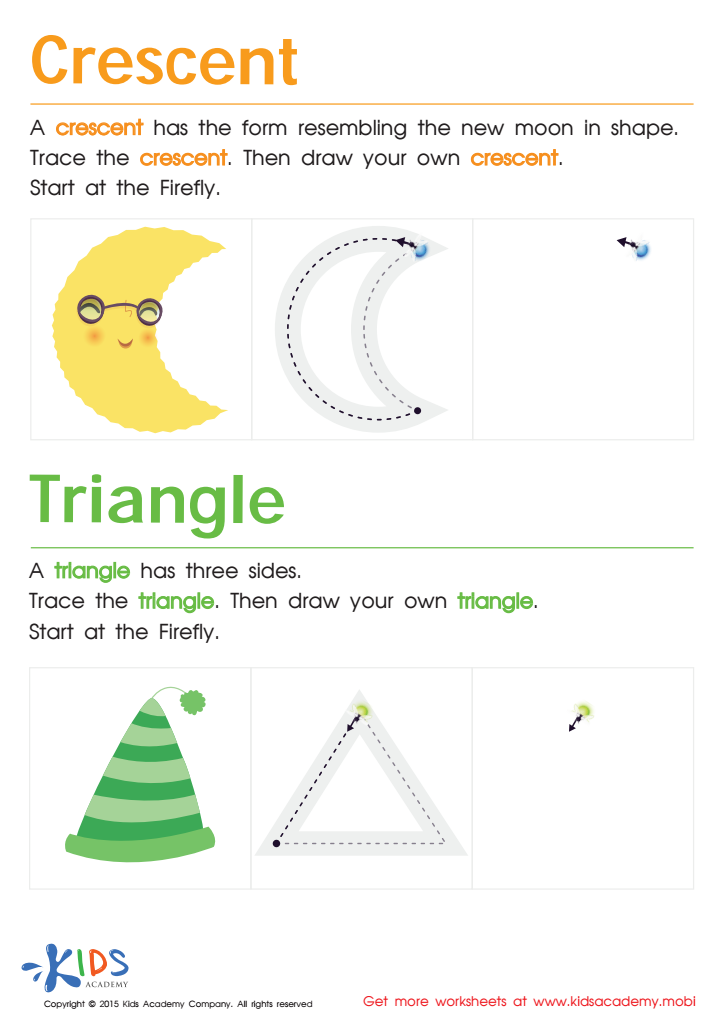
Learning to Draw Crescents And Triangles Worksheet
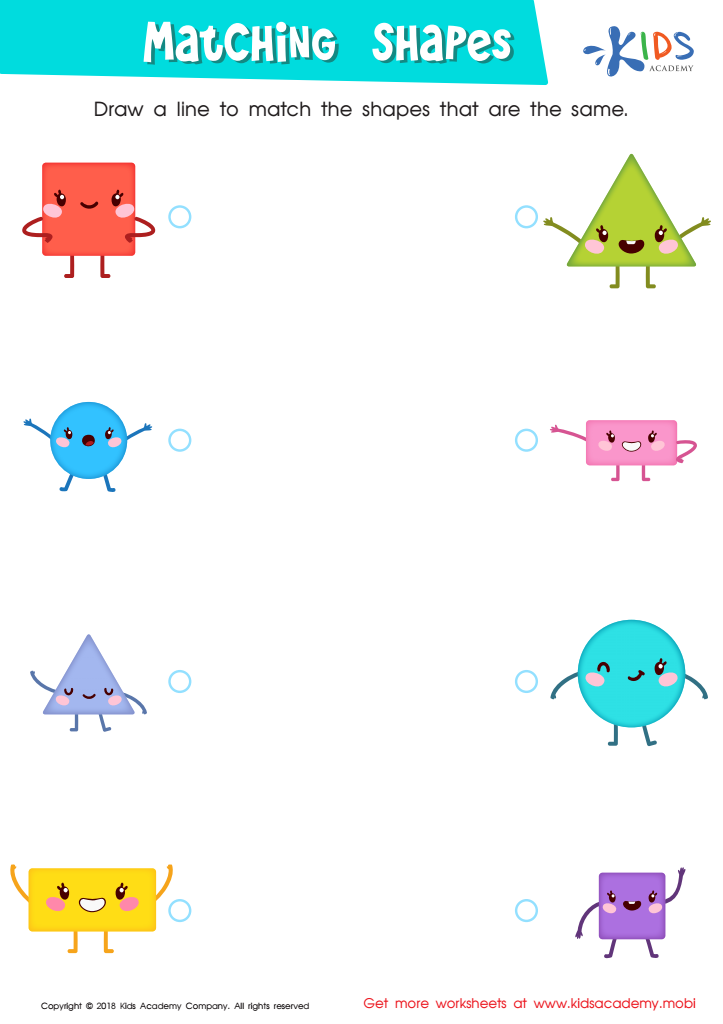
Matching Shapes Worksheet








Cognitive development in early childhood is crucial, as it lays the foundation for future learning. Understanding 2D shapes is an integral part of this developmental stage. Parents and teachers should care about this for several reasons.
Firstly, recognizing and differentiating 2D shapes enhances children's visual perception skills. This ability is vital as it aids in everyday tasks such as reading, writing, and navigating their environment.
Secondly, knowledge of shapes forms the basis for more complex mathematical concepts. Recognizing shapes helps children grasp spatial awareness and problem-solving, which are essential for later mathematical learning.
Thirdly, learning about shapes fosters creativity and critical thinking. Engaging with different shapes fuels imaginative play, allowing children to explore geometry through art and design activities.
Moreover, discussing shapes can enhance language development. When adults introduce terminology associated with shapes, children enrich their vocabularies and develop better communication skills.
Finally, early shape recognition contributes to better overall cognitive abilities, nurturing a child's ability to categorize, analyze, and infer, which are critical skills that serve them beyond early education. Understanding 2D shapes is a fun and necessary building block in a child's cognitive development journey.