Cognitive Development Normal Addition & Subtraction Worksheets
3 filtered results
-
From - To
Enhance your child's cognitive development with our engaging normal addition and subtraction worksheets! Designed for early learners, these activities promote critical thinking and problem-solving skills while making math fun. Each worksheet reinforces essential math concepts through playful exercises that encourage children to understand quantities, number relationships, and arithmetic operations. Our user-friendly format makes it easy for educators and parents to track progress and tailor activities to suit individual learning needs. Start your child's mathematical journey today with our carefully crafted worksheets, fostering both confidence and competence in addition and subtraction, critical for their future academic success!
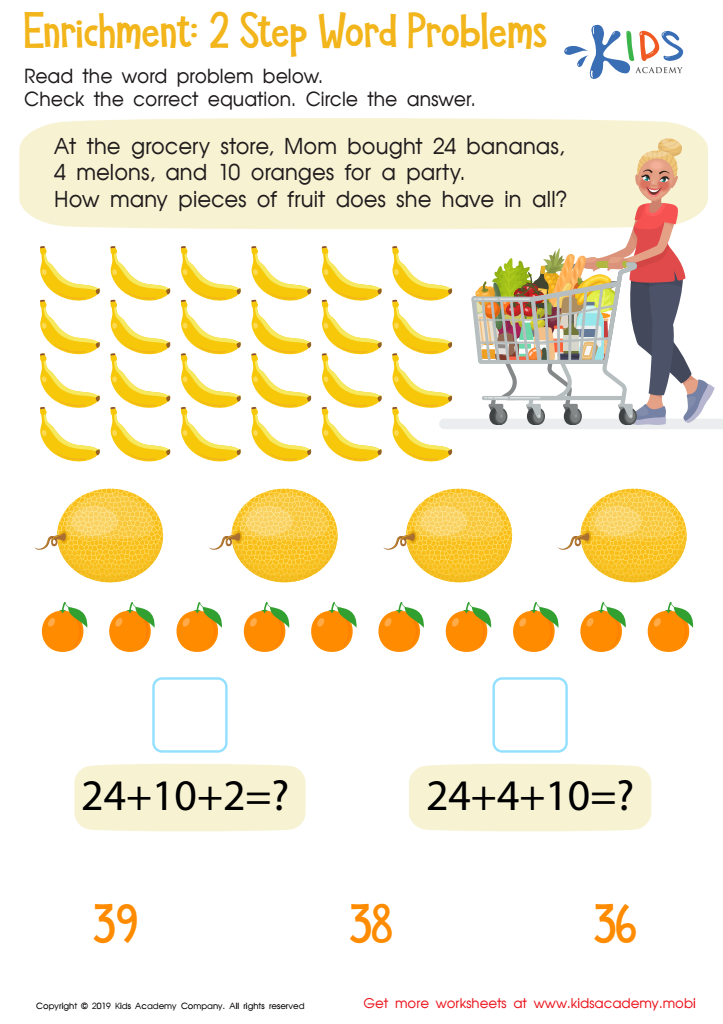
Enrichment -2 Step Word Problems Worksheet
 Assign to My Students
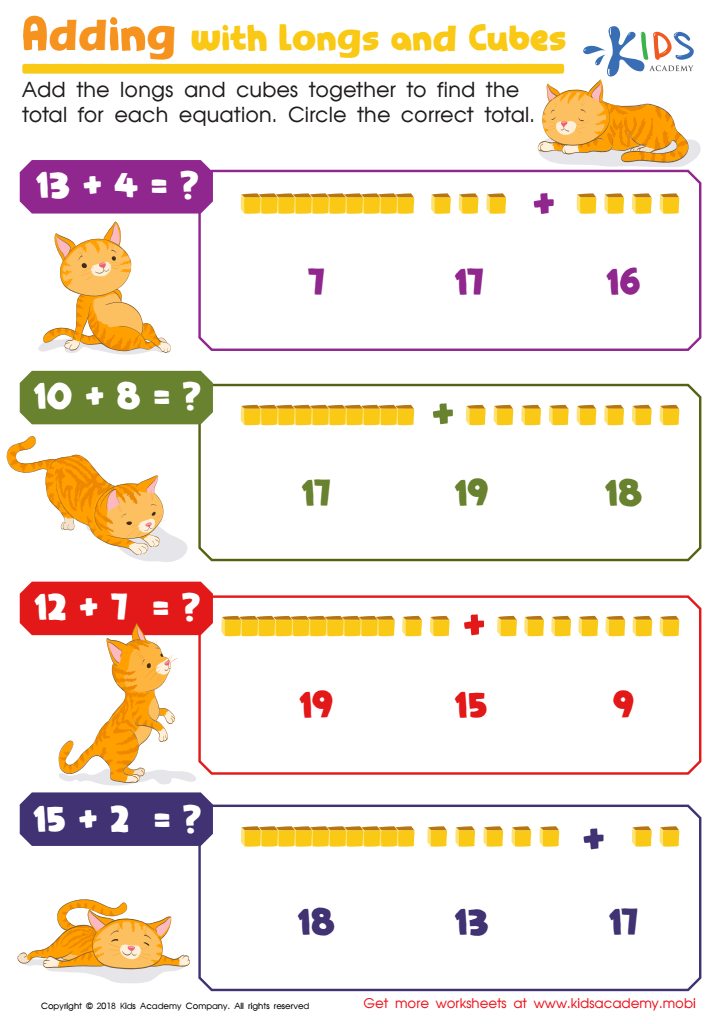
Adding With Longs and Cubes Worksheet
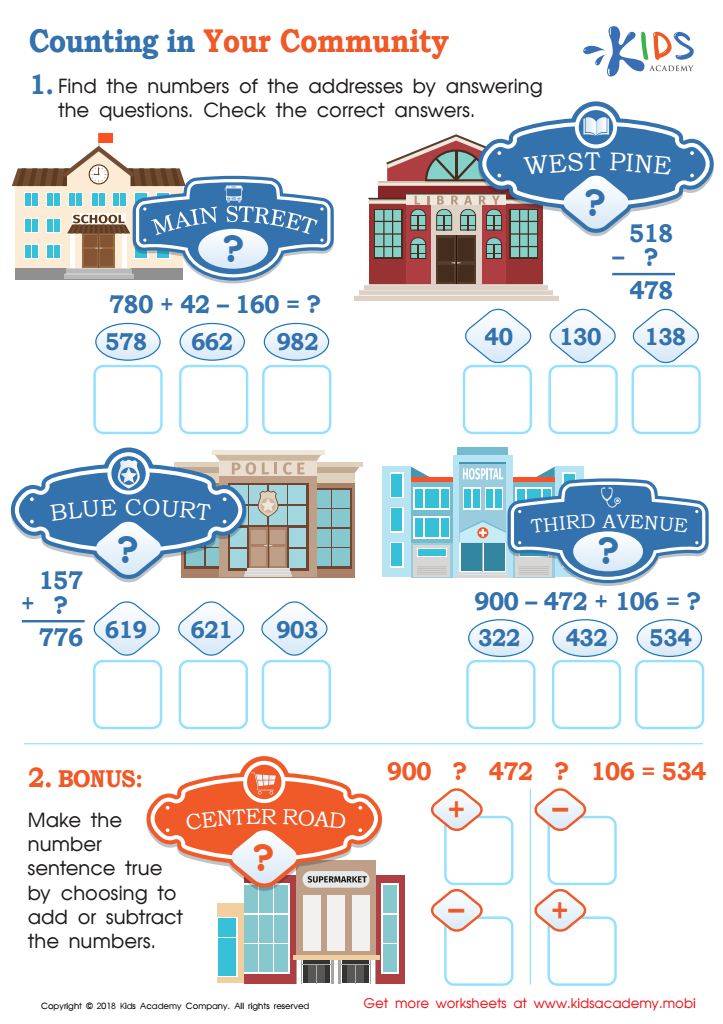
Counting in Your Community Worksheet








Cognitive development during early childhood is a critical aspect of a child's overall learning process, particularly in mathematics. Understanding and mastering normal addition and subtraction are foundational skills that not only support academic achievement but also enhance problem-solving abilities, critical thinking, and social interactions.
Parents and teachers should care about cognitive development in these areas because early mathematical skills set the stage for future learning. Children who struggle with addition and subtraction may face difficulties in more advanced math concepts later on, potentially leading to a lifelong aversion to the subject. Furthermore, these foundational skills foster confidence and independence in students, empowering them to tackle challenges both in and out of the classroom.
Moreover, engaging children in addition and subtraction activities helps develop their cognitive functions, such as memory, reasoning, and spatial awareness. This engagement not only promotes a love for learning but also supports emotional development, as mastering these skills provides a sense of accomplishment. Lastly, educators and parents play a crucial role as facilitators in this process, ensuring that children have access to appropriate resources, activities, and encouragement, making cognitive development in math a shared priority that benefits the whole child's growth and future opportunities.








