Shape identification Normal Geometry Worksheets
5 filtered results
-
From - To
Discover our engaging Shape Identification Normal Geometry Worksheets, designed to make learning shapes fun and interactive for young learners. These printable worksheets offer a blend of vibrant visuals and captivating activities, helping children master essential geometric concepts. With various exercises that encourage shape recognition, comparisons, and detailing attributes, these resources cater to different learning styles. Ideal for classroom or home use, they support educators and parents in enhancing kids’ understanding of shapes in a playful way. Let your child's creativity soar as they explore and identify shapes in an enjoyable, captivating format that lays the groundwork for future math skills!
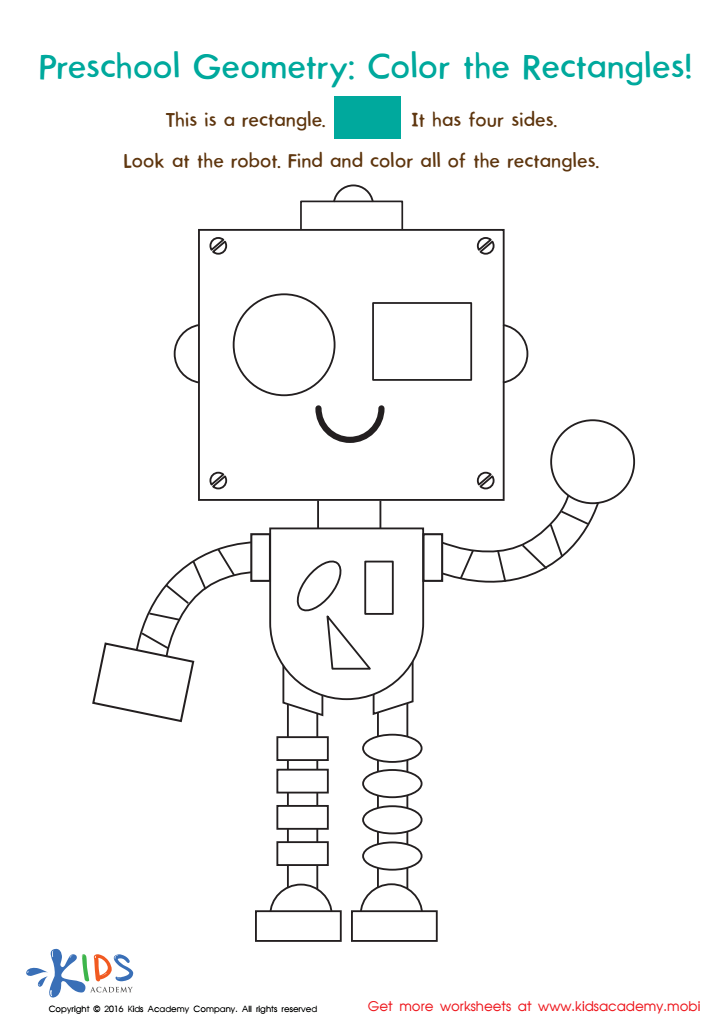
Geometry Worksheet
 Assign to My Students











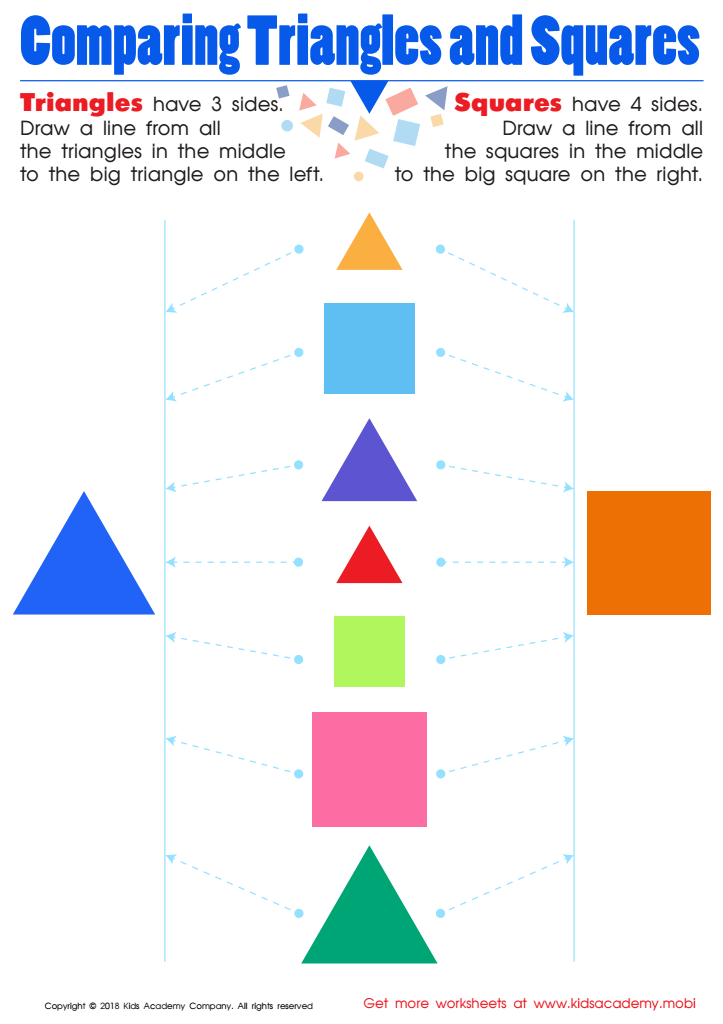
Comparing Triangles Squares Worksheet
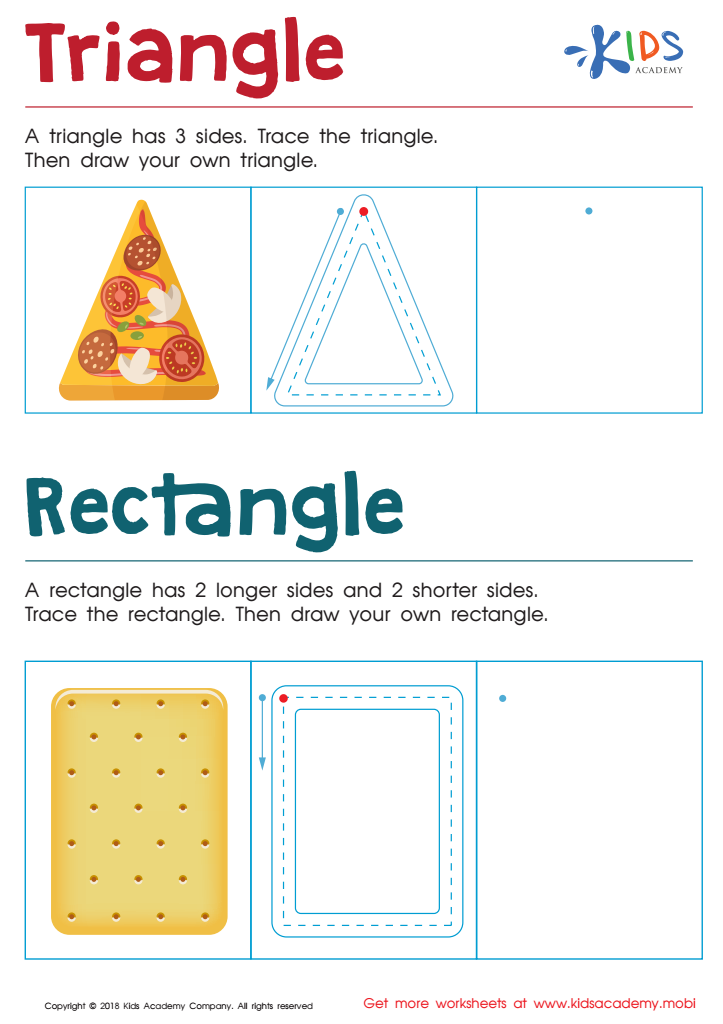
Triangle Rectangle Worksheet
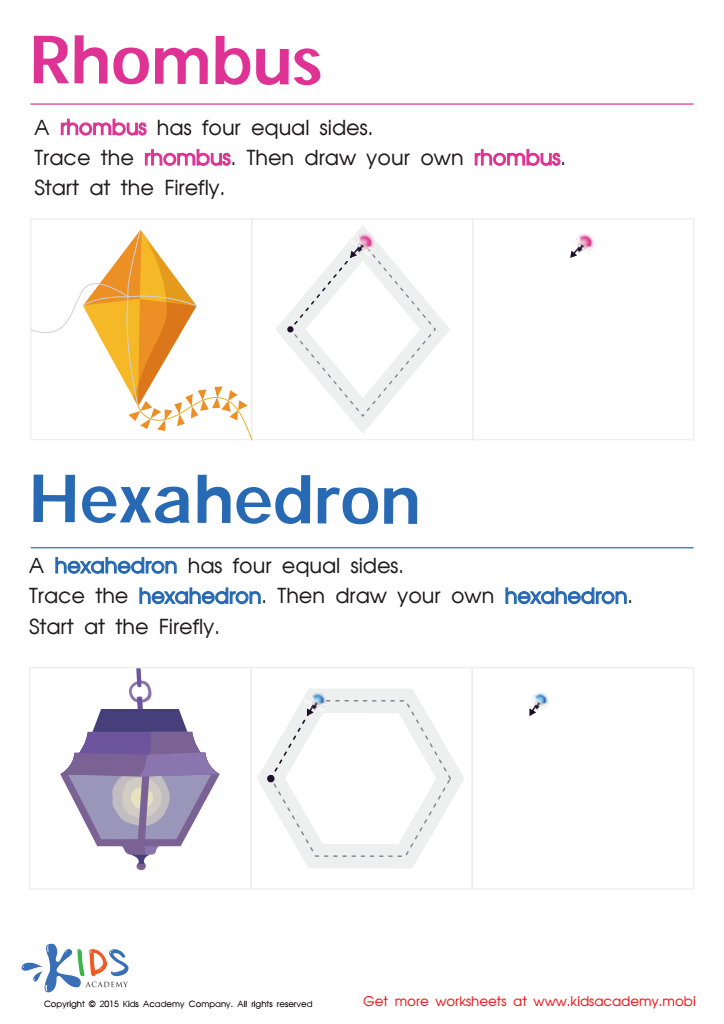
Draw a Rhombus And a Hexahedron Printable
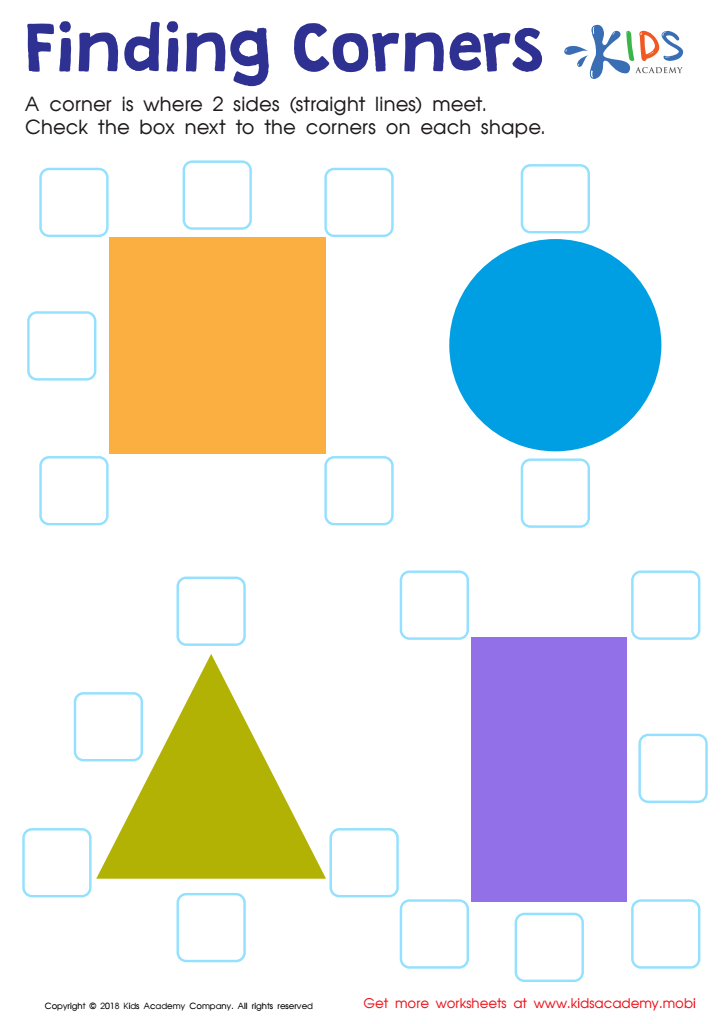
Finding Corners Worksheet








Shape identification in normal geometry is a fundamental skill that provides the foundation for critical thinking and problem-solving in early childhood education. Understanding shapes such as squares, circles, triangles, and rectangles helps children develop spatial awareness and cognitive skills. Parents and teachers should care about this skill because it plays a pivotal role in a child's overall development.
Firstly, shape identification strengthens a child's ability to recognize patterns and relationships in their environment, fostering logical reasoning. Secondly, it is closely linked to mathematical concepts, such as measurement and geometry, forming the basis for more complex mathematical understanding as they age. Early proficiency in shape identification can lead to greater success in math-related subjects later in school.
Moreover, recognizing shapes enhances fine motor skills through hands-on activities, such as sorting and assembling puzzles. Lastly, it promotes inclusive learning as children collaborate in discussing and identifying shapes, thereby developing communication skills and teamwork.
Therefore, by prioritizing shape identification and normal geometry, parents and teachers not only bolster a child's educational journey but also prepare them for a future where analytical and spatial skills are increasingly valued. Ultimately, this foundational skill is integral to nurturing well-rounded, capable learners.








