Understanding prepositions Normal Geometry Worksheets
3 filtered results
-
From - To
Discover engaging "Understanding Prepositions" normal geometry worksheets designed for young learners! These printable resources help students master prepositions through fun geometric concepts and colorful visuals. Each worksheet encourages children to identify and use prepositions like "above," "below," "between," and "next to" in the context of shapes and spatial relationships. By integrating language skills with math, these activities promote critical thinking and enhance comprehension. Perfect for reinforcing classroom lessons or providing at-home practice, our worksheets cater to early grade students. Boost your child's confidence and understanding in both math and language arts with our thoughtfully crafted geometry worksheets today!
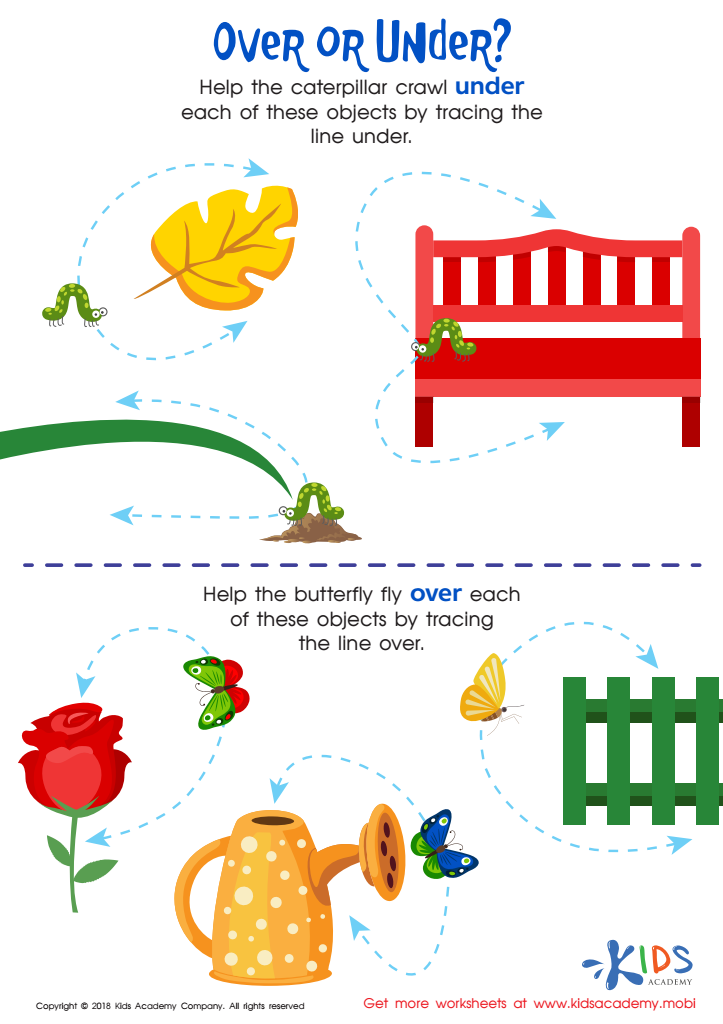
Over or Under? Worksheet
 Assign to My Students











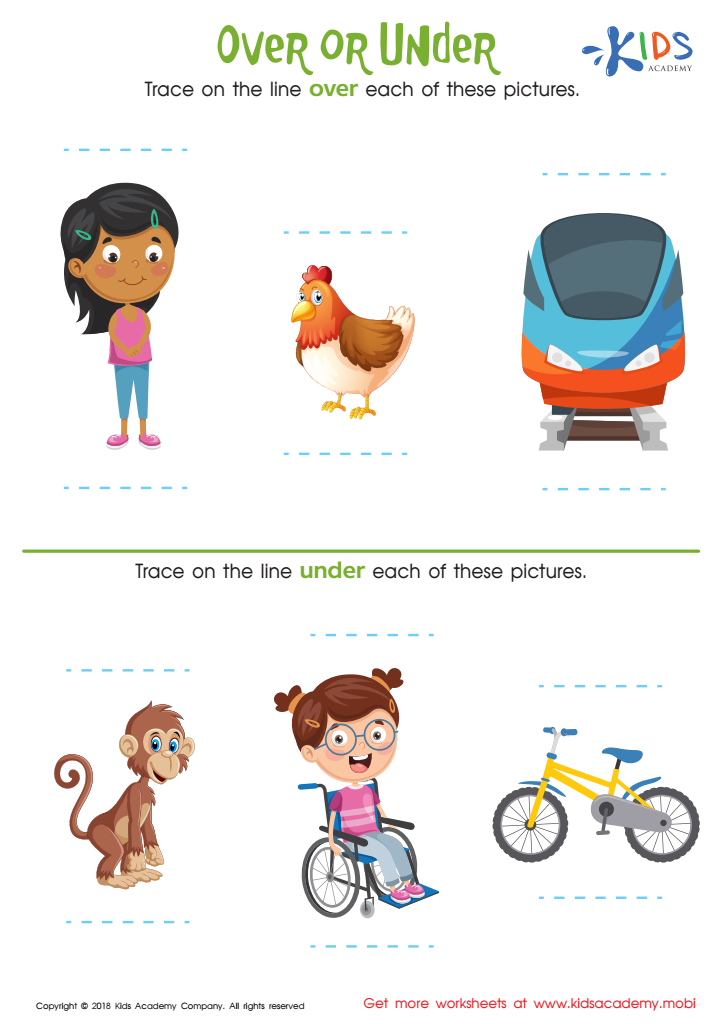
Over or Under Worksheet
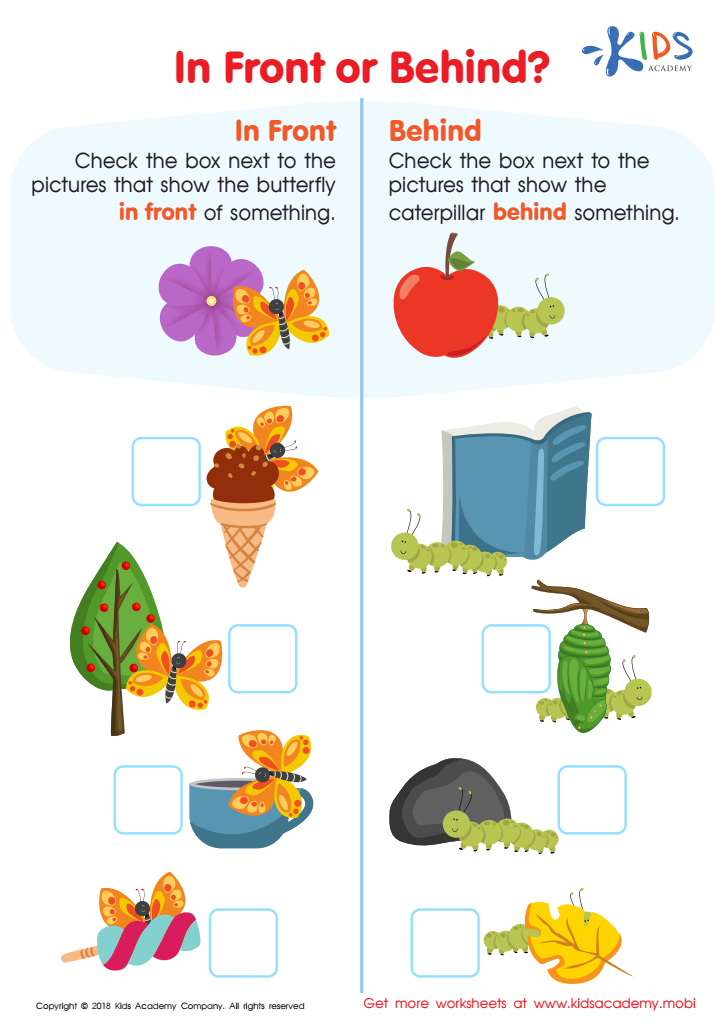
In Front or Behind Worksheet








Understanding prepositions and normal geometry is crucial for both parents and teachers as they lay the foundational skills needed for children’s academic success and everyday communication. Prepositions are integral to grammar; they help establish clear relationships between objects, people, and ideas, aiding effective expression and comprehension. Proficient use of prepositions enhances a child's ability to construct coherent sentences, enriching their language skills that contribute to reading and writing proficiency.
On the other hand, normal geometry fosters spatial awareness, critical thinking, and problem-solving skills. By grasping geometric concepts, children learn to identify shapes, understand their properties, and recognize their relevance in the world around them. This knowledge is beneficial not only in math but also in areas like art and design, which can inspire creativity.
Furthermore, both subjects encourage logical reasoning and analytical thinking. Teachers and parents should prioritize these areas to ensure children develop strong communicative abilities and robust problem-solving skills, as they are essential in an increasingly complex world. Together, prepositions and geometry prepare students for success in future academic pursuits and everyday life interactions, making them indispensable components of early education. Investing attention in these foundational skills now fosters lifelong benefits in children’s learning journeys.








