Understanding comparisons Normal Numbers Worksheets
3 filtered results
-
From - To
Our "Understanding Comparisons Normal Numbers Worksheets" webpage offers a comprehensive collection of engaging and educational resources designed to help young learners master the concept of comparing normal numbers. These printable worksheets provide fun and interactive ways for kids to practice identifying greater than, less than, and equal to relationships among numbers. Aligned with educational standards, these worksheets are perfect for reinforcing classroom lessons or enhancing at-home learning. Teachers and parents will find a variety of exercises, from simple comparisons to more complex problems, that cater to different grade levels and learning styles. Foster numerical confidence and critical thinking with our expertly crafted materials.
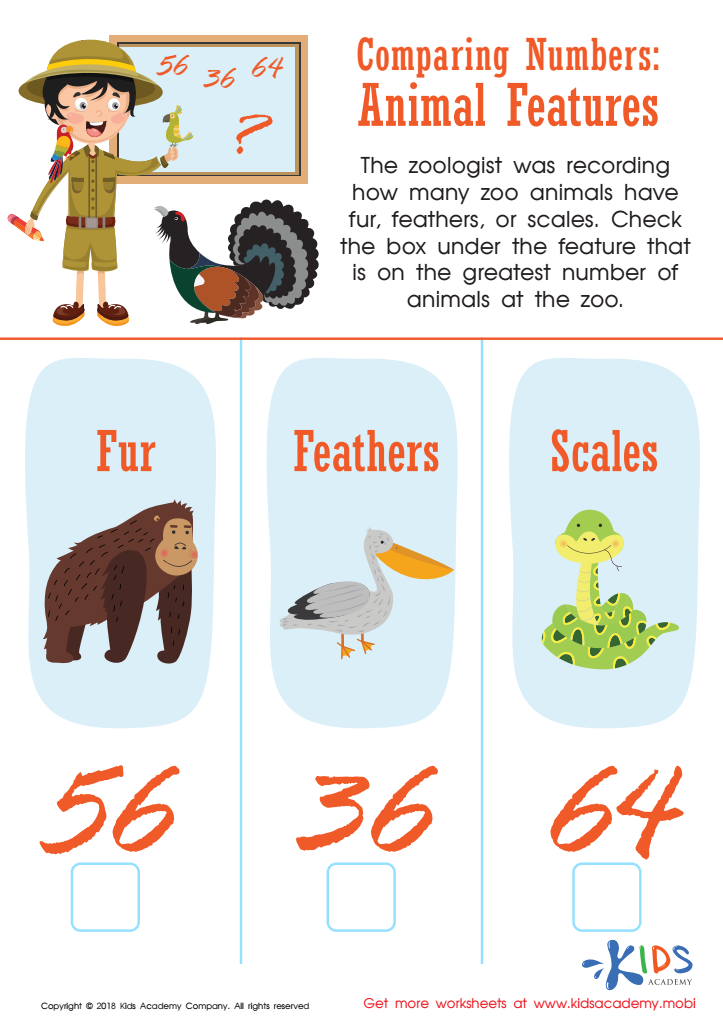
Animal Features Worksheet
 Assign to My Students
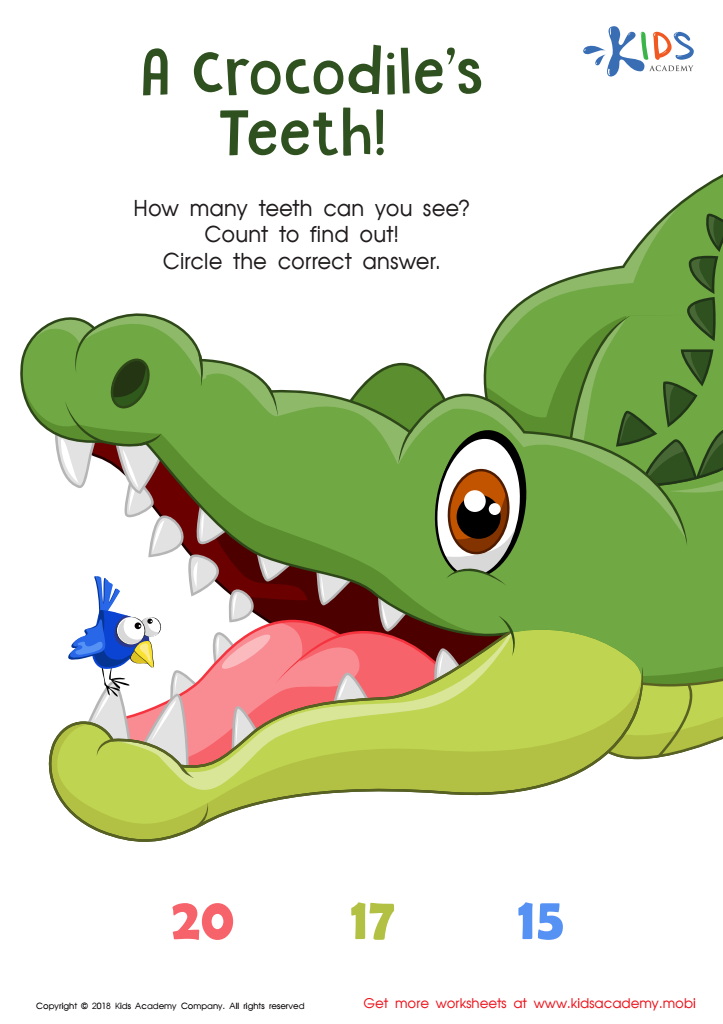
A Crocodile's Teeth Worksheet
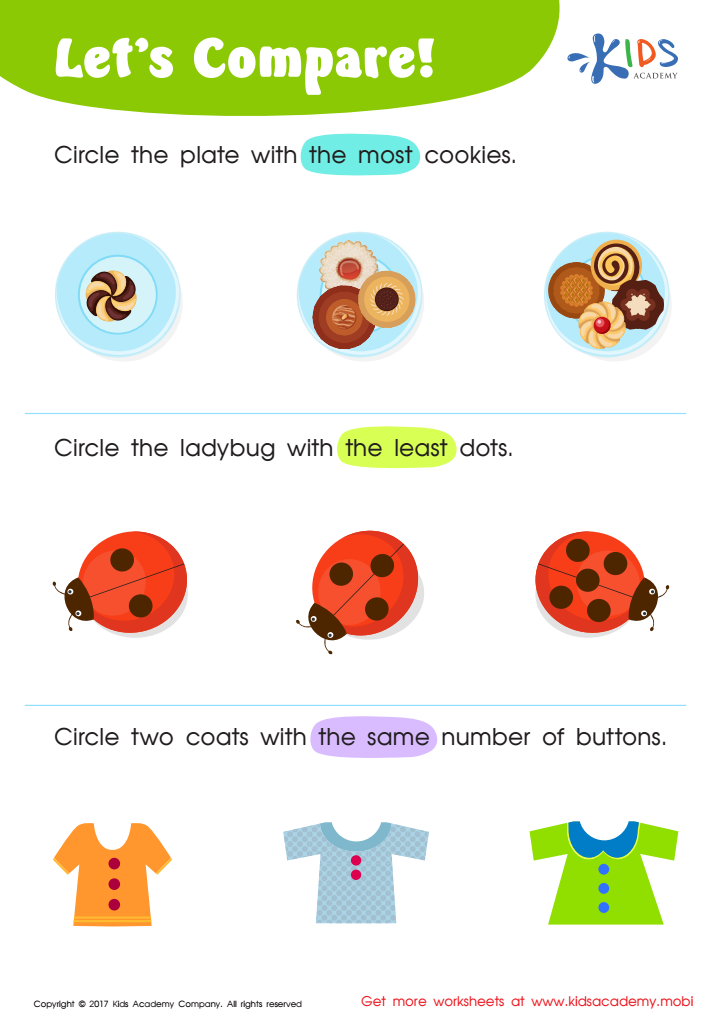
Matching: Classifying Toys by Size Worksheet







Understanding comparisons and normal numbers is crucial in early education as these concepts lay the groundwork for essential mathematical skills. Comparisons, such as understanding which number is greater or smaller, enable children to make sense of quantifiable differences in the world around them. These skills are foundational for more complex arithmetic operations including addition, subtraction, and ordering of values.
Normal numbers, which are those in commonly encountered forms, also play a significant role in numeracy. Recognizing and working with these numbers help children build familiarity and confidence when dealing with day-to-day mathematical problems, such as counting objects, reading time, or handling money.
From a cognitive perspective, mastering comparisons and working with normal numbers enhances critical thinking and problem-solving abilities. These skills enable children to draw inferences, identify patterns, and establish order, which are valuable not just in mathematics but across various domains of learning.
Moreover, fostering these skills at an early age can yield long-term academic benefits, making future learning more intuitive and less challenging. By investing effort into helping children understand comparisons and normal numbers, parents and teachers can provide them with essential tools for academic success and everyday life. This foundational knowledge imbibes a proactive, confident approach towards mathematics and its applications, nurturing well-rounded, capable learners.








