
Understanding symmetry Normal Math Worksheets
3 filtered results
Difficulty Level
Grade
Age
-
From - To
Subject
Activity
Standards
Discover the joy of learning symmetry with our "Understanding Symmetry Normal Math Worksheets!" Designed specifically for early grade students, these engaging worksheets provide a hands-on approach to grasping the concept of symmetry in a fun and interactive way. Children will explore symmetrical shapes, lines, and patterns through a variety of activities, including coloring, identification, and drawing exercises. These thoughtfully crafted resources help develop critical thinking skills and boost creativity while reinforcing foundational math concepts. Perfect for classroom use or at-home learning, our symmetry worksheets are an invaluable tool for young learners seeking to enhance their understanding of this essential mathematical principle.
Favorites
With answer key
Interactive
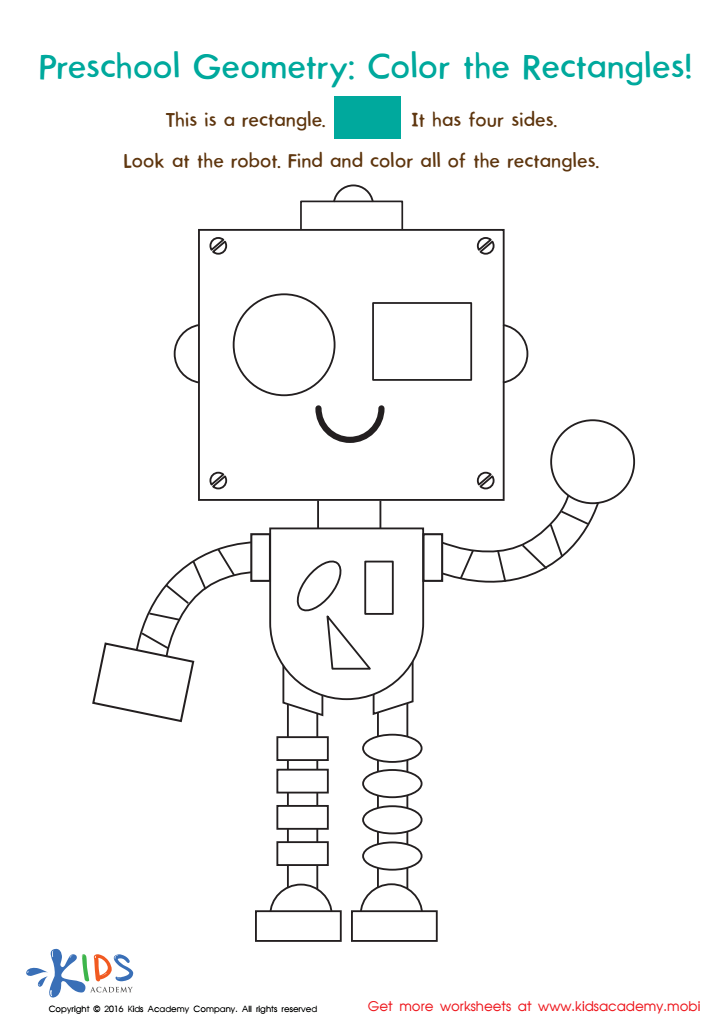
Geometry Worksheet
Geometry can be fun for kids! They explore shapes that create their favorite pics and objects. This preschool worksheet explains that rectangles have four sides, then kids color rectangles on a funny robot!
 Assign to My Students
Geometry Worksheet
Worksheet
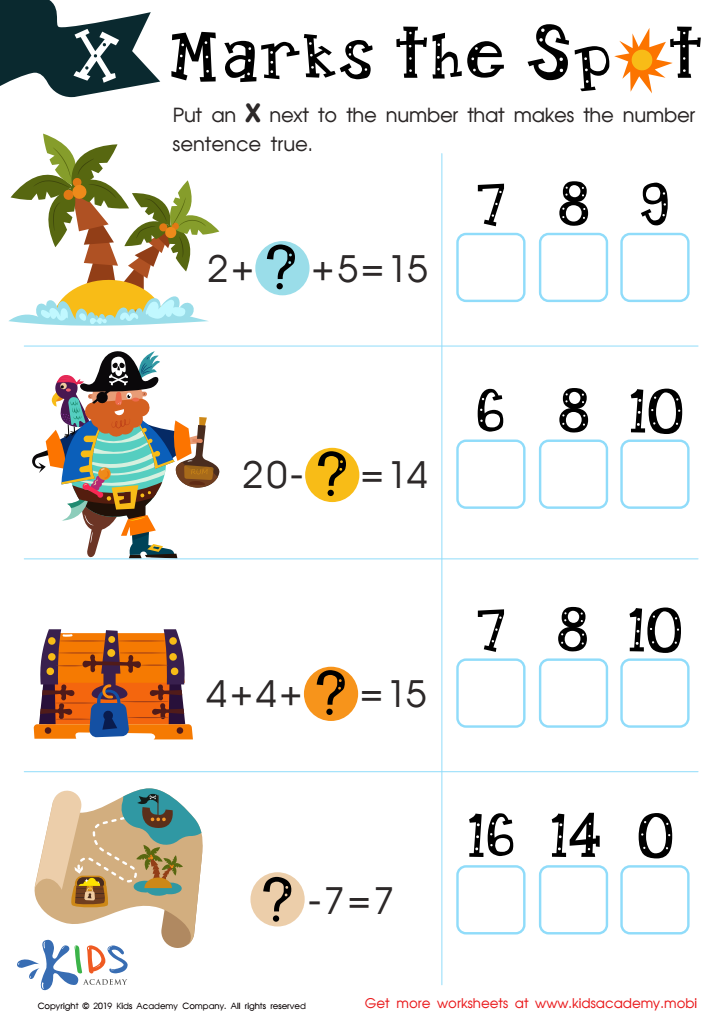
X Marks the Spot Worksheet
Let your kids explore the world of pirates! Ask them what they know about them, what they do and the phrases they like. Download the printout and point at the images, asking them to tell you what they see. Help them tick the box for the number that makes the sentence true. Let them have fun learning about pirates! (80 words)
X Marks the Spot Worksheet
Worksheet
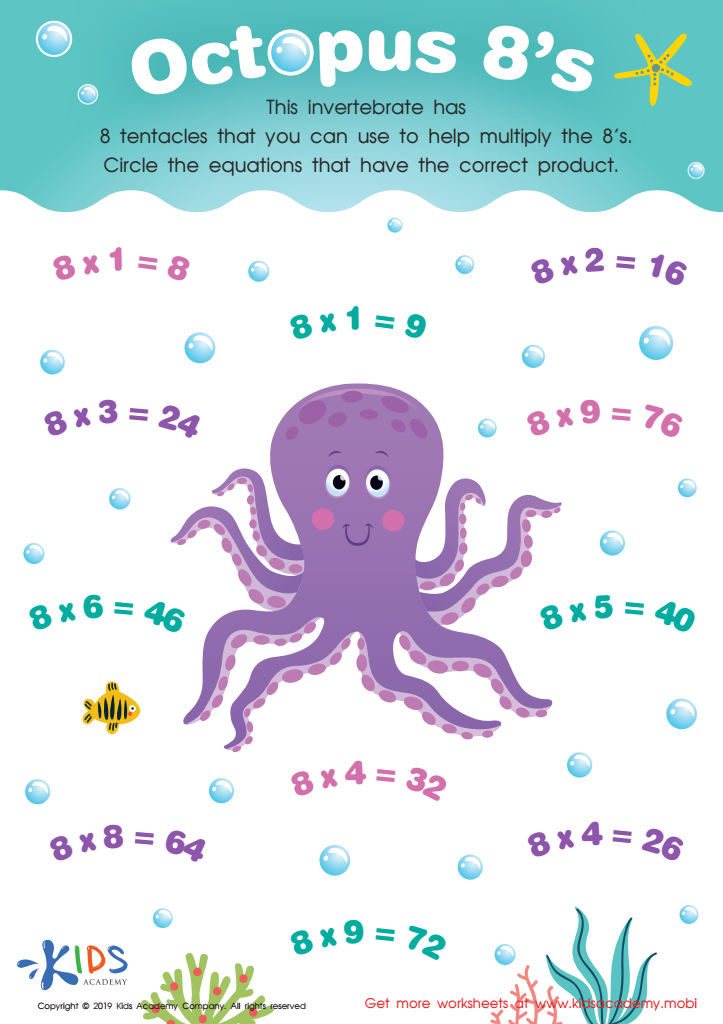
Octopus 8’s Worksheet
Can your child identify the octopus in the worksheet? It's an invertebrate with 8 tentacles. Have your child circle the equations with the correct products, and see if they can tell you some other features of the octopus too.
Octopus 8’s Worksheet
Worksheet
Join Kids Academy for Free
Who is primarily going to use this learning content?








Understanding symmetry in mathematics is essential for young learners, and parents and teachers should prioritize it for several reasons. Firstly, symmetry fosters critical thinking skills. Recognizing symmetrical patterns helps children learn to analyze and categorize shapes, enhancing their problem-solving abilities. This cognitive development is foundational for more complex mathematical concepts later on.
Secondly, symmetry is ubiquitous in nature and art, making it highly relevant. By exploring symmetry, children can connect mathematics to the world around them, cultivating a sense of curiosity and appreciation for patterns in their environment. This real-life application reinforces their engagement with math, making it more relatable and enjoyable.
Additionally, symmetry plays a significant role in geometry and algebra, helping students understand transformations, reflective properties, and geometric shapes. It serves as a bridge to more advanced topics, laying the groundwork for spatial awareness and reasoning.
Finally, by encouraging exploration of symmetry, parents and teachers can foster creativity and a positive attitude toward math. When learners appreciate symmetry's beauty and significance, they are more likely to develop a lifelong interest in mathematics. Therefore, prioritizing symmetry is key to nurturing well-rounded, mathematically literate individuals.








