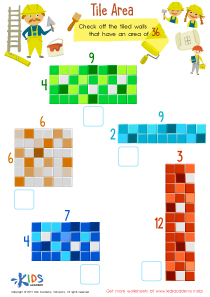
Matching skills Normal Matching Worksheets
4 filtered results
-
From - To
Enhance your child's learning with our Matching Skills Normal Matching Worksheets at Kids Academy! Designed for early grade students, these engaging worksheets help develop critical matching skills through fun and interactive activities. Kids will enjoy identifying and pairing related images, words, and concepts, reinforcing their cognitive abilities and enhancing their visual perception. Perfect for home or classroom use, our worksheets are align with educational standards, making learning both effective and enjoyable. Explore our collection today to support your child's educational journey and foster a love for learning through playful interaction! Discover the joy of matching and watch your child thrive!
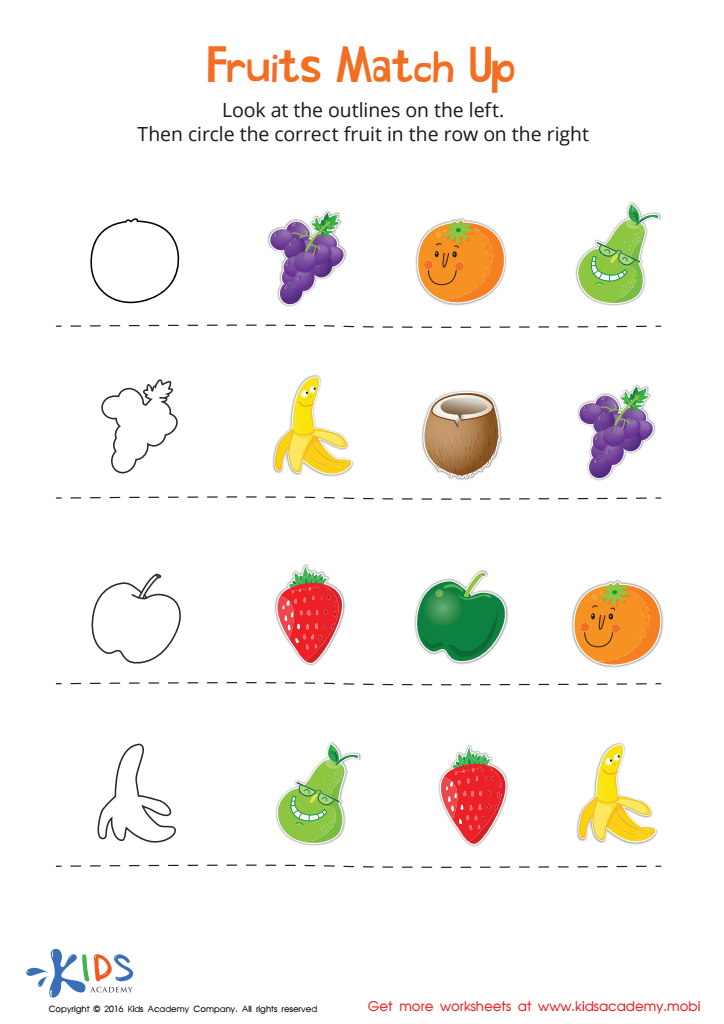
Fruits Match Up Worksheet
 Assign to My Students
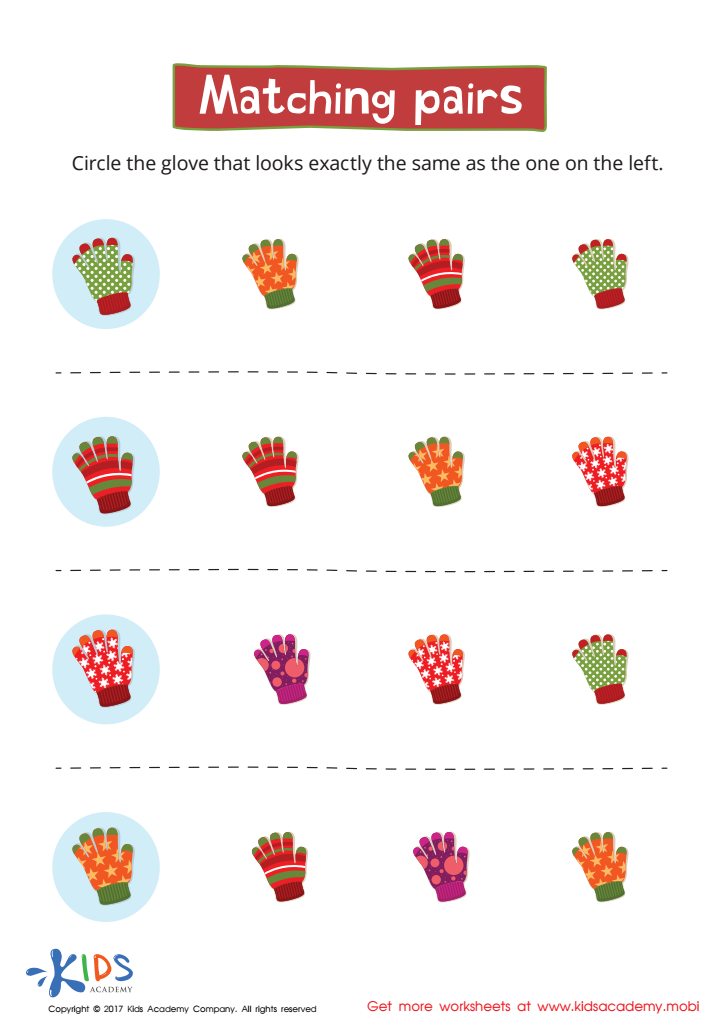
Matching: Matching Pairs Worksheet
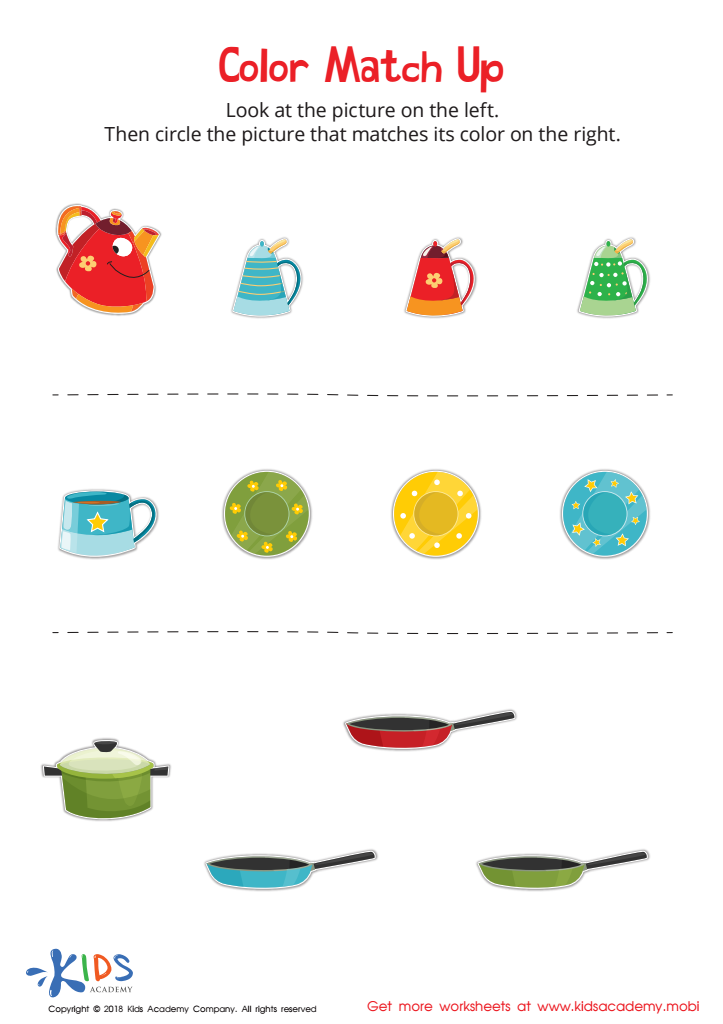
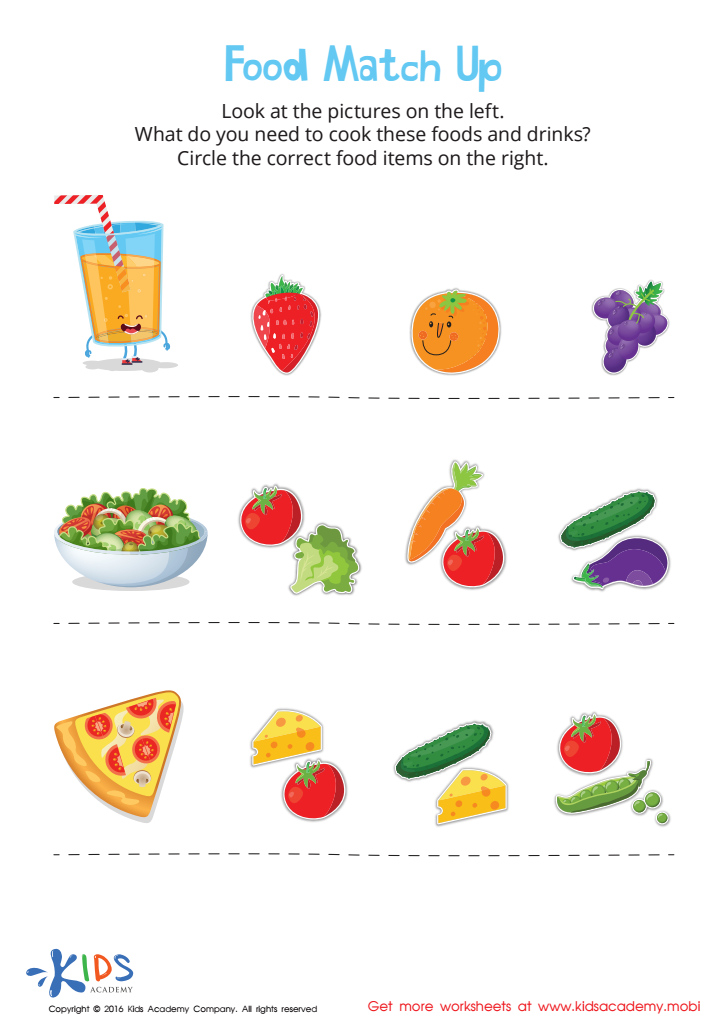
Food Match Up Worksheet








Matching skills, particularly normal matching, play a crucial role in early childhood development and education. Parents and teachers should prioritize these skills as they serve as foundational cognitive building blocks that enhance a child's learning abilities. Normal matching involves recognizing similarities and understanding relationships between objects, fostering cognitive growth and logical thinking.
First, developing matching skills encourages critical thinking. When children learn to identify pairs or similar attributes — such as colors, shapes, or sizes — they strengthen their ability to categorize and organize information. This skillset is essential as they move on to more complex tasks in literacy and mathematics.
Additionally, matching skills promote concentration and attention to detail. Through activities that involve finding matches, children practice focusing on specific characteristics, which can improve their overall attention span in classroom settings.
Moreover, the ability to match also supports language development. As children articulate their reasoning for why items match, they enhance their vocabulary and communication skills. Parents and teachers should engage children in matching games and activities, particularly during playtime, as this not only fosters these essential skills but also makes learning enjoyable.
In summary, prioritizing normal matching skills can significantly impact a child’s cognitive advancement, attentiveness, and communication capabilities.