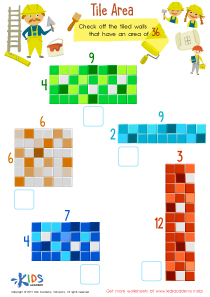
Animal Classification Normal Sorting Worksheets
3 filtered results
-
From - To
Explore our engaging "Animal Classification Normal Sorting Worksheets" designed to enhance young learners' understanding of wildlife categorization. These interactive worksheets help children develop essential sorting skills by grouping animals based on different characteristics, such as habitats and diets. Through fun activities, kids will strengthen their critical thinking and observational abilities while learning about various animal classifications, including mammals, birds, reptiles, and more. Ideal for early-grade classrooms or at-home learning, these worksheets provide a hands-on approach to animal science. Download now for a structured yet enjoyable way to learn about the animal kingdom and foster a love for nature in your child!
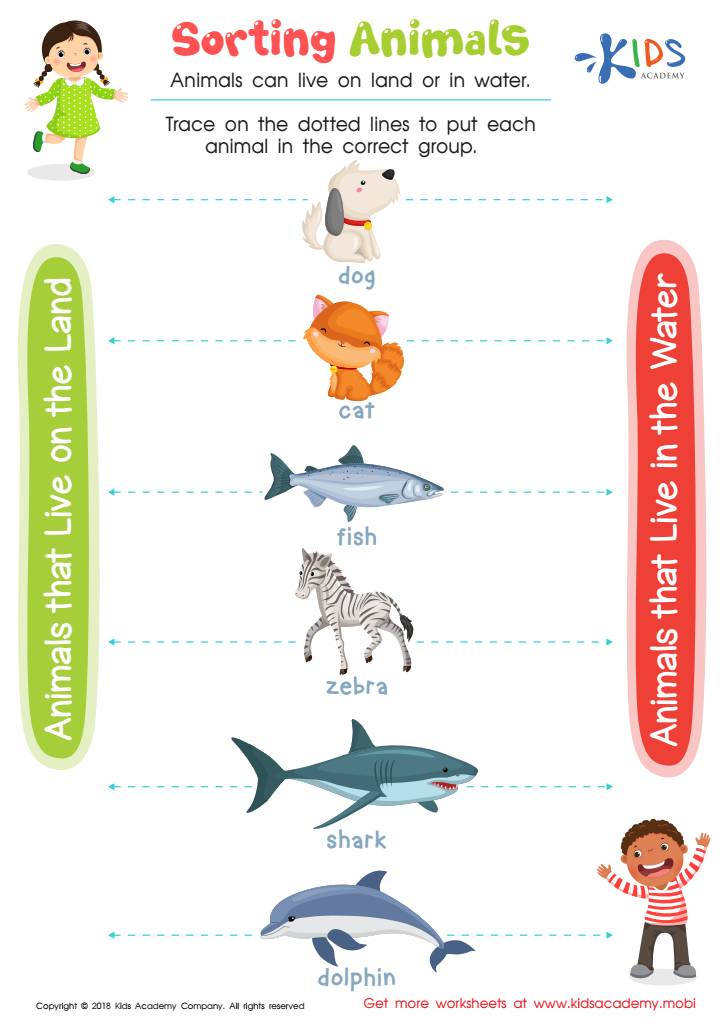
Sorting Animals Worksheet
 Assign to My Students
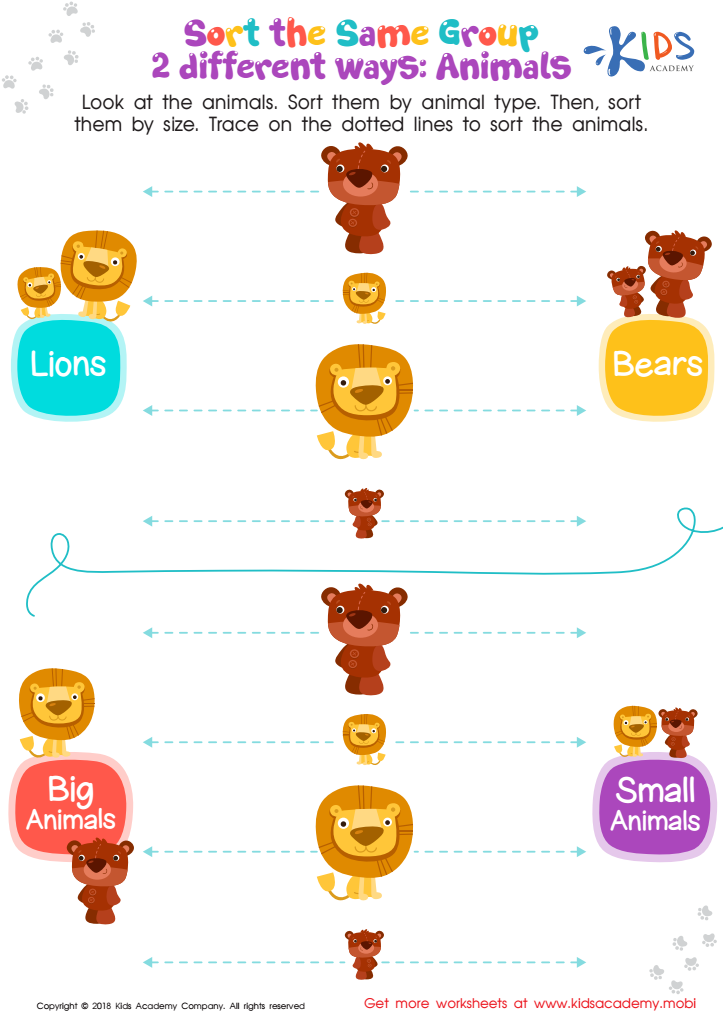
Sort the Same Group 2 Different Ways: Animals Worksheet
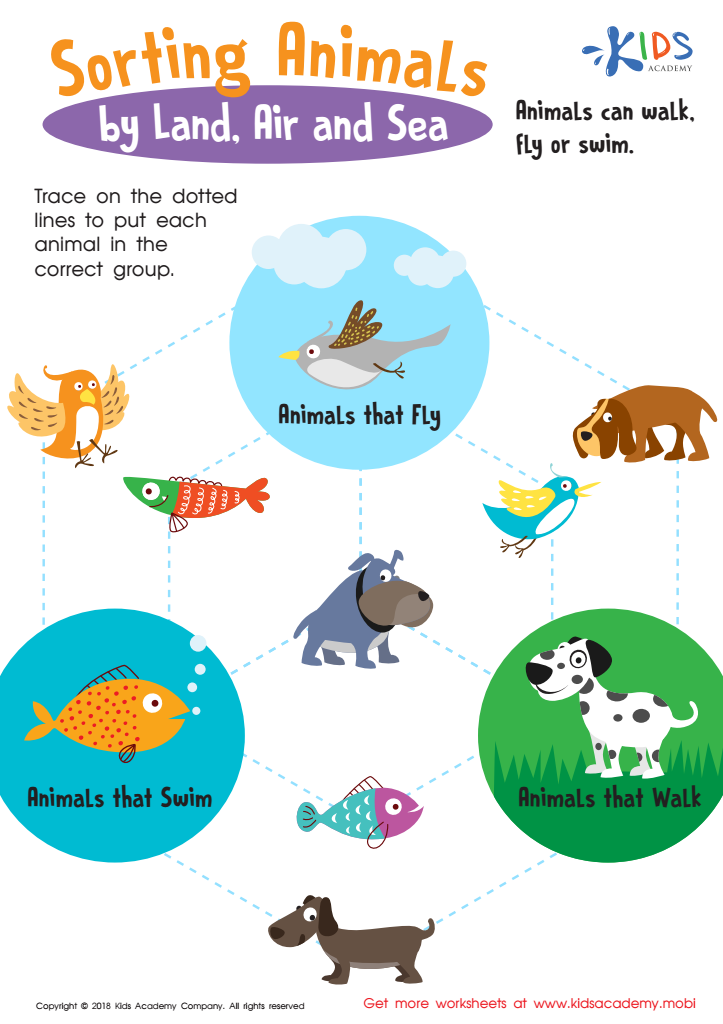
Sorting Animals by Land, Air and Sea Worksheet







Animal classification and normal sorting are vital concepts for parents and teachers as they lay the groundwork for understanding biodiversity and ecological relationships. When children learn to classify animals, they develop critical thinking skills by categorizing animals based on shared characteristics such as habitat, diet, and physical traits. This sorting fosters curiosity and mimics the scientific method, encouraging students to observe, hypothesize, and draw conclusions.
Understanding classifications not only boosts scientific literacy but also promotes environmental awareness. As children grasp how different species coexist and their roles in ecosystems, they cultivate a sense of responsibility towards conservation and wildlife protection. This knowledge can inspire future generations to advocate for environmental sustainability.
Moreover, these concepts can seamlessly integrate into various subjects, enhancing lesson plans in science, math (through sorting games), and even art (by creating posters of different animal groups). Through collaborative activities, children learn social skills and teamwork.
By engaging in animal classification, children gain a holistic understanding of life on Earth, establishing a foundation for lifelong learning and a profound respect for nature. Parents and teachers play a crucial role in guiding this exploration, making it a priority in young education.