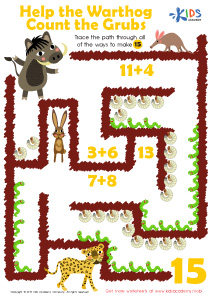
Mathematical reasoning Normal Subtraction Worksheets
4 filtered results
-
From - To
Discover our engaging "Mathematical Reasoning Normal Subtraction Worksheets" designed for young learners to enhance their subtraction skills. These worksheets provide a variety of problems that encourage children to apply logical thinking and reasoning in their mathematical practices. Each exercise focuses on building confidence in subtraction while developing critical problem-solving abilities. Ideal for classroom or home use, our worksheets include colorful images and relatable scenarios that make learning enjoyable. By promoting visual aids and interactive exercises, students will grasp subtraction concepts effectively. Perfect for early grades, these worksheets support a well-rounded math education and inspire a love for learning. Start exploring today!
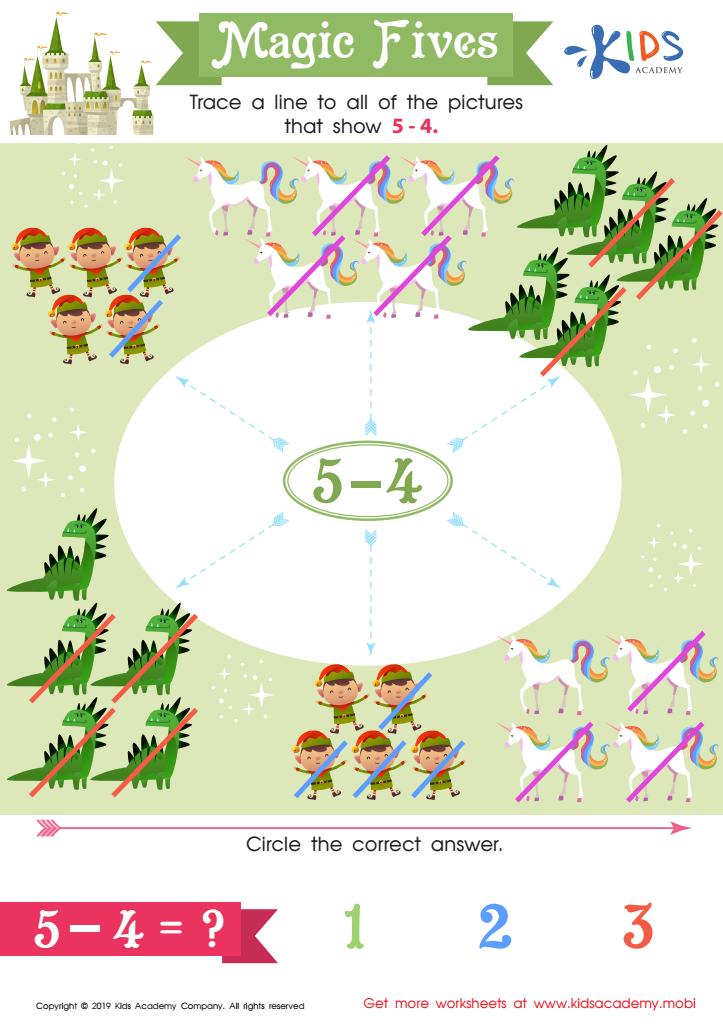
Magic Fives Worksheet
 Assign to My Students
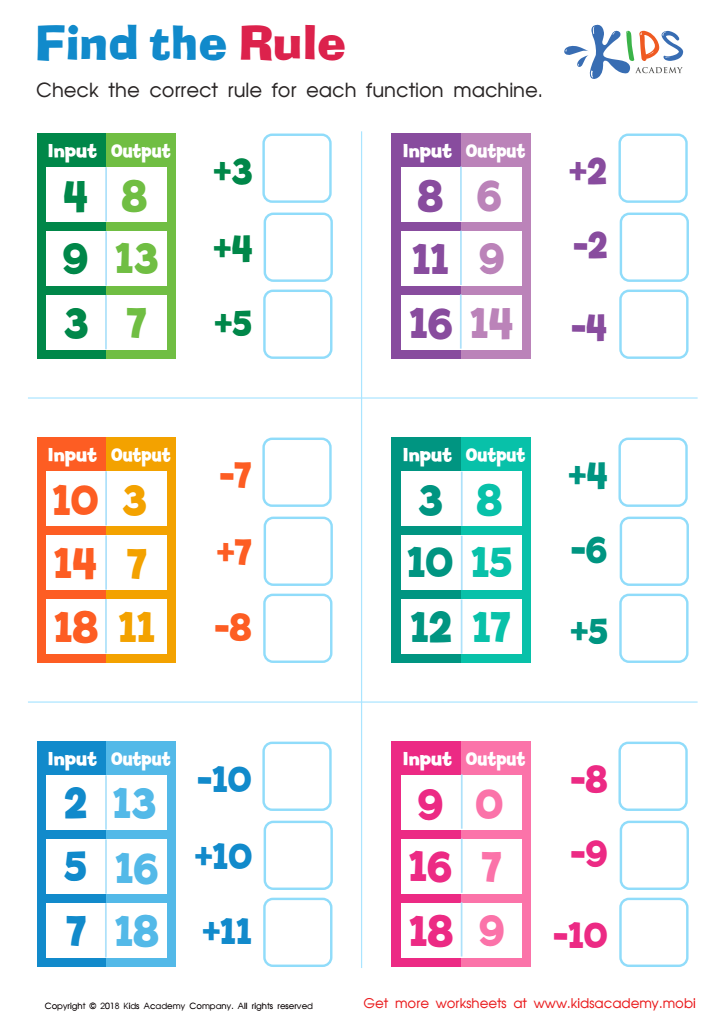
Find the Rule Worksheet
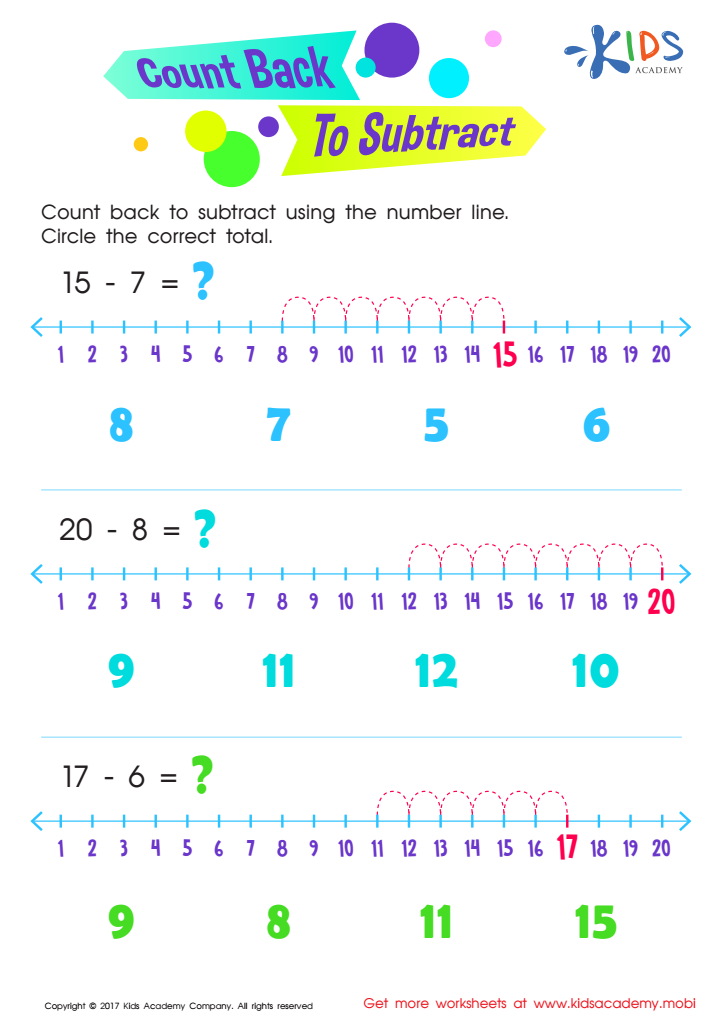
Count Back to Subtract Substraction Worksheet
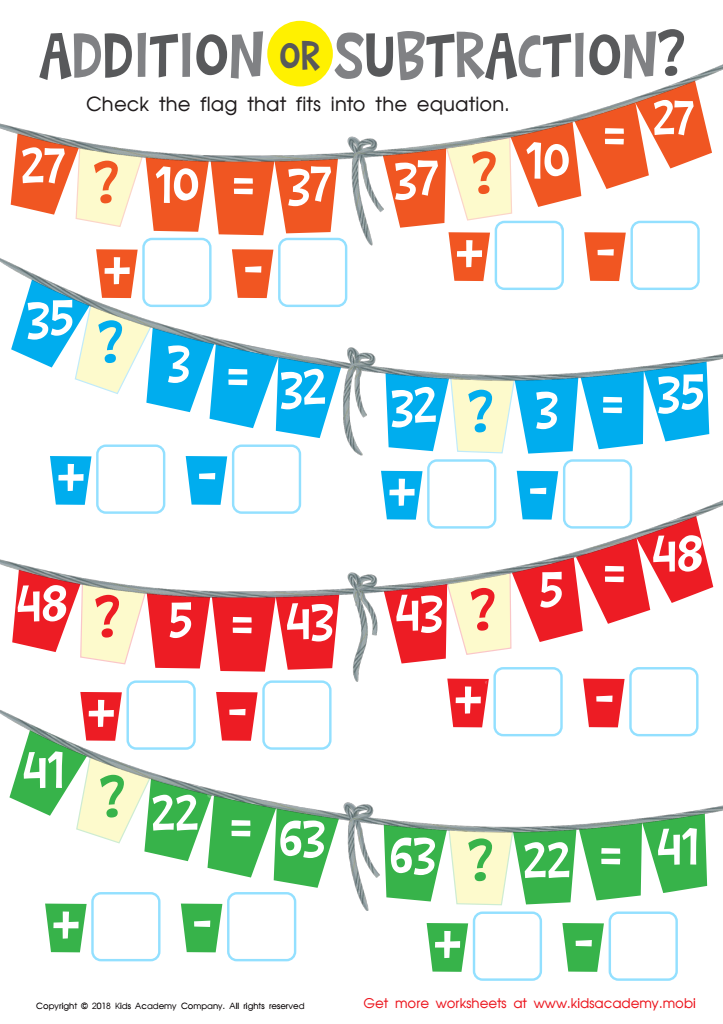
Addition or Subtraction? Worksheet








Mathematical reasoning, particularly in the context of normal subtraction, is fundamental for young learners. It nurtures critical thinking skills and problem-solving abilities that extend beyond math itself. When parents and teachers invest in understanding and teaching normal subtraction, they build a strong foundation for children’s overall mathematical proficiency.
Subtraction is one of the basic operations in mathematics, yet it plays a critical role in helping children engage with concepts such as number sense, operations, and quantitative reasoning. By focusing on normal subtraction, educators can guide students to understand not just how to perform the operation, but also why it works. This deeper comprehension enables learners to make connections between math and real-life situations, enhancing their ability to apply these skills outside the classroom.
Moreover, encouraging mathematical reasoning fosters perseverance and resilience, as students often face challenges while developing these skills. This process teaches them valuable lessons in patience and diligence. For parents, engaging in mathematical discussions around subtraction helps create a supportive learning environment and strengthens the parent-child bond. Overall, prioritizing normal subtraction is crucial for cultivating engaged, proficient, and confident math learners.