Counting practice Normal Preschool Numbers Worksheets
4 filtered results
Difficulty Level
Grade
Age
-
From - To
Subject
Activity
Standards
Enhance your preschooler's counting skills with our "Counting Practice Normal Preschool Numbers Worksheets." Designed for early learners, these engaging worksheets offer a variety of activities that make learning numbers fun. From counting objects to tracing numbers, each exercise promotes numerical understanding through playful interaction. Perfect for at-home study or classroom use, these worksheets align with developmental milestones and improve fine motor skills. Watch your child gain confidence as they practice counting from 1 to 20 while building a solid foundation for future math concepts. Download our colorful and versatile worksheets today and make counting a bright adventure for your little ones!
Favorites
With answer key
Interactive
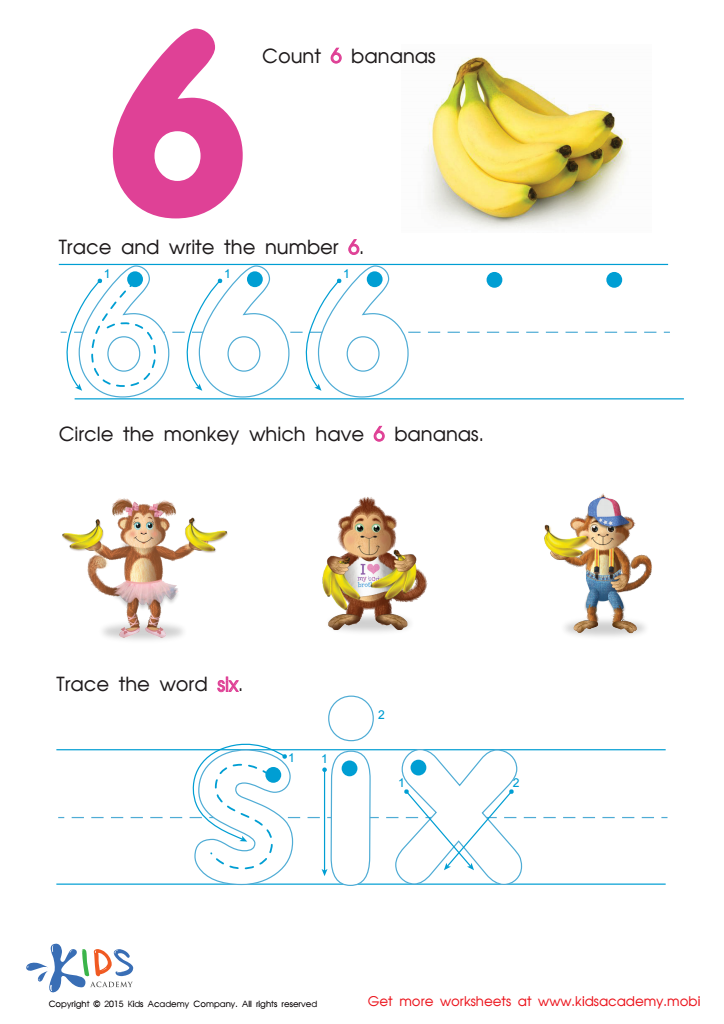
Tracing And Writing Number 6 Worksheet
Learn numbers in a fun way with our preschool number worksheets. Count six bananas, trace and write the number, find the monkey with six bananas, and trace the word "six." Explore more activities at Kids Academy.
 Assign to My Students
Tracing And Writing Number 6 Worksheet
Worksheet
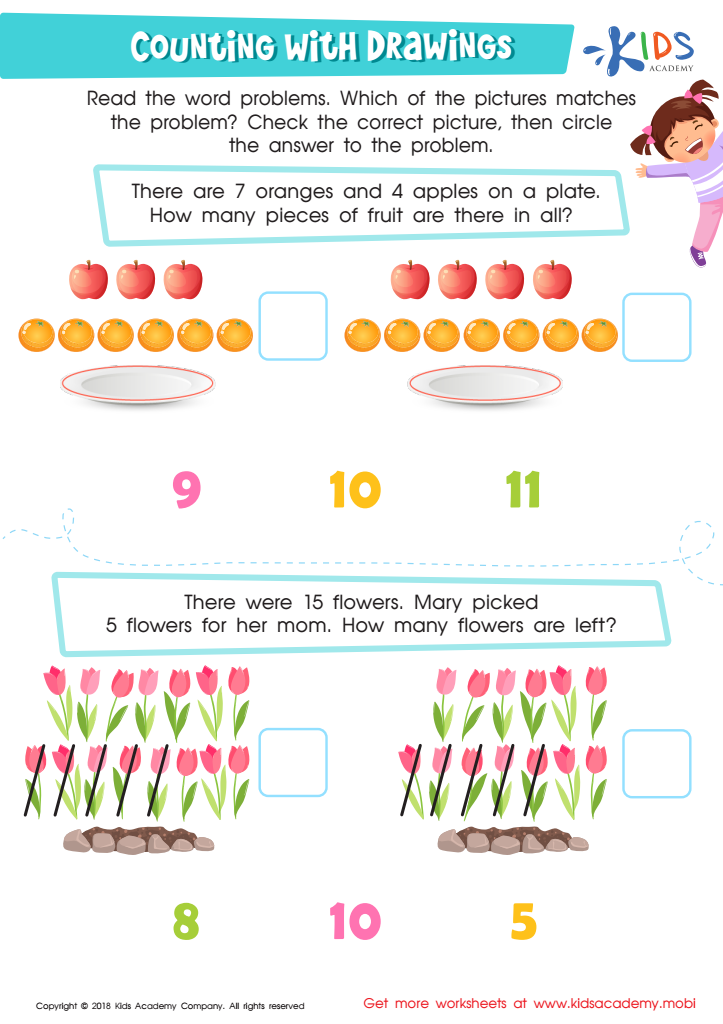
Counting with Drawings: Fruits & Chocolates Worksheet
Learning basic addition and subtraction has never been easier with this free worksheet! Young mathematicians can sort & count to get the right sum or difference for each problem. Plus, they'll practice fine motor skills by circling the correct answer. An ideal way to help kids build important visual recognition and discernment skills.
Counting with Drawings: Fruits & Chocolates Worksheet
Worksheet
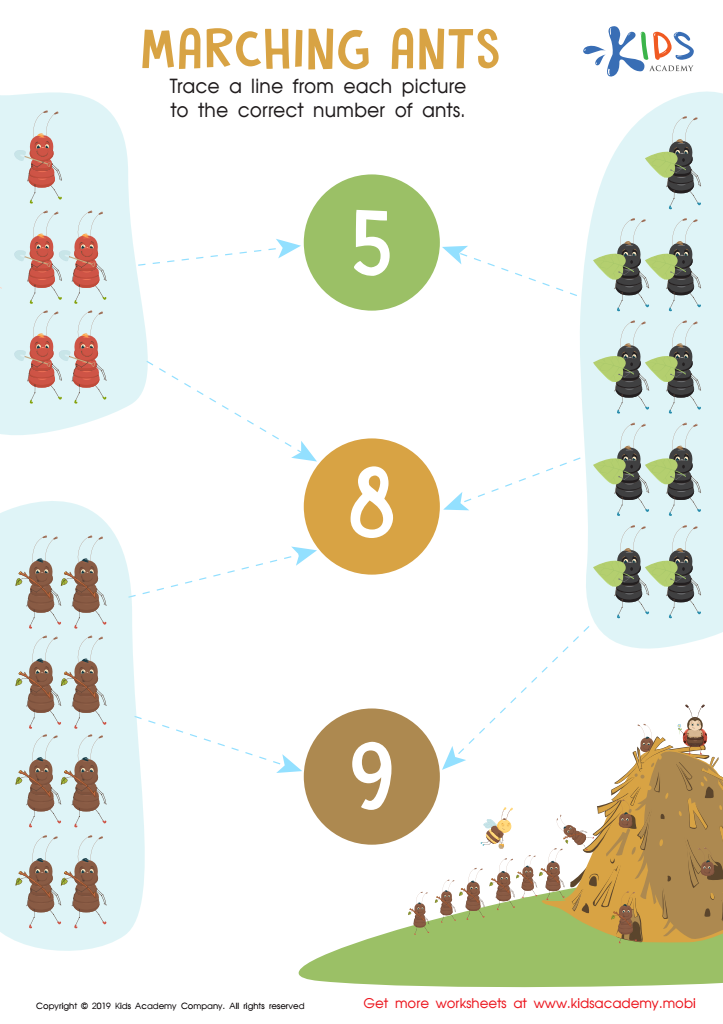
Marching Ants Worksheet
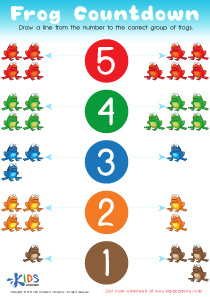
Assess and help your kids practice counting with this worksheet. Ask them to identify the four groups of ants in the picture. Guide them as they count each group and trace the lines to the corresponding number.
Marching Ants Worksheet
Worksheet
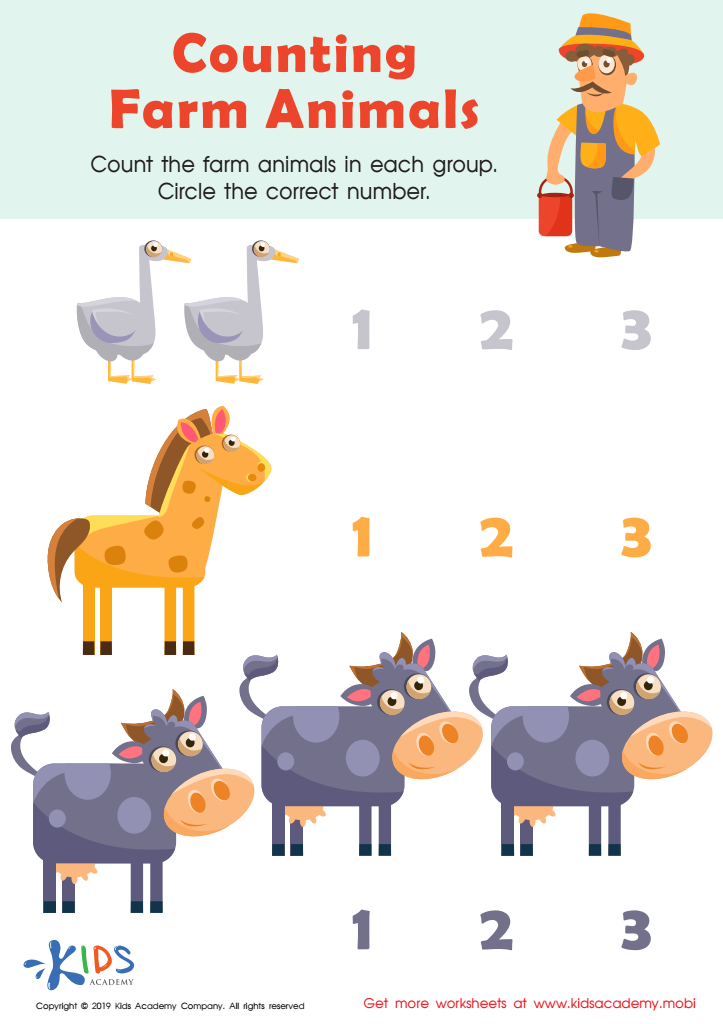
Counting Farm Animals Worksheet
Kids love farms! That's why this free farm animals counting worksheet is great for building number sense and counting skills. Have your young mathematician count the pictures, then circle the corresponding number. It's a fun and meaningful way to practice counting.
Counting Farm Animals Worksheet
Worksheet
Join Kids Academy for Free
Who is primarily going to use this learning content?








Counting practice is a foundational skill for young children in preschool that significantly influences their overall academic development and everyday life. Parents and teachers should prioritize counting activities because they provide essential learning opportunities that extend beyond mere number recognition.
Firstly, counting helps children develop numerical sense, which lays the groundwork for higher-level math concepts, such as addition and subtraction. Engaging in counting fosters critical reasoning and problem-solving skills, important in various subjects and day-to-day activities.
Additionally, counting practice enhances cognitive abilities through the development of memory and attention span. As children track numbers or count objects, they learn to focus and concentrate, improving overall classroom behavior and participation. Furthermore, these activities promote fine motor skills when counting physical objects, such as blocks or toys.
Socially and emotionally, counting practice encourages collaborative play and communication among peers, as children often count together or take turns. It builds confidence in their abilities and provides a sense of achievement as they master these initial math skills.
In summary, consistent counting practice in preschool sets the stage for successful academic trajectories, essential life skills, and positive social interactions, making it a critical focus for parents and educators alike.