Phonics recognition Normal Reading Worksheets
4 filtered results
-
From - To
Enhance your child's reading skills with our Phonics Recognition Normal Reading Worksheets! Designed for early learners, these engaging worksheets focus on phonics, helping children recognize letters, sounds, and their combinations. Our resources provide a fun and interactive way to master essential reading skills, fostering confidence and fluency in young readers. Each worksheet features vibrant illustrations and age-appropriate exercises that reinforce phonetic patterns, making learning enjoyable. Whether in the classroom or at home, our phonics recognition worksheets are ideal for developing foundational reading abilities, setting your child on the path to literacy success. Start your child's reading journey today!
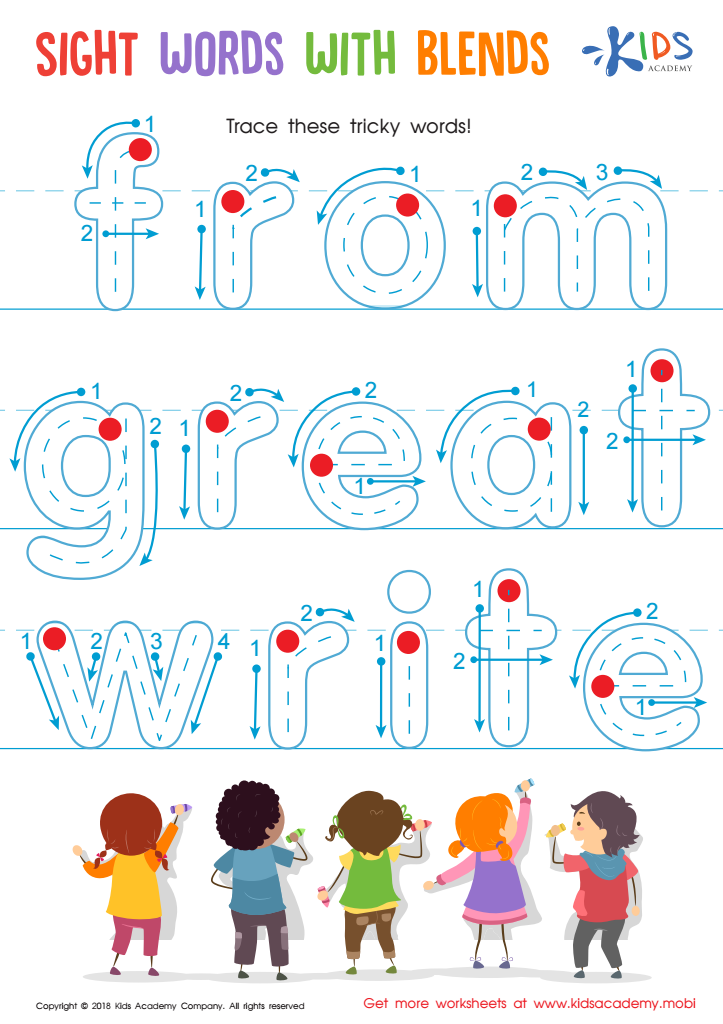
Sight Words with Blends Worksheet
 Assign to My Students
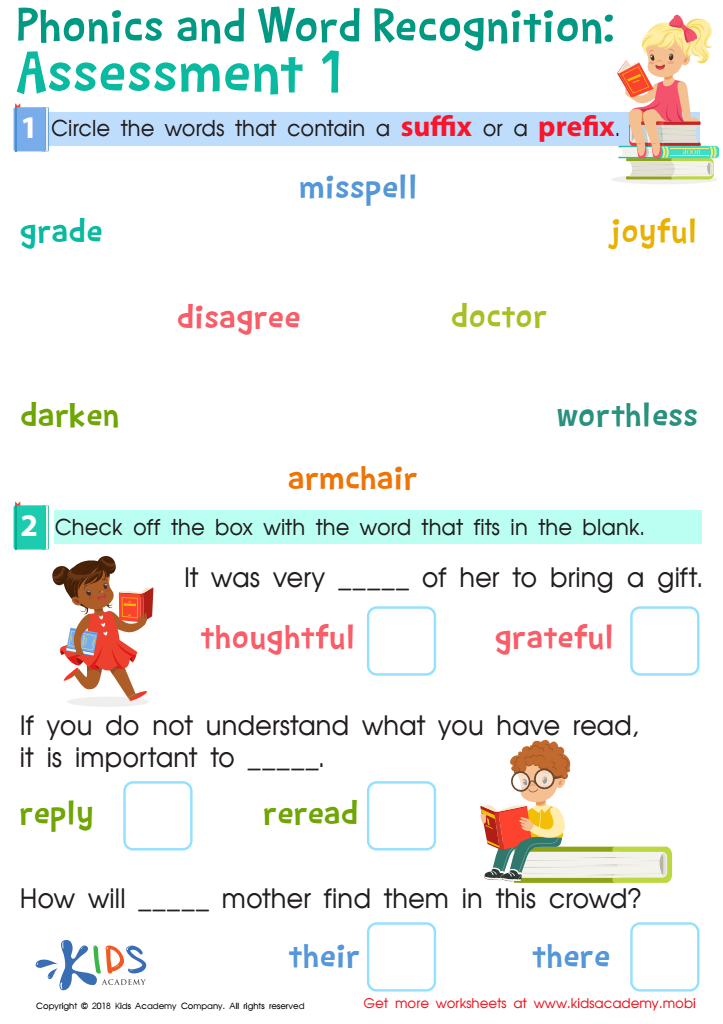
Phonics and Word Recognition: Assessment 1 Worksheet
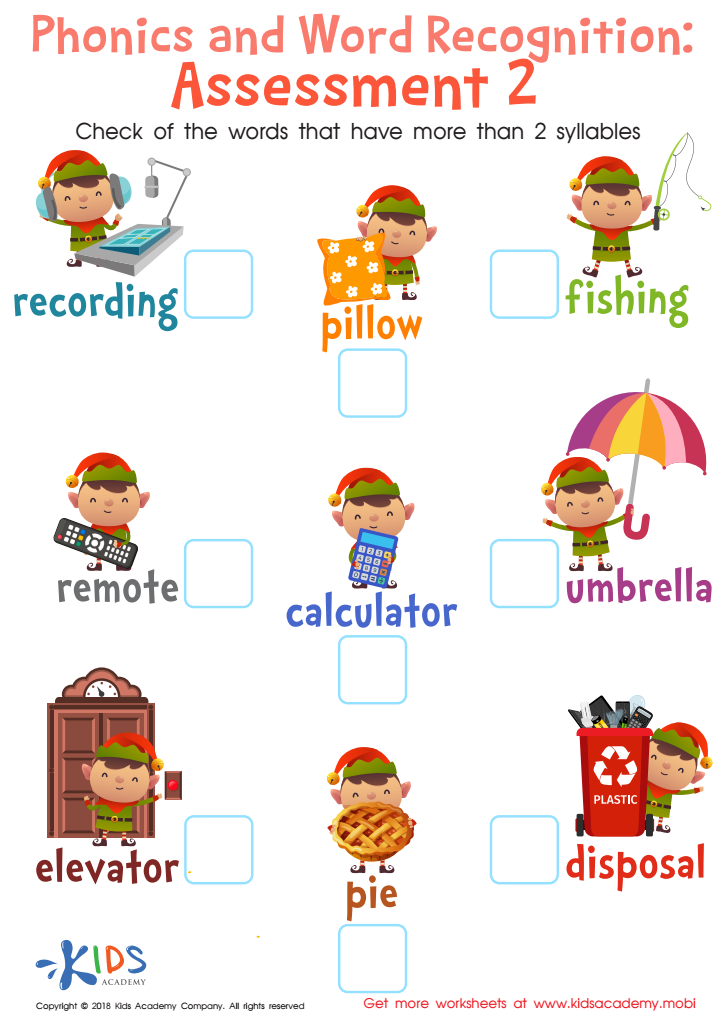
Phonics and Word Recognition: Assessment 2 Worksheet
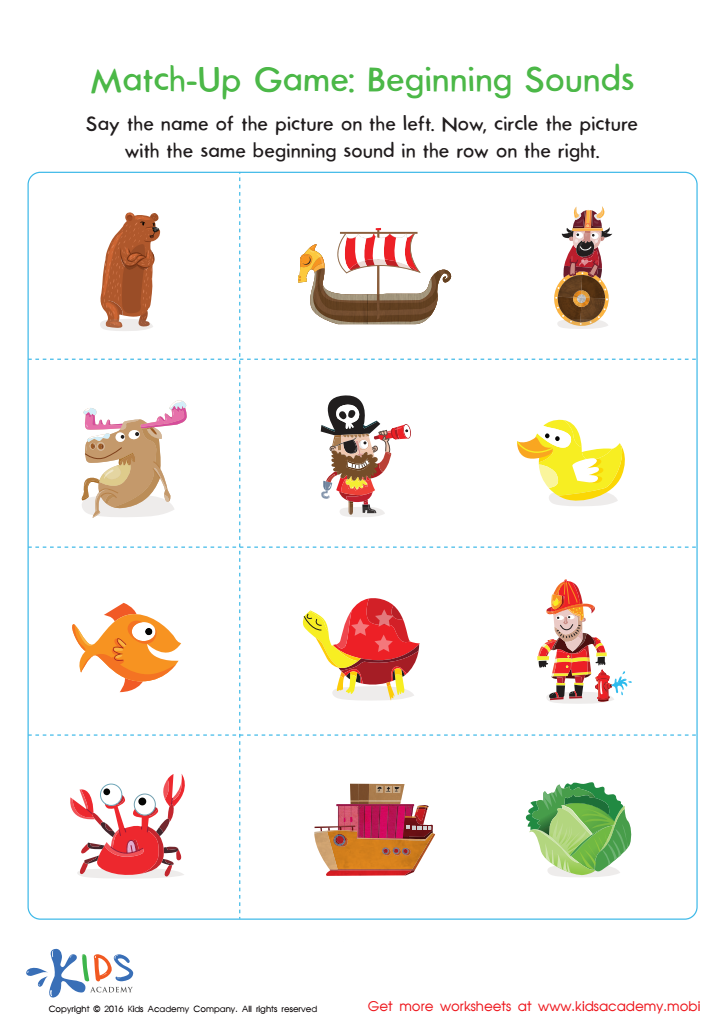
Match–Up Game: Beginning Sounds Worksheet








Phonics recognition is a crucial foundation for reading, emphasizing the relationship between sounds and their corresponding letters. Parents and teachers should prioritize phonics for several compelling reasons.
Firstly, phonics instruction enhances decoding skills, allowing children to sound out unfamiliar words independently. This empowers them to tackle new texts with confidence and curiosity, fostering a love for reading. As children recognize sound-letter correlations, they improve their fluency and comprehension, which are essential for academic success across all subjects.
Secondly, early phonics instruction can significantly reduce the risk of reading difficulties later on. By instilling a strong phonetic foundation, parents and teachers enable children to navigate the complexities of language more effectively, mitigating frustrations associated with reading challenges.
Lastly, phonics recognition also facilitates improved vocabulary development, as children begin to connect sounds with meanings. This awareness not only aids in communication skills but also boosts overall literacy proficiency.
In summary, nurturing phonics recognition is vital for developing competent readers. It lays the groundwork for independence in reading, promotes academic readiness, and ultimately sets the stage for lifelong learning and enthusiasm for literature. Engaging in phonics education ensures that children are equipped with the necessary tools to thrive as they advance in their educational journey.








