Understanding Sequences Normal Reading Worksheets
3 filtered results
-
From - To
Enhance your child's reading skills with our "Understanding Sequences" normal reading worksheets. Designed for early learners, these engaging resources help children grasp the concept of sequencing events, a vital comprehension skill. Each worksheet encourages critical thinking as students organize information and identify the order of events in stories. With various activities, including drawing and writing, kids will not only improve their reading abilities but also develop a better understanding of narrative structure. Perfect for classroom or home use, our worksheets foster a love for reading while building essential skills. Explore the world of sequences and watch your child's confidence soar!
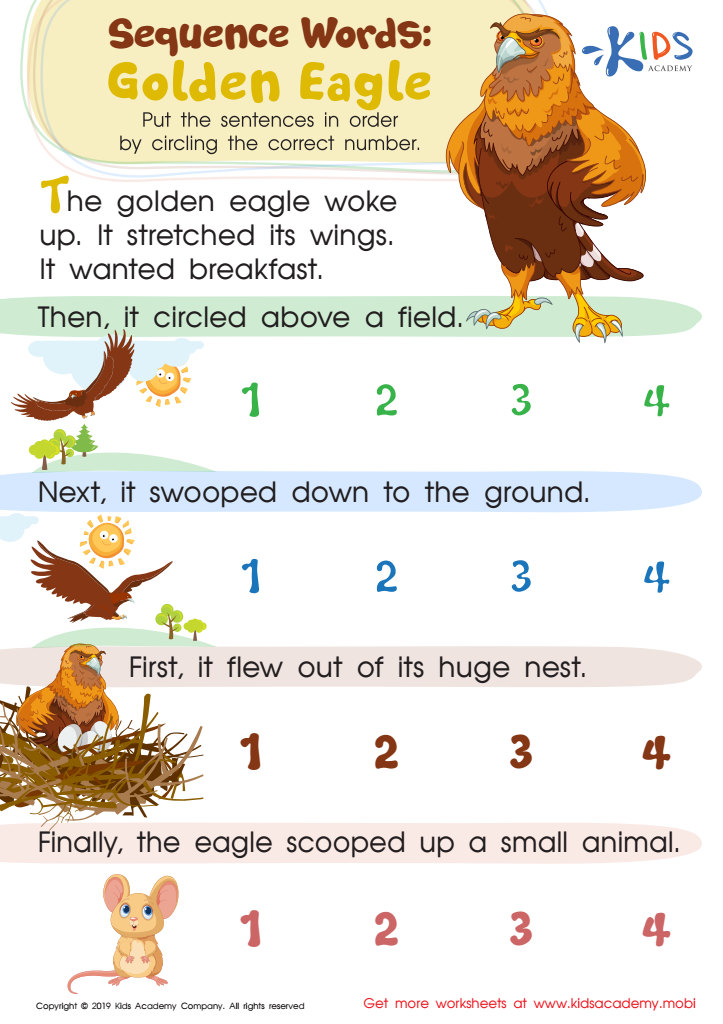
Sequence Word Eagle Worksheet
 Assign to My Students
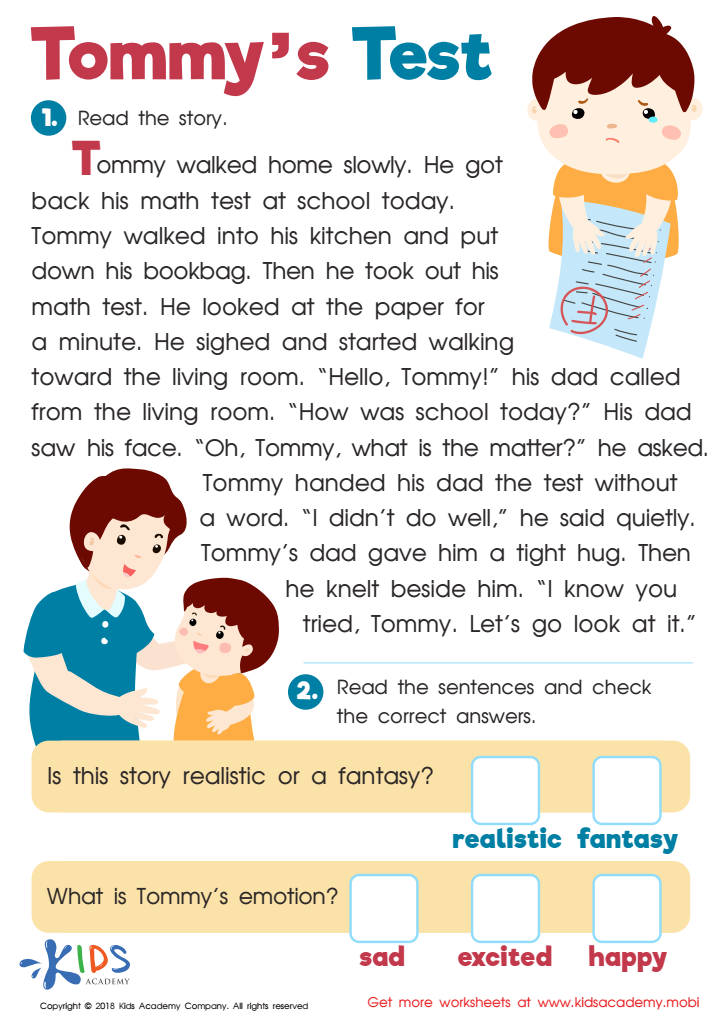
Tommys Test Worksheet
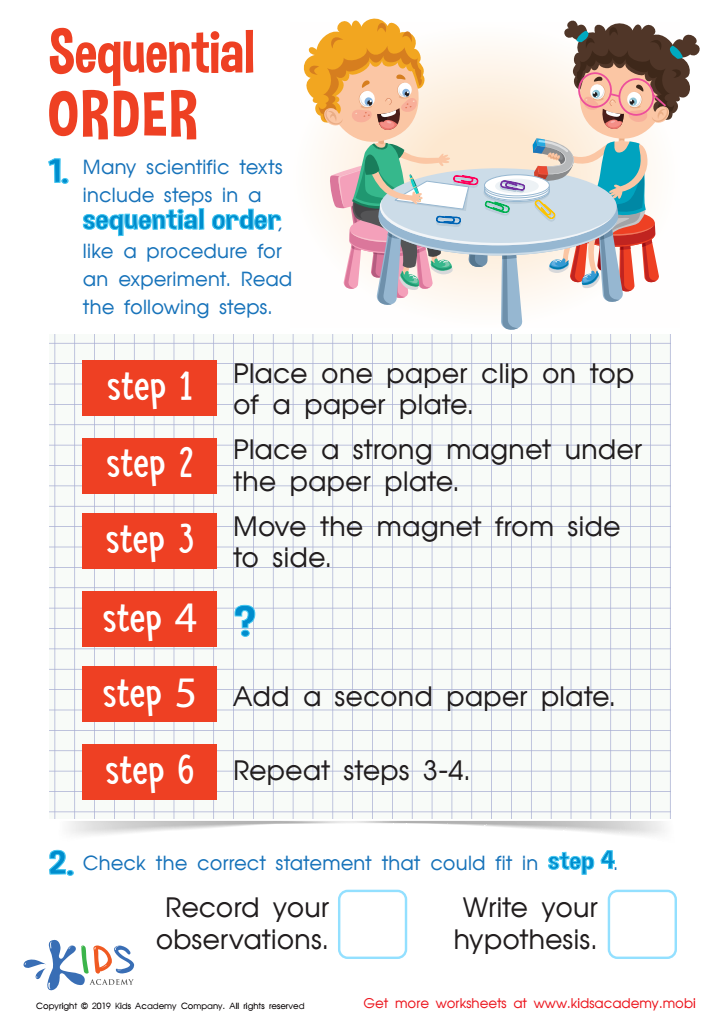
Sequencential Order Worksheet





Understanding sequences in reading is crucial for both parents and teachers as it lays the foundation for children's literacy development. Sequences refer to the ability to recognize the order of events or ideas in a text, which is essential for comprehension. When children grasp the concept of sequences, they can better follow narratives, understand cause-and-effect relationships, and anticipate what might happen next in a story. This enhances their overall reading skills, enabling them to engage with a variety of texts more effectively.
Parents play a vital role in reinforcing this concept at home. By reading stories together and discussing the order of events, they help children develop critical thinking and reasoning skills. Simple questions like “What happened first?” or “What do you think will happen next?” promote interactive reading and boost comprehension.
Teachers can integrate sequencing activities into their reading programs through graphic organizers, storytelling, or sequencing games, fostering deeper understanding and retention. Helping students become proficient in recognizing sequences not only supports their reading development but also encourages collaboration and discourse about texts, making reading a more enjoyable and meaningful experience. Ultimately, understanding sequences promotes lifelong learning and a love for reading, benefiting children academically and personally.








