Word identification Normal Reading Worksheets
5 filtered results
-
From - To
Discover our engaging Word Identification Normal Reading Worksheets, designed to enhance early literacy skills for young learners. These worksheets provide fun and interactive activities that help students recognize and interpret words, building a strong foundation for reading fluency. Ideal for preschool and early grade students, our resources foster phonemic awareness and vocabulary growth through tracing, matching, and word recognition exercises. Perfect for classroom use or at-home learning, these worksheets encourage critical thinking and bolster confidence in emerging readers. Explore our collection today to ignite a love for reading in your child and promote their academic success!
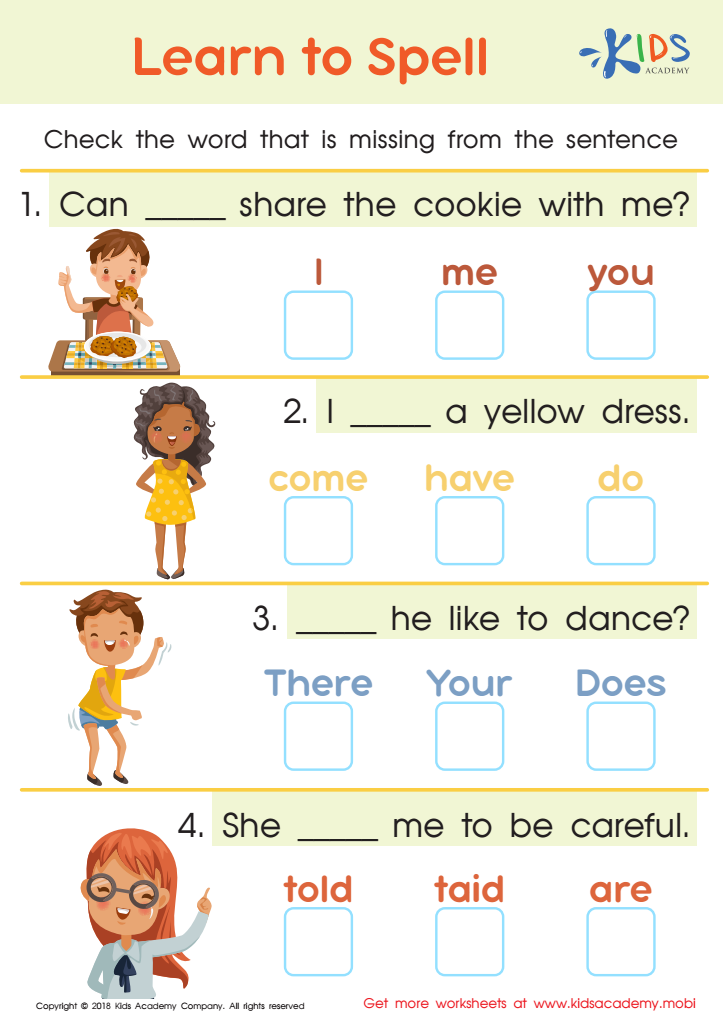
Learn to Spell Worksheet
 Assign to My Students
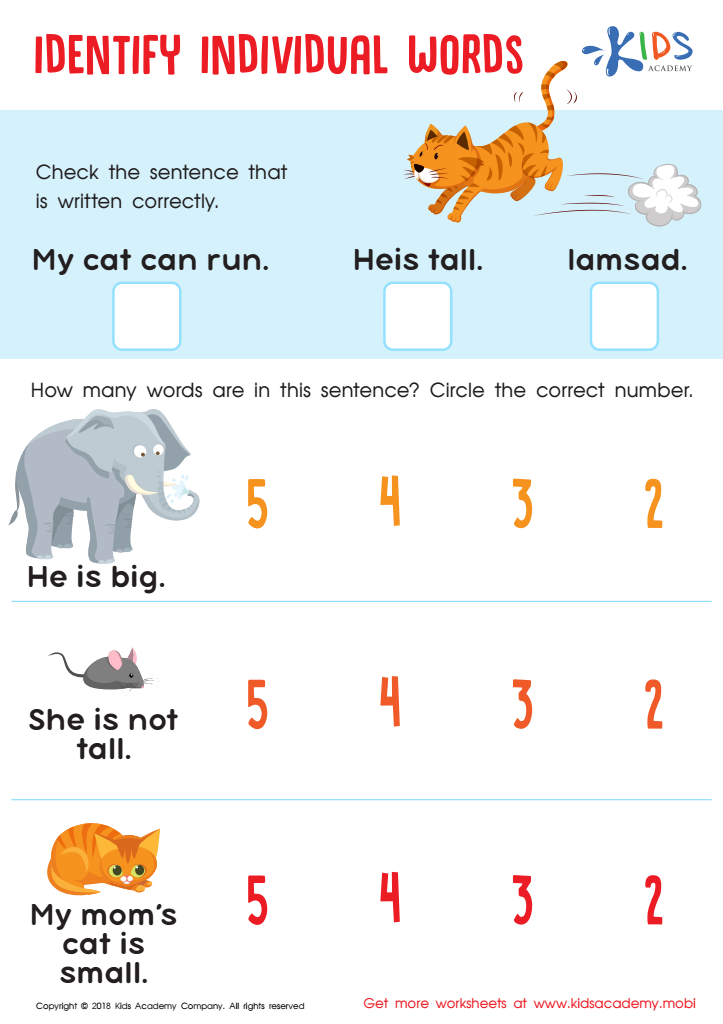
Identify Individual Words Worksheet
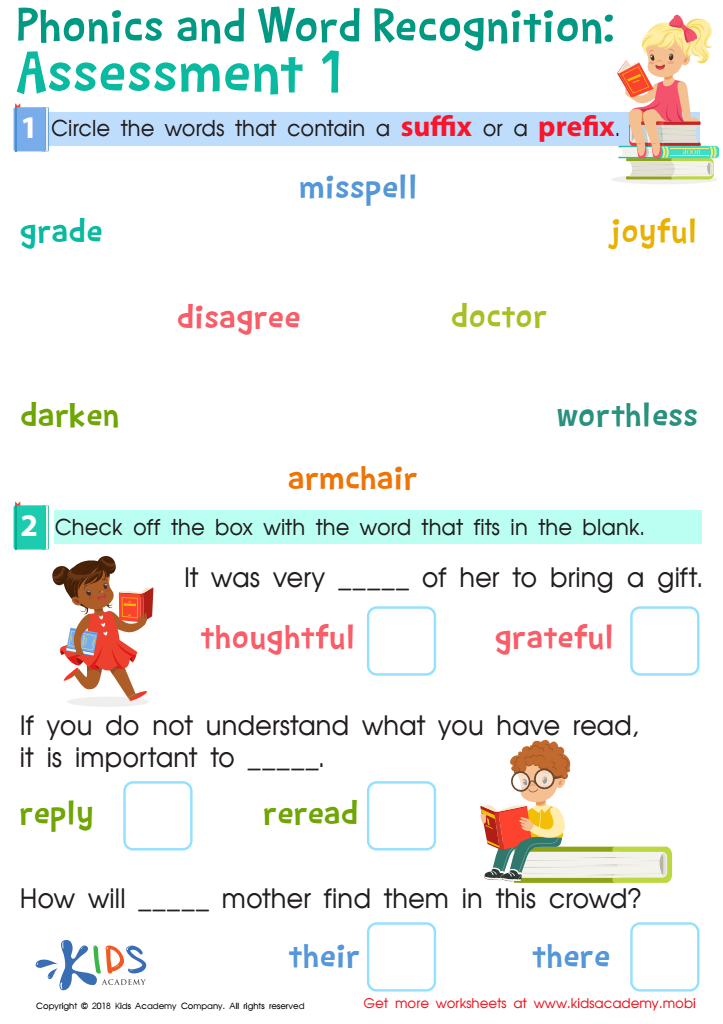
Phonics and Word Recognition: Assessment 1 Worksheet
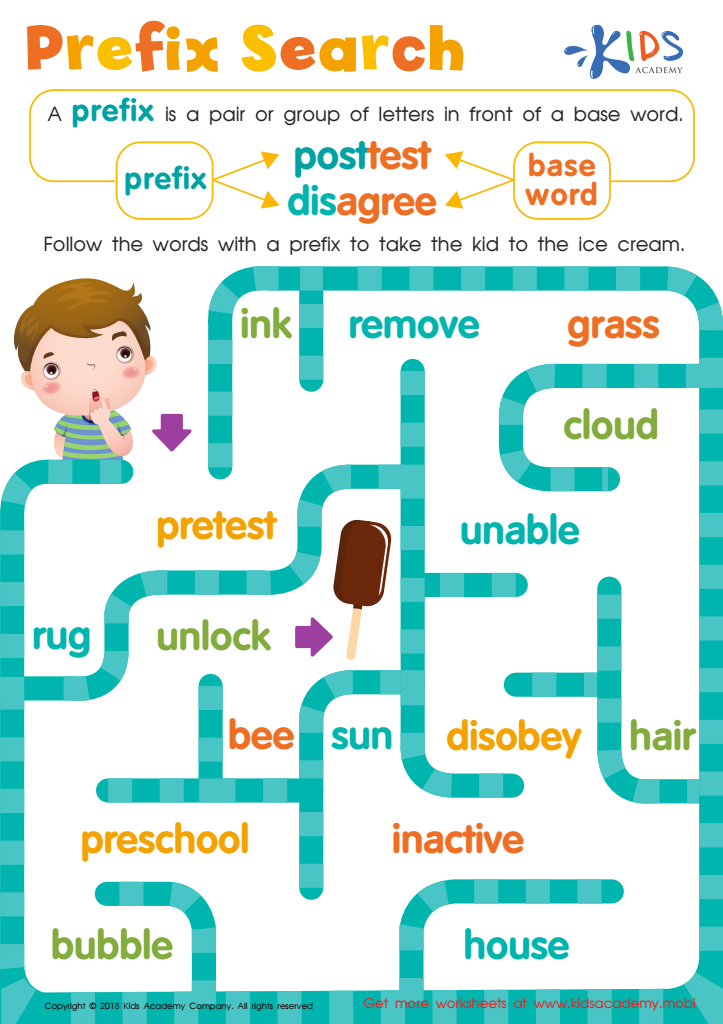
Reading: Prefix Search Worksheet
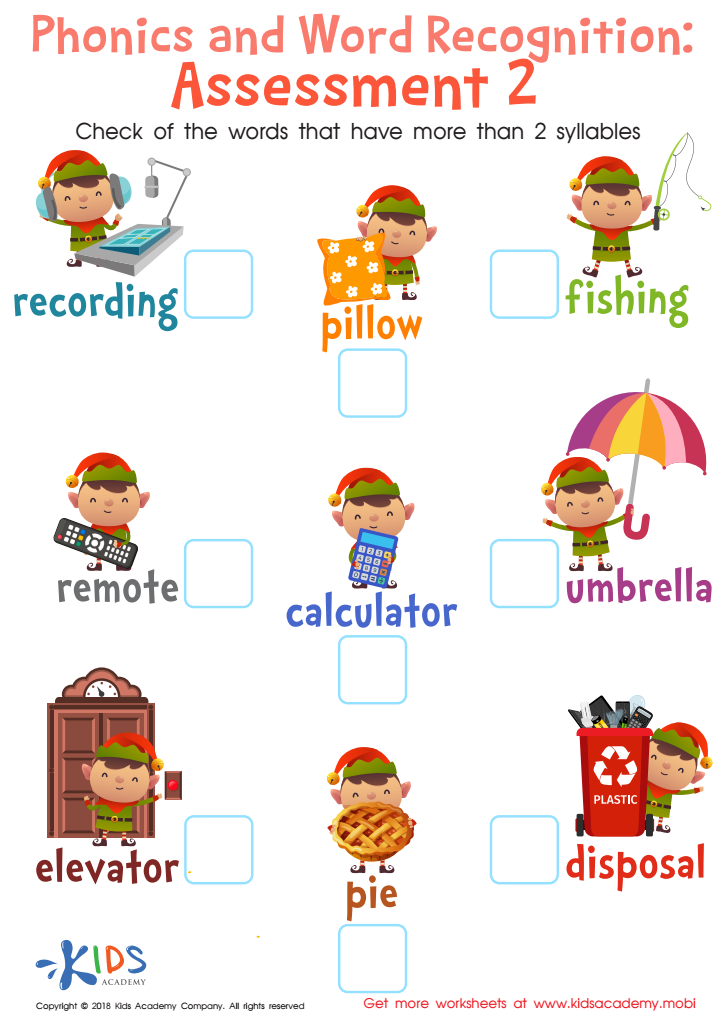
Phonics and Word Recognition: Assessment 2 Worksheet








Word identification is a crucial component of early literacy that significantly impacts a child's reading development and overall academic success. Parents and teachers should care about normal reading and word identification because it serves as the foundation for effective reading skills. When children can quickly recognize words, they can focus on comprehension, allowing them to engage with and understand the text meaningfully.
Moreover, strong word identification skills promote confidence in young readers, reducing frustration and disengagement with reading tasks. As children encounter new vocabulary and complex texts, their ability to identify words influences their motivation to read more frequently, fostering a love for literature that can last a lifetime.
In a broader context, word identification is linked to critical thinking and academic achievement across subjects. It impacts a student's ability to follow instructions, participate in discussions, and ultimately perform well in standardized assessments. Therefore, ensuring that children develop robust word identification skills is vital for their overall educational journey, equipping them with the tools needed for lifelong learning and success. By prioritizing this aspect of literacy, parents and teachers can create nurturing environments that enhance children's reading abilities and inspire their enthusiasm for reading.








