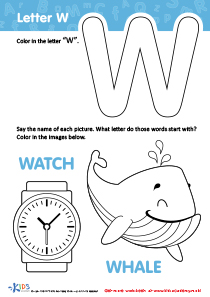
Word Recognition Normal Grade 2 Alphabet Worksheets
6 filtered results
-
From - To
Help your second graders master word recognition with our engaging Alphabet Worksheets! Designed specifically for grade 2 learners, these printable resources promote literacy through fun, interactive activities that enhance reading skills. Each worksheet features a variety of exercises to identify and recognize letters and words, improving vocabulary and boosting confidence in young readers. Ideal for classroom use or at-home learning, our worksheets encourage recognition of common words while reinforcing alphabet knowledge. Empower your students to become proficient readers with these friendly, age-appropriate materials that cater to diverse learning styles. Explore our essential tools for a successful reading journey today!
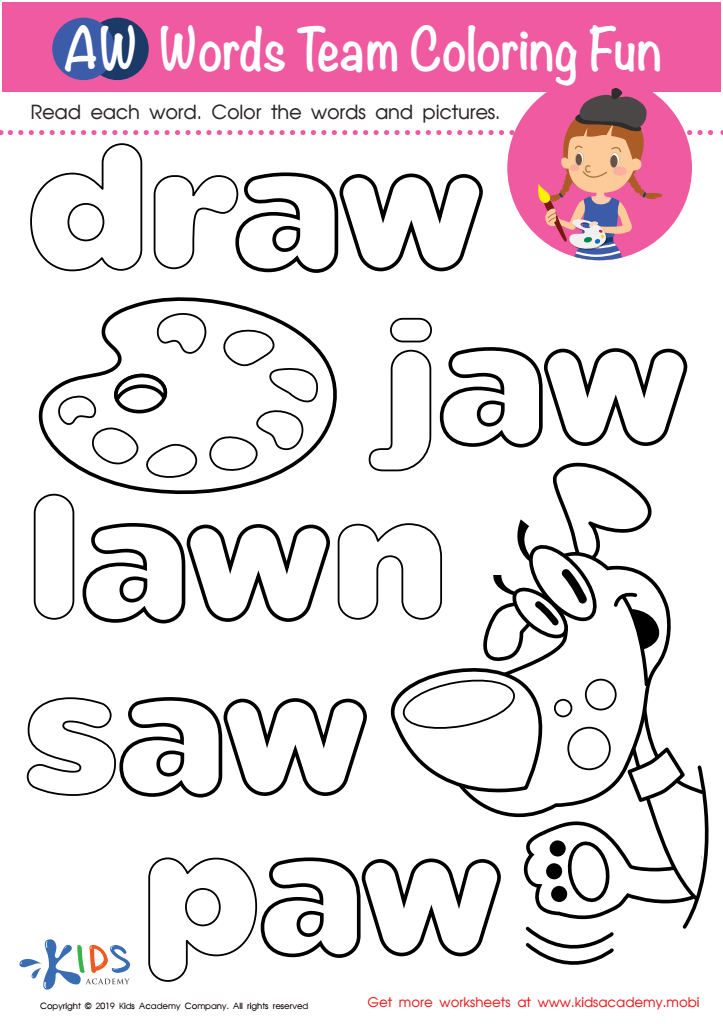
AW Words Team Coloring Fun Worksheet
 Assign to My Students
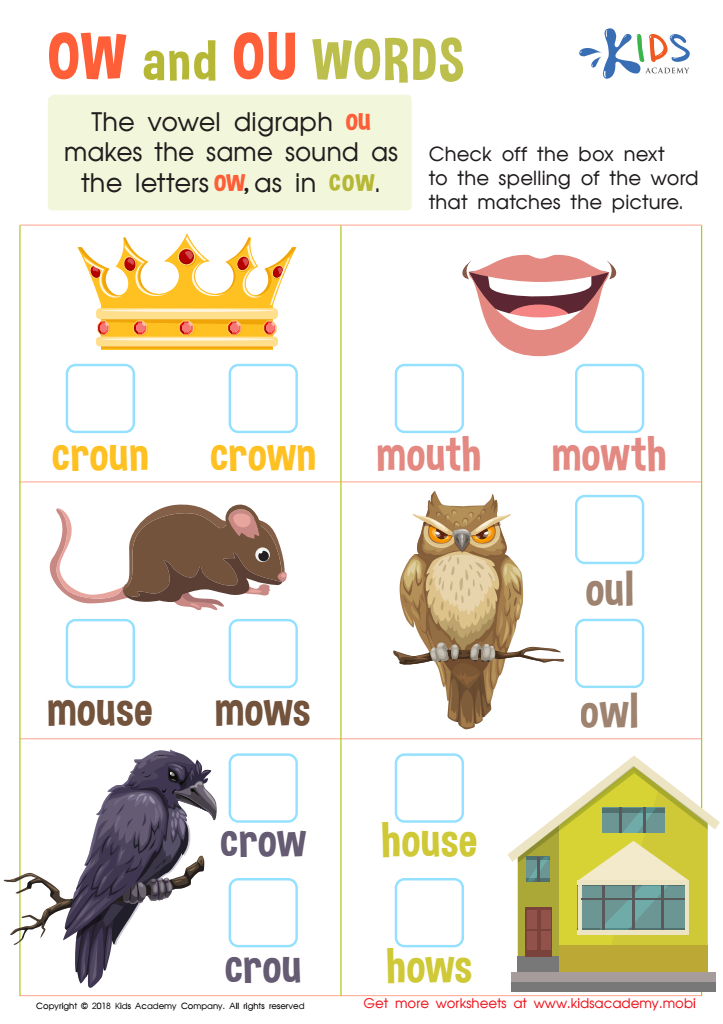
Reading: OW and OU Words Worksheet
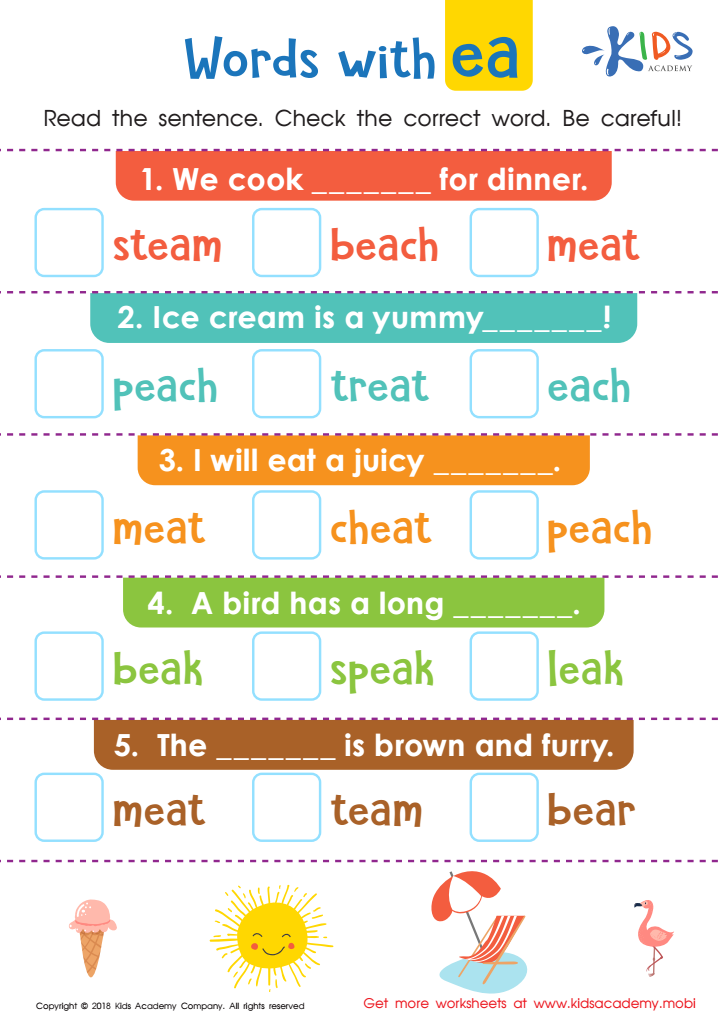
Words with ea Worksheet
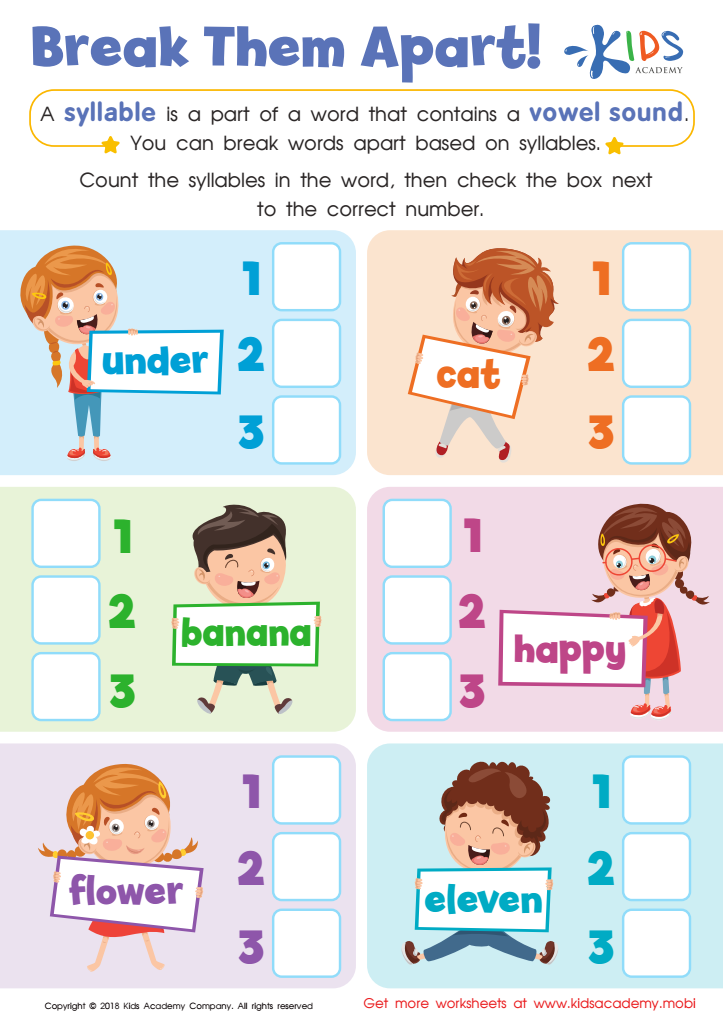
Reading: Break Them Apart Worksheet
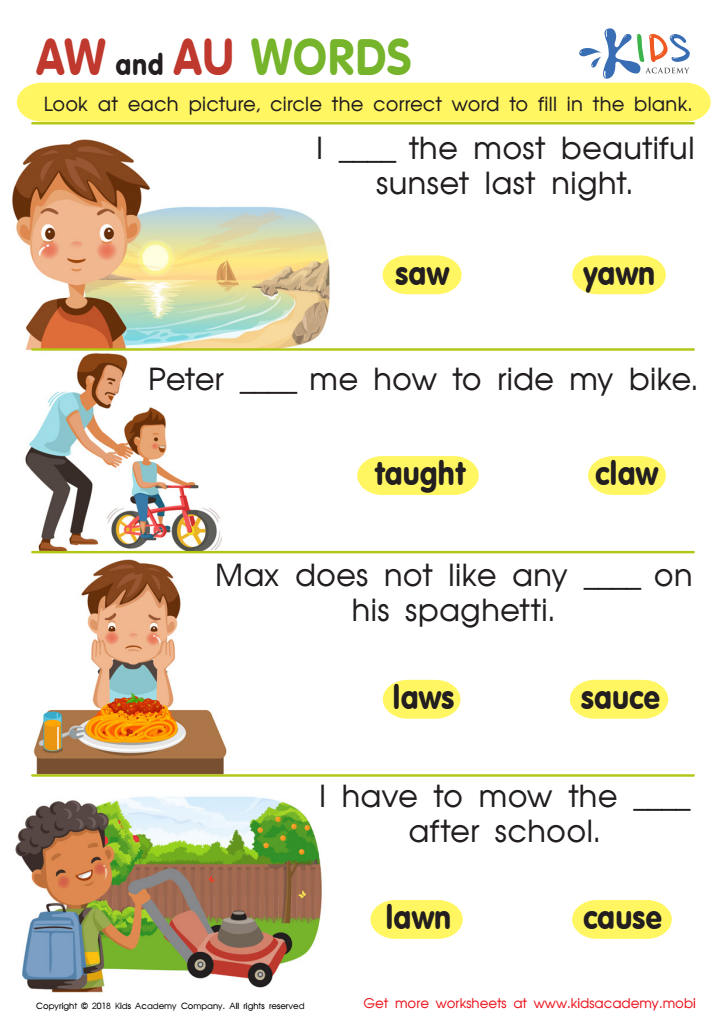
Reading: AW and AU Words Worksheet
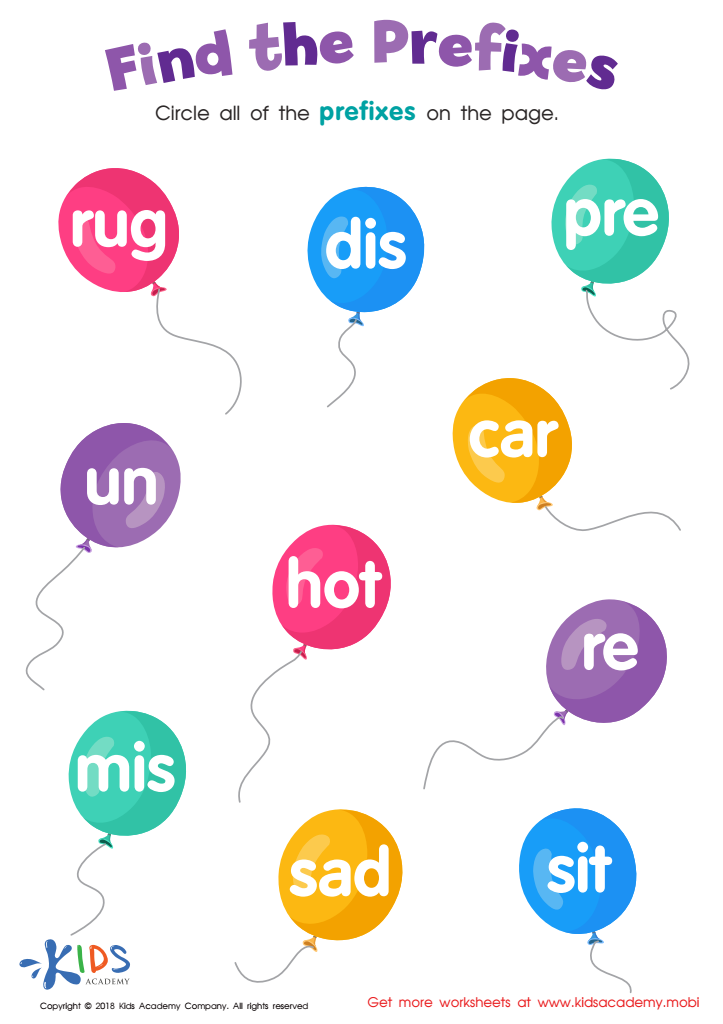
Reading: Find the Prefixes Worksheet








Word recognition is a critical skill for second graders, forming the foundation for successful reading and overall academic achievement. By this grade, students typically transition from learning to read to reading to learn, making proficient word recognition essential.
Firstly, strong word recognition skills enable children to decode and understand new texts more efficiently, fostering greater comprehension. When students can quickly recognize words, they can focus on grasping meanings rather than getting stuck on decoding, which can enhance their engagement and enjoyment in reading.
Additionally, mastering word recognition aids vocabulary development. Children encounter words repeatedly in various contexts, expanding their language skills and enhancing effective communication.
Moreover, teachers and parents play a vital role in nurturing these skills. By providing supportive reading environments, employing engaging reading strategies, and encouraging daily reading habits, they can motivate children to practice and improve in this area.
By prioritizing word recognition at this critical stage, parents and teachers can empower children to become confident readers, equipped with the necessary tools for lifelong learning. In essence, fostering these skills contributes to a child's academic success and overall cognitive development, making it a vital area of focus for educators and caregivers alike.