Understanding pollination Normal Grade 2 Worksheets
4 filtered results
-
From - To
Explore our engaging "Understanding Pollination" worksheets designed for Grade 2 students! These resources help young learners discover the essential role of pollination in nature. Through fun activities, students will grasp key concepts such as how plants reproduce and the importance of pollinators like bees and butterflies. Each worksheet encourages critical thinking and creativity, making learning both enjoyable and effective. Perfect for classroom use or at-home practice, our worksheets will captivate young minds and foster a deeper appreciation for the environment. Access our comprehensive collection and help your second graders excel in their understanding of this vital ecological process today!
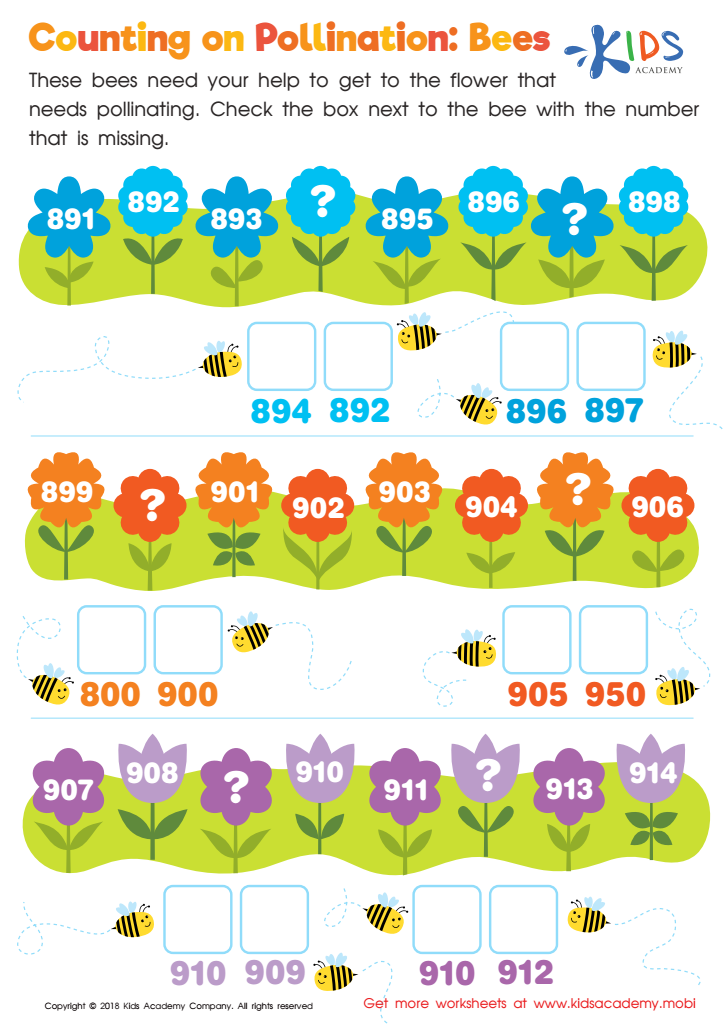
Counting on Pollination: Bees Worksheet
 Assign to My Students
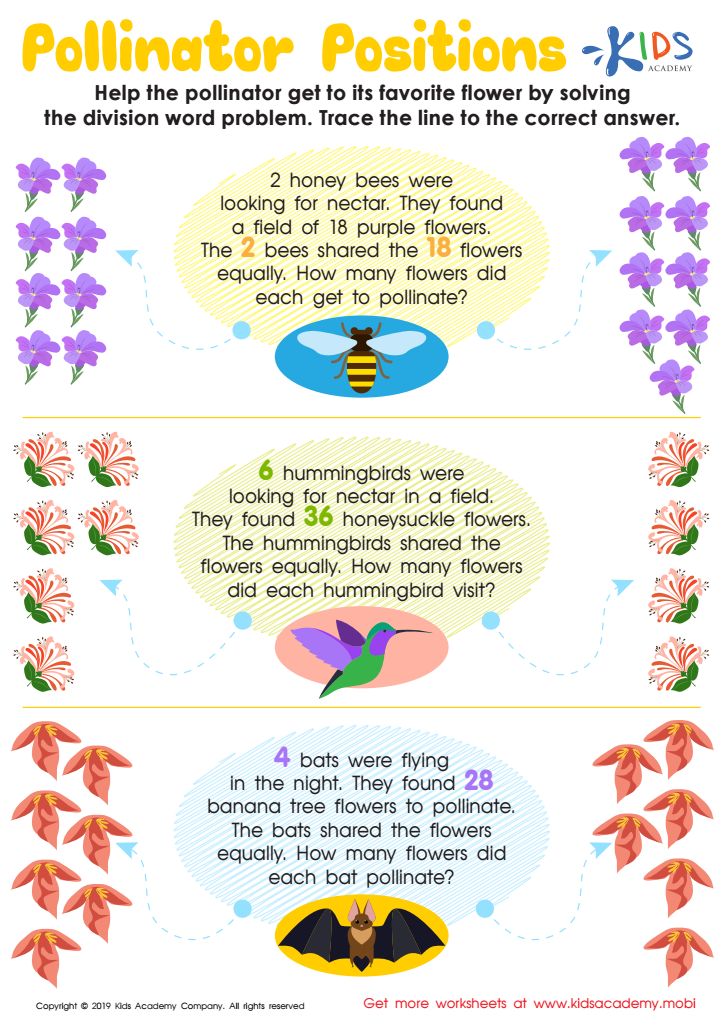
Pollinator Positions Worksheet
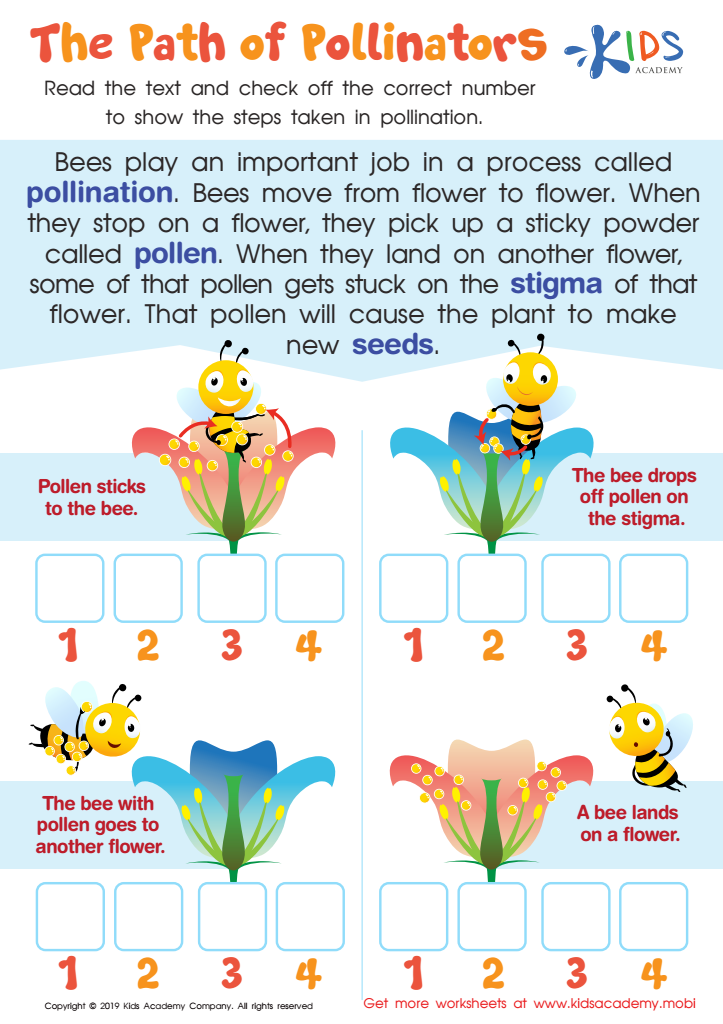
The Path of Pollinators Worksheet
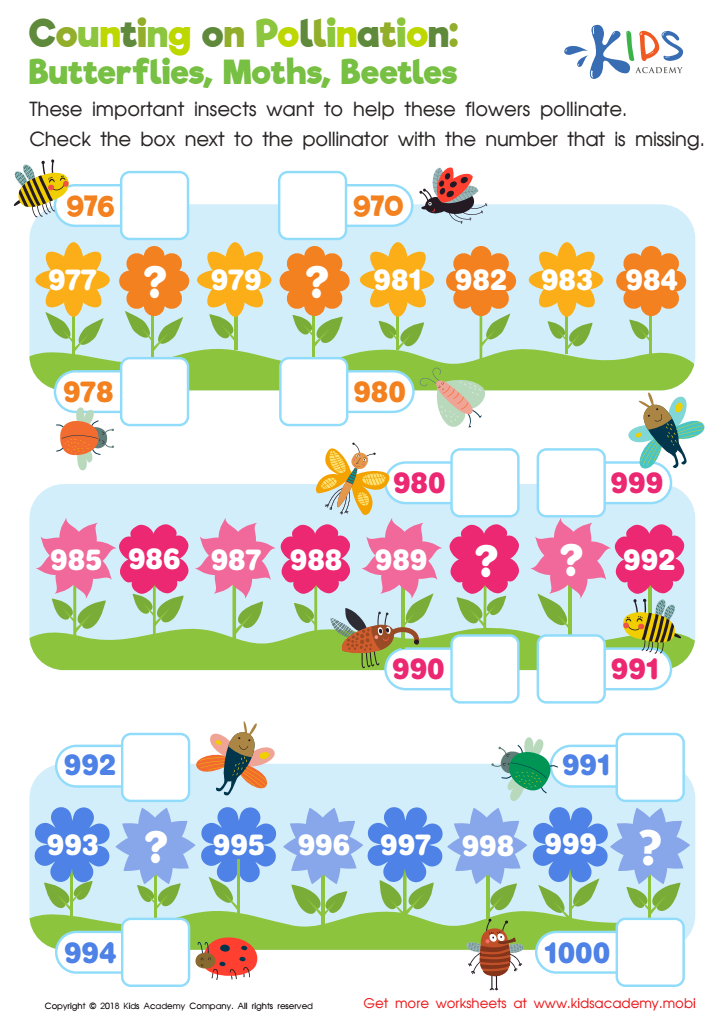
Counting on Pollination: Butterflies, Moths, Beetles Worksheet








Understanding pollination is essential for both parents and teachers, primarily because it lays the foundation for children's knowledge about nature and the environment. Pollination is a crucial process that helps plants reproduce by transferring pollen from one flower to another. This process is vital for producing many of the foods we eat, such as fruits, vegetables, and nuts.
By teaching children about pollination in Grade 2, we foster curiosity about the natural world and encourage them to appreciate the role of insects, birds, and wind in this process. This understanding nurtures a sense of responsibility toward protecting these vital pollinators, including bees and butterflies, which are facing declining populations.
Moreover, pollination contributes to biodiversity, ensuring that various species of plants and animals thrive. This knowledge can inspire young students to engage in conservation efforts, promoting sustainability in their communities.
Getting children involved in hands-on activities, such as planting flowers or observing insects, makes learning interactive and enjoyable. It helps develop critical thinking, scientific inquiry, and a deep respect for nature. Ultimately, cultivating an appreciation for pollination supports lifelong learning and awareness about environmental stewardship among students.