Basic Addition Skills Normal Grade 2 Addition & Subtraction Worksheets
3 filtered results
-
From - To
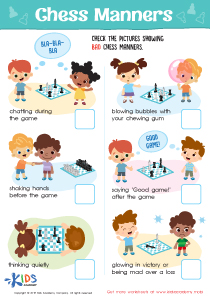
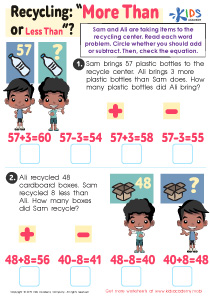
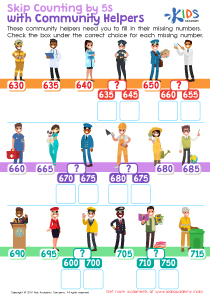
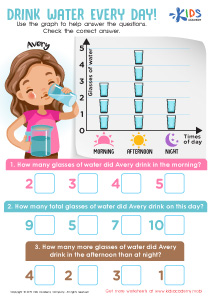
Enhance your child's math abilities with our Basic Addition Skills worksheets designed specifically for Grade 2! These engaging activities focus on developing foundational addition and subtraction skills, ensuring a solid understanding of essential math concepts. With clear instruction and varied exercises, children will practice core skills, solve problems, and build confidence in their math abilities. Our printable worksheets feature colorful illustrations and user-friendly layouts, making learning fun and accessible. Perfect for homeschooling, classroom use, or supplemental learning, these resources cater to various learning styles and help students master basic addition and subtraction effectively. Start building their math skills today!
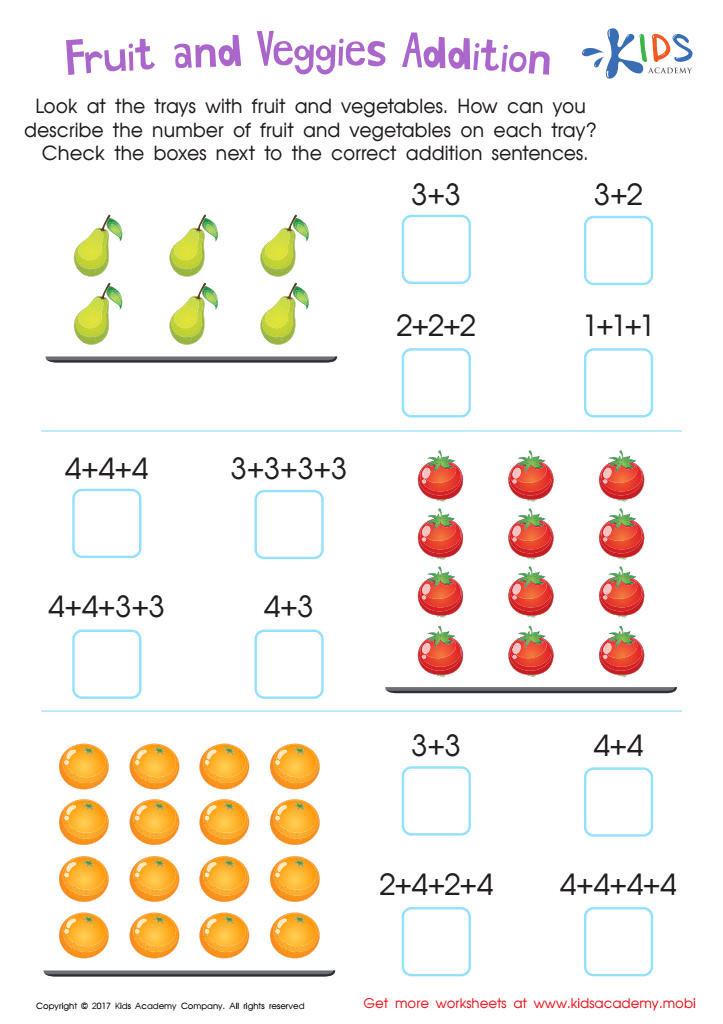
Fruit and Veggies Worksheet
 Assign to My Students
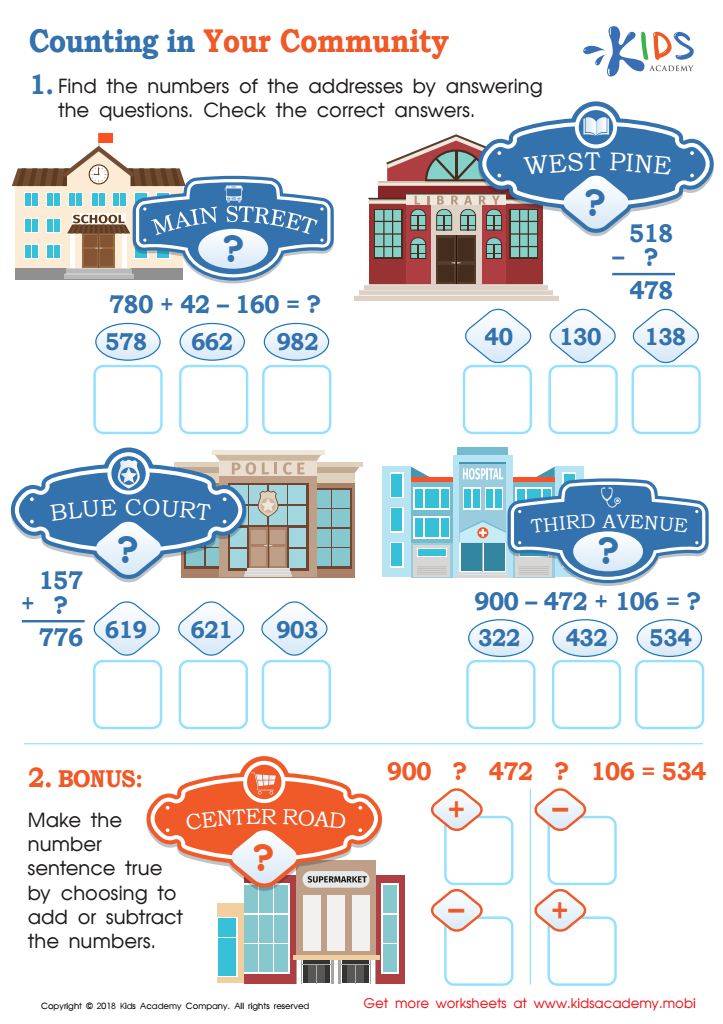
Counting in Your Community Worksheet
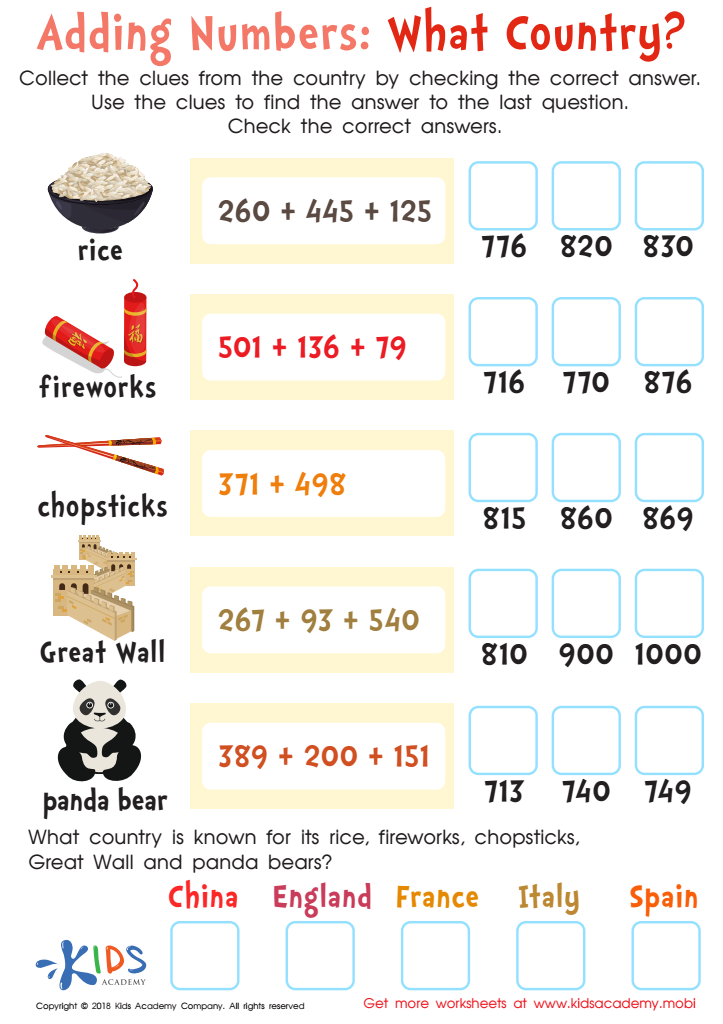
Adding Numbers: What Country Worksheet








Basic addition and subtraction skills are fundamental components of early mathematics education and are essential for a child's cognitive development. In Grade 2, students typically solidify their understanding of these concepts, building a foundation for more complex mathematical tasks. Parents and teachers should care about these skills for several reasons.
Firstly, proficiency in basic addition and subtraction enhances overall academic confidence. When students master these skills, they feel more capable in other subjects, as mathematics often serves as the language of logic and problem-solving. This confidence can carry over to other areas of study, fostering a love for learning.
Secondly, basic math skills are crucial for everyday life. Understanding addition and subtraction enables children to perform calculations essential for practical tasks, like managing money or measuring ingredients during cooking.
Additionally, these skills are interconnected with broader cognitive skills, such as critical thinking and analytical reasoning. As children learn to solve addition and subtraction problems, they sharpen their ability to approach challenges and think logically.
Finally, foundational math skills are linked to long-term academic success. Early math proficiency often predicts later achievements in more advanced mathematics, making it imperative for educators and parents to support mastery in Grade 2.