Practical math application Normal Grade 2 Math Worksheets
4 filtered results
Difficulty Level
Grade
Age
-
From - To
Subject
Activity
Standards
Discover engaging and educational Normal Grade 2 Math Worksheets focused on practical math applications! Our carefully crafted worksheets help young learners apply math skills to everyday situations, promoting real-world problem-solving. Designed for second graders, these resources cover essential topics such as money, time, and unit measurement, ensuring kids develop confidence in their mathematical abilities. Each worksheet encourages critical thinking, creativity, and the ability to connect math concepts with everyday life. Perfect for classroom use or at-home practice, these worksheets foster an enjoyable learning environment. Explore our collection today and empower your child with the necessary tools for their mathematical journey!
Favorites
With answer key
Interactive
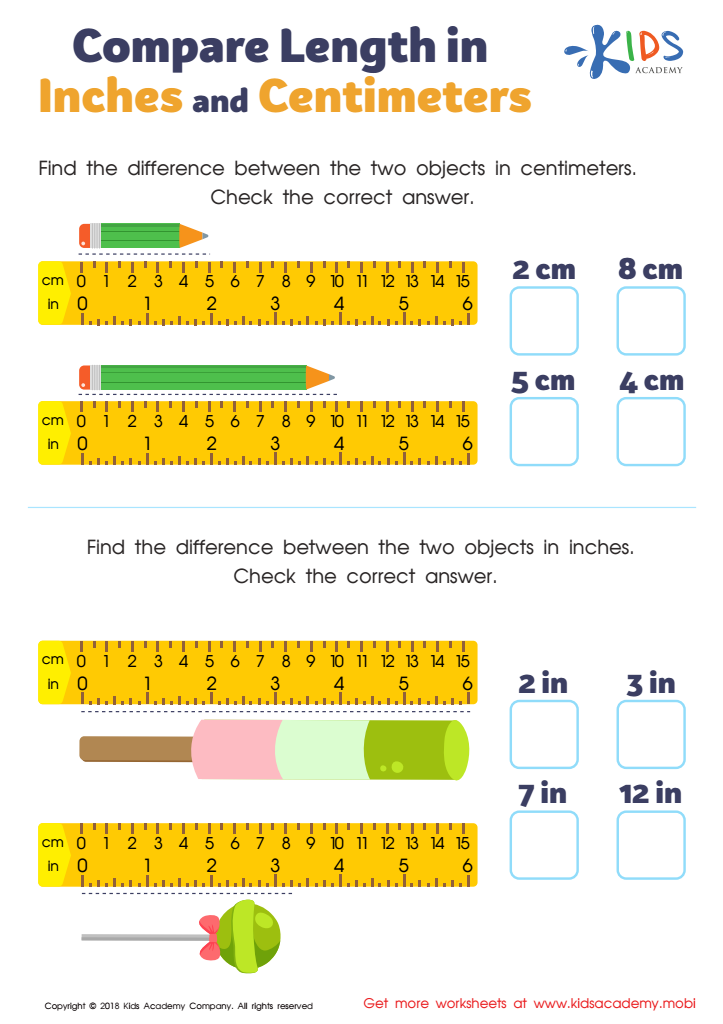
Compare Length in Inches and Centimeters Worksheet
This worksheet has your child measuring objects in both centimeters and inches. The first task requires measuring both objects in centimeters, then finding their difference. The second task is the same but in inches.
 Assign to My Students
Compare Length in Inches and Centimeters Worksheet
Worksheet
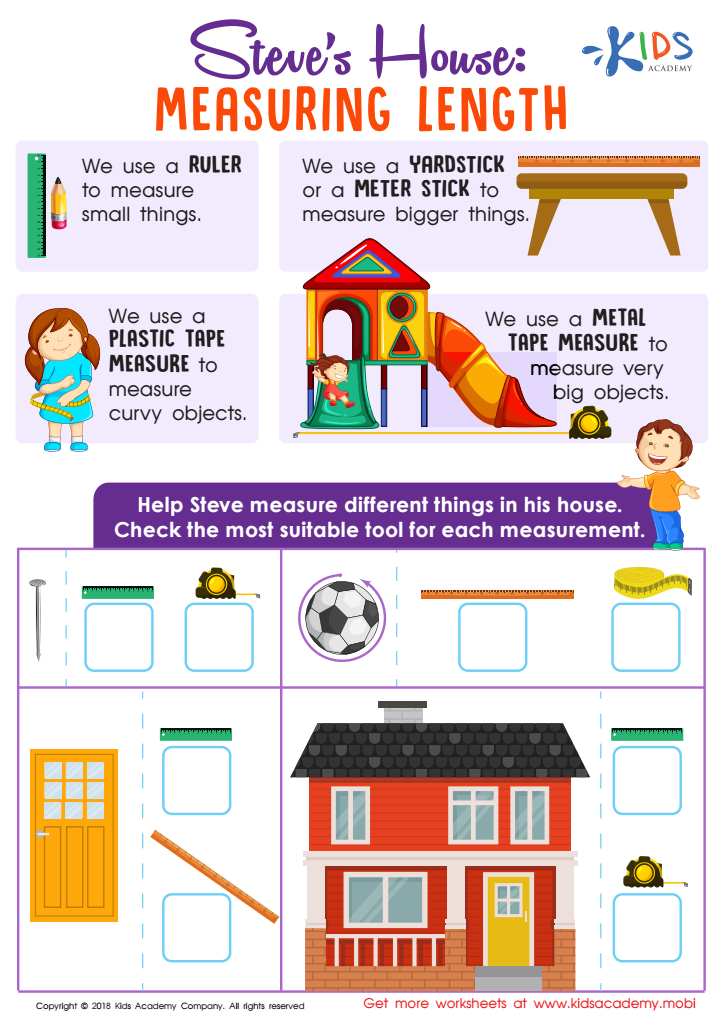
Steve's House: Measuring Length Worksheet
Introduce your kids to the various measuring tools and their uses. Explain how a ruler, plastic tape, yard stick, and metal tape measure are used to measure different objects. Guide them as they help Steve measure things in his home with the correct tool.
Steve's House: Measuring Length Worksheet
Worksheet
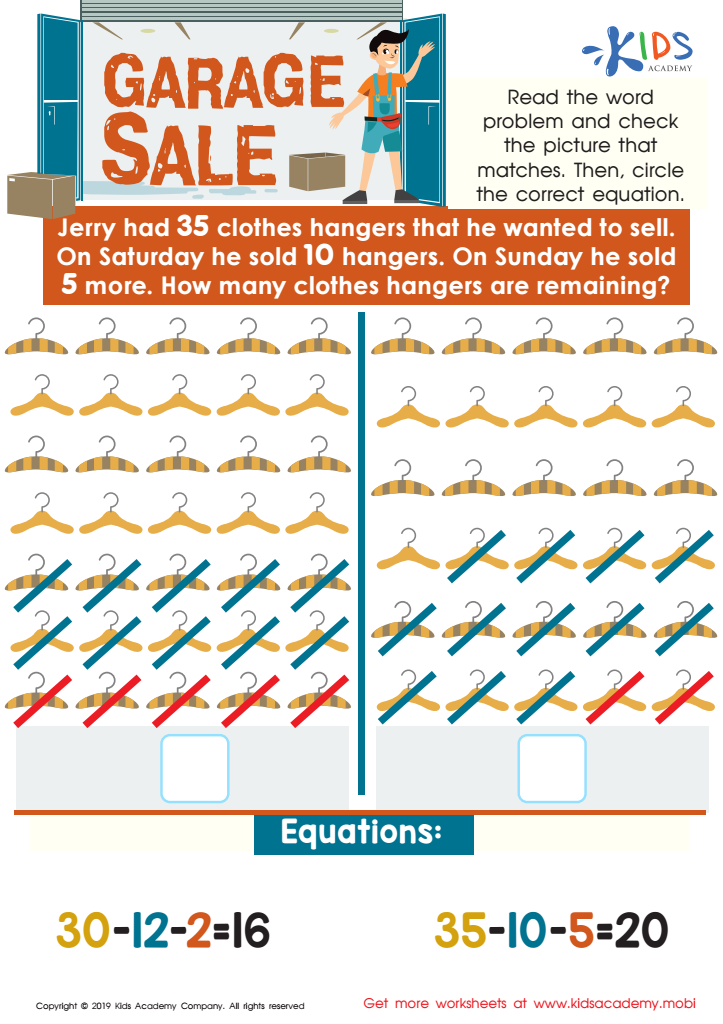
Garage Sale Worksheet
Help Jerry at his garage sale! With this worksheet, your child can practice subtraction word problems with multiple subtrahends. They'll read the problem, identify important info, circle the equation and solve it. Let your little math star have fun while helping Jerry out!
Garage Sale Worksheet
Worksheet
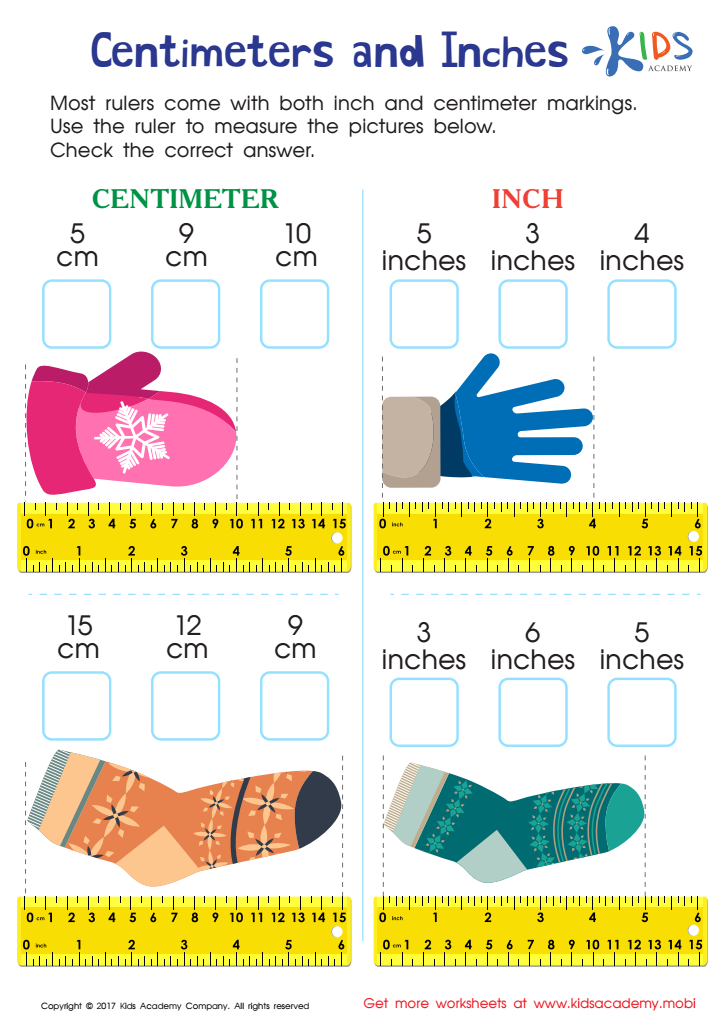
Centimeters and Inches Worksheet
This worksheet will help your child learn how to read a ruler using both centimeters and inches. It's an important skill that will benefit them throughout life! With practice, they'll gain a better understanding of these basic units of measurement.
Centimeters and Inches Worksheet
Worksheet
Join Kids Academy for Free
Who is primarily going to use this learning content?







Parents and teachers should care about practical math application in Grade 2 for several vital reasons. First, real-world math enhances students' understanding by linking abstract concepts to tangible experiences. When children see how math applies to everyday situations—such as budgeting allowance, measuring cooking ingredients, or determining playtime duration—they develop a more meaningful grasp of the subject.
In Grade 2, children are mastering foundational skills like addition, subtraction, and basic problem-solving. By integrating practical math activities, educators and parents can reinforce these skills and help students see their relevance. This approach fosters critical thinking, as students learn to analyze situations and apply their knowledge to arrive at solutions.
Moreover, practical math enhances engagement. When children engage in hands-on activities, like shopping scenarios or counting games, they are more likely to retain information than when learning principles in a vacuum. Engagement is essential for building confidence and a positive attitude towards math.
Finally, emphasizing practical applications prepares students for future learning. It lays a groundwork for more complex mathematical concepts and demonstrates the utility of math in achieving goals, promoting lifelong skills such as financial literacy and problem-solving. Ultimately, it cultivates a love for math that can benefit students throughout their lives.