Understanding pollination Normal Grade 2 Math Worksheets
3 filtered results
Difficulty Level
Grade
Age
-
From - To
Subject
Activity
Standards
Welcome to our "Understanding Pollination" Normal Grade 2 Math Worksheets! These engaging and interactive worksheets are specially designed to help young learners connect essential math concepts with the fascinating process of pollination. With fun problems and activities, students will practice addition, subtraction, and basic comprehension skills while exploring the important role pollinators play in our ecosystem. Our worksheets encourage critical thinking and creativity, ensuring an enjoyable learning experience. Perfect for classroom use or at-home study, these resources provide the ideal blend of education and fun, nurturing both math skills and an appreciation for nature in your second grader.
Favorites
With answer key
Interactive
Counting on Pollination: Bees Worksheet
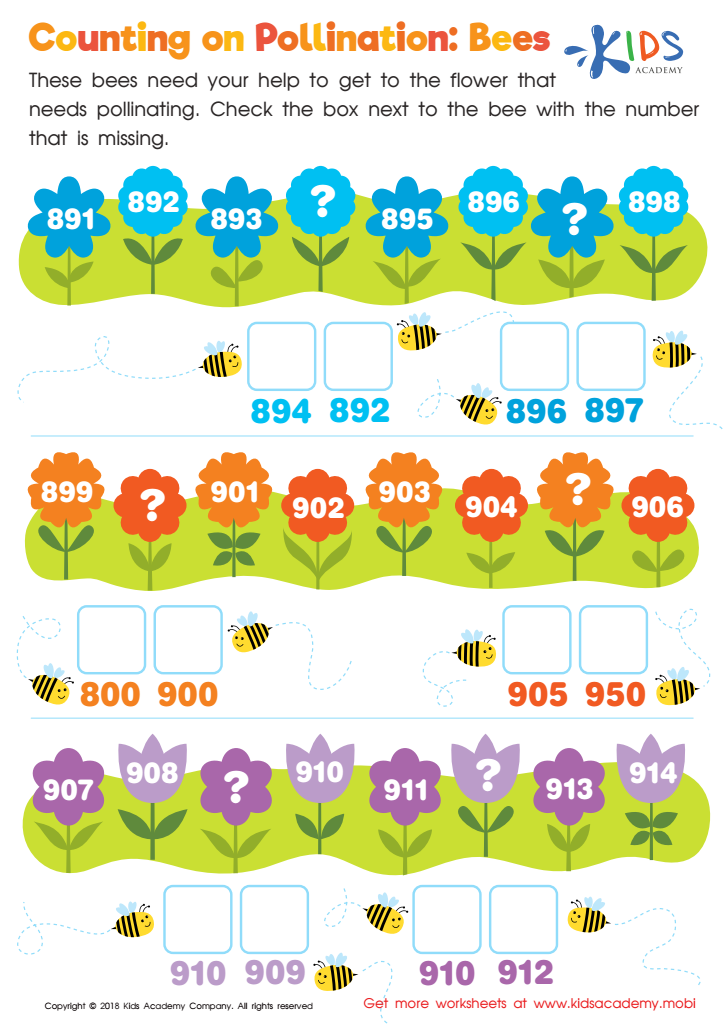
This downloadable worksheet helps kids improve their math skills while having fun - they'll help the bees pollinate the flowers by finding the missing number. It's an entertaining way to practice number patterns, sequences and number line skills, aiding in fast and efficient math computations.
 Assign to My Students
Counting on Pollination: Bees Worksheet
Worksheet
Pollinator Positions Worksheet
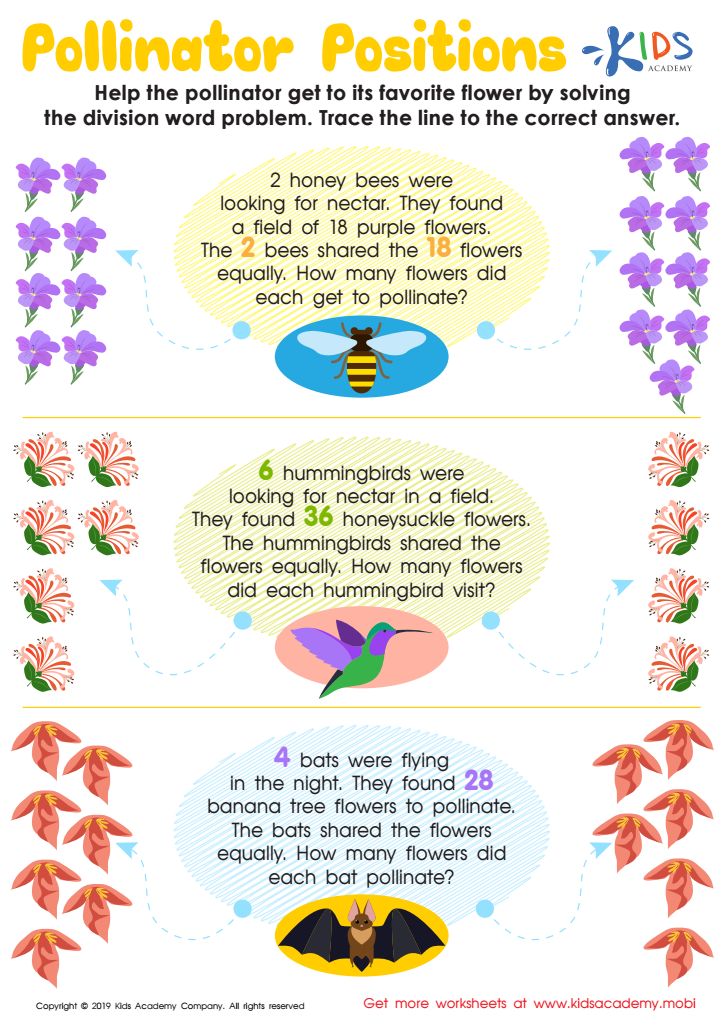
Kids will love learning about pollinators and how vital they are. Help their favorite friends get to the right flowers with this fun PDF. Children can solve the problems without even knowing they're doing division; just read the word problems and use the highlighted numbers. Finish by tracing the lines to the correct quotient!
Pollinator Positions Worksheet
Worksheet
Counting on Pollination: Butterflies, Moths, Beetles Worksheet
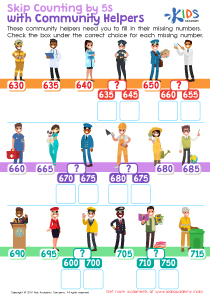
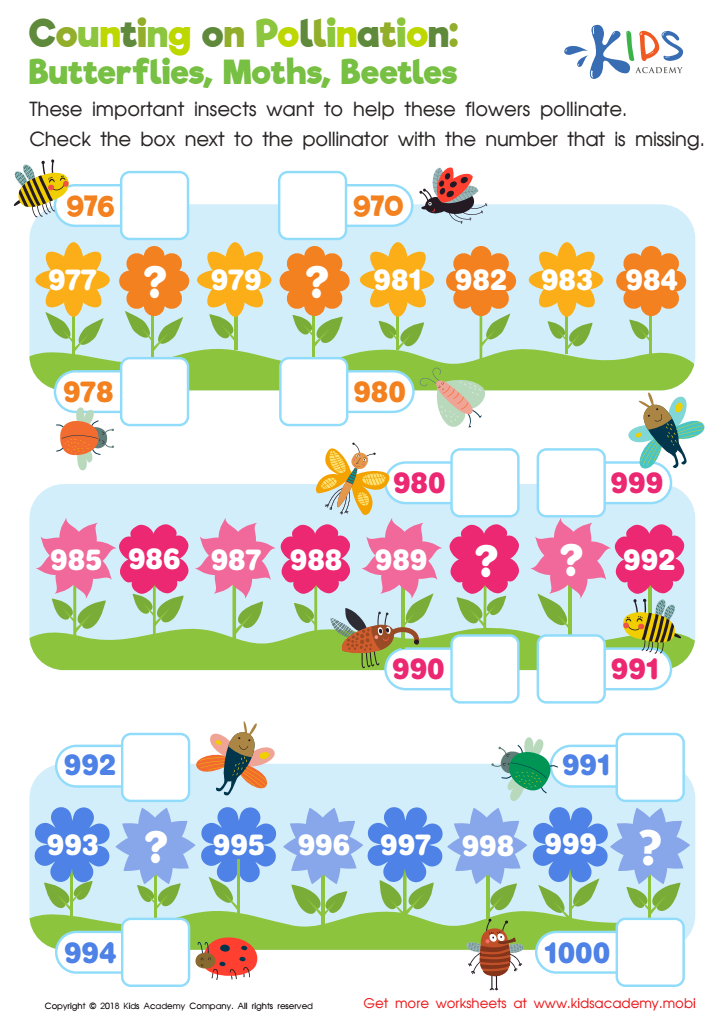
A number line can help boost computation accuracy and efficiency. It can also be used with more advanced numbers. Help your child practice by having them identify missing numbers in sequences. This fun worksheet lets them help the pollinators in the process, as they strengthen their number sense.
Counting on Pollination: Butterflies, Moths, Beetles Worksheet
Worksheet
Join Kids Academy for Free
Who is primarily going to use this learning content?






Parents and teachers should care about understanding pollination because it plays a vital role in our ecosystem and food production, making it an important topic for young learners.
At a Grade 2 level, discussing pollination can seamlessly integrate with math through engaging activities. For instance, children can learn to count and categorize different types of flowers, or measure how far bees travel to collect nectar. These exercises create a hands-on learning experience that helps develop crucial math skills while also teaching science.
Moreover, educating children about pollination fosters an appreciation for nature and the environment. By understanding how bees and other pollinators contribute to the growth of fruits, vegetables, and flowers, students can recognize the importance of biodiversity and the impact of human activities on these organisms.
Finally, addressing topics like pollination in early education nurtures curiosity and inquiry. Parents and teachers can encourage questions and discussions, helping children learn critical thinking skills. In summary, understanding pollination not only supports key learning objectives in both math and science but also instills a sense of responsibility towards our planet, fostering environmentally conscious citizens for the future.