Counting skills Normal Grade 2 Word Problems Worksheets
4 filtered results
-
From - To
Enhance your child's math abilities with our "Counting Skills Normal Grade 2 Word Problems Worksheets," designed to boost counting proficiency through engaging and practical exercises. These printable worksheets cater to second graders, offering a variety of fun, real-life scenarios that require solving word problems. By tackling tasks that involve basic arithmetic, students can sharpen their counting skills, improve number sense, and build a solid foundation for more advanced math concepts. Ideal for both classroom use and at-home practice, these worksheets support a hands-on learning approach, making math both enjoyable and educational. Get started today and watch your child's confidence soar!
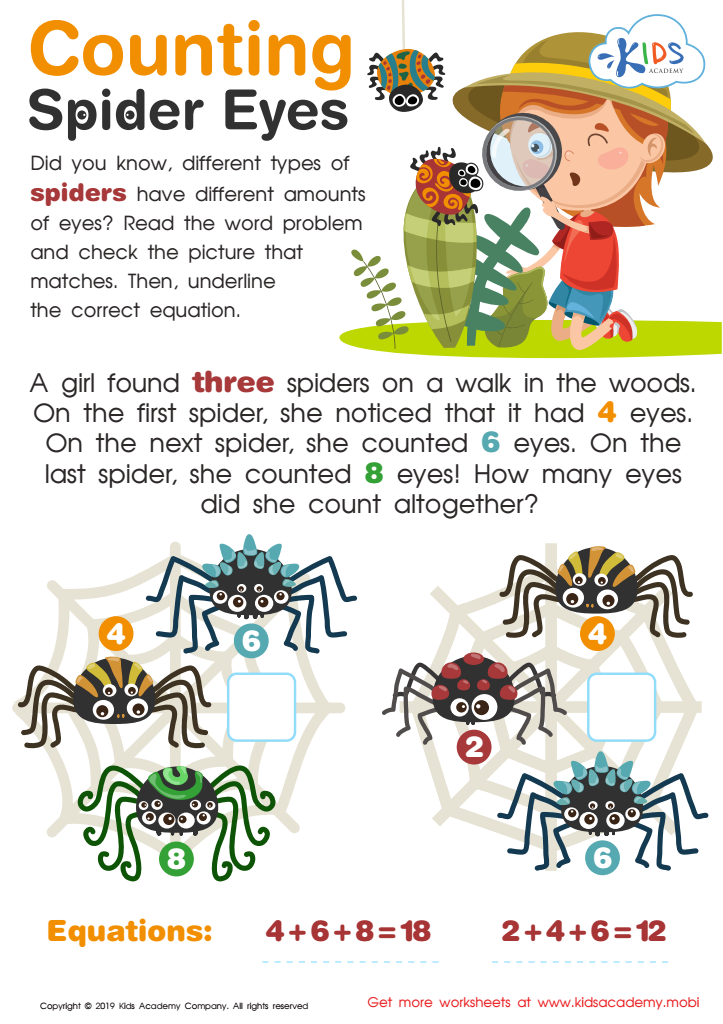
Counting Spider Eyes Worksheet
 Assign to My Students
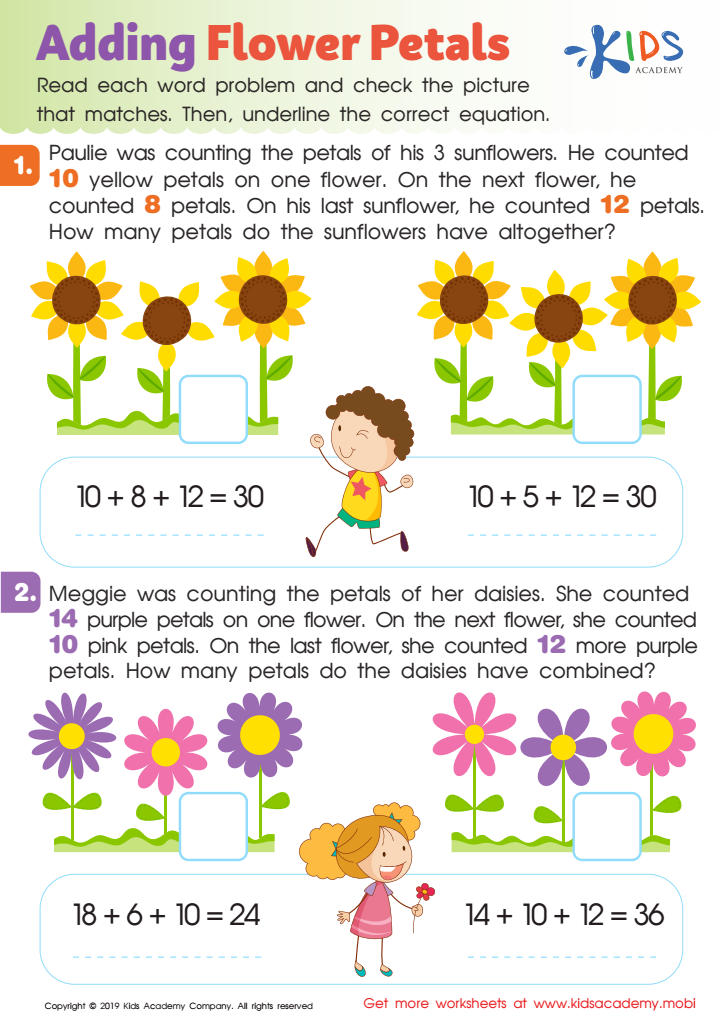
Adding Flower Petals Worksheet
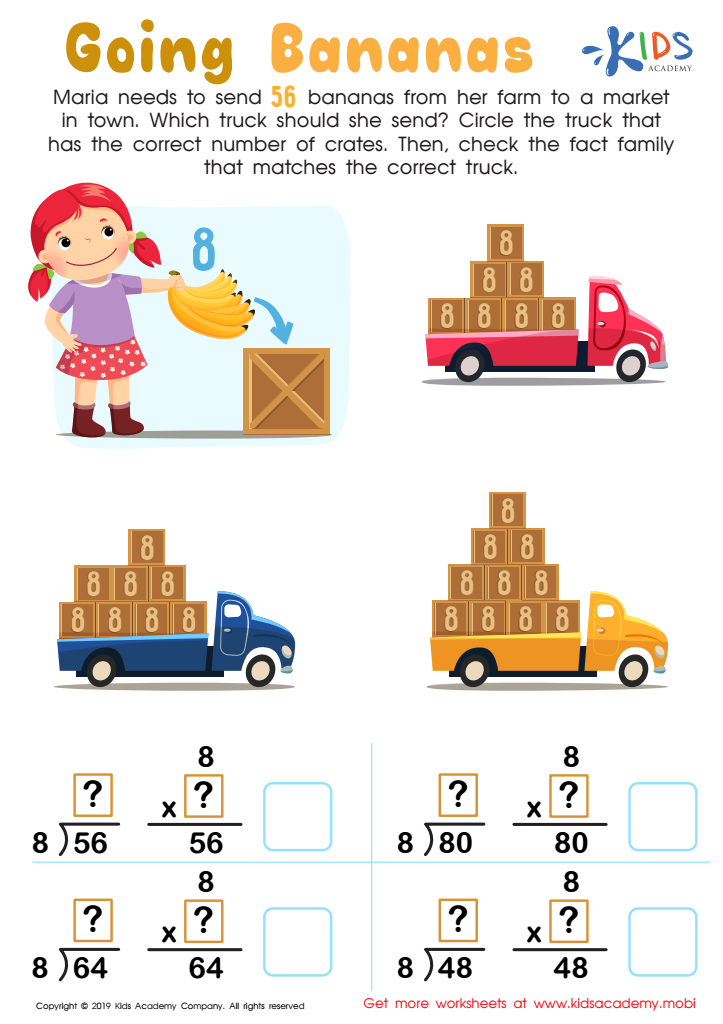
Going Bananas Worksheet
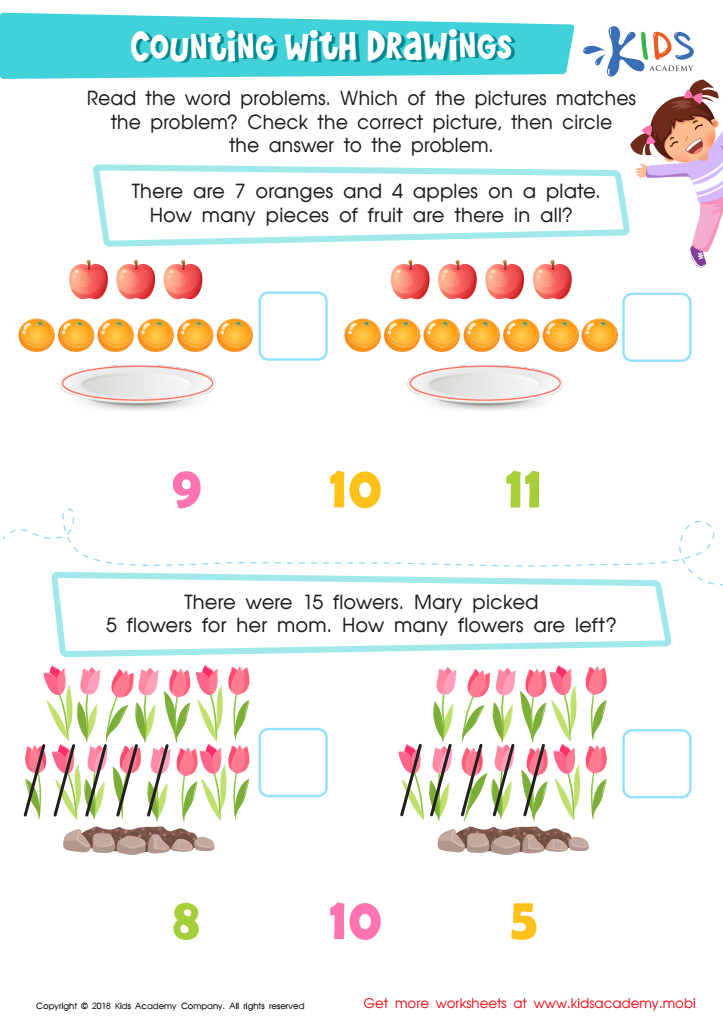
Counting with Drawings:Fruits & Flowers Worksheet








Counting skills and word problems are fundamental components of a child's early education, especially in Grade 2. When parents and teachers prioritize these areas, they set a solid foundation for various academic and life skills.
Firstly, counting is not just about knowing numbers; it's about understanding relationships between quantities. At Grade 2, children start grappling with more complex counting, addition, subtraction, and eventually multiplication. Mastery in these areas fosters critical thinking and problem-solving abilities that are essential for advanced math concepts they'll encounter later.
Word problems, on the other hand, integrate real-world scenarios which make math tangible and meaningful. They require students to apply their counting and arithmetic skills in practical situations, enhancing comprehension. This kind of applied learning boosts cognitive development, improves logical reasoning, and nurtures analytical skills.
Furthermore, these early math skills build confidence and academic enthusiasm. A child who isn't struggling with counting or basic problems is more likely to enjoy school and exhibit a positive attitude towards learning.
By focusing on these skills, parents and teachers ensure that children develop a strong mathematical foundation, promote intellectual growth, and foster a lifelong love for learning. An early investment in counting and problem-solving mirrors future academic success and everyday skill proficiency.