Subtraction practice Normal Grade 2 Word Problems Worksheets
3 filtered results
Difficulty Level
Grade
Age
-
From - To
Subject
Activity
Standards
Welcome to our Subtraction Practice worksheets for Grade 2! Designed to enhance your child's math skills, these engaging word problems challenges students to apply subtraction in real-world scenarios. Each worksheet is carefully crafted to promote critical thinking and problem-solving abilities, making math fun and interactive. Students will work through relatable situations, ensuring they understand the concept of subtraction while building confidence in their abilities. Perfect for classroom use or at-home practice, these worksheets align with educational standards and provide instant feedback to support learning. Download now to strengthen your child's subtraction skills and watch them excel in math!
Favorites
With answer key
Interactive
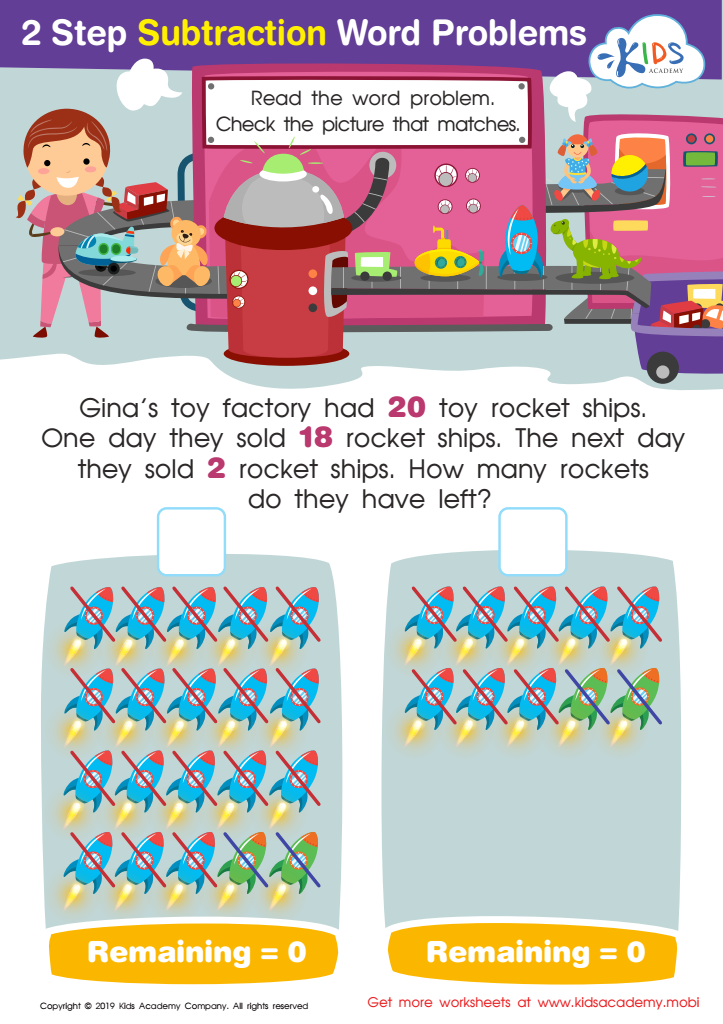
Step Subtraction Word Problems Worksheet
With this worksheet, kids can solve a multi-step subtraction problem with one-to-one number representation, helping Gina figure out her rocket count. Visualizing word problems is key, and this PDF will give your child a concrete image to work with. They'll be successful problem solvers in no time!
 Assign to My Students
Step Subtraction Word Problems Worksheet
Worksheet
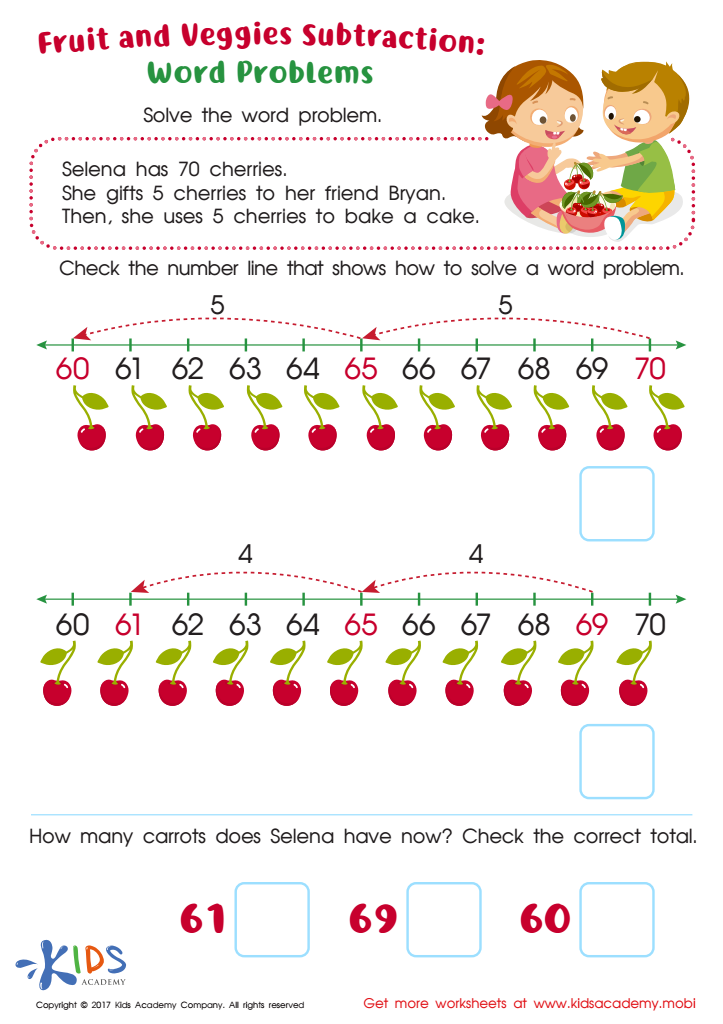
Subtraction Word Problems Free Printable
Try out this free printable subtraction worksheet! Your child can use number lines to solve challenging word problems – it's a great way to boost their problem-solving skills.
Subtraction Word Problems Free Printable
Worksheet
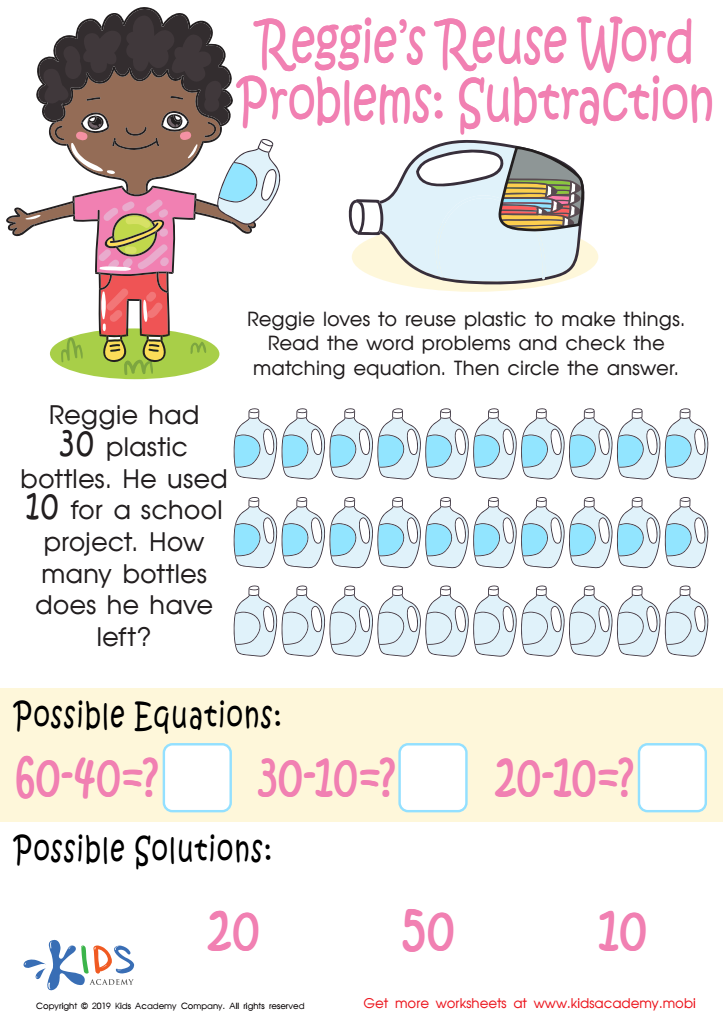
Reggie's Reuse Word Problems: Subtraction Worksheet
Kids can help pal Reggie become an eco-friendly friend! This PDF teaches kids subtraction and one-to-one number representation. They'll use pictures to solve word problems and find out how many plastic bottles Reggie can reuse. They'll also match number equations and solutions to get the right answer.
Reggie's Reuse Word Problems: Subtraction Worksheet
Worksheet
Join Kids Academy for Free
Who is primarily going to use this learning content?








Subtraction practice through word problems is essential for second graders as it helps develop critical thinking and problem-solving skills. When students engage with word problems, they learn to interpret real-life situations mathematically, which enhances their understanding of subtraction beyond memorization. This understanding is fundamental, as it forms the foundation for more advanced math concepts in later grades.
Additionally, word problems encourage students to visualize numbers and relationships, fostering deeper comprehension. As they encounter various scenarios—like sharing or finding the difference—they strengthen their ability to articulate mathematical reasoning, which is invaluable for both verbal communication and written expression.
For teachers and parents, supporting subtraction practice through word problems can enhance student confidence and promote independence in learning. By guiding children in breaking down problems, they'll learn to approach challenges systematically. This builds resilience, as they become accustomed to trial and error in finding a solution.
Ultimately, a strong grasp of subtraction through relatable word problems equips children not only for future academic success but also prepares them for everyday situations involving financial literacy, time management, and planning. Prioritizing this practice ensures holistic development and sets the stage for lifelong learning.