Word Recognition Normal Grade 2 Building Vocabulary Worksheets
4 filtered results
Difficulty Level
Grade
Age
-
From - To
Subject
Activity
Standards
Unlock your child's reading potential with our "Word Recognition Normal Grade 2 Building Vocabulary Worksheets." Designed specifically for second graders, these engaging worksheets foster essential skills for word recognition and vocabulary enhancement. Through fun and interactive activities, children will expand their word bank and improve their reading fluency. Each worksheet incorporates age-appropriate language and themes to make learning enjoyable. Perfect for classroom use or at-home practice, these resources are aligned with educational standards to ensure a solid foundation in literacy. Encourage your child's love for reading and boost their confidence with our hands-on, skill-building worksheets today!
Favorites
With answer key
Interactive
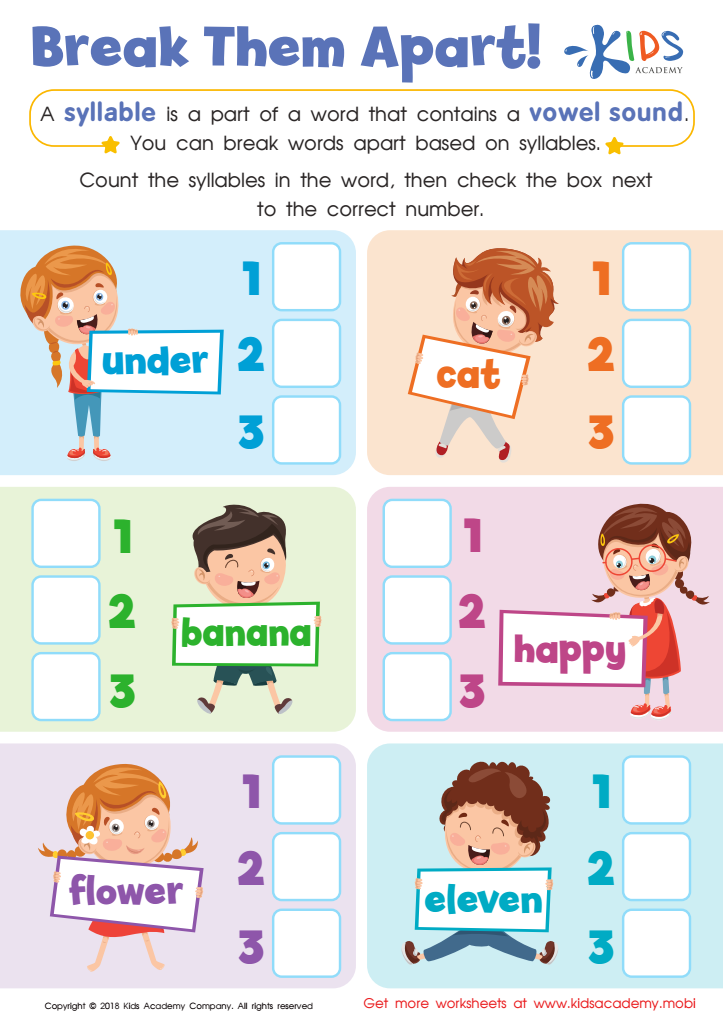
Reading: Break Them Apart Worksheet
See if students understand syllables with this fun worksheet. It teaches them that a syllable is a word part with a vowel sound. Kids read each word and choose how many parts it has. Doing this often helps them decode new words and gain confidence.
 Assign to My Students
Reading: Break Them Apart Worksheet
Worksheet
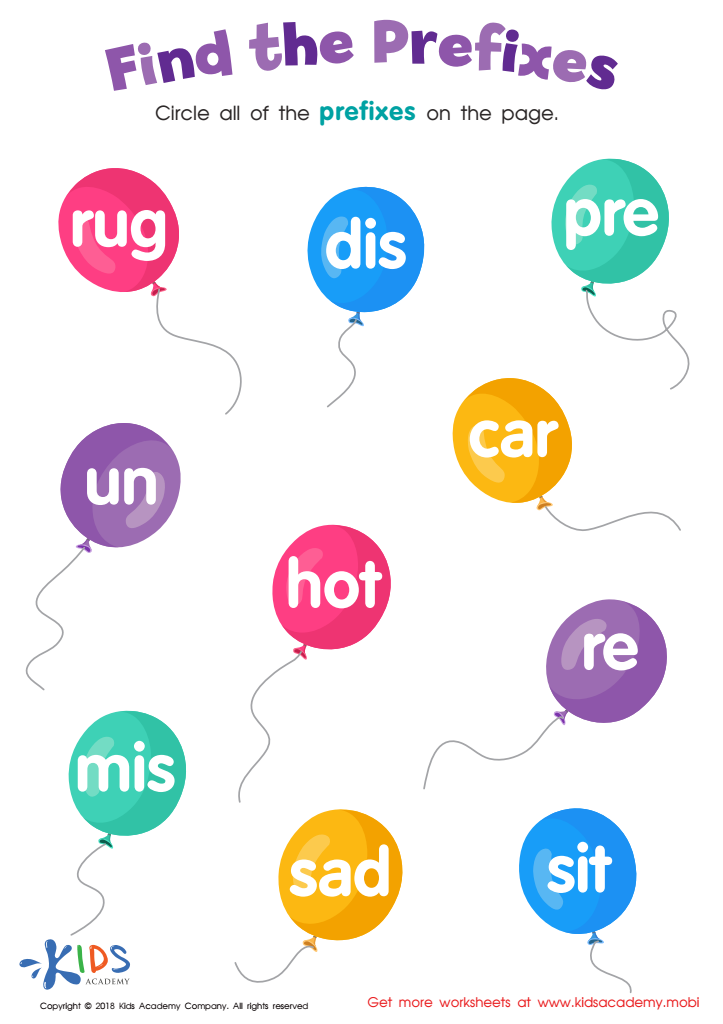
Reading: Find the Prefixes Worksheet
Students are asked to circle all prefixes on this worksheet and brainstorm a list of words that have them. It's a great tool for teaching vocabulary and helps students understand new and unfamiliar words by recognizing how prefixes change meaning.
Reading: Find the Prefixes Worksheet
Worksheet
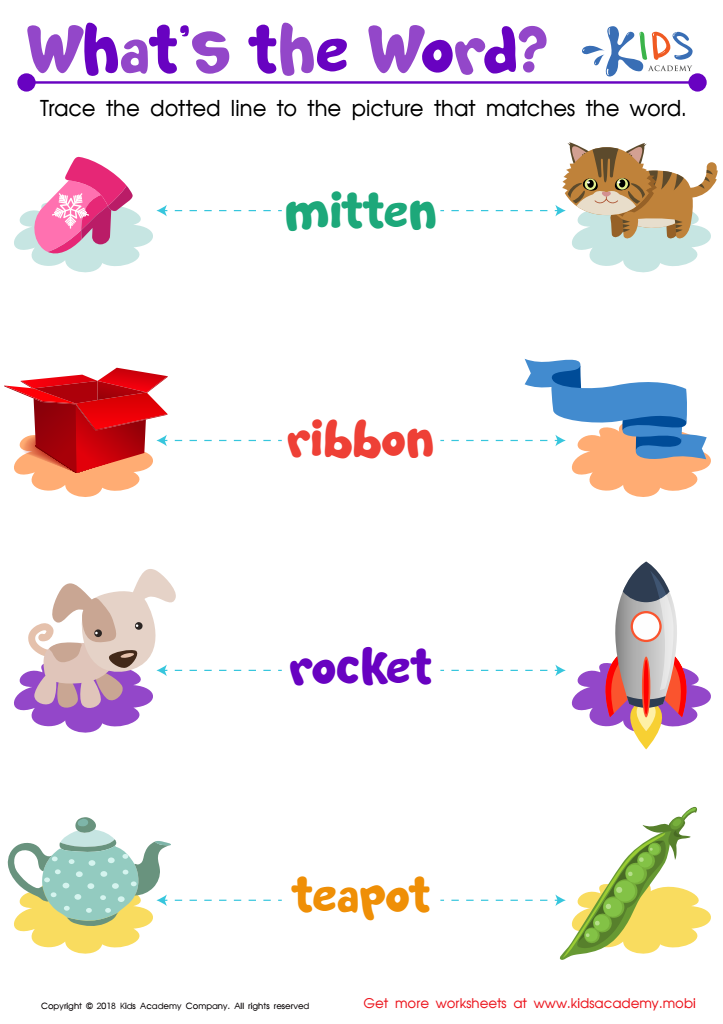
Reading: What's Word Worksheet
Teaching reading? This worksheet can help! Students read the word and draw a line to the picture for clues if needed. This will boost their vocabulary and fluency, increasing confidence and reading skills. Watch their progress as new words are added!
Reading: What's Word Worksheet
Worksheet
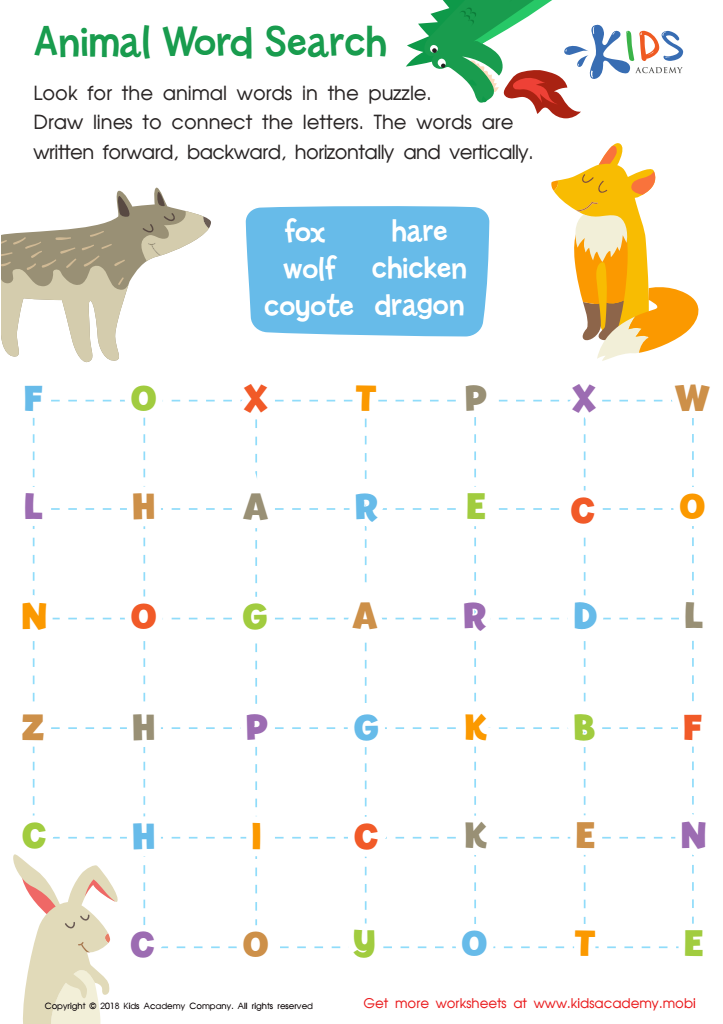
Animal Word Search Worksheet
Students can have fun and strengthen spelling and vocabulary skills with this word search worksheet. Search for animal words and circle the letters in the puzzle. Words can be found forwards, backwards, horizontally or vertically, providing a great challenge to foster critical thinking skills. An enriching activity for all ages!
Animal Word Search Worksheet
Worksheet
Join Kids Academy for Free
Who is primarily going to use this learning content?








Word recognition is a foundational skill in early literacy, particularly for Grade 2 students. For parents and teachers, understanding its importance is crucial for several reasons. First, it directly impacts a child's reading proficiency. As students master recognizing words quickly and accurately, they become more confident readers, allowing them to focus on comprehension rather than decoding each word. This fluency supports overall academic success, as strong reading skills are linked to performance across all subjects.
Building vocabulary is equally important; it enhances a child's ability to express thoughts clearly and engage with complex texts. In Grade 2, students begin encountering more challenging literature, and a robust vocabulary allows them to grasp new concepts and ideas effectively. Engaging activities that boost vocabulary, like reading diverse genres, playing word games, and discussing new words in context, stimulate cognitive development and encourage a love for reading.
Moreover, parents and teachers play vital roles in creating a language-rich environment. By modeling positive reading habits and providing opportunities for word exploration, they can foster an appreciation for language. Ultimately, enhancing word recognition and vocabulary not only develops literacy skills but also equips children with tools for lifelong learning and communication.